
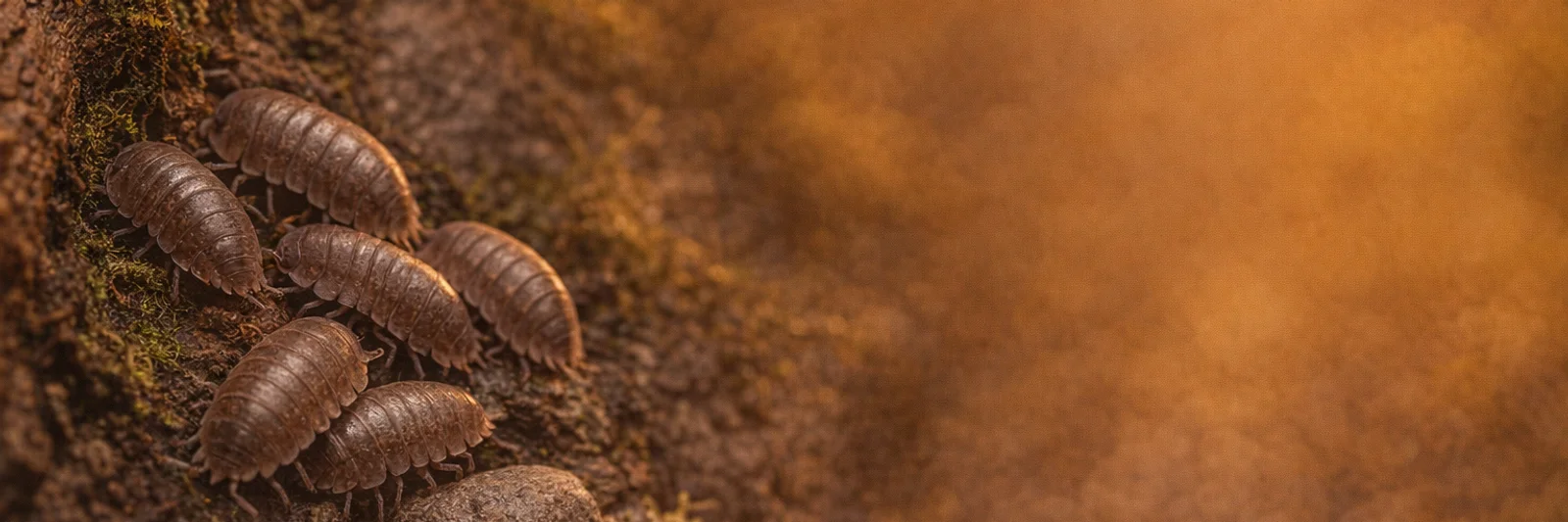
- Porcellio are large, fast, hardy isopods that stay active and breed readily, which makes them one of the most beginner-friendly genera.
- They tolerate drier conditions better than Cubaris, so a simple humid side and dry side setup keeps them thriving without fuss.
- Their big appetite makes Porcellio an excellent cleanup crew for enclosures with a heavier bioload of waste and leftover food.
- Dairy Cow (Porcellio laevis) and other aggressive Porcellio can nibble live plants and bother very small or soft animals, so pick tankmates carefully.
- Porcellio are easy and forgiving to keep as long as they have deep substrate, rotting wood, leaf litter, and a steady calcium source.
Who Porcellio Are
Porcellio are a genus of land isopods that includes some of the most popular species in the hobby: the common rough woodlouse (Porcellio scaber) and its many colorful morphs like Orange, Dalmatian, and Koi, the fast-growing Dairy Cow (Porcellio laevis), and showstoppers like the giant Spanish Porcellio magnificus. What they share is a build that is bigger, faster, and hungrier than most of the dwarf and tropical isopods people start with.
They are also hardy and forgiving. Porcellio handle a wider range of conditions than delicate genera, they shrug off the occasional dry spell, and a healthy colony multiplies quickly. That combination of size, speed, appetite, and toughness is exactly why they are such a satisfying isopod to keep and such a capable cleanup crew.
- Larger and faster than most beginner isopods, and fun to watch
- Big appetites that make them strong cleaners and quick breeders
- Hardy and forgiving of a wider range of conditions, including drier setups
- Many morphs, from scaber color forms to Dairy Cows and giant species
Setting Up the Bin
A roomy, well-ventilated plastic tub or terrarium is ideal, sized to the colony. Porcellio are active ground-dwellers that appreciate floor space to roam, so favor a wide footprint over height. Because these are fast, capable climbers on rough surfaces, use a secure, tight-fitting lid and keep the smooth upper walls clean so they stay put.
As with all isopods, build a moisture gradient: keep one end damp by misting it or burying a patch of moist sphagnum moss, and let the other end stay drier. Here is where Porcellio shine for new keepers: they tolerate the drier side better than Cubaris and are far less prone to crashing if the bin dries out a little. Give them real cross-ventilation so the enclosure never turns into a stagnant, moldy box, and they will regulate themselves.
- A roomy, ventilated bin with plenty of floor space and a secure lid
- A humid side and a drier side so they can pick the moisture they want
- Good cross-ventilation to keep air moving and prevent mold
- Clean, smooth upper walls since Porcellio can climb rough surfaces
Temperature
Most Porcellio do well at ordinary room temperature, roughly 70 to 80 F, so they usually need no special heating in a typical home. They stay active and breed steadily across that range, and they handle brief swings better than more sensitive genera.
The thing to avoid is extremes. Keep the bin out of direct sunlight and away from radiators, heat vents, or a basking bulb, all of which can overheat and dry out a colony quickly. If a room runs cold, add gentle heat to one side only and leave a cooler zone, so the isopods can move to the temperature they prefer.
Substrate, Wood, Leaf Litter, and Calcium
Give Porcellio a deep, moist blend of coco fiber and topsoil that they can burrow into, and enrich it with crushed leaf litter, a little sphagnum moss, and bits of decaying wood. The substrate should feel like a wrung-out sponge on the damp side, moist to the touch but never dripping or waterlogged.
Rotting hardwood and leaf litter are the heart of the diet and their main cover. Use pesticide-free leaves from safe species like oak, magnolia, or maple, and add pieces of well-aged, decaying hardwood for them to graze on and hide under. Keep both topped up as the colony works through them. Finally, leave a steady calcium source such as cuttlebone, crushed eggshell, or a bit of limestone in the bin at all times, since these big isopods need plenty of calcium to build their exoskeletons and molt well.
- Deep, moist coco fiber and soil they can burrow into
- Rotting hardwood like oak or maple to graze on and shelter under
- Dried leaf litter as everyday food and cover
- Calcium always available, such as cuttlebone or crushed eggshell
Feeding a Big Appetite
Porcellio eat more than most isopods, and that appetite is a feature. On top of the leaf litter and rotting wood that form the base of the diet, they readily take fresh vegetables and fruit in small amounts: carrot, squash, cucumber, potato, and leafy greens all go over well. Offer small portions and remove anything that starts to mold.
These are also more protein-hungry than many isopods, so give a protein source occasionally, such as a pinch of fish flake, a specialty isopod food, or a small piece of dried shrimp. Feed protein sparingly and remove leftovers, since too much moist protein is what triggers grain-mite blooms and fouls a bin. A varied diet keeps a Porcellio colony fast-growing and productive.
The Honest Caution: Dairy Cows and Planted Tanks
This is the part every keeper should know before dropping Porcellio into a display vivarium. Some Porcellio, and the Dairy Cow (Porcellio laevis) most of all, are aggressive, opportunistic eaters. In a lush planted setup they can nibble on live plants, tender roots, and new shoots, and a hungry, crowded colony has been known to bother very small, slow, or soft-bodied animals such as tiny froglets, eggs, or a freshly molted invertebrate.
This does not make them bad isopods, it makes them the wrong tool for a delicate, densely planted tank with fragile occupants. If you want isopods for a showpiece planted bioactive with small or soft animals, a gentler species is the safer pick, and slower dwarf isopods are a common choice there. If you do keep Porcellio in a planted enclosure, keep them well fed so they are not tempted to graze plants, avoid overcrowding, and choose sturdier tankmates that can hold their own.
A Great Cleanup Crew for a Heavier Bioload
Flip that big appetite around and it becomes their best quality. For an enclosure that produces a lot of waste, such as a larger reptile setup with plenty of droppings and leftover feeders, Porcellio are a powerhouse cleanup crew that chews through mess faster than smaller, slower species can keep up with. Their speed, size, and hunger let them process a heavier bioload and keep a substrate turning over.
A strong pairing for any bioactive is Porcellio for the bulk cleanup and springtails for the fine work, since springtails handle mold and the smallest particles the isopods leave behind. Together they form a resilient cleanup team that keeps a busy enclosure healthy with very little intervention from you.
Common Mistakes
Most Porcellio problems come down to a few avoidable slip-ups, and each has a simple fix. Because these isopods are so hardy, they usually bounce back quickly once the underlying issue is corrected.
The classic mistakes are keeping the whole bin too wet with poor airflow, which invites mold and grain mites, and skipping calcium, which leads to soft, failed molts in these fast-growing isopods. Others are underfeeding a hungry colony, which in a planted tank pushes them toward eating your plants, and an insecure lid or grimy walls that let these fast climbers escape. Set up a good moisture gradient, keep calcium and food available, and lid the bin tightly, and Porcellio all but take care of themselves.
- Too wet everywhere: add ventilation and rebuild the humid and dry gradient
- No calcium: add cuttlebone or eggshell to prevent soft, failed molts
- Underfeeding: keep them well fed so they do not graze live plants
- Loose lid or dirty walls: these fast climbers escape a poorly sealed bin
Frequently Asked Questions
How do you care for Porcellio isopods?
Keep Porcellio isopods in a roomy, well-ventilated bin with deep, moist substrate, and set up a humid side and a drier side so they can choose the moisture they want. Hold them at roughly 70 to 80 F out of direct heat, give them rotting hardwood, leaf litter, and a steady calcium source, and feed a varied diet with fresh vegetables and occasional protein. They tolerate drier conditions than many isopods, so as long as the bin has airflow and a damp corner, they are easy and forgiving to keep.
Are Porcellio isopods good for bioactive terrariums?
Yes, Porcellio are excellent cleanup crews for bioactive terrariums, especially enclosures with a heavier bioload of waste and leftover food, because their size and big appetite let them process mess quickly. The one caveat is planted display tanks with delicate plants or very small, soft animals, where aggressive species like the Dairy Cow can nibble plants or bother fragile occupants. For a heavier-bioload setup, they are one of the best cleanup crews you can choose, and they pair well with springtails.
Do Porcellio laevis (Dairy Cow) eat plants?
Dairy Cow isopods (Porcellio laevis) can eat live plants, since they are aggressive, opportunistic feeders that will graze tender leaves, roots, and new shoots when hungry. In a planted bioactive you can reduce this by keeping them well fed with leaf litter, wood, and vegetables so they are not tempted to browse your plants, and by avoiding overcrowding. For a showpiece planted tank with fragile plants, a gentler, slower isopod species is often the safer choice.
Are Porcellio isopods good for beginners?
Yes, Porcellio are one of the most beginner-friendly isopod genera because they are large, fast-growing, and hardy, and they forgive a wider range of conditions than fussier genera like Cubaris. They tolerate the drier side of a moisture gradient well, breed readily, and rarely crash if the bin dries out a little. Give them deep substrate, wood, leaf litter, calcium, and good ventilation, and a new keeper can expect a thriving colony with very little trouble.
What do Porcellio isopods eat?
Porcellio isopods eat leaf litter and rotting hardwood as the base of their diet, grazing on the decaying plant matter and the microbes growing on it. They have big appetites, so they also readily take fresh vegetables and fruit like carrot, squash, and leafy greens in small amounts, plus an occasional protein source such as a pinch of fish flake or a specialty isopod food. Keep a calcium source like cuttlebone or crushed eggshell available at all times for healthy molting.
How much humidity do Porcellio need?
Porcellio need a moisture gradient rather than one fixed humidity level, so keep one end of the bin damp and let the other end stay drier. The humid side should feel like a wrung-out sponge, moist but never dripping, while the dry side gives them a less humid place to sit. Compared with Cubaris, Porcellio tolerate the drier end well and handle the occasional dry spell without trouble, so mist the damp side as it dries and let them shuttle between the two.
Keep comparing: Isopod Care Guide· Cubaris Isopod Care· Armadillidium Isopod Care· Best Cleanup Crew Isopods
