
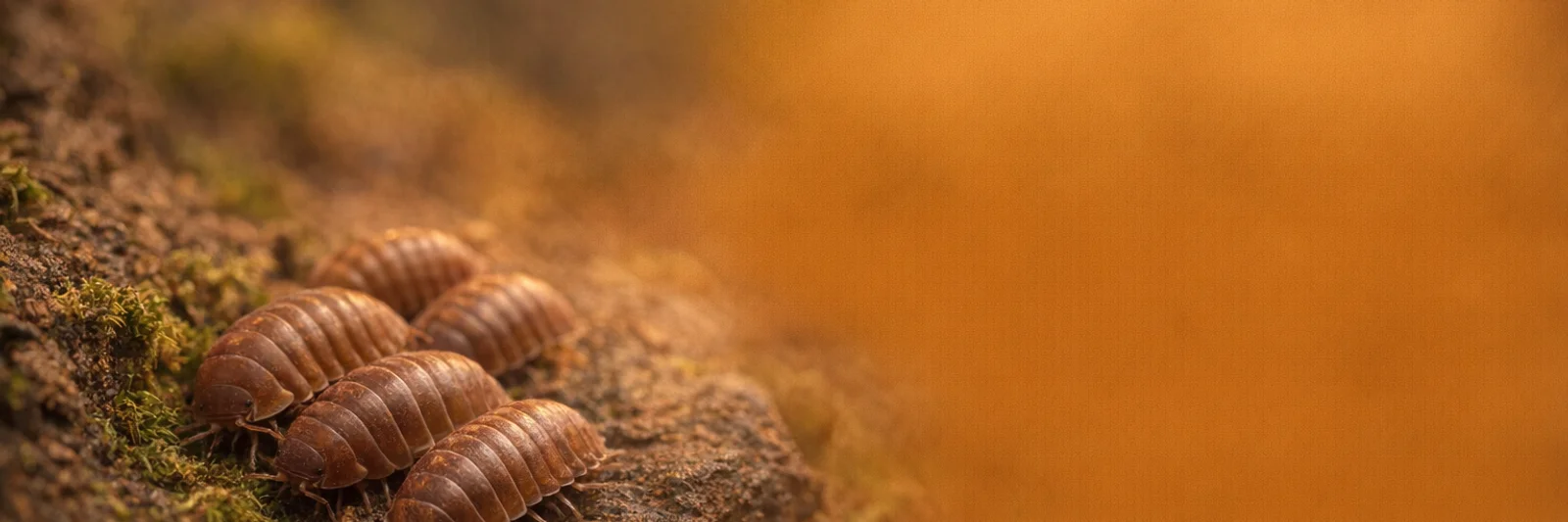
- Armadillidium are the true rollers, the pill bugs and roly-polies that curl into a tight ball when threatened.
- They tolerate drier setups than Cubaris and want good ventilation, with one humid corner and a distinctly drier side.
- A steady calcium source is important because rollers rely on strong exoskeletons for their shells and clean molts.
- Armadillidium come in beautiful, hardy morphs, from the everyday vulgare to striking klugii and zebra patterns.
- Most Armadillidium are hardy and beginner-friendly, though a few fancy morphs can be slower and a little pickier.
Who Armadillidium Are: The True Rollers
Armadillidium are the isopods most people picture when they think of a "roly-poly" or "pill bug." They are the true conglobating isopods, meaning they can roll into a tight, armored ball when disturbed, which protects them from drying out and from predators. That trick, and their tough, rounded shells, is exactly what makes them such a fun, recognizable display animal.
The genus is full of variety. Armadillidium vulgare is the common pill bug found under logs across much of the world and comes in wild-type gray plus color morphs. A. klugii "Montenegro" shows off bold spotted patterns, A. maculatum "Zebra" wears clean black-and-white stripes, and species like A. gestroi and various selectively bred morphs add even more color. They stay a manageable size and are hardy enough to make a great first roller.
- A. vulgare: the classic pill bug, hardy and available in many color morphs
- A. klugii "Montenegro": bold spotted patterning, a popular display morph
- A. maculatum "Zebra": crisp black-and-white striping
- A. gestroi and other morphs: bright colors and selectively bred looks
Setup: Drier and Well Ventilated
A ventilated plastic tub or a small terrarium works well, sized to the colony. Armadillidium live along the ground, so floor space matters far more than height. Where their care differs from tropical isopods is moisture: Armadillidium tolerate drier conditions and actively want good airflow, so aim for an enclosure that breathes rather than a sealed, swampy box.
Build a clear moisture gradient: keep one corner humid by misting it or burying a patch of damp sphagnum moss, and let the rest of the bin stay noticeably drier. The rollers will move to the humidity they want. Give the lid real ventilation, such as a screened window plus a few holes, so the enclosure never turns stagnant. A setup that is wet all over is one of the fastest ways to lose a roller colony.
- A ventilated tub or terrarium with plenty of floor space
- Strong cross-ventilation, since Armadillidium want more airflow than tropical species
- One humid corner and a distinctly drier side for a proper gradient
- A spot out of direct sun and away from heat vents so the bin cannot cook or fully dry out
Temperature
Armadillidium do well at ordinary room temperature, roughly 70 to 80 F, so most homes need no special heating. That range suits the common species and morphs comfortably, and they are tolerant of the normal ups and downs of a lived-in room.
Avoid extremes. Keep the enclosure out of direct sunlight and away from radiators, heat vents, or basking bulbs, all of which overheat and dry out a bin quickly. If a room runs cold, add gentle warmth to one side only and leave the rest cooler, so the isopods can shuttle to the temperature they prefer.
Substrate, Calcium, and Leaf Litter
Give them a good layer of moist coco fiber and topsoil to burrow into, enriched with crushed leaf litter and pieces of decaying hardwood. Keep the substrate on the drier side of a wrung-out sponge, damp in the humid corner but never waterlogged across the bin. A living substrate holds humidity and slowly feeds the colony as the organic matter breaks down.
Calcium matters a lot for rollers. Because Armadillidium carry hard, rounded shells and molt as they grow, a steady calcium source helps them build strong exoskeletons and molt cleanly. Leave crushed limestone, cuttlebone, or crushed eggshell in the bin at all times, and the colony will nibble it as needed. A calcium-poor culture often shows up as slow growth and soft, struggling molters.
Top the bin with pesticide-free leaf litter from safe hardwoods like oak, magnolia, or maple, plus chunks of rotting or well-aged hardwood. These are the heart of the diet, feeding the colony and giving them cover to hide and molt under. Keep both topped up as they graze through them.
- Moist coco fiber and topsoil, kept drier than a tropical isopod bin
- Crushed limestone or cuttlebone always available for strong shells and clean molts
- Leaf litter and rotting hardwood as the everyday staple food and cover
- Occasional fresh veg or a light pinch of protein, fed sparingly and removed if it molds
Feeding a Roller Colony
Leaf litter and decaying wood do most of the work, so a well-stocked Armadillidium bin rarely needs much hands-on feeding. Beyond that base, you can offer small amounts of fresh vegetable like carrot, squash, cucumber, or leafy greens, which the rollers readily take. Keep the calcium source in the bin at all times for healthy molting.
You can add a light pinch of protein, such as fish flake or a specialty isopod food, but go easy: too much moist protein or produce can trigger grain-mite blooms and foul the substrate. Offer small amounts, remove anything that molds, and let leaf litter remain the backbone of the diet. Mist the humid corner as it dries rather than following a rigid schedule.
Why Armadillidium Are Beginner-Friendly
Most Armadillidium are hardy, forgiving, and genuinely beginner-friendly. They tolerate the drier, better-ventilated setups that are easy to maintain, they breed readily once settled, and their tolerance for normal room conditions means a beginner has a wide margin for error. The rolling behavior and bold morphs also make them an engaging display animal, not just a cleanup crew.
One honest caveat: not every morph is equally easy. Some fancy Armadillidium, such as certain A. klugii lines, can be a little slower to establish and pickier than the bulletproof vulgare. If you are brand new to rollers, start with a common hardy species or morph to build confidence, then branch into the flashier lines once your husbandry is dialed in.
Common Mistakes to Avoid
When an Armadillidium colony struggles, the cause is almost always one of a few simple things. The most common is keeping the bin too wet: rollers want the drier side of moderate, and a soaked, stagnant enclosure invites mold, foul substrate, and dieback. If that is happening, dry out most of the bin, improve airflow, and rebuild a proper humid-corner-and-dry-side gradient.
The other two frequent slip-ups are no calcium, which leaves rollers with soft, failed molts, and poor ventilation, which lets a bin turn moldy and breeds grain mites. Add crushed limestone or cuttlebone, open up the airflow, and cut back moist protein and produce, and most colonies turn around within a couple of weeks.
- Too wet: rollers want it drier, so dry most of the bin and rebuild the gradient
- No calcium: add crushed limestone, cuttlebone, or eggshell for strong shells and clean molts
- Poor ventilation: increase airflow to stop mold and grain mites before they start
- Too much moist protein or produce: feed sparingly and remove anything that molds
Frequently Asked Questions
How do you care for Armadillidium isopods?
Keep Armadillidium in a ventilated tub or terrarium with a moist coco-fiber and soil substrate, and set up one humid corner with a distinctly drier rest of the bin, since these rollers tolerate drier conditions than tropical isopods and want good airflow. Hold them at roughly 70 to 80 F, out of direct heat, and feed leaf litter and rotting hardwood with a steady calcium source like crushed limestone or cuttlebone for their shells. Add occasional veg or a light pinch of protein, mist the humid corner as it dries, and keep ventilation strong to prevent mold and mites.
Do Armadillidium isopods roll into a ball?
Yes, Armadillidium are the true rollers, the pill bugs and roly-polies that curl into a tight, armored ball when disturbed. This behavior, called conglobation, protects them from drying out and from predators, and it is exactly what separates them from isopods that only flatten or run. Species like vulgare, klugii, and maculatum all roll, which is a big part of their appeal as a display animal.
What humidity do Armadillidium need?
Armadillidium need a moisture gradient rather than a uniformly damp enclosure, and they tolerate drier conditions than tropical isopods. Keep one corner reliably humid, with substrate that feels like a wrung-out sponge, and let the rest of the bin stay noticeably drier with good airflow. Mist the humid corner as it dries out and rely on the rollers to move between the wet and dry zones to find what they need.
Are Armadillidium good for beginners?
Yes, most Armadillidium are hardy and beginner-friendly. They tolerate drier, easy-to-maintain setups, handle normal room conditions well, and breed readily once settled, which gives a new keeper a wide margin for error. Start with a common hardy species or morph like A. vulgare to build confidence, since a few fancy morphs such as certain A. klugii lines can be a bit slower to establish and pickier.
Do Armadillidium isopods need calcium?
Yes, Armadillidium need a steady calcium source, and it matters especially for rollers because they rely on strong, rounded exoskeletons for their shells and clean molts. Leave crushed limestone, cuttlebone, or crushed eggshell in the bin at all times and the colony will use it as needed. A calcium-poor culture often shows slow growth and soft, failed molts, which usually clears up once a good source is added.
What do Armadillidium eat?
Armadillidium eat leaf litter and rotting hardwood as the main part of their diet, grazing on the decaying plant matter and the microbes and fungi growing on it. You can supplement with small amounts of fresh vegetable, such as carrot, squash, cucumber, or leafy greens, and a light pinch of protein like fish flake fed sparingly. Keep a calcium source such as crushed limestone or cuttlebone in the bin at all times for healthy molting.
Keep comparing: Isopod Care Guide· Cubaris Isopod Care· Porcellio Isopod Care· Best Isopods for Beginners
