You speed up an isopod colony with four real levers: warmth in the 75 to 80 F range, steady humidity with a reliably moist zone, a little supplemental protein and calcium, and simply leaving the colony undisturbed once it is set up. Pick a naturally fast-breeding species like Dwarf White (Trichorhina tomentosa), which is one of the fastest-multiplying beginner species, and dial in those four levers, and you will see a visible boom sooner than a colony left to room temperature and patience alone. None of this is a shortcut around time itself, a new culture still needs real weeks to build toward critical mass, but each lever removes friction that would otherwise slow it down. Get the setup right first with our isopod care guide, then layer these four on top.
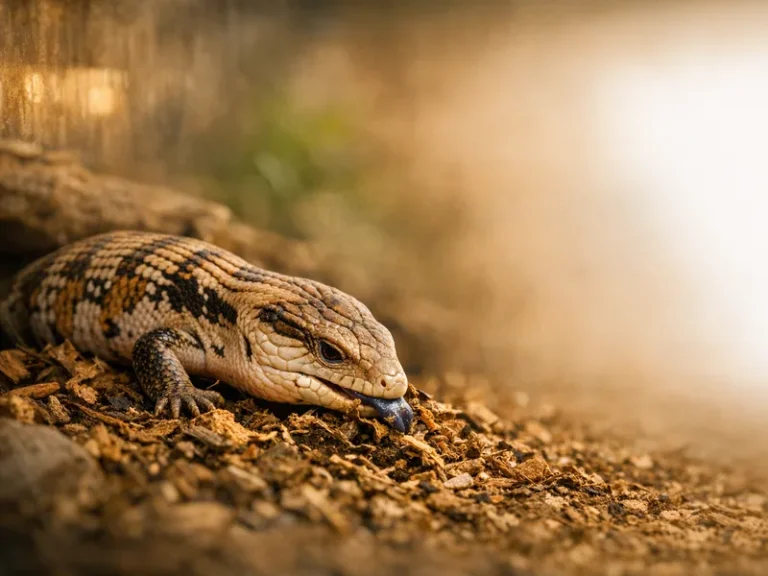
Push toward the warm end of their range to speed things up
Can roughly double its numbers in about a month
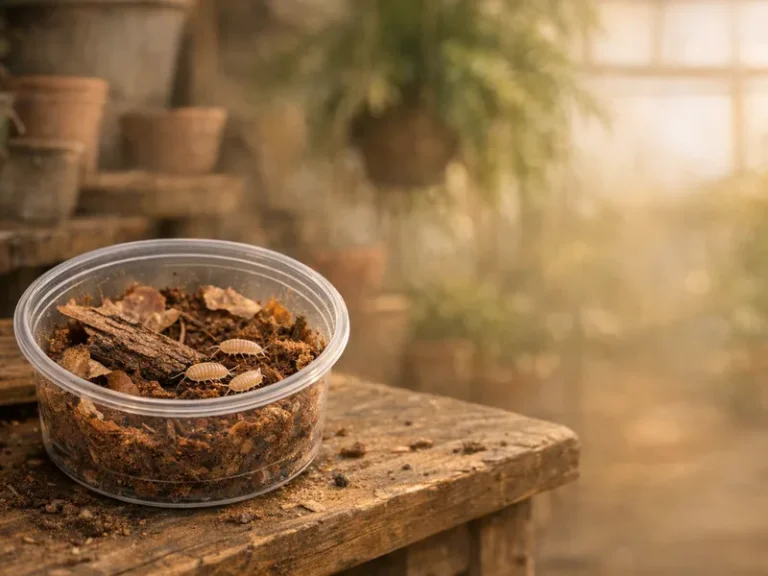
For a fast species with all four levers dialed in
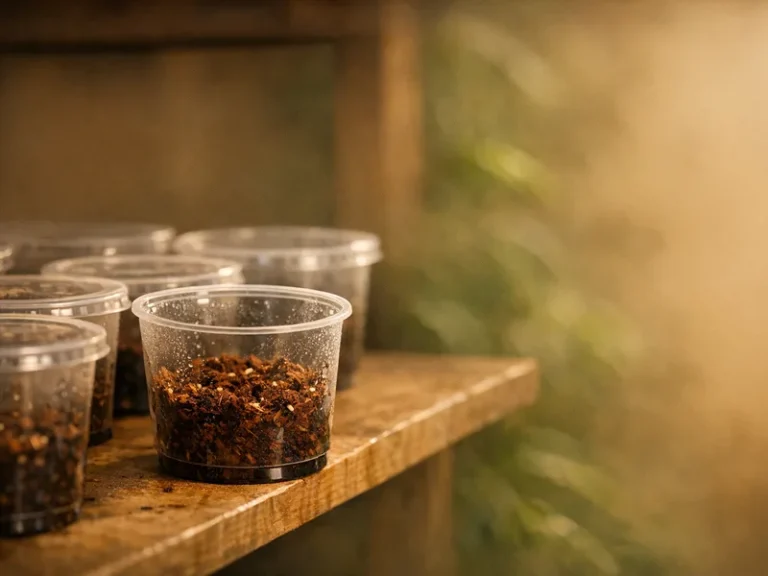
The four real levers, at a glance
Speeding up an isopod colony comes down to four things: warmth, moisture, feeding for reproduction rather than just survival, and leaving the colony alone. None of them work miracles on their own, but they compound, and you do not need to nail all four perfectly to see a difference. Fixing even one bottleneck usually shows up as a visibly livelier bin within a few weeks.
This guide assumes your basic setup is already sound. If you have not nailed down moisture, temperature, and feeding basics yet, start with our isopod care guide, then come back and layer these four levers on top.
Lever one: warmth, pushed a little further than 'fine'
Most isopods reproduce steadily in the upper 60s to mid 70s F, which is why room temperature works for most beginner setups with no added heat. Push toward the warmer end of that range, into the 75 to 80 F zone, for a species that tolerates it, and breeding speeds up further, since warmth drives faster metabolism and more frequent molting, and molting is what allows growth and reproduction to happen at all.
The honest trade-off: a warmer bin dries out faster, so if you nudge the temperature up specifically to chase faster breeding, check moisture more often than you otherwise would. This is the same trade-off we flag in our guide to a stalled colony, worth reading if warmth alone does not move the needle.
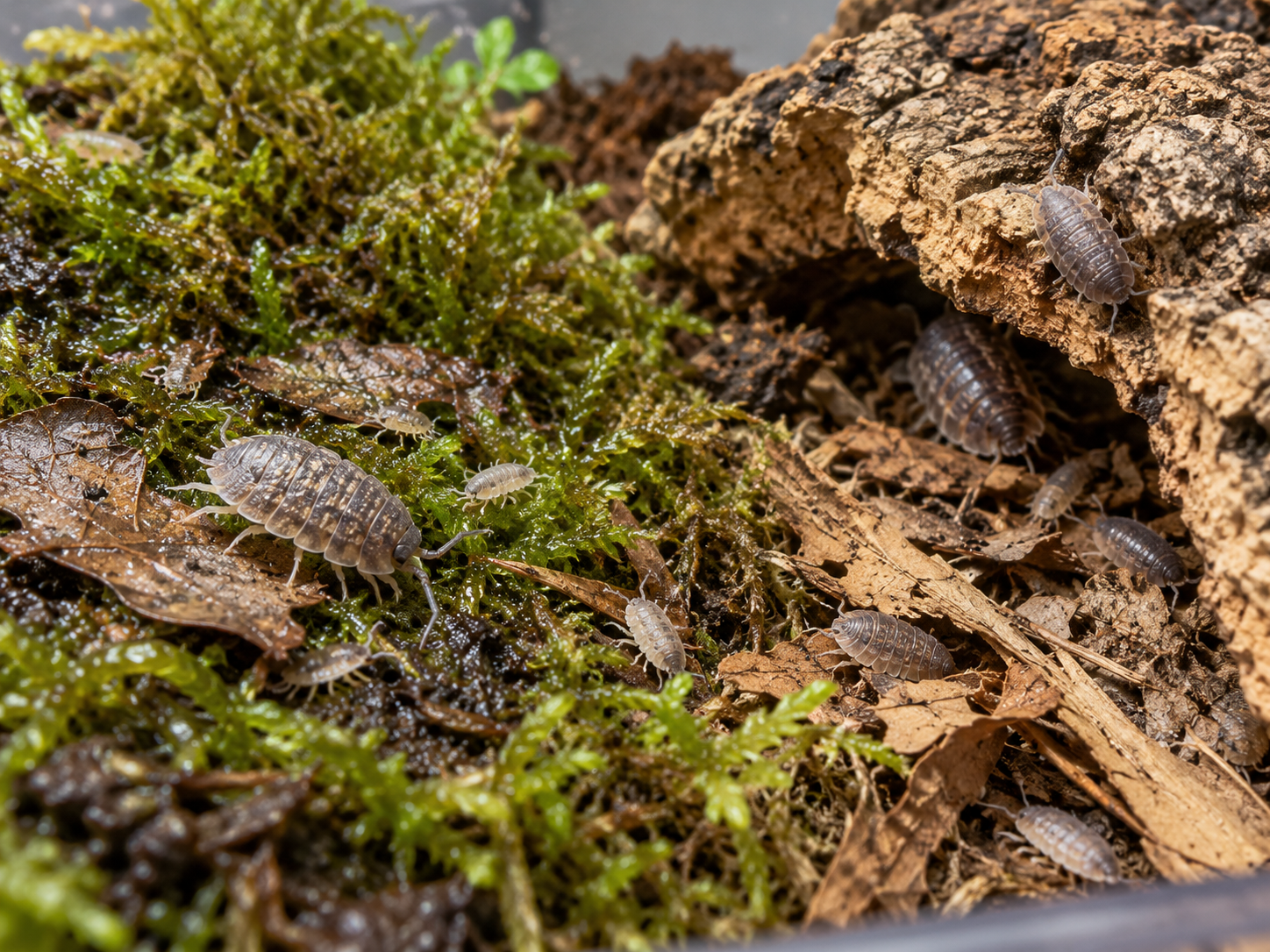
Lever two: a steady moist zone, not a soaked bin
Adult isopods tolerate a dry spell better than you would think, but the newborns, called mancae, are tiny and dry out fast. A bin that looks damp enough for the adults can still be too dry for the next generation to survive, which quietly caps how fast the population can grow even when the adults look perfectly healthy.
Keep one reliably damp zone at all times rather than letting the whole bin swing dry, mist the substrate rather than the animals, and aim for damp to the touch, never dripping. Moisture-holding substrate and leaf litter make that zone much easier to maintain without babysitting it daily.
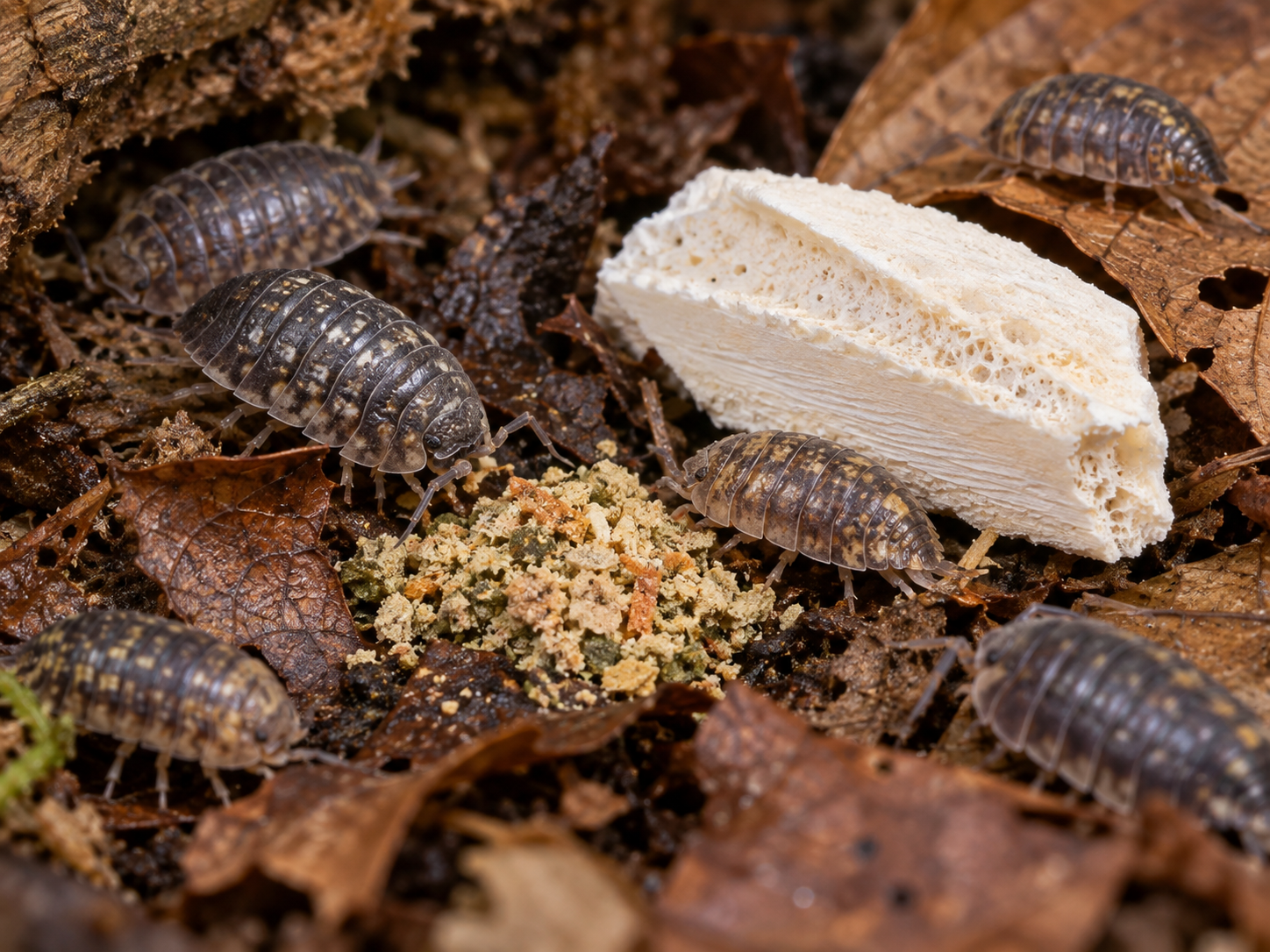
Lever three: feed for reproduction, not just survival
Leaf litter keeps a colony alive, but it is light on two things reproduction actually needs: protein, which fuels egg production, and calcium, which fuels the molts that let isopods grow and breed in the first place. A bin with plenty of litter but no protein or calcium source can sit at the same population for months without any real forward progress.
Offer a small pinch of protein, no more than about a pencil eraser's worth per week for a small colony, plus a free-choice calcium source like cuttlebone. Our isopod feed and calcium cover both. Do not overdo the protein, since too much draws mites and fungus gnats, which will slow a colony down far more than it speeds one up.
Lever four: leave it alone
This is the counterintuitive one: the more you dig through a bin checking for progress, the slower that progress tends to be. Constant rummaging stresses isopods and interrupts breeding, and pulling out isopods too early or too heavily removes breeding stock faster than a young colony can replace it.
Once a colony is genuinely booming, only skim the surplus you can see it clearly replacing, rather than harvesting hard. If you want a bigger harvest sooner, the answer is to start a second bin, not strip the first one down, and our guide on what to do with a booming colony covers that stage once you get there.
Pick a fast species, and set a realistic timeline
Species choice matters as much as any of the four levers above. Dwarf White is the fastest common beginner species, one of the fastest-multiplying beginner species, which makes it the best pick if speed is your main goal. Powder Orange and Powder Blue also breed quickly and add some drought tolerance if your setup tends to run on the drier side.
Even with warmth, moisture, feeding, and patience all dialed in, expect a genuine boom in roughly 2 to 3 months for a fast species, and longer for a slower one, not overnight. Start with a fast species from our beginner isopods page if getting to a visible boom quickly is the priority.
Fuel a Faster Boom
The feed, calcium, and setup gear behind the four levers above, ready to add in one tap.
Frequently Asked Questions
Written by the TC INSECTS breeding team · Porter, Texas · Live Arrival Guarantee on every order
Have a care question? Ask our community.
Join Reptile Keepers USA, our free Facebook group for reptile, amphibian and invert keepers. Share your setups, get care help and swap feeder tips.
Join the free group