Can Superworms Chew Through a Plastic Container? The Honest Answer
No, superworms cannot chew through a rigid plastic tub or a glass container, and a smooth-walled bin with a secure lid is effectively escape-proof from their mouths alone. The viral headlines about superworms eating plastic are real, but they describe a much narrower finding: superworm larvae can mechanically shred expanded polystyrene foam, and their gut bacteria can partly digest it over weeks, which is not the same as chewing a hole through your average deli cup or storage tote. Most real escapes trace back to a warped lid, a gap at the rim, or a soft material like cardboard left in reach, not the walls of the container itself. Here is what actually happens, and how to keep it from happening to you.
A smooth, secure container fully contains them
Gut bacteria break it down over weeks; a lab finding, not an escape risk
Not chewed walls; check rim and lid fit first

Can Superworms Really Chew Through Plastic?
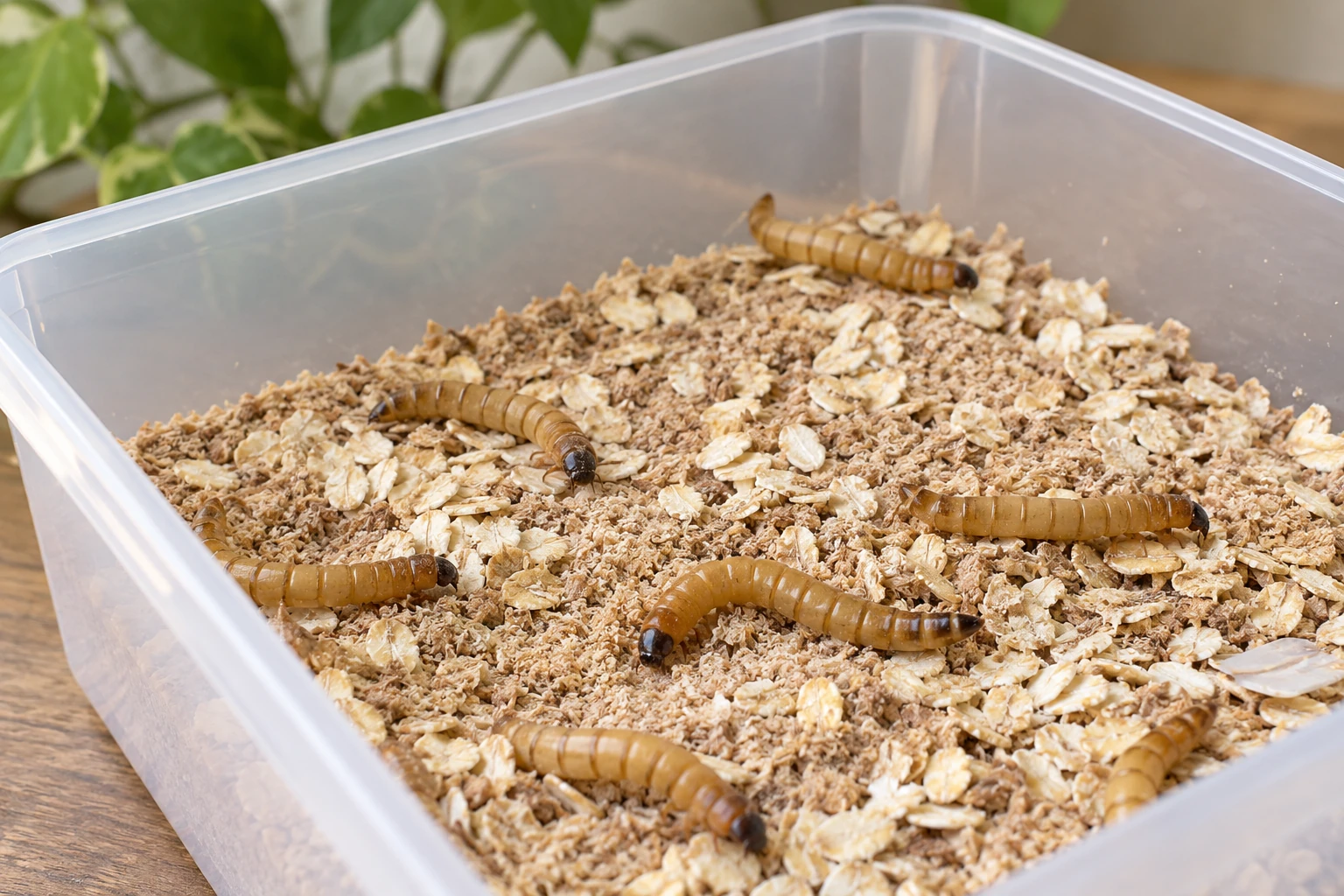
No. A superworm's mouthparts are built to tear soft plant matter and bran, not to cut through a rigid, smooth-walled plastic tub or a glass container, and there is no credible report of one doing it. Treat any hard-sided, well-fitted storage container as effectively escape-proof from chewing alone. What they can damage is soft or already-weakened material: a thin film lid, a cardboard egg flat, a paper towel, or foam packaging left within reach.
This question usually shows up alongside two very different worries, the life-cycle question of why a worm curls up and stops moving, and the day-to-day storage question this guide answers. If you came here worried about temperature, humidity, or feeding, our superworm care guide covers that ground in full, including why you should never refrigerate them. Here we are answering one narrow question: what a superworm can and cannot get through.
The Real Science Behind the Superworms-Eat-Plastic Headlines
The viral finding is real, and it specifically involves Zophobas morio larvae and expanded polystyrene foam, the lightweight white foam used in packaging and coolers, not ordinary rigid plastic. Researchers found that superworms will mechanically shred foam with their mandibles and that bacteria living in their gut, including species in the genera Sphingobacterium and Pseudomonas, can partly break down the polystyrene as it passes through. In one published trial, superworms fed only foam lost roughly a third of the foam's mass over about four weeks.
That is a genuinely useful discovery for plastic-waste research, and it is also a slow, deliberate feeding process, not a fast escape trick. A superworm eating foam is choosing it as food over days and weeks in a lab setting built around that diet, a completely different situation from a worm trying to get out of a bran-filled storage tub overnight. Rigid plastics like the polypropylene or PET used in most deli cups and storage tubs are a different material entirely and are not part of that finding.
What Actually Lets Superworms Escape
When keepers do find escapees, the cause is almost always mechanical, not a chewed hole. A lid that does not seat flush leaves a gap superworms can push through or climb out of, since they are capable climbers on rough or textured surfaces. A warped tub rim from heat or age does the same thing. Cardboard egg flats and paper products left in a bin are genuinely easy for them to chew and fray, which is a real vulnerability, just not the plastic walls themselves.
Ventilation holes matter too. A large, uncovered mesh window is fine, since superworms rarely climb straight up smooth vertical plastic for long, but a cluster of oversized drilled holes with no mesh or fabric behind them can be wide enough for a large worm to squeeze through headfirst. Check any lid you did not buy specifically for insect culture for this before trusting it overnight.
Containers That Keep Superworms Contained
A smooth-sided plastic tub or a glass container with a secure, vented lid is all a storage bin needs. Add an inch or two of bran or a similar substrate as food and bedding, the same setup our superworm care guide walks through in detail, and skip the cardboard inside the bin specifically because superworms will chew it. A produce slice for moisture is fine; just remove it before it softens or molds.
Group housing in one reasonably shallow, roomy container is not just about pupation control, it is also the easier setup to keep escape-proof, since one well-fitted lid is simpler to check than several small cups. TC's superworms ship as group-housed larvae ready to go straight into a bin set up this way.
The Trade-off: Ventilation vs. a Fully Sealed Lid
A completely airtight, sealed container sounds like the safest option, and it is the wrong choice. Superworms and their bran substrate need airflow, and a sealed tub traps humidity, which molds the bran and kills worms faster than any chewing risk ever would, the same reason you should never refrigerate them either. The honest trade-off is that any container secure enough to stop a determined climber still needs real ventilation, meaning a vented or mesh lid, not a solid one snapped down tight.
When not to worry about this at all: a smooth, hard-sided tub with a lid that seats flush and has proper mesh ventilation has no meaningful chewing or escape risk from the worms themselves. Save your attention for the lid fit and the ventilation, not the wall material, and this problem is solved completely. If worms are dying rather than escaping, that is a different question, covered in our feeder die-off guide.
What's Really Letting Them Out
The Superworm Containment Kit
A rigid cup, a vented lid, and bran, everything a superworm bin needs to stay put and stay dry.
Frequently Asked Questions
Written by the TC INSECTS breeding team · Porter, Texas · Live Arrival Guarantee on every order
Have a care question? Ask our community.
Join Reptile Keepers USA, our free Facebook group for reptile, amphibian and invert keepers. Share your setups, get care help and swap feeder tips.
Join the free group