Buffalo Beetle Colony Care: Culturing Alphitobius diaperinus
Buffalo beetles culture best in a warm, dry bin of wheat bran between about 75 and 90°F, the same small beetles that ship free on request with many dubia colony starters as a bin cleanup crew. Most keepers never build them a home of their own, but a standalone culture is easy: a vented container, a few inches of bran, and warmth is nearly all it takes. This guide covers what they do in a roach bin versus what they do as their own soft-bodied feeder colony, the full life cycle from egg to breeding adult, and the honest downsides, since this is not a beetle you want loose in the house.
Also called lesser mealworm or litter beetle
Warm and dry; slows down at normal room temperature
34 to 38 days at the warm end of 75 to 90°F; slower if cooler
What Is a Buffalo Beetle, and What Job Does It Do?
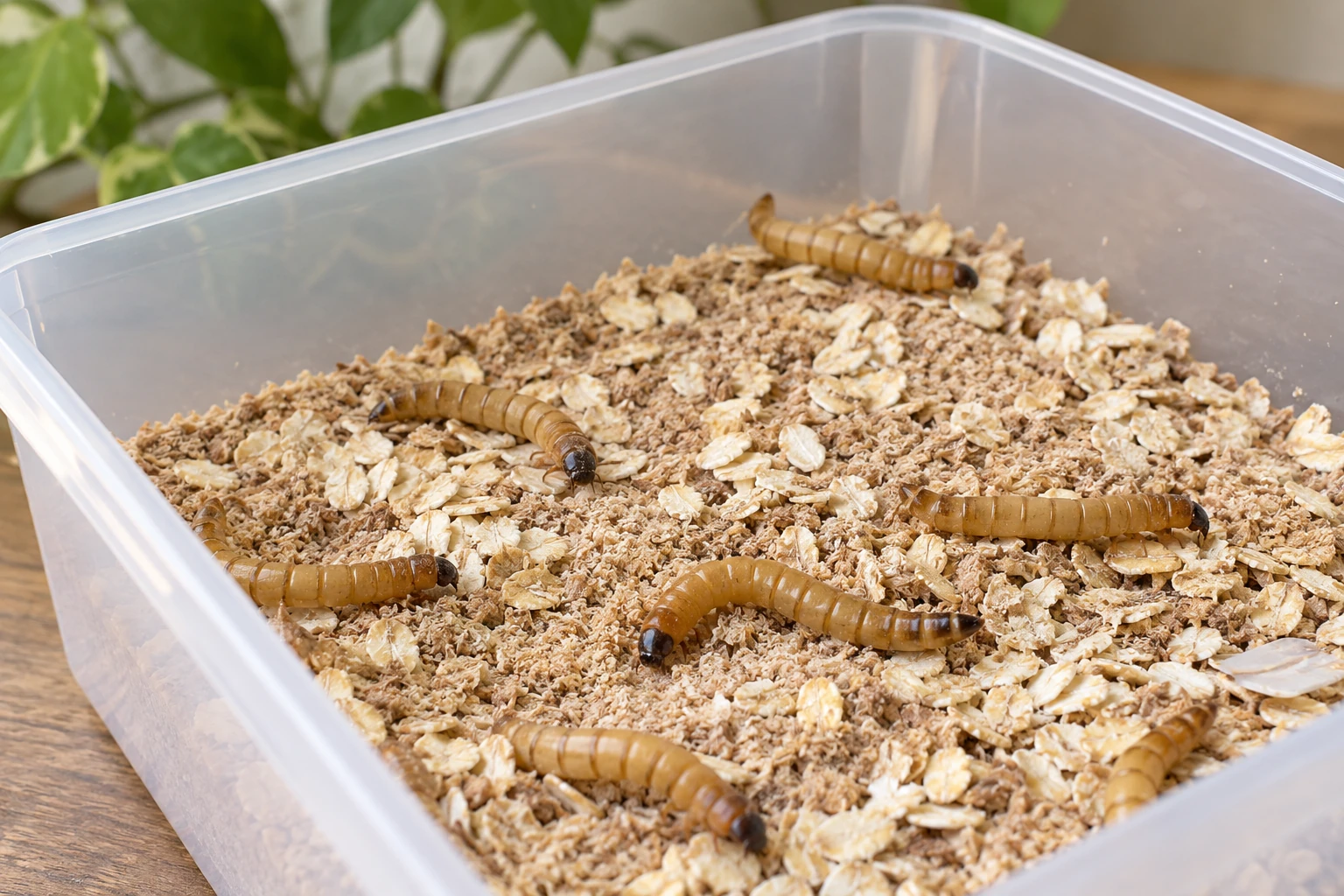
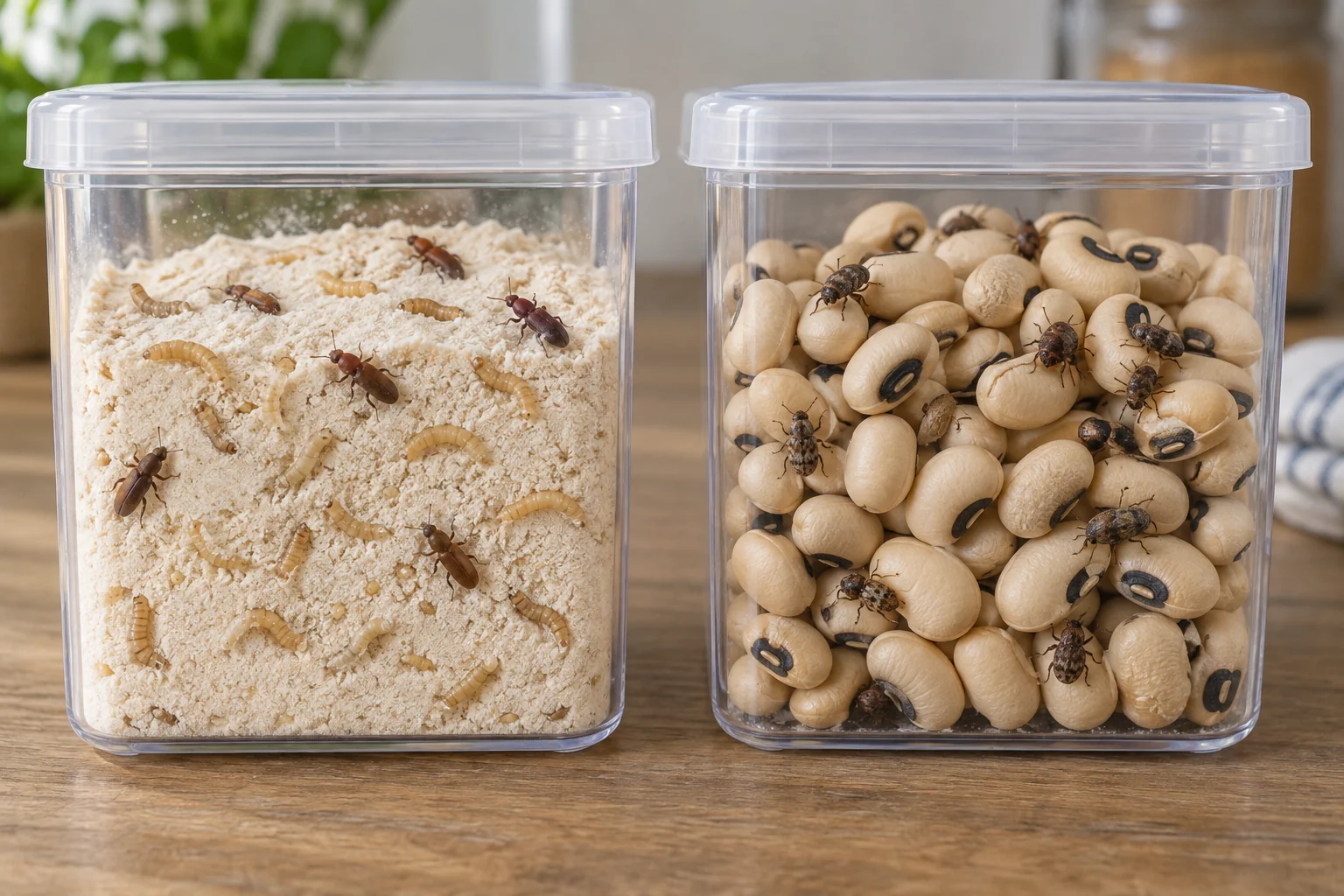
Buffalo beetles are Alphitobius diaperinus, also called the lesser mealworm or litter beetle. TC includes them free on request with many dubia colony starters as a built-in cleanup crew, so most keepers meet them by accident: a handful of small dark beetles and pale larvae working the bottom of a roach bin, quietly eating shed skins and dead insects. Fewer keepers realize the same culture can be grown on purpose, in its own container, as a small soft-bodied feeder for compact insectivores. The larvae are sold as buffalo worms. One culture does two jobs, bin janitor first and feeder second.
Do not confuse buffalo beetles with dermestid beetles, the meat-eating skull cleaners some keepers also raise. Dermestids (Dermestes maculatus) live on dried meat and hide in a dark, warm bin to strip bone, and they need a completely different diet and setup. Buffalo beetles eat dry organic debris and grain-based feed, never meat, and they thrive in the same warm, dry conditions as a roach colony. If a bin smells like death, that is a dermestid project. If it smells like nothing and hosts a few small quick beetles, that is buffalo beetles.
Buffalo worms are not mealworms either, even though lesser mealworm is this species' other common name. Mealworms are the larvae of Tenebrio molitor, a different beetle that grows considerably larger and is raised as a dedicated feeder crop, while buffalo worms stay smaller and are a byproduct-turned-feeder from a cleanup culture. If you want a bran-and-grain culture built to be a primary feeder rather than a bin cleaner, see our guide to starting a mealworm colony instead.
Setting Up a Standalone Buffalo Beetle Culture
A culture container needs three things: dryness, warmth, and airflow. Start with a smooth-walled plastic tub or a spare deli cup, and add two to three inches of dry wheat bran or a similar grain-based medium as bedding, food, and cover all at once. A few flat pieces of cardboard or an egg flat give the beetles more surface area to work and hide in. TC's feeder and cleanup insect cultures are the easiest starting point if you want to build a culture from scratch rather than splitting off your dubia bin's free crew. Keep the whole setup on the dry side, since standing moisture is the fastest way to invite mold instead of a working culture.
Temperature drives everything. Buffalo beetles are most active and breed fastest between about 75 and 90°F, the same range as a healthy dubia colony, so a culture kept on a warm shelf or near a roach rack needs no separate heat source. At normal room temperature they slow down but keep going, they just take longer to build numbers. Cover the container with a vented or fine mesh lid rather than a solid one. Good airflow keeps the bran dry, and it matters for containment too, since adults move fast and climb, and TC's own culturing notes are blunt about keeping this species contained, because it is treated as a pest in uncontrolled settings like stored grain.
The Buffalo Beetle Life Cycle, Stage by Stage
A buffalo beetle culture runs on four stages, egg, larva, pupa, and adult, with every stage usually present at once in an established bin. That overlap is what makes it self-sustaining rather than something you restart by hand. Here is roughly how long each stage takes in a culture kept toward the warm end of the beetle's preferred range, based on published entomology sources for this species.
Egg
Females lay 200 to 400 eggs in cracks and crevices near food and bran. In a warm culture the eggs hatch within about a week, and you will rarely see them since they are tucked into the bedding.
Larva (Buffalo Worm)
This is the stage sold as buffalo worms and the stage that does the cleanup work. Larvae molt 7 to 11 times over roughly 3 to 4 weeks in a warm culture, growing from nearly invisible to about 3/8 inch long, eating shed skins, dead insects, and dry debris the whole way.
Pupa
Mature larvae pupate for about a week. A pupa cannot move away from danger or feed itself, so it needs to be left alone in the bran rather than dug up or disturbed.
Adult Beetle
Adults are dark reddish brown to black and move quickly through the bedding. A newly emerged female starts laying her own eggs in about 11 days. Published research puts egg-to-adult development at roughly 5 weeks (34 to 38 days) at this species' optimal temperature near the top of TC's recommended 75 to 90°F range, stretching out to months in a culture kept much cooler, since this beetle's development speed is unusually sensitive to temperature.
Feeding the Culture and Harvesting Buffalo Worms
In a shared dubia or cricket bin, buffalo beetles need no separate feeding at all. They live on shed exoskeletons, dead insects, and leftover roach chow, which is exactly why they keep a busy bin from smelling or molding between sifts. A standalone culture with no roaches to clean up after needs a little dry feed of its own: the same grain-based chow you would give dubia works, offered in a light layer a few times a week rather than piled on, since old wet food is the one thing that turns this dry culture into a mold problem.
To harvest, tip a portion of the bran through a coarse kitchen sieve. Larvae and beetles stay on top, fine bran and frass fall through, and you can pick out however many buffalo worms you need for the day. Size them the same way you size any feeder: nothing wider than the space between your animal's eyes. They are a small, soft-bodied snack for compact insectivores, not a substantial meal for anything large, and they work best as a rotation item rather than an everyday staple.
The Honest Downsides of Keeping Buffalo Beetles
This is not a low-stakes culture to leave uncovered. Outside a controlled bin, Alphitobius diaperinus is a recognized pest of stored grain and poultry litter, which is exactly why a vented lid matters more than it sounds like it should. Keep the culture in a smooth-walled, covered container, and never release beetles, larvae, or spent bran outdoors, the same rule that applies to every live animal TC ships.
Bigger is not automatically better here. A large starting colony is built for a busy or multi-bin operation, and dropped into one small, already-clean bin it can run short of the waste it eats, which means feeding it by hand to keep it going. A single small bin is better served by a small starter culture left to grow at its own pace. For a wider view of which feeders are worth breeding at home at all, see our breeding roundup.
The Buffalo Beetle Starter Kit
A dry bran home for the free cleanup crew, sized to grow into its own feeder culture.
Frequently Asked Questions
Written by the TC INSECTS breeding team · Porter, Texas · Live Arrival Guarantee on every order
Have a care question? Ask our community.
Join Reptile Keepers USA, our free Facebook group for reptile, amphibian and invert keepers. Share your setups, get care help and swap feeder tips.
Join the free group