
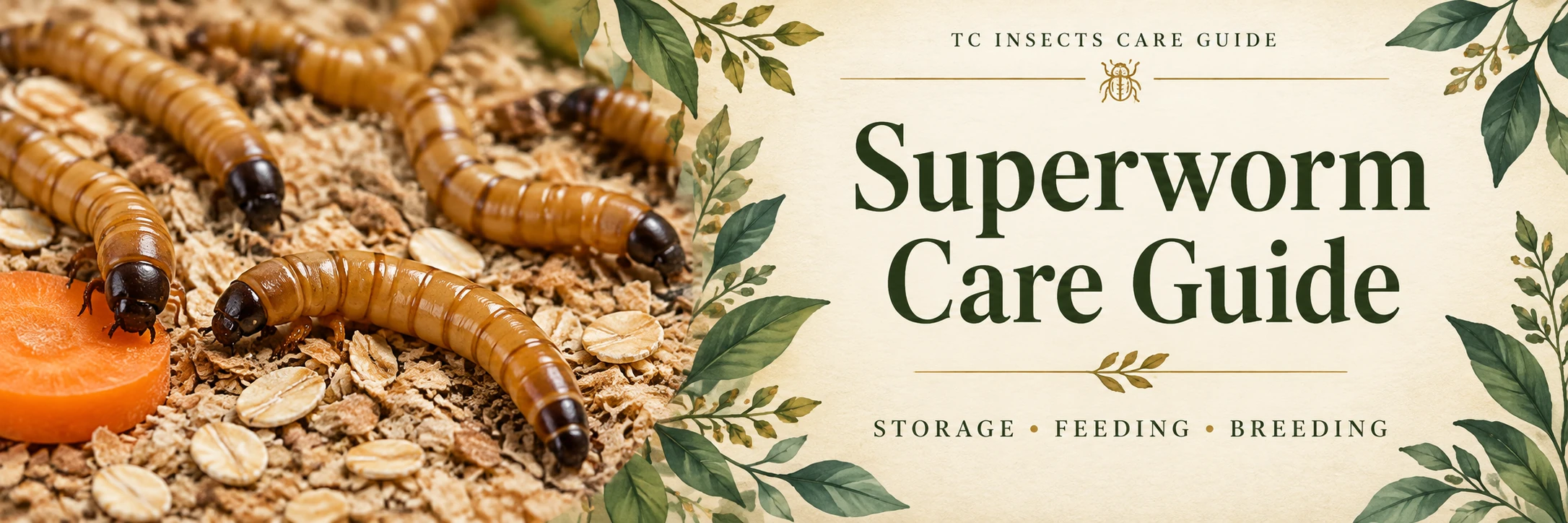
How to Care for Superworms
Superworms (Zophobas morio) are rewarding staple feeders with one critical rule: never refrigerate them. Kept correctly at room temperature, a healthy tub can remain active for months.
Never refrigerate superworms
The most common way keepers lose superworms is by storing them like mealworms. Mealworms can enter a cold dormant state; superworms cannot. Temperatures below roughly 60°F stress them, and refrigerator temperatures can kill a tub within a day or two.
Keep them at a stable 70–80°F, away from air-conditioning vents, cold garages, unheated porches, direct sunlight, and other temperature swings.
Roomy, dry, and well ventilated
Choose the tub
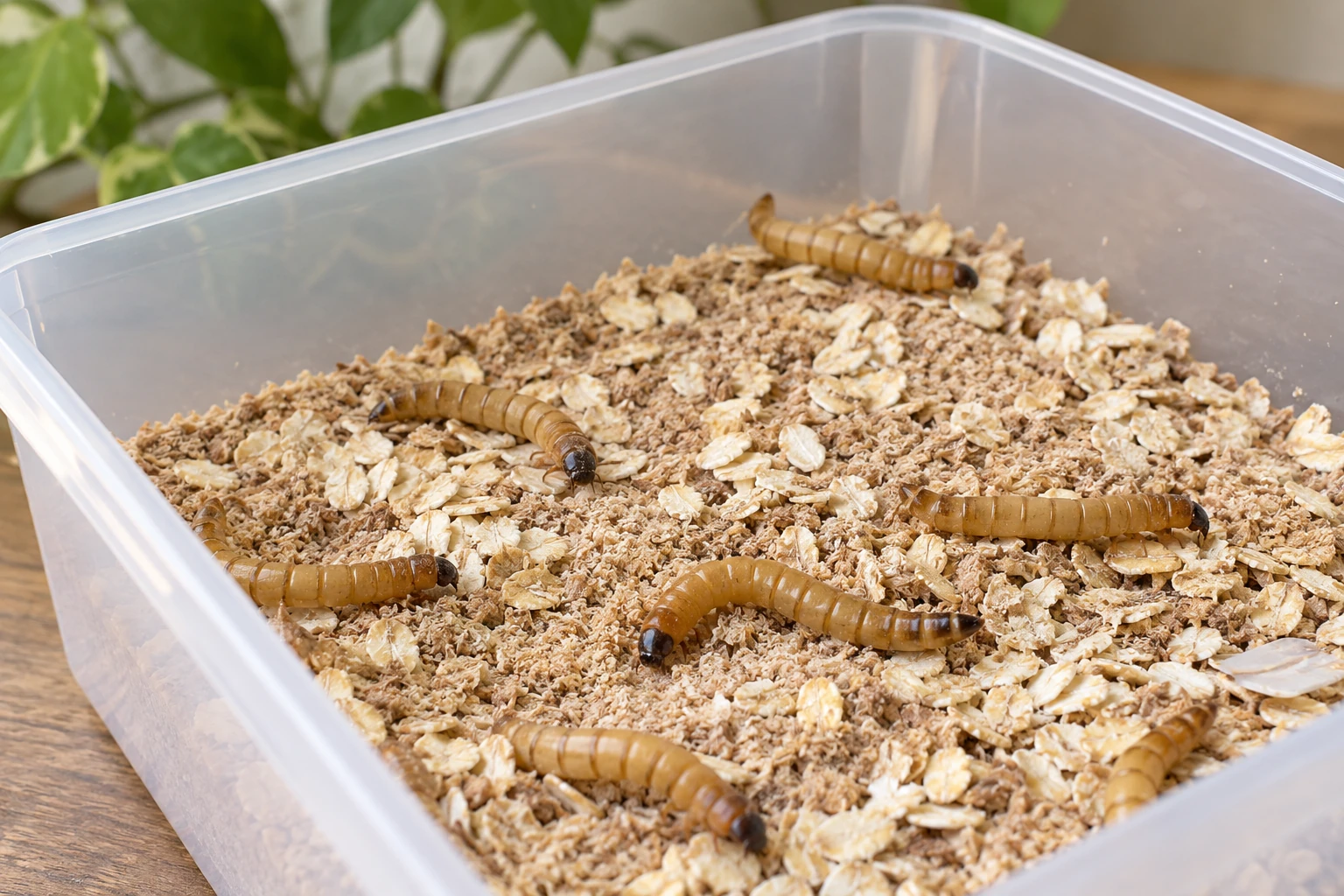
Use a smooth-sided plastic tub with a ventilated lid so the worms cannot climb out and air can circulate.
Add bedding
Provide 1–2 inches of wheat bran, rolled oats, or another wheat-based feed. It doubles as food.
Avoid crowding
A shallow layer and adequate floor space prevent heat and moisture buildup that can cause die-off.
Use produce—not a water dish
Superworms obtain water from fresh produce. Standing water can drown them and foul the bedding.
- Offer small slices of carrot, potato, sweet potato, or firm squash.
- One or two slices every couple of days is enough for a typical tub.
- Replace produce before it softens, spoils, or grows mold.
- Dry wheat bran or oat bedding usually supplies their staple food.
- A balanced grain-based feed supports growth and improves feeder nutrition.

Gut-load, dust, and rotate
Turning superworms into beetles
Isolate
Place large worms individually in small containers or egg-carton cells with a little bedding.
Let them pupate
Leave them undisturbed in the dark. Each worm curls up and pupates in roughly one to two weeks.
Start the colony
Darkling beetles emerge, breed, and lay eggs in fresh bedding to begin the next generation.
Superworm Care FAQ
Can you refrigerate superworms?
No. They do not go dormant like mealworms, and refrigerator temperatures usually kill them within a day or two. Keep them at 70–80°F.
How long do superworms live in storage?
With room temperature, dry bedding, and occasional fresh produce, a tub can remain healthy and active for several months before the worms mature.
What do you feed superworms?
Use dry wheat bran or oats as bedding and food, plus small slices of carrot, potato, sweet potato, or squash for moisture.
Why are my superworms dying?
Common causes are cold temperatures, excess moisture, spoiled produce, overheating, and poor ventilation. Keep them dry, ventilated, and between 70 and 80°F.
Are superworms a good staple feeder?
They are protein-rich but higher in fat, so they are best as part of a varied diet. Gut-load and dust them with calcium before feeding.
Do superworms turn into beetles?
Yes. When isolated individually, they pupate over one to two weeks and emerge as darkling beetles that can breed the next generation.
Shop healthy live superworms

Choose the quantity that fits your animals, then use this guide to keep your feeders active and nutritious.
Written by the TC INSECTS breeding team · Porter, Texas · Live Arrival Guarantee on every order
