Cycling a Bioactive Tank
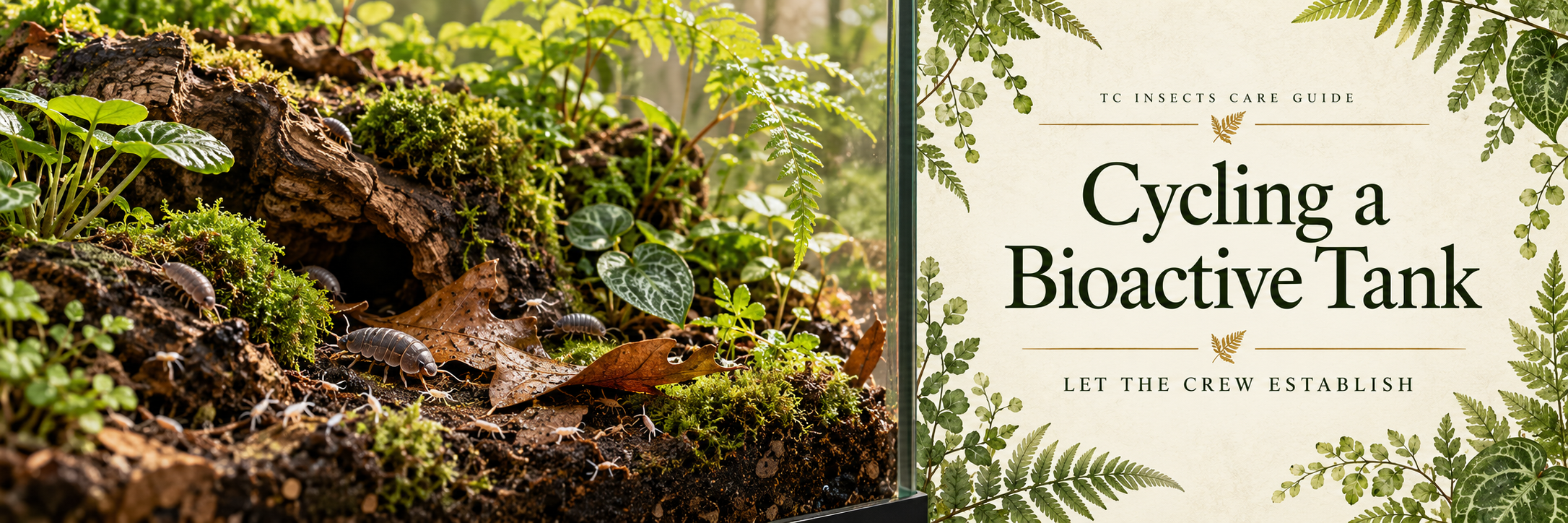
A bioactive terrarium does need time before an animal moves in, but it is not the ammonia-to-nitrite-to-nitrate cycle an aquarium runs, since a drained, well-ventilated soil system never traps waste in a closed water column the way a fish tank filter does. There is no water to test and no bottled bacteria to add. What you are actually waiting on is your cleanup crew, isopods, springtails, and the fungi already in the substrate, building up a working population, plus your plants finishing rooting in. Our own detailed timeline puts the honest window at 4 to 6 weeks of seeding time before an animal goes in, and it covers the exact signs that tell you a setup is actually ready rather than just old enough.
An establishment period, not an aquarium nitrogen cycle
Isopods, springtails and fungi settling in, not a bacterial biofilter
No ammonia or nitrite test kit applies to a drained soil system
What 'Cycling' Actually Means in a Fish Tank
In an aquarium, cycling means growing a colony of bacteria in the filter that converts toxic ammonia from fish waste into nitrite, then into far less harmful nitrate. That bacteria takes weeks to establish, and until it does, ammonia and nitrite can build up in the closed water column and poison the fish living in it. Keepers test the water with a kit during that window, watch the numbers rise and fall in that order, and treat a tank as cycled once ammonia and nitrite both read zero. It is a real chemical process with a real test you can run.
Why a Terrarium Doesn't Work the Same Way
A bioactive terrarium is a drained, open-to-air soil system, not a sealed column of water, and that difference is the whole answer. Waste does not sit trapped where it can poison anything, it lands on substrate that is already full of oxygen, decomposer bacteria, and fungi working on it the moment it lands, with isopods and springtails breaking down the larger pieces on top of that. There is no equivalent of a fish tank's ammonia spike building up with nowhere to go, so there is nothing to test for and nothing that has to detoxify before the system is safe. If you are still deciding whether bioactive is even the right call for your animal, our guide on what a bioactive terrarium actually is covers that decision before you build anything.

Three Aquarium Habits That Don't Belong in a Terrarium
It is an easy mistake to carry fishkeeping habits over, since the word cycling invites the comparison. A few of the most common ones are worth naming directly so you can skip them with confidence.
Adding bottled bacteria
Aquarium keepers sometimes add bottled nitrifying bacteria to a new tank to speed up a fishless cycle. There is no terrarium equivalent to buy or add, since the organisms actually doing the work, your isopods, springtails, and the fungi and bacteria already living in a proper substrate, are supplied by seeding the cleanup crew itself, not a bottle.
Testing for ammonia and nitrite
An aquarium test kit measures dissolved ammonia and nitrite in water, and neither reading means anything in a drained soil system with no water column to sample. Skip the test strips entirely, there is nothing here for them to measure.
Panicking at the first mold bloom
A thin white mold bloom in the first week or two is a normal part of a terrarium settling in, not a sign anything has gone wrong the way an ammonia spike would be in a fish tank. It is exactly what a young springtail population is there to graze down on its own, and if you want to confirm what you are actually looking at, our terrarium ID guide sorts mold, mites, and springtail eggs apart in seconds.
What's Actually Happening While You Wait
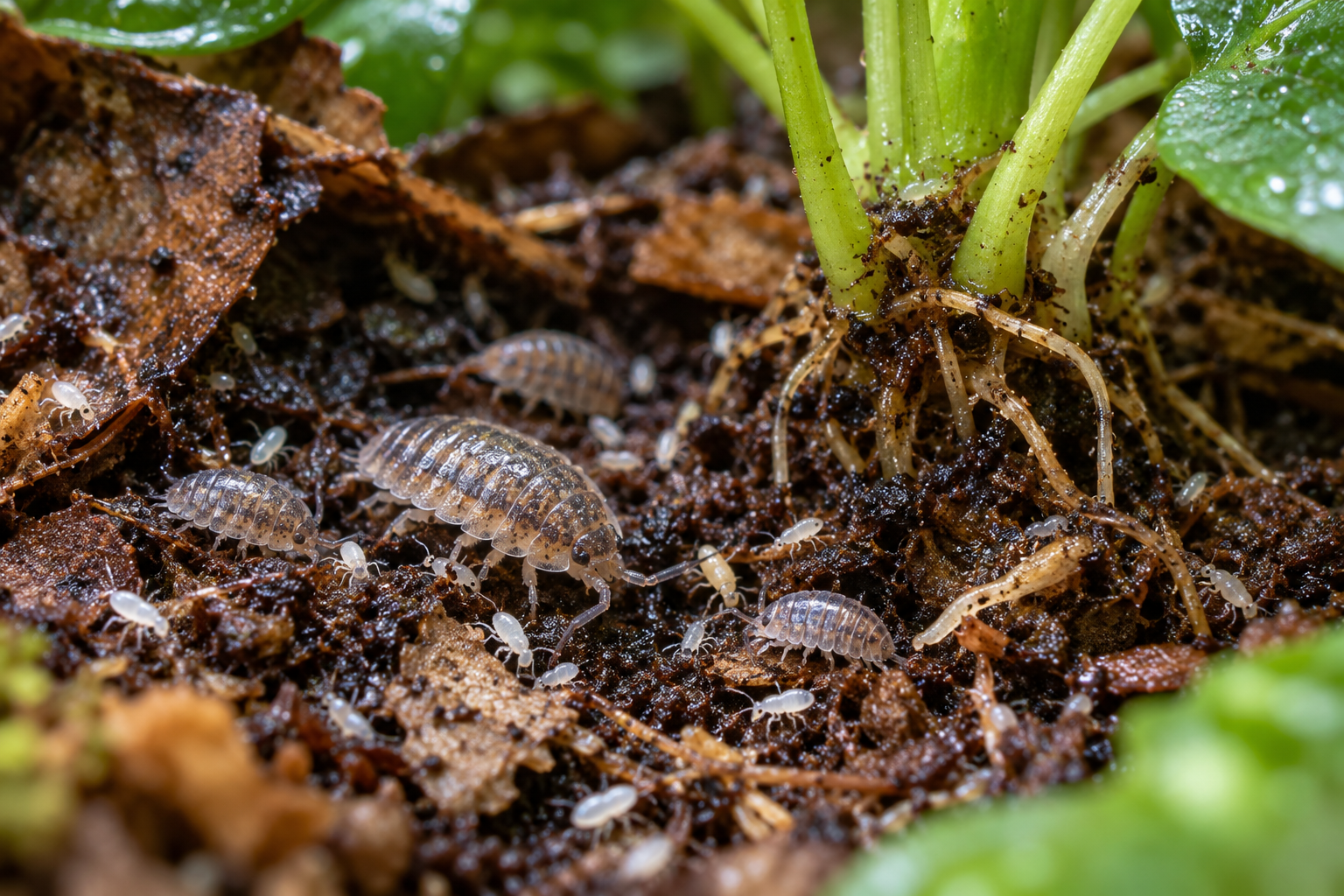
The wait is real, it is just biological population growth rather than a chemical process reaching equilibrium. Your isopods and springtails (Collembola) need time to settle in and start reproducing, not just survive the move, and the fungi and bacteria already in a proper bioactive substrate need time to build up enough decomposing power to keep pace with whatever an animal will eventually add. Plants are doing their own quieter version of the same thing, pushing roots into the substrate and starting new growth rather than just sitting where you planted them.
Our own detailed breakdown of how long a bioactive terrarium takes to establish puts the honest window at 4 to 6 weeks of seeding time before an animal goes in, counted from the day you seed the first crew member, not from whenever the tank looks finished. That extra time is what turns a crew that is merely alive into one that is actually breeding fast enough to keep up with a pet's waste. If you would rather start with both halves of the crew already paired instead of buying isopods and springtails separately, our bioactive combos take the guesswork out of seeding enough of each at once.
How to Tell It's Ready, Without Guessing
Watch the crew and the plants instead of the calendar. A cleanup crew that is genuinely established shows juveniles and fresh springtail activity across damp patches of substrate, not just the same handful of adults you started with, and plants resist a gentle tug rather than lifting loose. Our guide on seeding a vivarium in the right order walks through the full week-by-week sequence, springtails first, isopods a couple of weeks later. Starting from scratch? Our step-by-step bioactive setup guide covers the layers that come before any of this.
The One Fishkeeping Instinct Worth Keeping
The mechanism does not transfer, but the patience does. Add an animal to a bioactive terrarium before the crew has really built its numbers and the waste load outpaces what a handful of isopods and springtails can process, which is the actual terrarium version of a crashed cycle, mold and odor spike, and you end up cleaning by hand anyway. Waiting the extra week or two you were not sure you needed costs you nothing but time. Rushing it costs you the exact self-cleaning system you built a bioactive setup to get in the first place.
The Establishment Starter Kit
The crew and bedding that do the actual work while a new terrarium settles in.
Frequently Asked Questions
Written by the TC INSECTS breeding team · Porter, Texas · Live Arrival Guarantee on every order
Have a care question? Ask our community.
Join Reptile Keepers USA, our free Facebook group for reptile, amphibian and invert keepers. Share your setups, get care help and swap feeder tips.
Join the free group