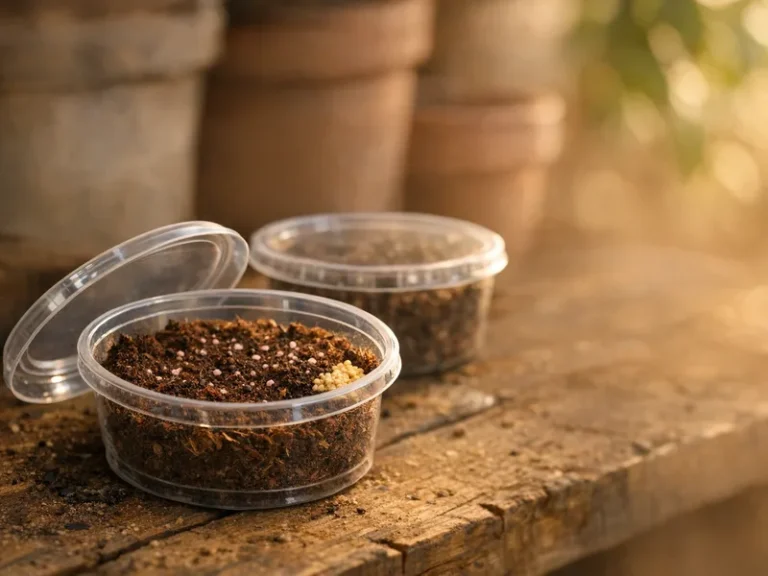
How Long Before a Bioactive Terrarium Is Ready for Its Animal?
The honest cycle time, not the bare 2 to 4 week minimum
Juveniles and mancae visible, not just the adults you seeded
A fresh crew gets buried before it can multiply
The honest answer is 4 to 6 weeks, not the bare minimum you will often see quoted, and that is how long it actually takes a fresh bioactive terrarium to cycle before an animal should move in. A tank is ready when the biology is visibly working on its own: a cleanup crew of isopods and springtails that is reproducing, not just surviving, plants rooted and pushing new growth, no runaway mold, and moisture that holds steady without daily fussing. Even a fast breeder like Dwarf White (Trichorhina tomentosa) needs real weeks to build a working population, and adding the animal before that happens is the single most common reason a bioactive setup fails in its first month. Give the crew the runway it needs and the enclosure becomes close to self-sustaining once your pet arrives.
The honest window: 4 to 6 weeks, not 2
You will often see 2 to 4 weeks quoted as the wait time, and that number is not wrong, it is just a floor. Two to four weeks is roughly how long it takes a freshly seeded cleanup crew to survive the move and settle in, not how long it takes to become a population that can actually keep up with a live animal's waste. The more honest number, and the one we tell our own customers, is 4 to 6 weeks from the day you seed the crew to the day the animal goes in.
That extra couple of weeks is not padding. It is the difference between a colony that is merely alive and one that is reproducing fast enough to outpace what an animal adds on day one. If you have not built the enclosure itself yet, our step-by-step bioactive setup guide walks through the layers in the right order, drainage, substrate, leaf litter, plants, then the crew, because the clock in this post only starts once that build is finished and the crew is in.
Sign 1: The cleanup crew is visibly reproducing
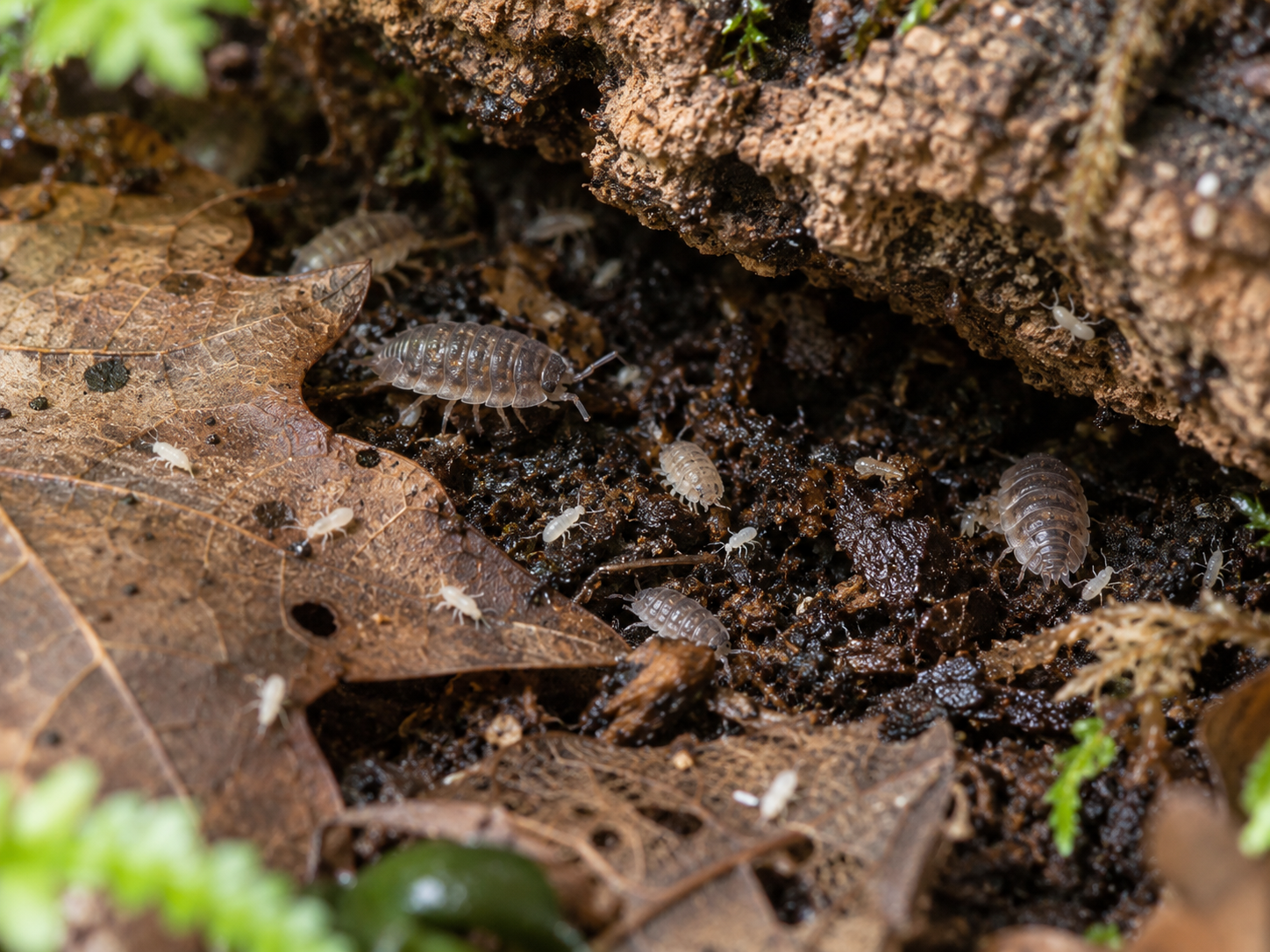
The single best sign a bioactive terrarium is ready is a crew that is multiplying, not just present. Look for isopod juveniles, smaller and paler than the adults you seeded, working through the leaf litter, and for springtails turning up across damp patches of substrate rather than only in the one spot you originally poured them. If all you can find are the same handful of adults you added a month ago and nothing smaller, the colony has not turned the corner yet.
Seeding generously from the start makes this sign show up faster and more reliably. Our isopod and springtail combos pair both halves of the crew in one order, and if you want a number matched to your exact enclosure, the cleanup crew calculator will tell you how many to start with so you are not guessing.
Sign 2: Plants are rooted and pushing new growth
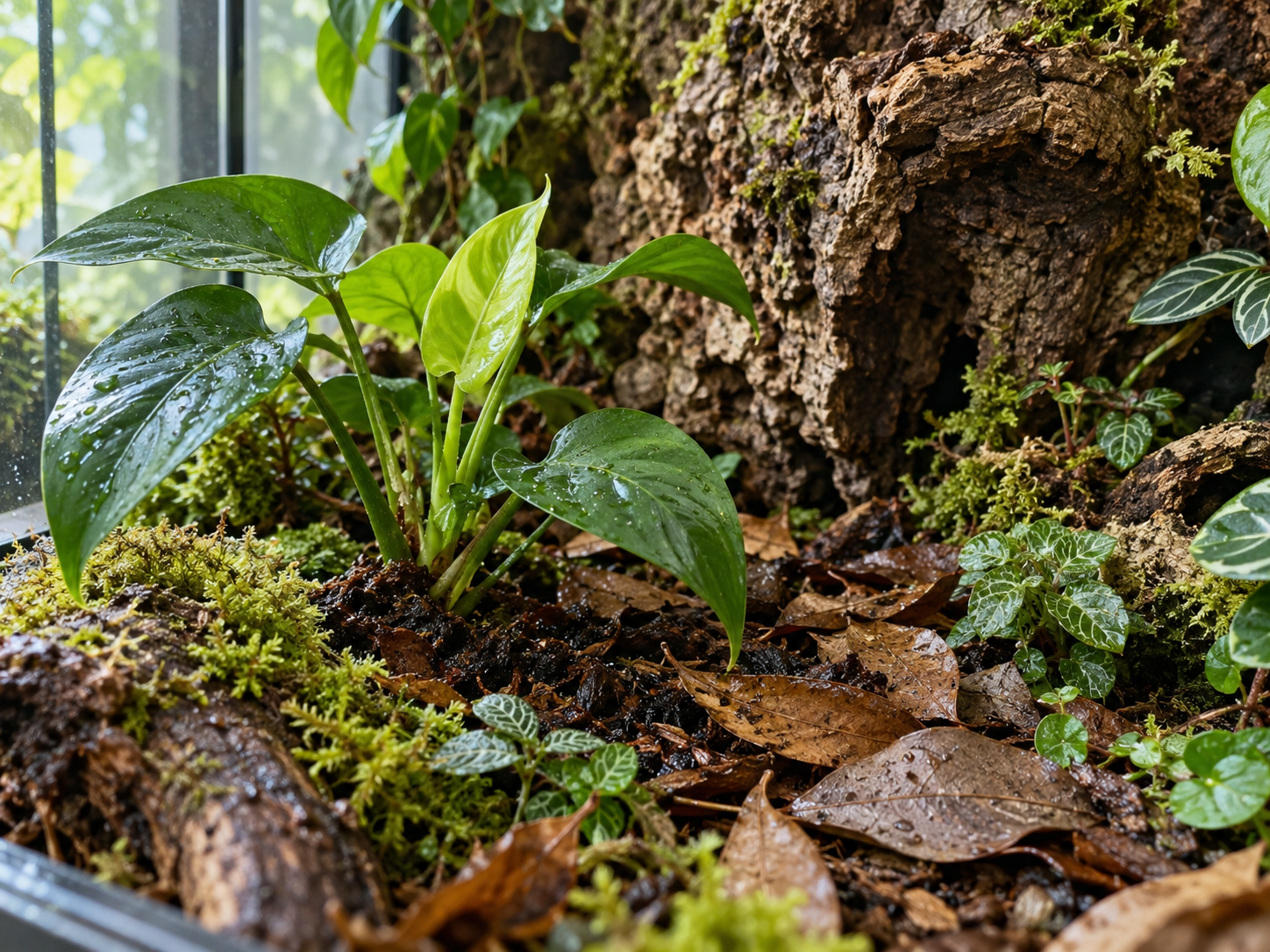
Plants are a second, independent clock running alongside your cleanup crew, and they are easy to check because you do not have to dig through leaf litter to see them. A rooted plant holds itself upright without leaning on a prop, resists a gentle tug at the base, and is putting out new leaves rather than just holding on to the ones it shipped with. Melting, yellowing, or a plant that still wiggles loose in the substrate after a month means the tank has not finished settling.
New growth matters because it tells you the substrate underneath is functioning: roots are finding nutrients, moisture is reaching them consistently, and the microbial life in the soil is doing its job. A tank where the plants are thriving and the crew is breeding is a tank where the whole system, not just one part of it, has come online.
Sign 3: No runaway mold, and moisture holding steady
A little white, fuzzy mold in the first week or two is normal, even expected. It is exactly what a young springtail population is there to eat, and a small early bloom that gets grazed down on its own is a good sign, not a bad one. What you do not want to see is mold that keeps reappearing bigger and faster than the crew can clear it, spreading across leaf litter and substrate week after week. That pattern means the microfauna has not caught up to the organic load yet, and it is a clear signal to wait.
Moisture is the other half of this sign. A cycled enclosure holds a stable moist-side and dry-side gradient with routine misting, not constant intervention, drying out fast, or turning swampy after every misting. If you are fighting the moisture level every single day, the substrate and the crew inside it are not yet doing their share of the work. Our guide on why a springtail culture stalls covers the same moisture and mold troubleshooting from the culture side, and the fixes carry over directly to a full enclosure.
Why rushing this is the number one bioactive failure
Here is the actual failure mode, and it is the one we hear about most. A keeper builds the enclosure, seeds the crew, and adds the animal within the same week because everything looks finished. The animal's waste lands on a crew that is still just a starter culture, not yet reproducing, and the mess outpaces what a handful of isopods and springtails can process. Odor and mold spike, the keeper starts cleaning by hand anyway, and the whole point of going bioactive quietly disappears.
This is recoverable, but it costs you weeks you did not need to lose. A crew that gets buried under waste before it has built numbers has to recover first and then still do the multiplying it should have done undisturbed. Waiting the honest 4 to 6 weeks up front is faster in the end than rescuing an overwhelmed enclosure two months in.
What to do while you wait
Treat the wait like you would a new isopod culture: leave it mostly alone. Keep the misting schedule steady, top off leaf litter as the crew works through it, and resist digging through the substrate every few days to check progress, which disturbs the very crew you are waiting on. A tank that is quietly left to run is usually further along than one that gets poked at daily.
When the four signs line up, a reproducing crew, rooted and growing plants, mold that stays in check, and moisture that holds steady on its own, the enclosure is ready. If you are only hitting two or three of them, give it another week or two rather than guessing. Our bioactive combos make it easy to seed generously enough the first time that you spend less time waiting and more time watching the crew actually establish.
Everything to Seed and Cycle a Bioactive Tank
The crew and bedding behind the timeline above. Add it now and start the clock today.
Frequently Asked Questions
Written by the TC INSECTS breeding team · Porter, Texas · Live Arrival Guarantee on every order
Have a care question? Ask our community.
Join Reptile Keepers USA, our free Facebook group for reptile, amphibian and invert keepers. Share your setups, get care help and swap feeder tips.
Join the free group