Dubia Roach Sizes Explained: XS to Adult
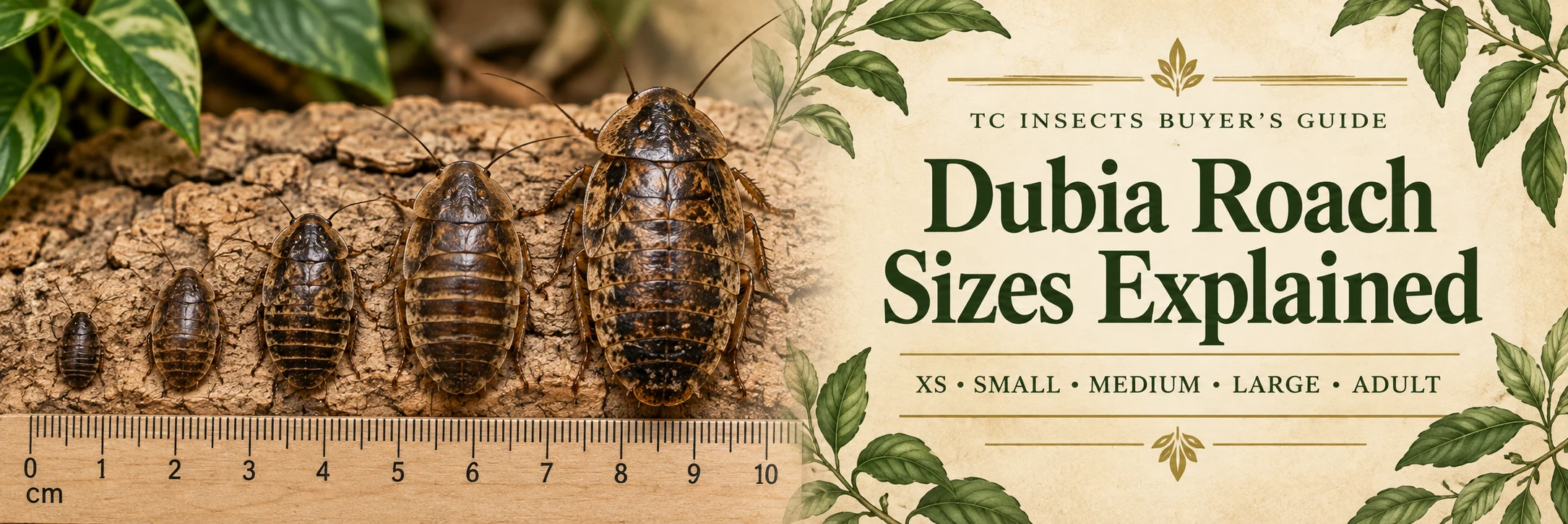
XS, S, M, L, and 1 1/4 inch adults
Prey no longer than that
Faster at 85 F, slower in a cool room
Match dubia size to the space between the animal’s eyes
Dubia roaches (Blaptica dubia) are sold in five sizes, extra small at 1/4 inch, small at 1/2, medium at 3/4, large at 1 inch, and adult at 1 1/4 inch and up, and the size you buy decides whether a feeding works: too big and the animal refuses or struggles, too small and it eats twenty. The rule is prey no longer than the width between the animal's eyes, which puts anoles and hatchlings on extra small, leopard geckos and juvenile dragons on small, adult geckos and chameleons on medium, adult dragons on large, and monitors and tegus on adults. Nymphs grow about one size every 4 to 6 weeks at room temperature, faster when warm, so a cup bought a size small becomes the right size within the month. This guide explains each size, the animal it fits, the growth clock, and how to buy for a month.
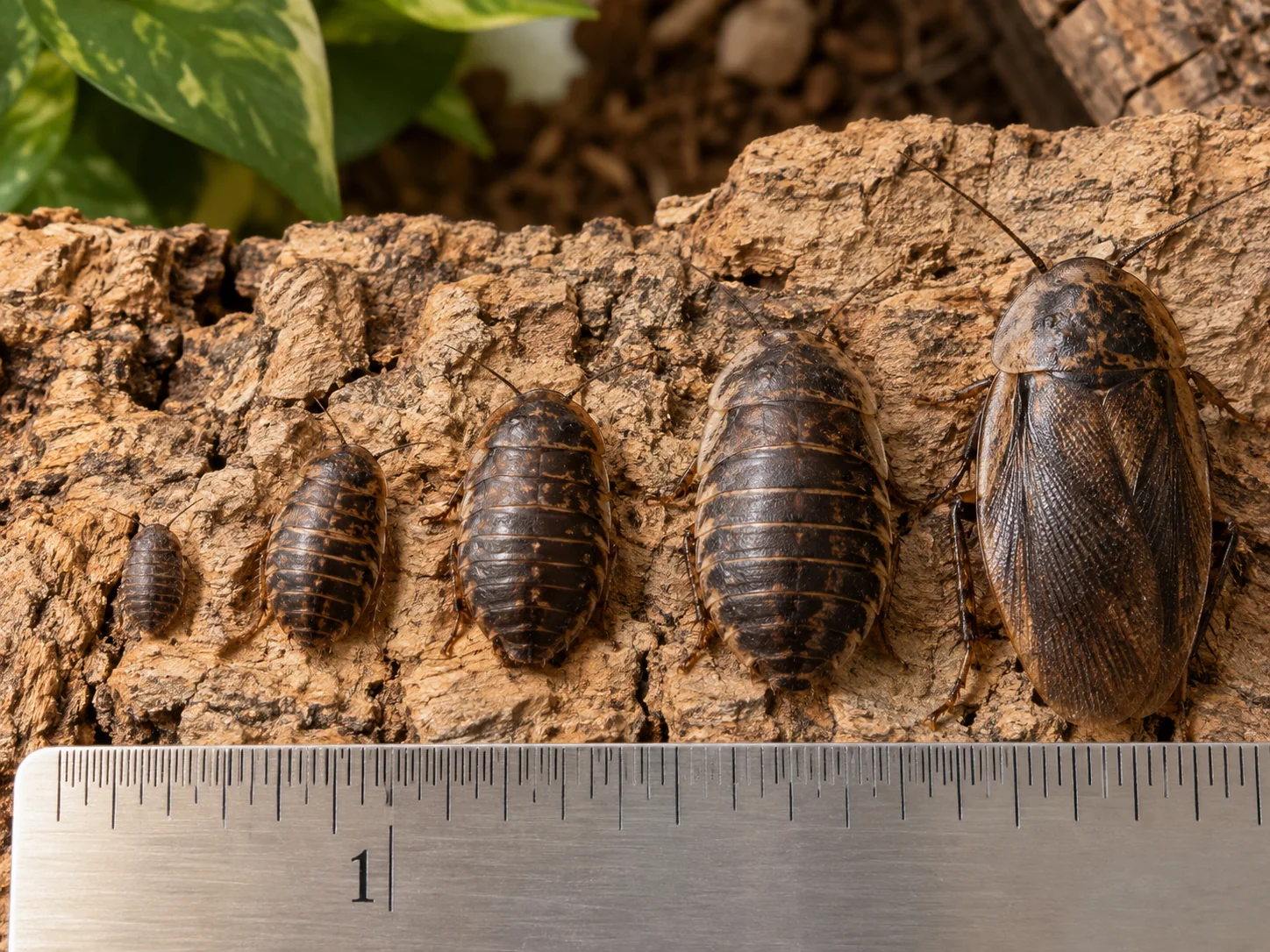
Five sizes cover hatchlings through large adults
Choosing the right size improves feeding response and reduces waste; when buying ahead, account for the roaches continuing to grow.
The five sizes, in order
Extra small dubia are 1/4 inch, the newest nymphs, pale and quick, and the smallest roach a farm sells. Small are 1/2 inch, darker and a real mouthful for a small lizard. Medium are 3/4 inch, the most-bought size and the one that fits the widest range of adult pets. Large are 1 inch, the last nymph stage before adulthood, heavy and slow. Adults are 1 1/4 inch and up, the males with wings and the females without, and they are sold both as feeders for big animals and as breeders.
The sizes overlap at the edges because a cup is sorted by sieve, not by hand, so a cup of medium contains a few that are nearly large and a few that are barely medium. That is fine for most animals and useful for a keeper feeding two sizes of animal from one cup. Every size is in the dubia shop, and the same rule from the feeder size chart decides which one: the roach's body no longer than the width between the animal's eyes.
Extra small and small: hatchlings, geckos, small lizards
Extra small is the size for green anoles, house geckos, hatchling and juvenile crested geckos, tree frogs, dart frogs that have outgrown flies, mantis nymphs, and jumping spiders. It is also the training size for any animal that has never eaten a roach, because a quarter-inch nymph is easy to catch and impossible to fear. Small is the size for adult leopard geckos, juvenile bearded dragons, adult crested and gargoyle geckos, young chameleons, larger tree frogs, and juvenile scorpions and tarantulas.
Both sizes are eaten in numbers: a juvenile dragon takes 10 to 20 extra small a day, a leopard gecko 5 to 8 small every other day. Buy by the 100 or 200 rather than the 25, and buy extra small a week before you need small, since the cup grows into it. Our anole feeding guide and the leopard gecko feeding schedule show how the two sizes get used.
Medium: the everyday size
Medium dubia, 3/4 inch, fit adult chameleons, subadult and small adult bearded dragons, water dragons, tokay geckos, large frogs, adult tarantulas and scorpions, tiger salamanders, and most of the lizards between a gecko and a monitor. It is the size most keepers should have in the house even if they buy another size for a specific animal, because a medium can be fed to a bigger animal by the handful and to a slightly smaller one as a single meal.
A cup of 100 medium lasts a single adult chameleon or a subadult dragon most of a month, and mediums held at room temperature in a ventilated tub with egg flats, chow, and a vegetable slice grow into large over 4 to 6 weeks, which suits a dragon that is growing at the same pace. The dubia care sheet covers holding a cup for a month with no losses.
Large and adult: dragons, monitors, tegus
Large dubia, 1 inch, are the adult bearded dragon size, and also fit adult water dragons, blue-tongue skinks, large chameleons, big frogs, and adult tokays. Adults at 1 1/4 inch and more are for monitors, tegus, big skinks, adult water dragons, and any animal with a mouth the width of a thumb; a bearded dragon can take an adult female dubia but a large nymph is the better everyday size. Adult males have wings, which some animals dislike, so many keepers feed females and keep the males for a colony.
Both sizes are eaten in small numbers, 3 to 8 a feeding, so a 50 or 100 count lasts weeks. Large nymphs turn into adults within a month or two and adults live several months, so neither size grows out of usefulness; a cup of large that becomes a cup of adults has simply become a breeding colony, which the home breeding guide covers.
The growth clock: buy a size small
Dubia nymphs molt about seven times over 4 to 6 months from hatch to adult, gaining roughly one sales size every 4 to 6 weeks at 75 to 80 F, faster near 85 F and much slower in a cool room. A cup of extra small bought today is a cup of small in a month and a cup of medium in two. That is the reason to buy one size smaller than the animal needs whenever a cup will be held for more than a couple of weeks, and to buy the exact size when it will be fed out within days.
The clock runs on heat and food. Keep the tub in the 70s F and feed lightly, and a cup holds its size for most of a month; keep it at 85 F with chow and fruit, and it grows a size in three weeks. A keeper with a growing juvenile dragon uses the clock on purpose, buying extra small and letting the roaches grow with the lizard.
Buying for a month, by animal
Juvenile bearded dragon: 300 to 500 extra small and small a month, bought as extra small and small in two cups. Adult bearded dragon: 100 to 150 large a month. Leopard gecko: 50 to 75 small a month. Crested gecko: 25 small a month alongside its diet. Chameleon: 75 to 100 medium a month. Water dragon or tokay: 50 to 100 large a month. Tarantula or scorpion: a 25-count cup of medium every two to three months. The monthly feeder cost calculator turns those counts into a bill.
Whatever the size, a cup held in a ventilated tub with egg flats, dry chow, a vegetable slice, and water crystals keeps for months, and a cup bought a size small grows to fit. The two mistakes are buying adults for anything smaller than a monitor and buying extra small for an adult dragon that then eats forty a day; the width between the eyes settles both.
The Dubia Size Ladder
Every size on one page, so a collection with an anole, a gecko, a chameleon and a dragon buys each one right.
Frequently Asked Questions
What sizes do dubia roaches come in?+
Five: extra small at 1/4 inch, small at 1/2, medium at 3/4, large at 1 inch, and adults at 1 1/4 inch and up. Cups are sorted by sieve, so each size overlaps a little with the next, and the rule for choosing is that the roach's body should be no longer than the width between the animal's eyes.
What size dubia should I feed a bearded dragon?+
Extra small and small for hatchlings and juveniles, 10 to 20 a day; medium for subadults; large for adults, 3 to 8 a feeding. A dragon can take an adult female dubia, but a large nymph is the better everyday size, and adult males have wings some dragons dislike.
What size dubia should I feed a leopard gecko?+
Small, 1/2 inch, for adults, 5 to 8 every other day, and extra small for hatchlings and juveniles. Medium is too big for most leopard geckos. A 50 to 75 count of small lasts an adult gecko a month.
How fast do dubia roaches grow?+
About one sales size every 4 to 6 weeks at 75 to 80 F, faster near 85 F and much slower in a cool room. Nymphs molt about seven times over 4 to 6 months from hatch to adult. Buy one size smaller than needed when a cup will be held more than a couple of weeks.
What size dubia do monitors and tegus eat?+
Adults, 1 1/4 inch and up, and large nymphs for younger animals. Adult dubia also suit big skinks and adult water dragons. They are eaten a few at a time, so a 50 or 100 count lasts weeks, and leftover adults become a breeding colony.
Which dubia size should I keep on hand if I only buy one?+
Medium, 3/4 inch. It fits adult chameleons, small adult dragons, water dragons, tokays, large frogs, tarantulas, and scorpions, can be fed by the handful to a bigger animal, and grows into large over a month or two if held at room temperature with food.
More helpful guides
Have a care question? Ask our community.
Join Reptile Keepers USA, our free Facebook group for reptile, amphibian and invert keepers. Share your setups, get care help and swap feeder tips.
Join the free group