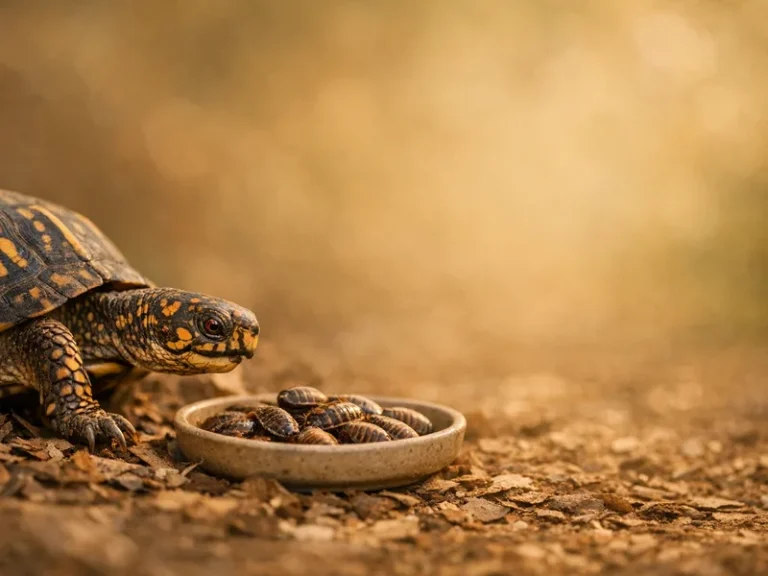
Breed Dubia Roaches at Home
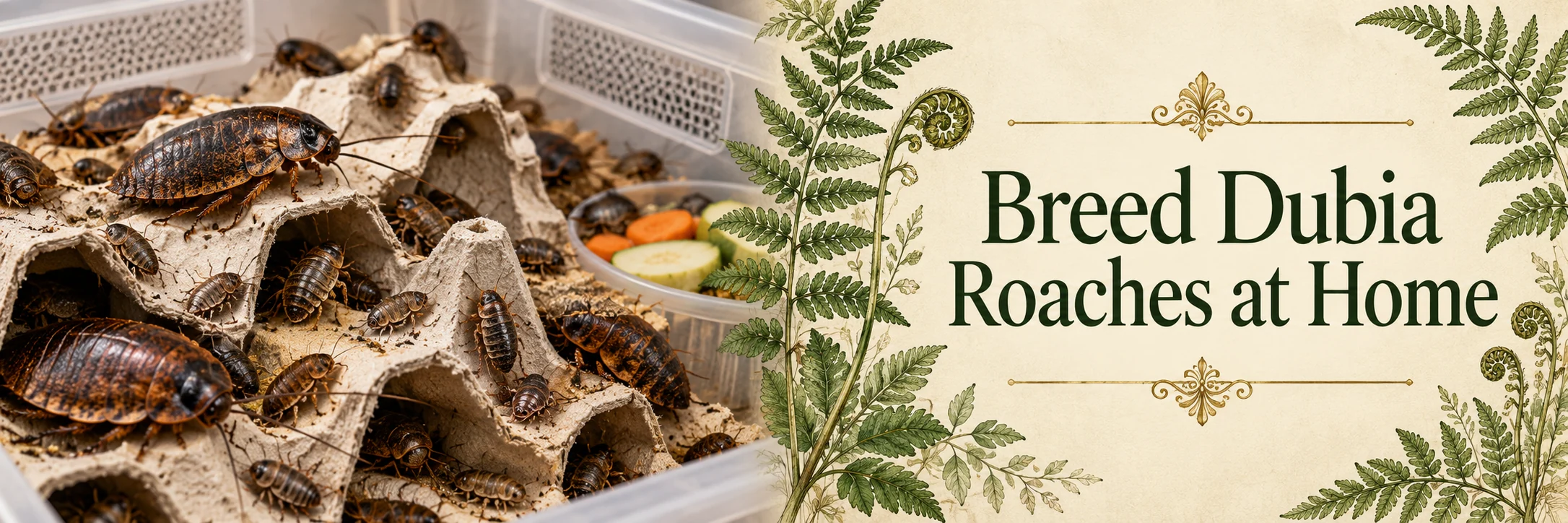
Breeding dubia roaches at home starts with a smooth-sided, dark, well-ventilated bin, kept warm at roughly 85 to 95 degrees F and 40 to 60 percent humidity, stocked with egg-crate cardboard for hiding space and a starter ratio around five females to one male. Blaptica dubia mate within about a week of reaching adulthood and give live birth to nymphs rather than laying eggs, but a truly harvestable colony, one producing more roaches than you are pulling out, is realistically several months out, not several weeks. Feed a dry roach chow plus fresh vegetables, never high-protein table scraps, and keep the bin dark since dubia are burrowers that shy from light. It is an honest time investment rather than a shortcut, so this guide lays out the real setup and timeline rather than promising an instant colony.
Warmer than most reptile enclosures
Cuts aggression, keeps breeding steady
Mating starts fast; a harvestable colony takes longer
The bin: smooth-sided, dark, and ventilated
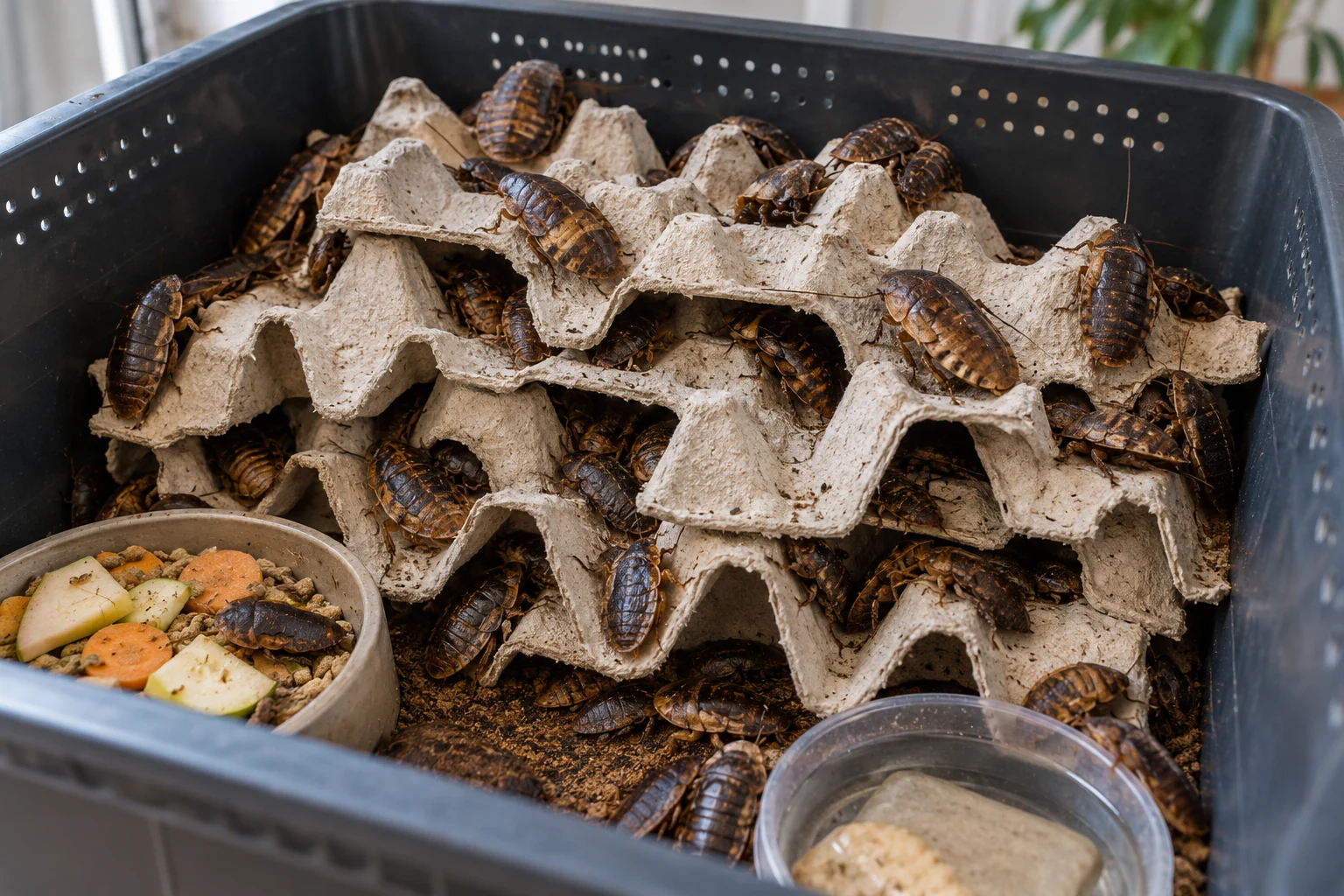
Dubia roaches cannot climb smooth, vertical plastic or glass, which is exactly why a smooth-sided bin, with no mesh, fabric, or rough texture on the walls, is standard for a breeding colony; the roaches stay contained without a tight-fitting, airless lid. Ventilation matters just as much as containment, since a sealed, humid bin invites mold and mites far faster than an open, airy one does.
Dubia are also light-shy burrowers, most active and most willing to breed when the bin stays dark, so an opaque tote or one covered with a dark towel outperforms a clear one left in a bright room. Egg-crate cardboard stacked in layers gives the colony vertical hiding space and multiplies the usable surface area of a bin many times over without taking up floor space.
Temperature, humidity, and the male-to-female ratio
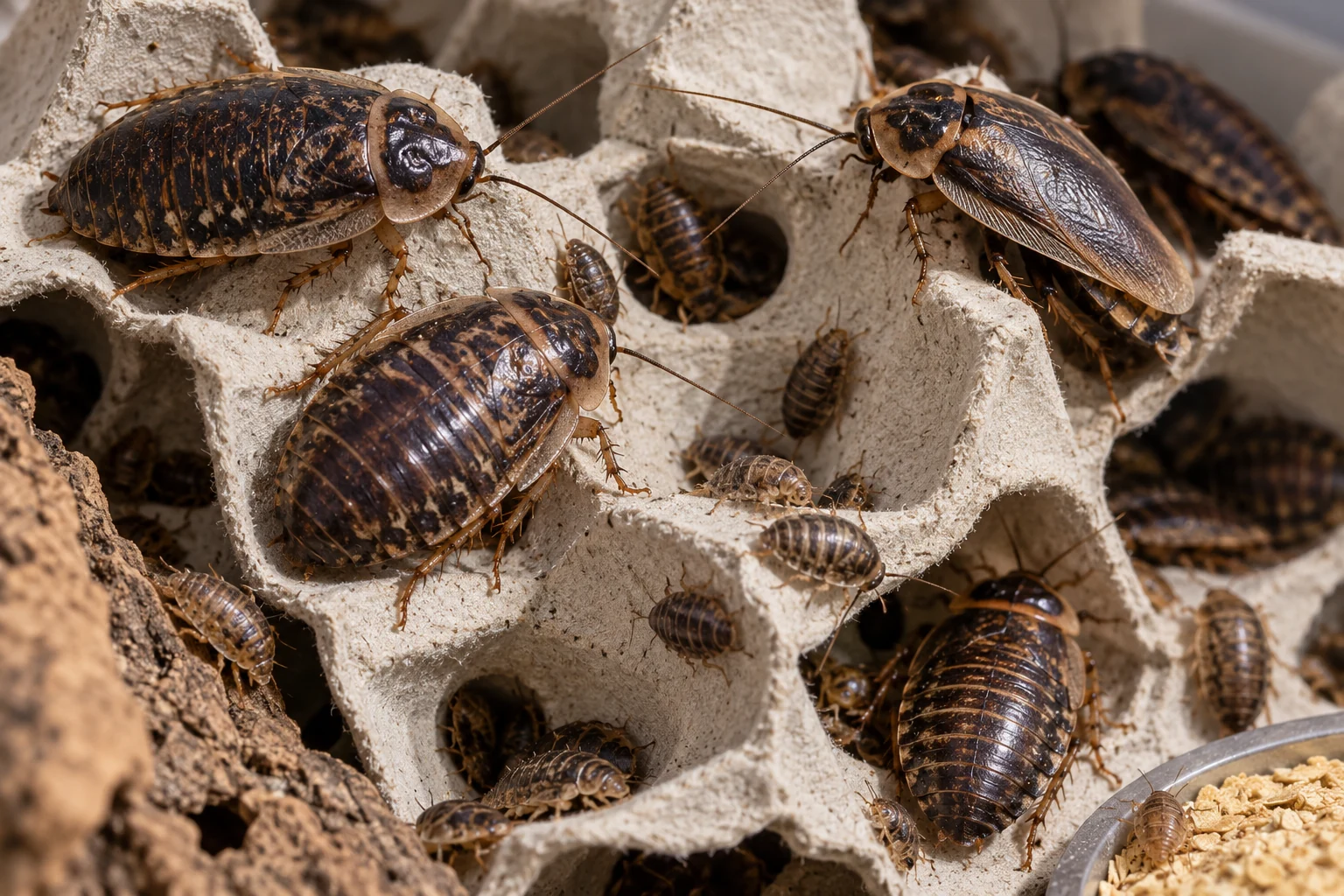
Dubia breed best kept warm, in the 85 to 95 degree F range, which is noticeably warmer than most reptile enclosures and usually means a heat mat or heat tape on one side of the bin rather than relying on room temperature alone. Humidity in the 40 to 60 percent range is enough to support molting and reproduction without tipping into the mold-and-mite territory a wetter bin invites.
For the breeding ratio itself, a common and effective starting point is around five females for every male; too many males adds stress and aggression to the colony without meaningfully speeding up reproduction. A starter colony of at least fifty to a hundred mixed adults and nymphs gives that ratio room to establish itself naturally as animals mature.
Mating, live birth, and a realistic timeline
Dubia reach sexual maturity at several months old, and mating typically begins within about a week of both sexes reaching adulthood. Unlike many feeder insects, dubia do not lay external eggs; females carry an egg case internally and give live birth to small nymphs, which is part of why a colony can feel slow to show visible progress even though breeding is already happening.
The honest timeline matters here: mating and early nymphs can show up within the first couple of months, but a colony that is actually producing a harvestable surplus, more new roaches than you are removing to feed out, is realistically several months out from a fresh starter colony, not a few weeks. If a faster-breeding roach is more your speed, see how dubia stacks up against red runner roaches, which breed faster but need a drier, warmer setup.
Feeding the colony without fouling the bin
A dry roach chow formulated for the species is the steady base of a dubia colony's diet, supplemented with fresh vegetables like carrots, squash, or leafy greens a couple of times a week. Skip high-protein table scraps and meat entirely; dubia handle excess protein poorly, and it fouls a bin fast with odor and mold, exactly the opposite of what a dry, low-maintenance colony is supposed to be.
Remove uneaten fresh food within a day so it does not rot in the warm bin, and keep a water source that will not drown nymphs, a gel crystal or a water-soaked sponge works well. For the honest word on colony odor in general, see our do dubia roaches smell guide; a colony fed consistently on dry chow plus rotating fresh produce grows steadily without the smell problems an overfed or wet bin develops.
Harvesting without stalling the colony
Once the colony is genuinely established, harvest only the surplus, and resist pulling roaches out faster than the colony is replacing them, the same principle that governs any breeding culture. Take mostly larger nymphs and adults for feeding, and leave a healthy base of breeding-age adults and smaller nymphs undisturbed so the population keeps climbing rather than flattening out.
If you want a feeder size ready without waiting on the colony every time, keeping a separate stock of sized dubia roaches on hand for the size your reptile eats right now, while the breeding colony builds up behind it, is a common and practical way to bridge the gap during those first slower months.
Is breeding worth it, or should you just buy as needed?
Be honest with yourself about the tradeoff. Breeding dubia at home saves money over time and gives you a self-sustaining supply, but it is a real time investment, months of setup and patience before a colony is actually producing a surplus, not an instant fix for a single reptile's feeding needs. For a single pet eating a modest amount weekly, simply reordering sized roaches as needed is often more practical than running a colony.
Where breeding genuinely pays off is multiple reptiles, a reptile room, or anyone who values a backup supply independent of any single order. If that describes your setup, a proper starter colony and the setup in this guide will get you there; if it does not, there is no downside to skipping the colony and just buying dubia sized to your animal as you go.
Start Your Own Dubia Breeding Colony
The starter colony, feed, and water source behind the setup above.
Frequently Asked Questions
Written by the TC INSECTS breeding team · Porter, Texas · Live Arrival Guarantee on every order
Have a care question? Ask our community.
Join Reptile Keepers USA, our free Facebook group for reptile, amphibian and invert keepers. Share your setups, get care help and swap feeder tips.
Join the free group