The Best Feeder Insects for a Box Turtle's Protein Half

A box turtle's diet runs roughly half plant matter and half animal protein, and that protein half is exactly where TC's feeders fit. Dubia roaches beat mealworms on both protein, around 20 percent, and calcium to phosphorus balance, which makes them the better everyday pick for the protein side of the plate. Mealworms are not off limits, they are just a once-a-week feeder rather than a staple, since their tougher exoskeleton is more work to digest in quantity. Here is how to build the protein half correctly, feeder by feeder.
Roughly half plant matter, half animal protein
About 20% protein with a better calcium balance than mealworms
Fine occasionally; capped due to chitin and digestibility
The protein half of a box turtle's plate
Most box turtle diet guidance lands on roughly a 50/50 split between plant matter and animal protein, with the exact ratio shifting a bit by age and by how the individual animal does. This post is deliberately scoped to that protein half, since that is where feeder insects do their work, and where most generic box turtle diet posts stop short of comparing feeders head to head.
The plant half, leafy greens, vegetables, and some fruit, still matters and is not covered in depth here. Think of this guide as the other half of the plate: which feeder insects to reach for, and which to use sparingly.
Dubia roaches: the better everyday protein pick
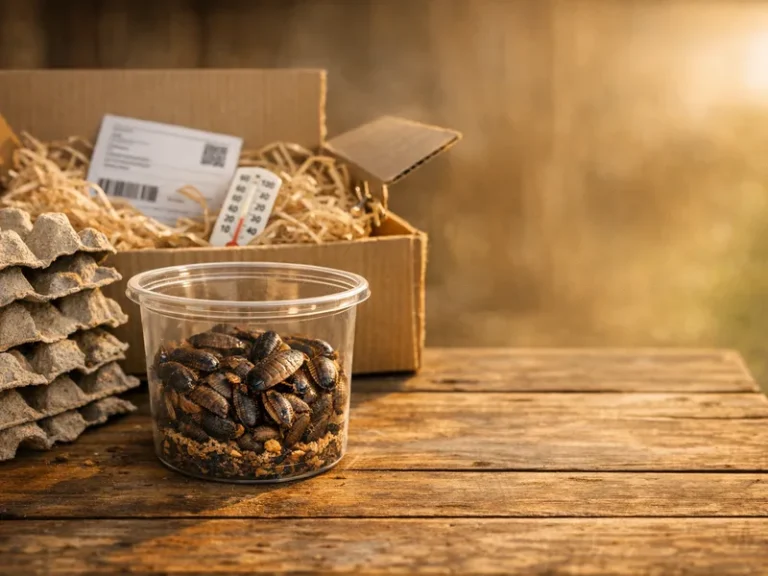
Dubia roaches (Blaptica dubia) beat mealworms on both counts that matter most for the protein half: protein content, around 20 percent, and a friendlier calcium to phosphorus balance. For a box turtle's smaller mouth, small dubia, about 1/2 inch, suit most animals well, with medium dubia sized up for a larger shell.
One regional note: dubia roaches are a restricted species in Florida, so TC does not ship live dubia there. Florida keepers can lean on black soldier fly larvae as a calcium-forward alternative for the protein half instead. See our Florida feeder guide for the full legal lineup.

Mealworms: fine, but cap it at once a week
Mealworms (Tenebrio molitor) are not off the table for a box turtle, they are simply a once-a-week feeder rather than an everyday staple. Their tougher, more chitinous exoskeleton takes more work to digest in quantity than a dubia roach's softer body, so an occasional feeding is the more comfortable way to include them.
If your box turtle strongly prefers mealworms, that preference is fine to indulge within that weekly cap. Just keep dubia as the everyday backbone rather than letting mealworms creep into daily rotation.
Calcium: why the balance matters as much as the protein number
Protein content is only half the comparison. Dubia carry a friendlier calcium to phosphorus balance than mealworms, which matters for a shelled animal that depends on steady dietary calcium for healthy shell and bone growth. A feeder that is calcium-poor and phosphorus-heavy, fed too often, can work against that over time.
Black soldier fly larvae are worth knowing about here too, since they are naturally calcium-rich rather than calcium-poor, which makes them a useful rotation partner or Florida-legal substitute for dubia on the protein half. They still benefit from a light dusting for fast-growing juveniles, rather than skipping calcium powder altogether.
Feeding frequency by age
Hatchlings and juvenile box turtles lean more carnivorous and benefit from more frequent protein feedings to fuel growth, generally several times a week. Adults shift toward a more plant-forward diet overall and need the protein half less often, commonly just a couple of times a week alongside their produce.
Watch body condition and appetite rather than following a fixed count, and remember the protein half is a component of the diet, not the whole meal, at any age.
Building a simple weekly protein rotation
A practical weekly approach: dubia roaches most of the times you offer protein, one mealworm feeding worked in for variety, and black soldier fly larvae in occasional rotation for the calcium edge. Size every feeder to your turtle's mouth, and skip anything that looks too large to swallow comfortably.
Get the protein half right and the rest of a box turtle's diet is mostly about variety in produce, which is a separate conversation from the feeder-insect question this guide answers.

Build the Protein Half Right
Dubia sized for a box turtle's mouth, plus the once-a-week mealworm and calcium dust from the answers above.
Frequently Asked Questions
Written by the TC INSECTS breeding team · Porter, Texas · Live Arrival Guarantee on every order
Have a care question? Ask our community.
Join Reptile Keepers USA, our free Facebook group for reptile, amphibian and invert keepers. Share your setups, get care help and swap feeder tips.
Join the free group