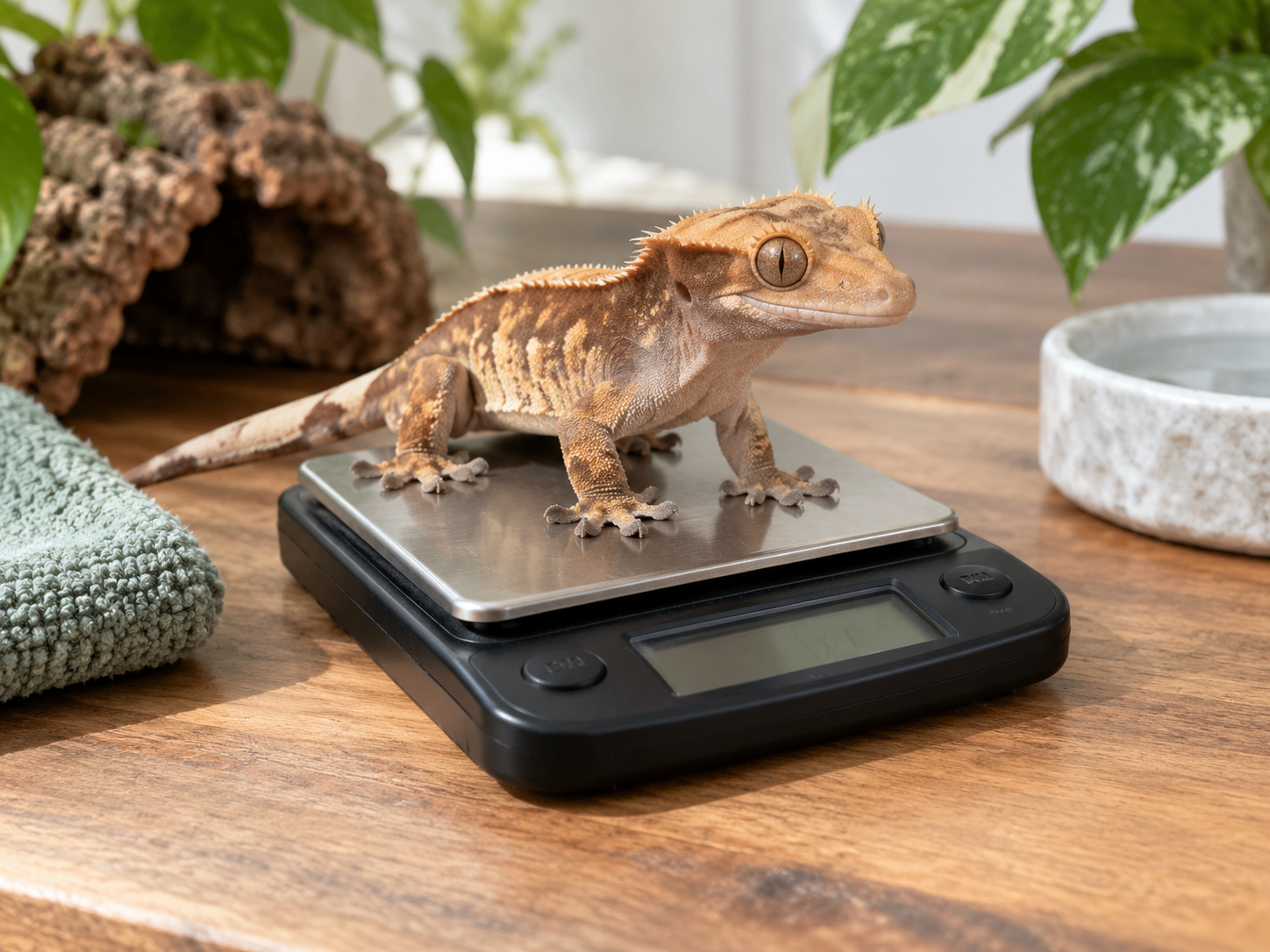
Weigh weekly on a gram scale; droppings confirm digestion between weighings
Above our care sheet's ceiling, appetite is often the first thing lost
The point general reptile-vet guidance treats as worth real concern
Most crested geckos (Correlophus ciliatus) that seem to be "not eating" are actually fine: they feed mostly after dark, so the real test is not whether you saw it eat but whether droppings are turning up in the enclosure and the number on a gram scale is holding steady week to week. Sustained heat above 82°F, the ceiling in our crested gecko care sheet, kills appetite fast, and so do a fresh shed, a new home, and diet powder mixed too thin or left out too long. This guide gives you the actual test before you panic, and when live insects can restart a real hunger strike that powder alone cannot fix.
The real test: droppings and weight, not sightings
Crested geckos feed mostly at night and spend a lot of daylight hours tucked away, so going days without actually seeing yours eat means very little on its own. Two things tell you far more: fresh droppings in the enclosure, which confirm digestion is happening whether you witnessed the meal or not, and its weight on a gram scale, checked on the same day each week.
A healthy adult crestie commonly sits somewhere in the 35 to 55 gram range depending on the individual, and the number that matters is the trend, not the exact figure. General reptile-vet guidance treats a loss of around 10 percent of body weight as worth real concern, so a gecko holding steady week to week is very likely fine even if you have not seen it eat in days.
Is the enclosure running too warm?
Crested geckos are a cool-running species, comfortable at 72 to 78°F by day, and our crested gecko care sheet puts the hard ceiling at 82°F, above which the risk becomes real heat stress rather than just a picky appetite. As the enclosure climbs toward and past that number, appetite is very often the first thing to go.
Check the actual air temperature at the warmest point in the enclosure, not the room in general, since a tank near a window or a warm wall can run several degrees above the rest of the house. Cooling the room, moving the tank, or adding airflow matters more here than any feeding trick.
Is this a shed, or a new home?
A crested gecko getting ready to shed commonly skips meals for a day or two while its skin dulls and eyes look duller than usual, and appetite returns once the shed is done and eaten. This is routine and needs nothing beyond the normal humidity cycle.
A gecko that just arrived in a new enclosure or a new home often does the same for the first one to two weeks, refusing food while it adjusts to new smells and surroundings. Keep offering its normal diet on schedule, keep handling minimal, and let the droppings and weight trend, not a missed meal or two, be the judge.
Is the diet powder actually usable?
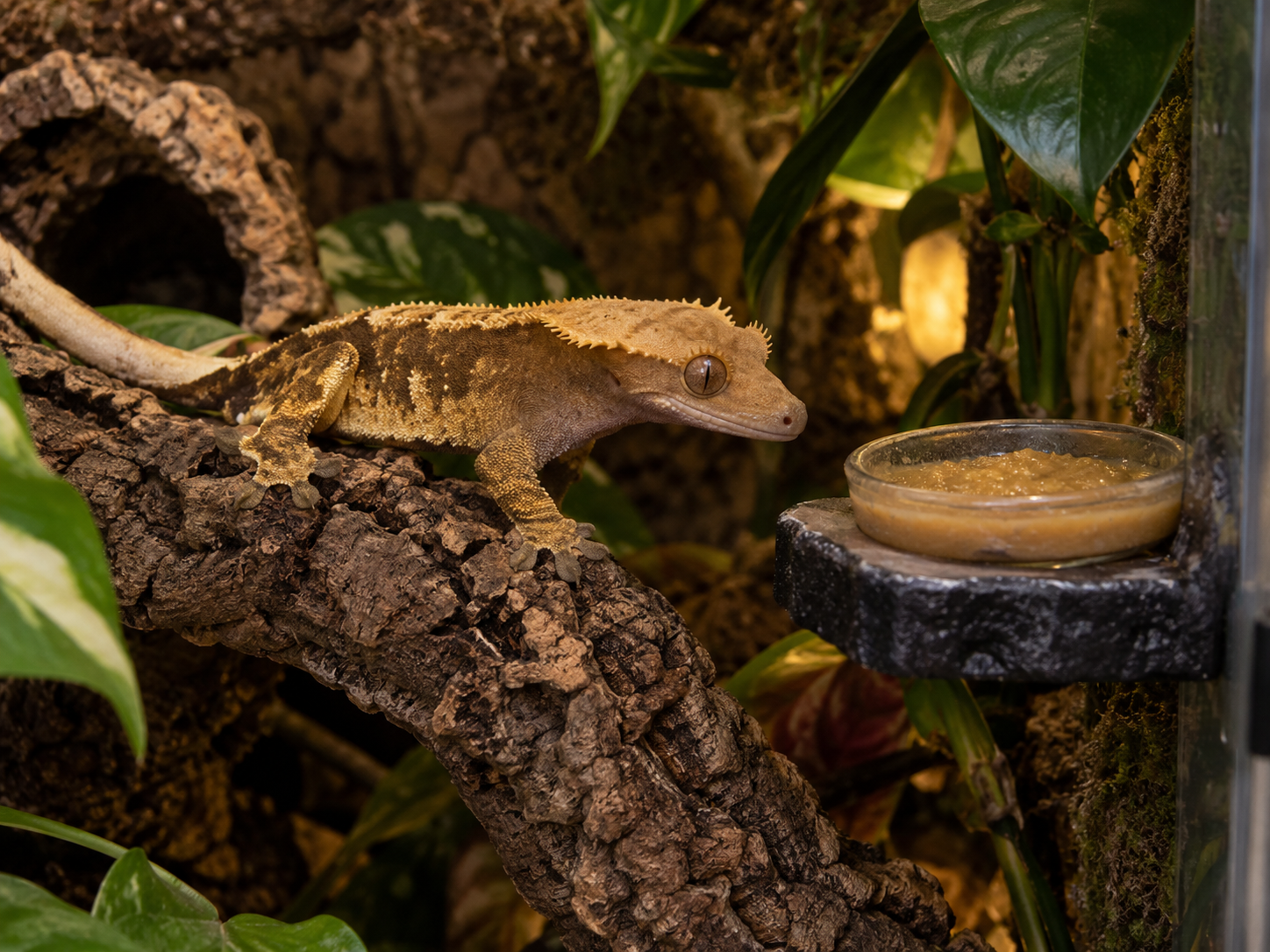
A complete crested gecko diet powder mixed too thin turns watery and unappealing, and one left sitting out for many hours in a warm, humid enclosure can sour or grow bacteria before the gecko ever gets to it. Mix it to a thick, pudding-like consistency and replace an untouched dish daily rather than topping it off.
If the powder dish is consistently ignored even when freshly mixed, try offering it on a different ledge or ledge height, since some geckos are particular about where they will feed. This is a presentation problem far more often than a nutrition problem, since a complete diet powder is nutritionally sufficient on its own.
When live insects fix what powder can't
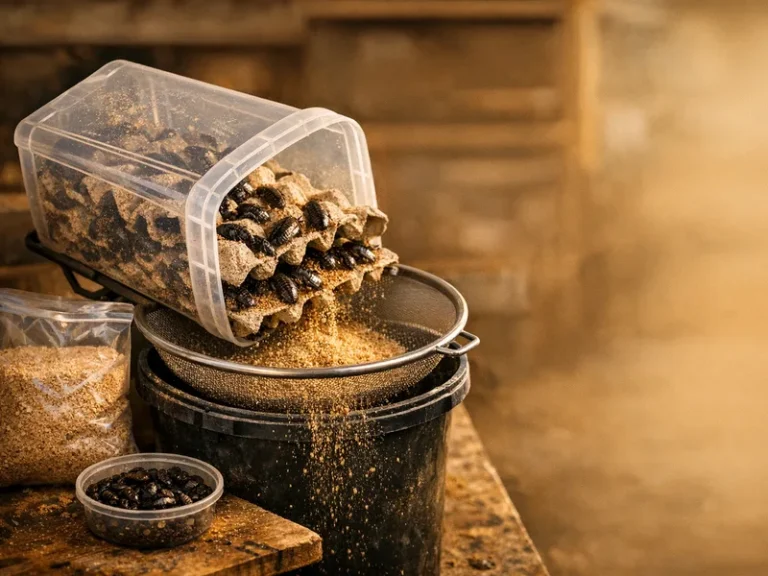
Some hunger strikes are genuinely about boredom with the same dish rather than illness, and a small live feeder can restart interest in eating faster than switching powder brands ever will. Black soldier fly larvae are the easiest first try, soft-bodied and impossible to ignore once they start moving.
Offer one or two feeders sized no larger than the gecko's head, a couple of times over a few days, and expect it to fold back into a normal powder routine once it is eating again. Our live insects supplement guide covers ratios and sizing if you want to make it a regular addition, and our black soldier fly larvae are sized right for a crestie's small gape. A fruit fly culture works well for juveniles too small for BSFL. Do not lean on live insects as a full, permanent replacement for powder, since the balance that works for most keepers long-term still puts powder first.
When to stop watching and call a vet
A gecko holding weight, producing droppings, and behaving normally is not an emergency no matter how many days it goes between visible meals. The picture changes with a weight loss of around 10 percent or more, visible bone structure along the hips or tail base, sunken eyes, or lethargy, any of which point past a normal skip and toward something that needs a professional look.
A juvenile has far less margin than an adult, so a young crestie refusing food for more than a few days deserves a faster check than an adult doing the same. A stuck-shed problem elsewhere on the body, on a toe, an eye cap, or the tail tip, sometimes travels with a skipped meal or two as well, so check those spots during your daily look-over.
Crested Gecko Not Eating: Normal Skip or Real Problem?
The Fussy Crestie Kit
Small live feeders that tempt a crested gecko back onto food when powder alone is not working.
Frequently Asked Questions
Keep reading: stuck shed on a crested gecko and how the two beginner geckos compare.
Written by the TC INSECTS breeding team · Porter, Texas · Live Arrival Guarantee on every order
Have a care question? Ask our community.
Join Reptile Keepers USA, our free Facebook group for reptile, amphibian and invert keepers. Share your setups, get care help and swap feeder tips.
Join the free group