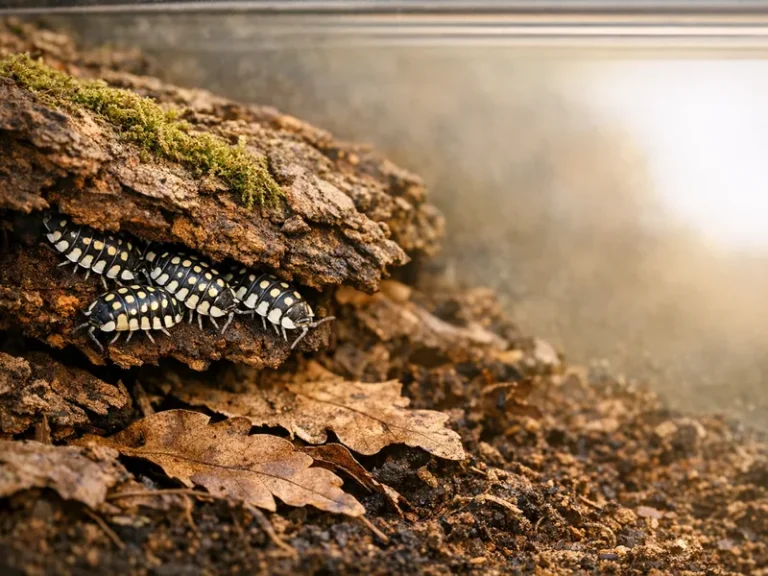
Nagurus cristatus, sold in the hobby as the Dwarf Grey isopod, is a true dwarf species that stays about 4 to 6 mm, prefers 68 to 78 F with medium to medium-high humidity, and breeds slowly enough that most keepers treat it as a collector addition rather than a working cleanup crew. It comes from a genus almost never seen in the US trade, first described back in 1889, part of the appeal for keepers who already keep Dwarf Whites and Dwarf Purples and want a rarer dwarf species with a genuinely different look and pace. Give it patience, a stable moist side, and a faster species to handle daily cleanup, and it settles in well. Shop rare and specialty isopods for more uncommon picks.
TC stock; European glasshouse records report up to 10mm
Stable room temp; keep away from vents and windows
Months to build visible numbers, unlike Dwarf White or Purple
What Is a Dwarf Grey Isopod?
Dwarf Grey is the hobby name for Nagurus cristatus, a small isopod first described in 1889 and placed in a genus, Nagurus, that almost never turns up in the US trade. That rarity is the main draw. It does not overlap with the common Porcellionides, Porcellio, or Cubaris morphs most keepers already have, so it adds real genus level variety rather than just another color form.
Adults reach roughly 4 to 6 mm on TC's own stock, with a gray to brownish gray body and a subtle ridge along the back that gives the species its name, since cristatus means crested in Latin. Published European records for the wider species report growth to about 10 mm in long established populations, mostly documented in heated botanic garden glasshouses in places like Cornwall and Birmingham, so treat TC's smaller, captive bred stock as the size you will actually see at home rather than that upper ceiling.
One thing to know before you buy: this is not a fast working cleanup crew like Dwarf White or Powder Orange. Most buyers pick Dwarf Grey for the rarity and the collector value, and the slower pace is a real trade off, not a flaw to work around.
Dwarf Grey Compared to Dwarf White and Dwarf Purple
TC sells three genuinely different dwarf isopods, and Dwarf Grey is the slowest and rarest of the three. All three stay small enough for a nano vivarium and reproduce without a male, but they come from different families and settle in at different speeds. Our full Dwarf White vs Dwarf Purple comparison covers those two species in depth, so this section focuses on where Dwarf Grey fits next to them rather than repeating that guide.
Against Dwarf White, the Burrower
Dwarf White (Trichorhina tomentosa) is the one most keepers already know, and it is dramatically faster than Dwarf Grey. It burrows deep into the substrate and reproduces without a mate, so a starter culture builds into a full colony in weeks, not months. Dwarf Grey stays closer to the surface and takes several months to show the same growth, which is the single biggest difference between the two.
Against Dwarf Purple, the Surface Grazer
Dwarf Purple (Trichoniscus sp.) is documented as parthenogenetic too, and it is a genuinely fast breeder in its own right, much like Dwarf White. TC's own Dwarf White vs Dwarf Purple guide is honest that sources disagree on which of the two actually breeds faster, so this page will not pretend otherwise. What is clear is that both leave Dwarf Grey well behind: all three can build a colony from a single starter group since none needs a mate, but Grey does it on a far slower timeline than either.
Setting Up a Bin That Suits a Slow Breeder
Dwarf Grey wants the same basic ingredients as most small isopods: a moisture retaining blend of coconut fiber and flake soil or decayed hardwood, topped with a deep layer of leaf litter and a few pieces of cork bark. Keep one side reliably moist and let the rest run slightly drier, and keep a calcium source such as crushed eggshell or a prepared isopod food available at all times to support clean molts.
Ventilation matters more here than it does for a hardier species. A fully sealed bin invites mites, but heavy ventilation dries out a small, slow colony faster than it can recover from, since there are fewer bodies working the bin than a fast breeding species would have at the same age. A vented lid with small slots or fine mesh strikes the right balance, and keeping the bin away from direct sun, heat vents, and drafty windows matters more than usual, since this species dislikes sudden swings.
Feeding a Colony That Will Not Clear a Bowl Fast
Leaf litter and aged, decaying hardwood are the staple diet, so keep both topped up as cover as much as food. Add small portions of vegetables such as carrot, sweet potato, squash, or mushroom now and then, and offer protein sparingly, a pinch of shrimp meal, fish flake, or a prepared isopod food like Isopod Supreme Feed, since a slow colony cannot clear food the way a fast one can.
The honest trade off here is patience. Expect several months before a starter group shows clear signs of population growth, and resist the urge to feed heavily just because the bin looks quiet. Springtails alongside the colony will handle mold and fine waste while Dwarf Grey works at its own pace, and TC's own listing recommends pairing this species with a faster one for the actual day to day cleanup.
Where Dwarf Grey Actually Fits in a Bioactive Setup
Because it feeds on decaying plant matter rather than protein, Dwarf Grey carries none of the nipping risk documented for large, protein driven isopods, so temperament is not the reason to hold back. The real limit is speed. Most keepers run a dedicated culture bin first, since a colony this slow can struggle in a busy display tank with heavier competition for food, then move surplus animals into a display enclosure once the culture is established.
It also works as an occasional supplemental feeder for very small reptiles or amphibians, though only in small quantities, since the slow reproduction cannot sustain regular feeder harvesting the way Dwarf White can in a nano vivarium. If you want one fast, dependable working cleanup crew and nothing else, a small, mild species from our reptile safe isopod picks is the better single choice. Dwarf Grey earns its place as the second species in the tank, not the first.
The Dwarf Grey Starter Kit
A slow collector species paired with a faster cleanup partner and the calcium it needs to molt well.
Frequently Asked Questions
Written by the TC INSECTS breeding team · Porter, Texas · Live Arrival Guarantee on every order
Have a care question? Ask our community.
Join Reptile Keepers USA, our free Facebook group for reptile, amphibian and invert keepers. Share your setups, get care help and swap feeder tips.
Join the free group