Best Isopods for a Nano Vivarium

A common nano is an 8 by 8 by 8 inch cube, roughly 2.2 gallons
The smallest common cleanup isopod, and an all-female fast breeder
Dwarf Whites to start a nano, plus one springtail culture
Small habitats need a small cleanup crew
For a nano vivarium under about 5 gallons, the best isopods are the smallest species, with Dwarf Whites (Trichorhina tomentosa) as the first pick and Powder Orange or Powder Blue (Porcellionides pruinosus) as the runner up. The reason is simple. A tiny tank has very little floor space and grows very little waste, so a large species with a large appetite will strip it bare and then start grazing your moss and plants. On our farm we seed nano builds all the time, and the small-species rule has held up every time. Here is how to pick, how many to seed, how to feed them, and the honest cases where a nano is better off without isopods at all.
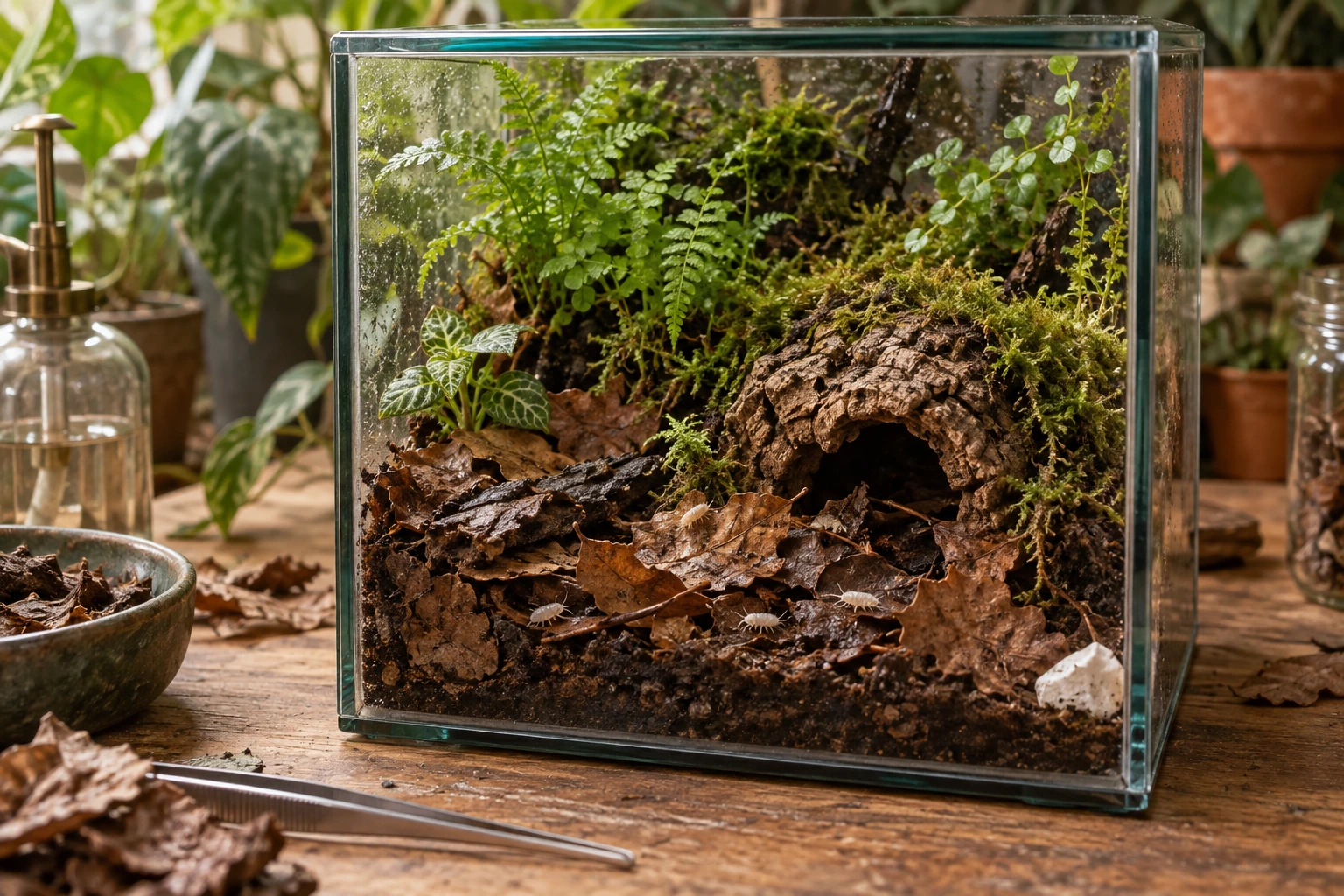
Build a leaf-litter habitat, not just a planted display
Choose small species, stock lightly and maintain a damp refuge. Leaf litter, a calcium source and springtails support the tiny living colony.
Why a nano changes the maths
A nano is small in every direction that matters. A typical 8 by 8 by 8 inch cube holds about 2.2 gallons and gives you only around 64 square inches of floor, which is roughly the size of a folded paper napkin. That little box of soil holds less water, so it dries out faster, and it holds less thermal mass, so it heats up and cools down faster than a big tank sitting in the same room. Every mistake you make in a nano shows up in days instead of weeks.
The bigger issue is food supply. A cleanup crew lives on shed skin, waste, dying plant material and leaf litter, and a tiny planted tank simply does not produce much of any of it. Stock a nano with big, hungry isopods and they will clear the leaf litter in a few weeks, then move on to moss, tender new growth and seedlings because there is nothing else left. Small species eat less per animal, tuck into the leaf pack instead of tunnelling through your planting, and are far easier to keep in balance.
The species picks, by adult size
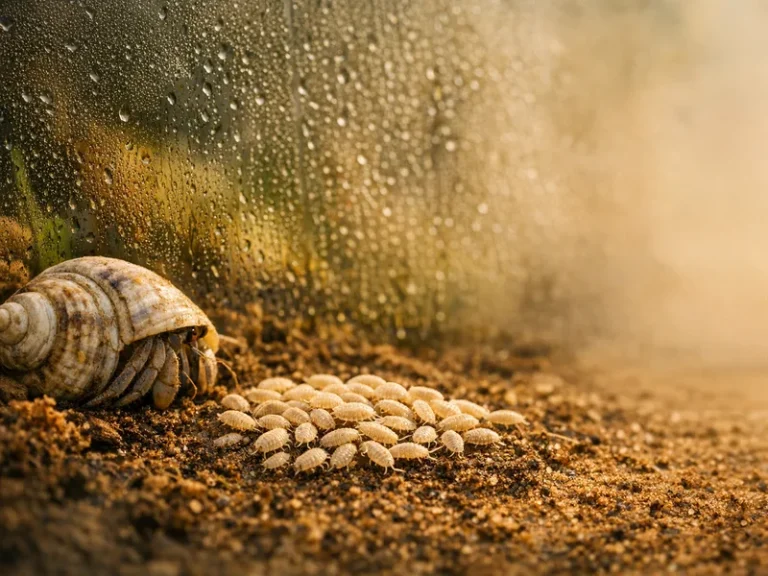
Dwarf White isopods are the first pick for almost every nano. Adults run about 3 to 4 mm, and some sources put the biggest ones nearer 5 mm, which still makes them the smallest cleanup isopod in common use. They are parthenogenetic, meaning the colony is all female and every animal you add can reproduce, so a small starter group builds itself up quickly. They stay down in the damp substrate, they are not climbers, and they are gentle enough to live alongside very small animals. You can see our small-species options on the beginner isopods page.
Powder Orange and Powder Blue are the runner up. Adults are roughly 10 to 12 mm, with some keepers reporting slightly larger, so they are noticeably bigger than a Dwarf White but still well under the size of the display species. They are fast, they breed hard, and they handle a drier corner better than most, which suits a nano that has one warm dry side. Two honest caveats. Powder isopods are commonly described as the best climbers of the popular cleanup species, so a nano with gaps around the lid can lose a few. And for real scale, Dairy Cow (Porcellio laevis) adults commonly run about half an inch to three quarters of an inch, which is several times the body mass of a Powder isopod, and they are protein driven with an appetite to match. That is simply too much for a napkin-sized floor. Skip the big Porcellio and the larger Armadillidium in a nano.
How many to seed a nano
Start smaller than you think. On our farm we seed a nano with about 25 to 30 Dwarf Whites, or about 10 to 15 Powder isopods, plus one springtail culture. That feels like nothing when you tip it in, and that is the point. Isopods multiply on their own, and a nano only ever needs enough animals to keep up with the waste the tank actually makes. Seeding heavy does not speed anything up, it just front-loads a food shortage.
An overcrowded nano crashes fast. In a small volume the litter disappears, uneaten supplemental food fouls the soil, mold and grain mites move in, and the colony dies back all at once instead of tapering. If you want a count matched to your exact tank rather than a general rule, run the numbers through our cleanup crew calculator. And whichever count you land on, seed the tank about 3 to 4 weeks before any animal moves in so the crew has time to settle and start breeding.
Feeding a nano crew, because the tank cannot
This is the part most nano keepers miss. A big planted vivarium with an animal in it generates a steady trickle of waste, but a nano generates almost none, so you have to feed the crew directly or it slowly starves out. Keep a real layer of hardwood leaf litter on the surface and top it up as it thins, tuck in a small piece of soft decaying hardwood, and leave a bit of cuttlebone or another calcium source in a corner so they can rebuild their shells when they molt.
Supplemental food goes in tiny. A piece of vegetable the size of a fingernail is plenty for a nano, and protein such as fish flake should be occasional and sparing, since excess protein invites mites and pushes some species to nip at tankmates. Most keepers find the same rule works here as in a culture bin. If the last feeding is still sitting there, skip this one, and pull anything soft or slimy out within a day or two. In a box this small, overfeeding causes more crashes than underfeeding does.
Pair them with springtails
A small humid tank grows mold, especially in the first month while fresh wood and new substrate break down. Isopods will graze some of it, but springtails are the ones that actually keep up, because they swarm the surface film and, once the culture is established, graze it back faster than it spreads. In a nano, where a single fuzzy patch on a piece of driftwood is a big share of the whole display, that difference is very visible. We seed springtails into every nano we build, without exception. You can pick up a live culture on our springtails page.
Conditions for both are the same and they are easy, which is why the pairing works. Room temperature, about 65 to 78 F, suits Dwarf Whites, Powder isopods and springtails alike, so no heat mat is needed unless the room stays cold. Keep the substrate damp but never waterlogged, with a slightly drier corner if you are running Powder isopods. Letting the tank go bone dry is the single fastest way to lose both crews. If you would rather buy the pair already matched, our isopod and springtail combos are set up for exactly that.
When not to add isopods to a nano
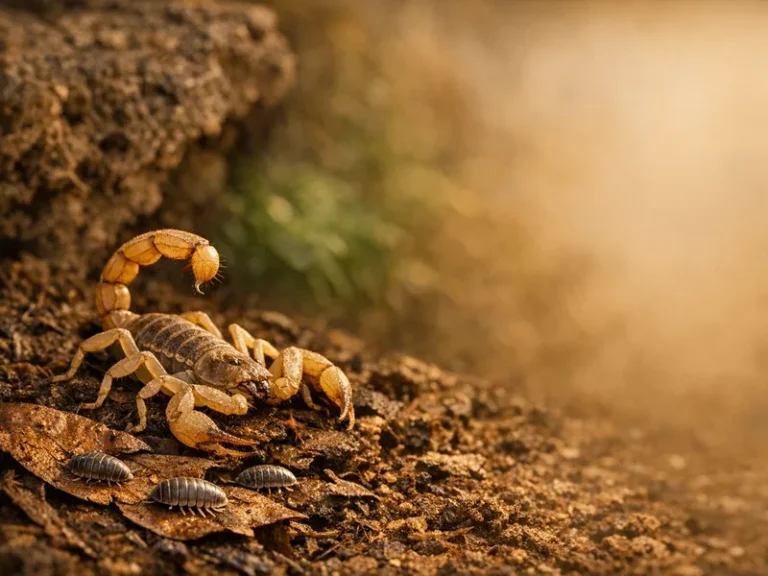
If the nano houses a tiny or delicate animal, a froglet, a hatchling gecko, a small or soft-bodied invert, stick to Dwarf Whites only. They are small, they stay in the substrate, and they are the crew we recommend around fragile tankmates. Do not put Dairy Cow or other large Porcellio in a small occupied tank at all. They are protein-driven, there are documented reports of large Porcellio nibbling reptiles, and a nano gives an animal nowhere to get away from them. Big Porcellio belong in animal-free display bins and feeder bins. Our guide on which isopods are safe with reptiles walks through the pairings in detail.
There is also an honest case for no isopods. If your nano is a sealed, mostly moss and glass display with no leaf litter and no damp soil layer, isopods have nothing to eat and nowhere to hide, and they will simply fade out. Springtails alone are the better answer for that build. Same if you cannot commit to keeping a damp corner. A cleanup crew is a small living colony, not a filter cartridge, and it only works when the tank gives it something to live on.
Keep reading: Dwarf White vs Dwarf Purple Isopods: Which Should You Get?
The Nano Vivarium Kit
Small-species isopods and a springtail culture, sized for a tank under 5 gallons.
Frequently asked questions
What isopods are best for a small vivarium?
The smallest species. Dwarf White isopods are the first pick at about 3 to 4 mm as adults, and Powder Orange or Powder Blue are a good second at roughly 10 to 12 mm. Larger species such as Dairy Cow, which commonly reach half an inch to three quarters of an inch, eat too much for a tank under 5 gallons and will strip the leaf litter, then start on your plants.
How many isopods do I need for a 5 gallon vivarium?
Start with about 25 to 30 Dwarf Whites, or about 10 to 15 Powder isopods, plus one springtail culture. They breed on their own, so seeding heavy does not help and can cause a crash when the food runs out. Seed the tank about 3 to 4 weeks before you add any animal.
Are Dwarf White isopods too small to be useful?
No. They are small individually, but the colony is all female and reproduces fast, so the numbers make up for the size. In a nano the total amount of waste is tiny anyway, which is exactly why a large number of very small workers handles it better than a handful of large ones.
Can Powder Orange isopods climb out of a nano tank?
They can. Powder isopods are widely described as the best climbers of the common cleanup species and will work cracks or slightly dirty glass. In practice a nano with a well-fitted screen or glass lid holds them fine, but if your lid has gaps, expect to find a few wanderers and pick Dwarf Whites instead.
Do I need springtails too, or are isopods enough?
Add springtails. Isopods graze some mold, but an established springtail culture grazes it back faster than it spreads and is what actually clears it, which matters a lot in a small humid tank where one fuzzy patch is a big part of the view. The two crews work different jobs and do not compete much.
Will isopods eat the plants in my nano vivarium?
Healthy plants are usually safe. Isopods prefer dead and decaying material, and problems start when the leaf litter runs out and they have nothing else to graze. That is far more likely in a nano than a big tank, so keep leaf litter topped up, feed a little supplemental food, and keep the stocking count low.
Keep learning
Have a care question? Ask our community.
Join Reptile Keepers USA, our free Facebook group for reptile, amphibian and invert keepers. Share your setups, get care help and swap feeder tips.
Join the free group