Are Store-Bought Plants Safe for Isopods?
Absorbed into the plant's own tissue, not just on the surface
Some soil-drench insecticides stay active in leaves for 6+ months
No treated plant can be baked or frozen safe like leaf litter
Check the plant’s history before it enters the tank
A store-bought plant can absolutely hurt or kill isopods and springtails, and the usual reason is not what most keepers expect: it is rarely mold or a hitchhiking pest, it is a systemic pesticide the nursery applied to the soil months before you bought it. Systemic insecticides move into a plant's own tissue and can stay active for months, so rinsing the leaves or waiting for them to look healthy does not remove it. Unlike wild leaf litter, which you can bake or freeze safe, a living nursery plant has no equivalent fix. Here is how to actually vet one before it goes anywhere near your cleanup crew.
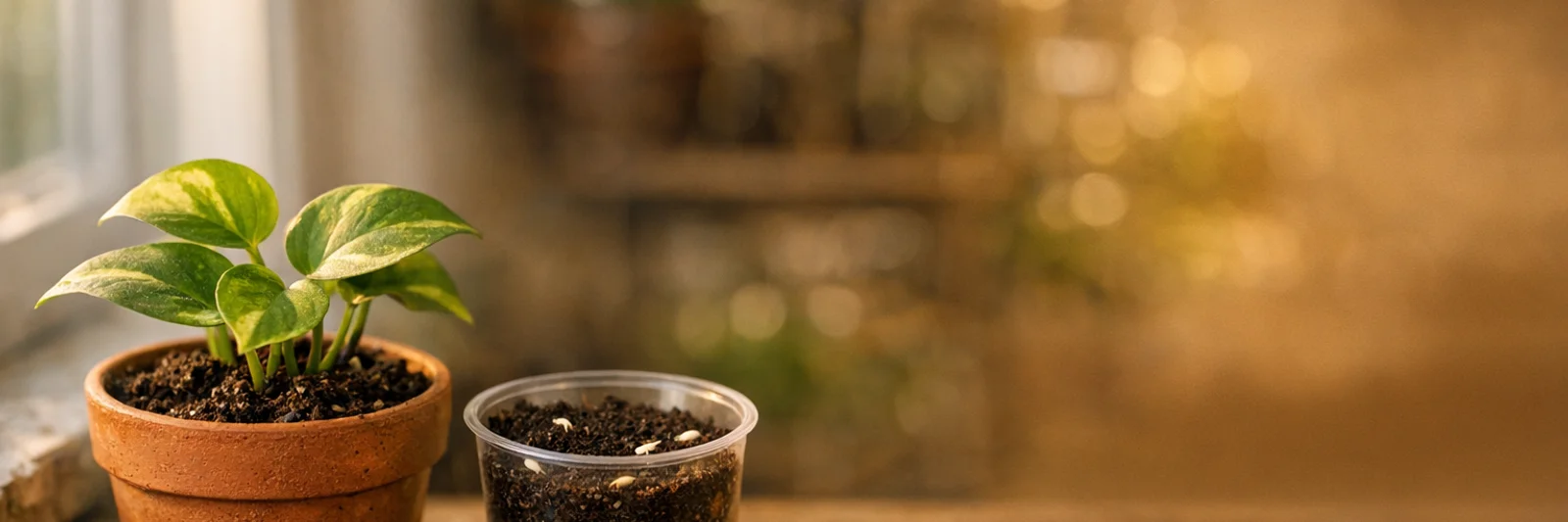
Look beyond the nursery tag
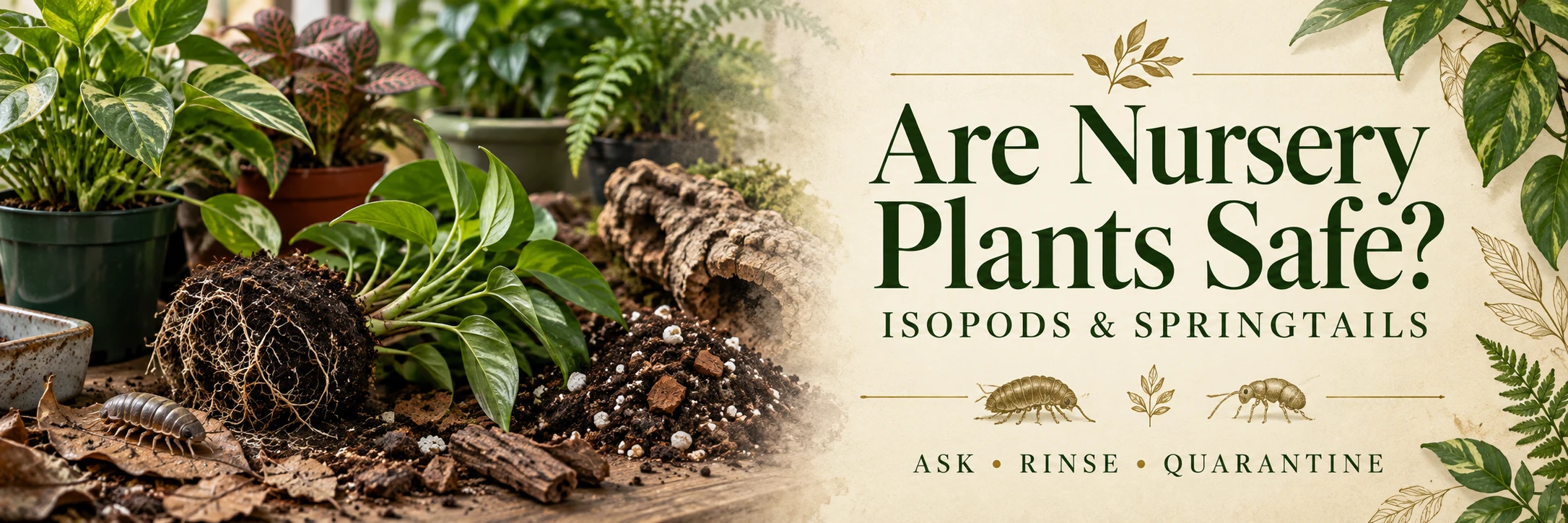
The guide explains systemic pesticide risks, nursery labels, plant preparation, and quarantine before introducing a plant to your cleanup crew.
Why can a store-bought plant hurt isopods and springtails?
Many nursery growers treat plants with systemic insecticides, chemicals absorbed into the plant's own roots and tissue rather than sitting on the leaf surface, and that absorbed chemical, not anything visible on the leaves, is the real danger. University extension research confirms nursery growers commonly use soil-drench products for exactly this reason, since a systemic treatment protects a plant from pests for far longer than a surface spray. That same trait is what makes it dangerous to a cleanup crew: an isopod or springtail feeding on decaying leaves from a treated plant is exposed to the chemical the plant absorbed, not something that would ever wash off.
How long does the pesticide stay active in the plant?
Longer than most keepers assume. Published research on imidacloprid, one of the most common systemic insecticides, found it can remain at effective levels in a treated plant for around six months, and the chemical is rated as highly persistent in soil generally. One study even found it moving into a plant's flowers and reducing survival in beneficial insects that fed on them months after the original application. There is no single number that covers every product or every plant, and sources vary on exact durations, but the honest range is months, not the few days a keeper might assume from a one-time treatment.
Does a 'pet-safe' or organic label mean it's safe for isopods?
Not necessarily, and this is the trap that catches careful keepers. Pet-safe and non-toxic labels on nursery tags are almost always written with dogs, cats, and small children in mind, meaning oral toxicity to a mammal, not residue that could harm a soil-dwelling invertebrate. An isopod and a curious puppy are exposed completely differently: one lives in and feeds on decaying leaf tissue directly, the other would have to eat the whole plant to be at risk. A label that is honestly reassuring for a pet owner tells you nothing about whether the soil is safe for a springtail culture working through it.
How do you actually vet a plant before it goes in the tank?
Start by asking the grower or store directly whether the plant was treated with a systemic insecticide, since some growers and specialty terrarium plant sellers will tell you plainly if you ask. When you cannot get a clear answer, treat the plant as treated until proven otherwise. Bare-root it, rinse the roots under running water, and replace the nursery soil entirely with a substrate you already trust, since the risk lives mostly in the root zone and the soil that came with the pot, not the leaves themselves. This one step removes most of the actual exposure even when you cannot confirm the plant's history.
Should you quarantine a new plant the way you quarantine isopods?
Yes, and the logic is the same one covered in our isopod quarantine guide, just aimed at a different risk. Grow the plant on its own for a few weeks in its new, trusted soil before it goes anywhere near your cleanup crew, and watch how it does on its own first. If you want a live test before committing your whole colony, add a small pinch of an inexpensive springtail culture to the plant's pot as a sentinel group. If that sentinel population is active and feeding normally after a couple of weeks, the soil is a reasonable bet for the rest of your crew.
What if you would rather skip the guesswork entirely?
Buying substrate and leaf litter that was farm-processed specifically for isopods and springtails, rather than repurposing nursery soil, removes the guessing game completely. It is not the only valid approach, foraging and buying nursery plants both work fine with the right precautions, but it is the path with the fewest unknowns if you would rather not run a sentinel test or track down a grower's spray records. Pair any new plant, wherever it came from, with species that already hold up well to a working cleanup crew, so a plant that survives the pesticide question also survives the isopods grazing around it.
Keep reading: Is Fertilizer Safe for Isopods? What Bioactive Keepers Should Know
Where Did This Plant Come From?
The Sentinel & Clean Start Kit
A sentinel springtail culture, clean substrate and litter, so you're never guessing about a new plant's soil.
Frequently asked questions
Are store-bought plants safe to put in an isopod or springtail terrarium?
Not automatically. Many nursery plants are treated with systemic insecticides that get absorbed into the plant's own tissue and can stay active for months. The plant itself may look perfectly healthy while still being dangerous to a cleanup crew feeding on its decaying leaves and soil. Asking the grower, rinsing and replacing the soil, or running a short quarantine period all lower the risk.
How long do pesticides stay active in a plant?
Longer than most people expect. Some systemic insecticides remain effective in a treated plant for around six months, and they are rated as highly persistent in soil generally. There is no single number that covers every product, so treat any nursery plant of unknown history as a months-long risk, not a days-long one.
Does rinsing a new plant remove the pesticide?
No, not if the pesticide is systemic. Rinsing washes off surface residue, but a systemic insecticide has already moved into the plant's roots, stems, and leaves, so no amount of rinsing pulls it back out. Replacing the soil and giving the plant time to grow in fresh, trusted substrate matters far more than rinsing alone.
Is potting soil from a bag safe for isopods?
It depends on the bag. Plain, unenriched potting soil is usually fine, but many bagged mixes include added fertilizer pellets or pest-control ingredients that were never meant to sit in a humid isopod bin. Check the label for insecticide language, and when in doubt, swap in substrate made for isopods and springtails instead.
My cleanup crew died right after I added a new plant. Could this be why?
It's a strong possibility, especially if nothing else about the setup changed. A sudden die-off within days of adding a new plant is a classic sign of pesticide exposure rather than a husbandry mistake. Remove the plant right away, move any survivors to substrate the plant never touched, and see our isopod die-off guide to rule out the other common causes too.
Are pet-safe or non-toxic plant labels good enough for isopods?
Not on their own. Those labels are almost always about oral toxicity to a dog, cat, or child, not about residue in the soil that a decomposer feeding on the plant's leaves and roots would be exposed to. A label that reassures a pet owner does not tell you anything about whether the soil itself is safe for isopods and springtails.
Keep learning
Have a care question? Ask our community.
Join Reptile Keepers USA, our free Facebook group for reptile, amphibian and invert keepers. Share your setups, get care help and swap feeder tips.
Join the free group