Seven Experiments That Work
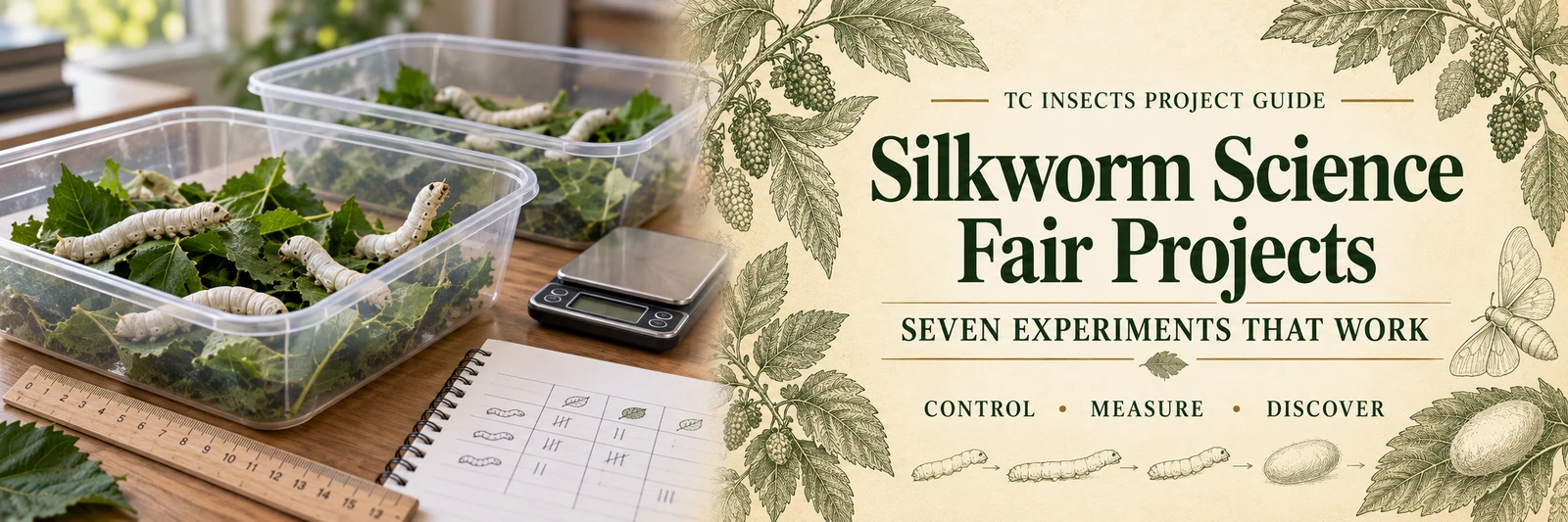
A silkworm (Bombyx mori) science fair project works because you can change one variable, keep everything else the same, and measure a real result in 2 to 4 weeks: growth in millimeters, days to cocoon, cocoon weight, or thread length. The seven projects below each have a clear question, a control group, something to measure with a ruler or kitchen scale, and a timeline that fits a school calendar. Start with 25 to 50 small silkworms so each group has at least 10, keep a written log from day one, and photograph every box on the same ruler each day. Pick one project; a silkworm study with a single sharp question beats a poster that tries to do everything.
Setting up a fair test with silkworms
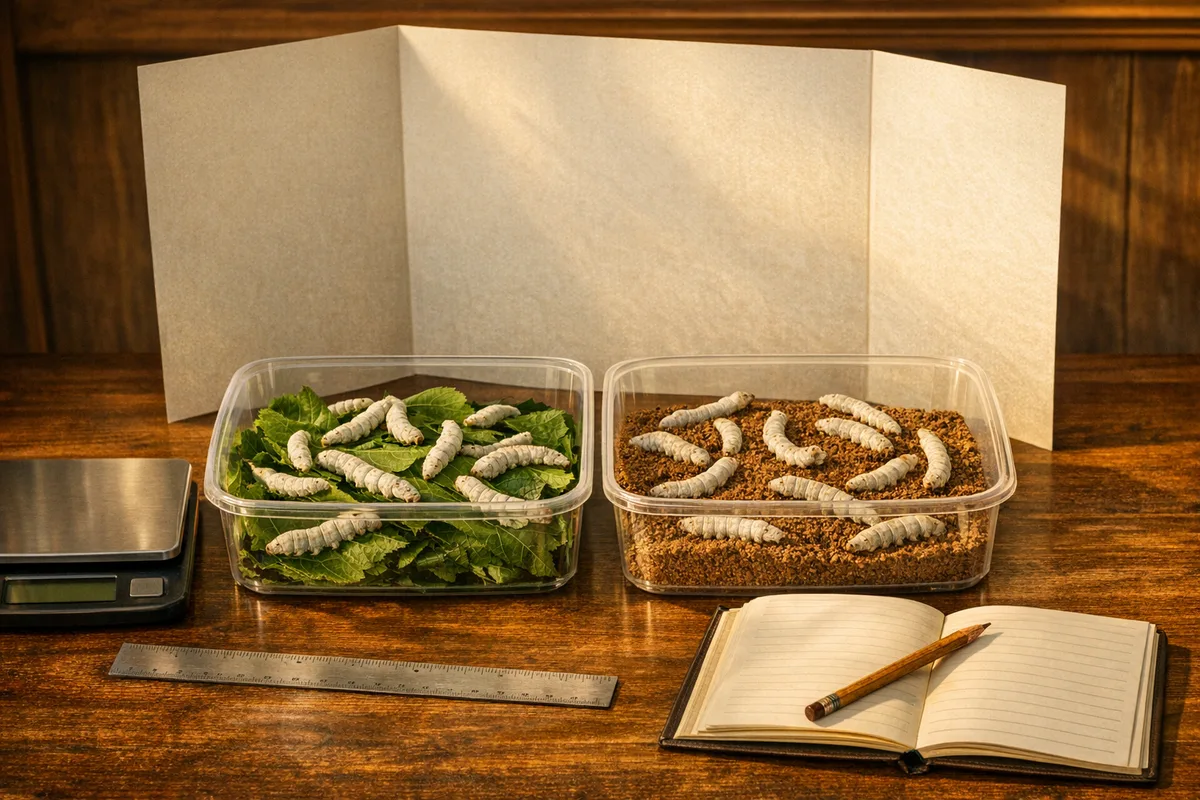
Every project below uses the same skeleton: two or more identical boxes that differ in exactly one thing. Same number of worms per box, same starting size, same room, same food amount, same cleaning schedule. Use clear shoeboxes or 32 oz cups with ventilated lids and a paper towel floor, no water, and label each box with the variable and the date. Judges look for a control group and a single variable more than they look for a dramatic result, so a project that finds no difference, honestly reported, still scores.
Measure the same way every day. Length is easiest: lay a worm on a printed millimeter ruler, photograph it, and read the photo later. Weight needs a kitchen scale that reads to 0.1 g; weigh the whole group and divide. Keep a table with date, box, average length, food added, deaths, and molts observed. Buy your worms as one batch of small silkworms so every box starts at the same age, and read the silkworm care sheet before day one, because a batch lost to mold in week two is the most common way a project ends early.
Projects 1 to 3: what changes how fast they grow
Growth projects are the safest bet: they run 2 to 3 weeks, and the measurement is a ruler.
1. Mulberry leaves vs mulberry chow
Question: do silkworms grow faster on fresh mulberry leaves or on prepared chow? Two boxes, 10 to 15 worms each, one on fresh leaves picked daily and one on chow, measured daily for 3 weeks. Record days to each molt and final length before spinning. You need access to a pesticide-free mulberry tree for this one. Our own leaves versus chow comparison gives you a hypothesis to test rather than a result to copy.
2. Temperature and growth rate
Question: how much does a 10 degree change in room temperature change days to cocoon? Two boxes on the same food, one in a room near 70 F and one near 80 F (a closet shelf near a heat source, never a lamp on the box). Silkworms are insects, so their growth is tied to temperature; you should see a difference of several days, and the cool box may need extra weeks. Log the actual temperature with a cheap digital thermometer in each box.
3. Feeding frequency
Question: does feeding three small meals a day beat one large meal? Same daily amount of chow split differently. Measure length daily and note how much food is left uneaten in each box before the next feeding. This one is popular because it can be run in a classroom with a rotating feeding schedule, and the answer is not obvious.
Projects 4 and 5: behavior and senses
Behavior projects run in a single afternoon once the worms are in their third or fourth growth stage, so they suit a late start.
4. Can silkworms find mulberry by smell?
Question: do silkworms move toward mulberry leaves and away from a decoy? Set a worm in the middle of a paper arena with a small mulberry leaf on one side and a same-sized leaf of another plant on the other, cover the arena so light does not bias them, and record which leaf the worm reaches first over 10 trials per worm. Swap the sides between trials. Repeat with 10 worms and report the percentage that chose mulberry.
5. Light or dark
Question: do silkworms prefer shade? Cover half a box with a card and count where each worm sits every 5 minutes for an hour. This is the silkworm version of the classic isopod choice-chamber experiment, and it pairs well with a second animal if you want to compare species; see the isopod choice chamber lab for the same method.
Projects 6 and 7: cocoons and silk
Cocoon projects need the full 4 to 5 weeks, so start early, but they produce the best display: real cocoons, real silk thread, and numbers nobody else at the fair will have.
6. Does diet change cocoon size?
Question: do worms raised on leaves spin heavier cocoons than worms raised on chow, or worms fed more often? Run one of the growth projects above, then weigh every finished cocoon on a 0.1 g scale about 5 days after spinning, before the moth emerges. Report average cocoon weight per box and the range. Keep the cocoons; they are the centerpiece of the poster.
7. How long is the thread in one cocoon?
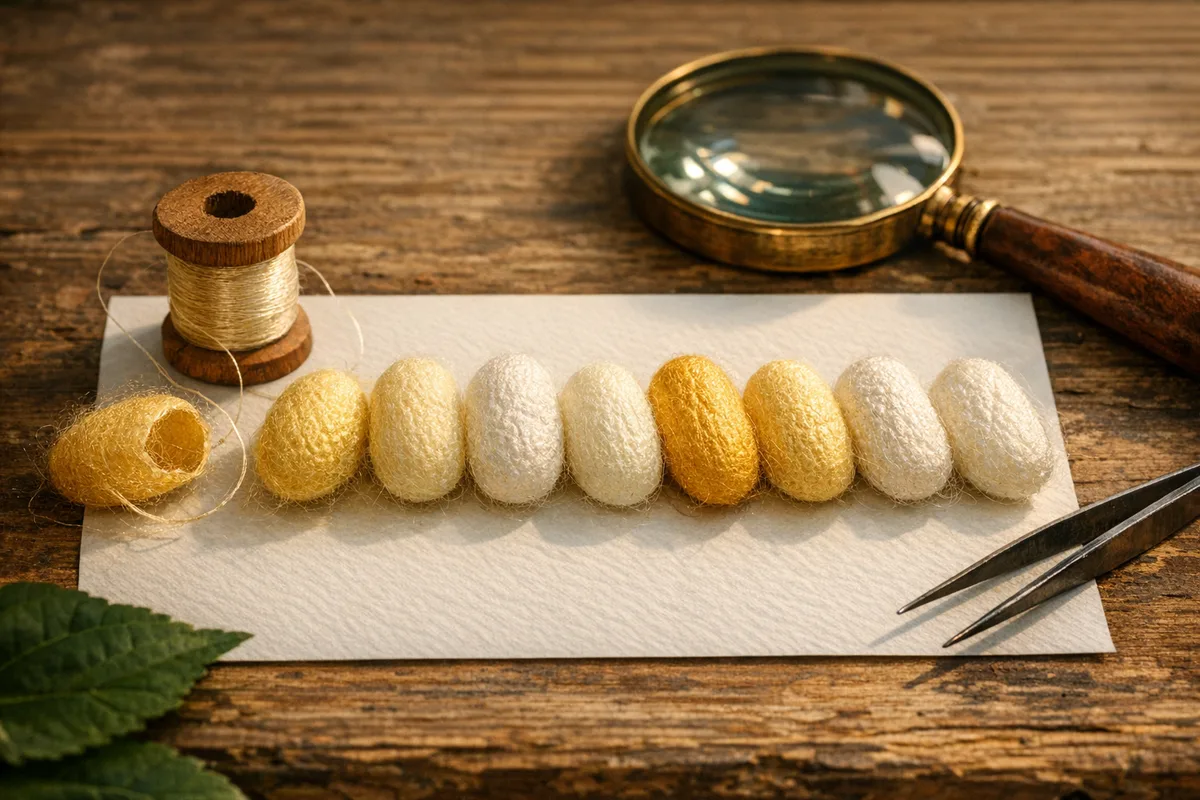
Question: how many meters of silk does one silkworm spin? Soak one cocoon in very hot water for a few minutes to loosen the gum, find the loose end with a soft brush, and wind the thread onto a marked spool or a ruler, counting turns. Commercial cocoons are often quoted at several hundred meters or more of usable thread; your number will depend on the strain and how gently you reel. Try three cocoons and report the average, then compare thread strength by hanging small weights from a short length.
Timeline: which project fits your deadline
With 4 weeks or more before the fair, run any project on this list, order small worms, and start the same week the worms arrive. With 3 weeks, run a growth project (1, 2, or 3) and stop measuring when the first worm spins. With 2 weeks, order medium worms and run a behavior project (4 or 5) plus a short growth log. With less than 2 weeks, buy medium worms, run the light-or-dark test, and present the full life cycle from our egg-to-moth guide as background rather than data you collected.
Build a week of slack into any cocoon project. Silkworms spin on their own schedule, worms in the same box can be a week apart, and a cool spell in the house stretches everything. If the fair is fixed and you cannot start early, choose a growth project and let the cocoon be a bonus. Order one 32 oz cup of chow per 25 to 30 worms plus a spare; a project that runs out of food in week three has no data.
Presenting silkworm results judges respond to
Judges reward a clear question, a fair test, honest numbers, and a student who can explain what went wrong. Lead the poster with the question and your one variable. Show the daily length graph with both boxes on the same axes, a photo strip of the same box on the same ruler every few days, and a table of molts and deaths. Put the cocoons and a reeled thread in a small display box; people stop for real silk. End with what you would change: more worms per box, a steadier temperature, a longer run.
Two honesty points that strengthen a project rather than weaken it. Report deaths and the box they came from, because judges notice missing worms. And say plainly that silkworms are a domesticated insect bred for thousands of years, so results describe a farm animal, not a wild moth. A student who understands that has understood the animal, and that is what the whole project was for.
The Science Fair Silkworm Kit
Two matched groups of small silkworms, chow for both, and an extra cup, so the only difference between boxes is the one you chose.
Frequently Asked Questions
What is the easiest silkworm science fair project?
Leaves versus chow, or feeding frequency, run for 2 to 3 weeks with 10 to 15 small silkworms per box. Both need only a ruler and a daily log, both have a clear control group, and both finish before the cocoon stage, so a slow-spinning worm cannot wreck your deadline.
How many silkworms do I need for a science project?
At least 10 per group and 25 to 50 total. With fewer than 10 per box, a single sick worm or an early molt swings the average and judges will notice. Order them as one batch of the same size so every box starts equal, and keep a few spares in a separate box.
How long does a silkworm science project take?
Growth and behavior projects take 2 to 3 weeks from small worms. Cocoon and silk projects need 4 to 5 weeks because the worms must finish growing, spin, and rest before you weigh or reel the cocoons. Add a week of slack for cool rooms and slow spinners.
Can I measure the silk thread from one cocoon?
Yes. Soak a cocoon in very hot water for a few minutes to soften the gum, lift the loose end with a soft brush, and wind it onto a marked spool while counting turns. Reel gently to avoid breaks, do three cocoons, and report the average. Commercial figures are often several hundred meters or more, but your strain and technique will set your own number.
What should I measure every day in a silkworm experiment?
Length in millimeters on a printed ruler (photograph it and read the photo later), grams of food added, any molts you see, and any deaths, per box. A weekly group weight on a 0.1 g kitchen scale adds a second measure. Keep the table from day one; a project cannot go back and collect week-one data.
Do I need mulberry leaves for a silkworm project?
No. Prepared mulberry chow works for every project on this list, and only the leaves-versus-chow experiment needs a real tree. If you do use leaves, they must be pesticide-free and picked fresh daily, and the tree must be a mulberry, because silkworms will not eat anything else.
Written by the TC INSECTS breeding team · Porter, Texas · Live Arrival Guarantee on every order
Have a care question? Ask our community.
Join Reptile Keepers USA, our free Facebook group for reptile, amphibian and invert keepers. Share your setups, get care help and swap feeder tips.
Join the free group