Chameleon Feeding Schedule: How Often by Age

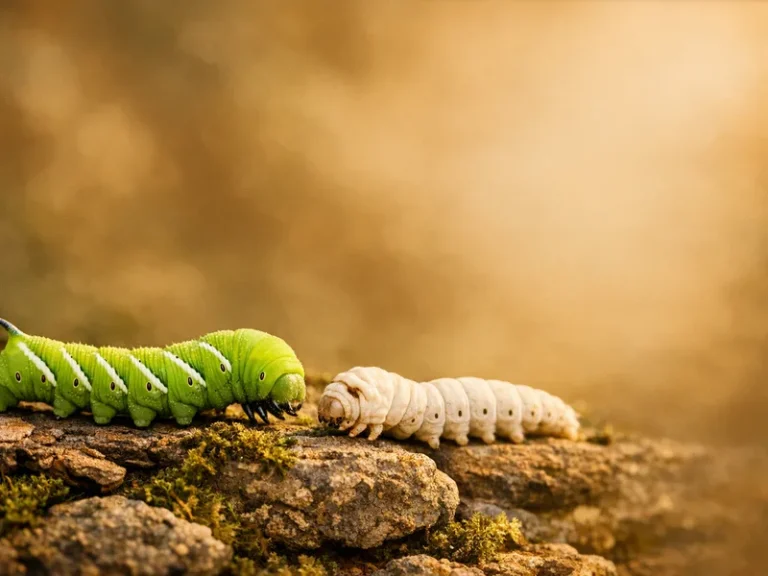
~1% fat, ~79% moisture, friendly Ca:P
~85% moisture, still dust them
most adults every other day
Chameleon Feeding Schedule: How Often by Age
Chameleon feeding frequency depends on age and size: juveniles eat daily, while most adults do well fed every other day. Because chameleons are visual hunters with sensitive guts, that schedule works best built around a rotation of feeders rather than one staple, and the two keepers rank at the very top are silkworms and hornworms for their soft bodies, low fat, and high moisture.

Variety Is the Whole Game
Chameleons are visual hunters with sensitive guts, and no single insect gives them everything. The keepers who succeed long term rotate several feeders so that protein, fat, moisture, and calcium all come from different sources across the week. On our farm we tell chameleon owners to think in terms of a menu, not a staple.
A workable rotation leans on soft, low fat feeders for everyday meals, uses a couple of richer or specialty items now and then, and dusts almost everything with calcium. Juveniles eat daily, while most adults do well fed every other day. As with any insectivore, feeders should be no longer than the space between the chameleon's eyes.
Silkworms: A Top Everyday Staple
Silkworms (Bombyx mori) are widely regarded among the best staples for chameleons, and for good reason. They are soft bodied and easy to digest, run near 1 percent fat, and carry roughly 79 percent moisture, so they feed and hydrate at once. Their calcium to phosphorus ratio, around 1 to 2.4, is friendlier than almost any other larval feeder.
That clean, usable nutrition is why a picky or recovering chameleon will often cave for a silkworm when it turns down everything else. Our silkworm care sheet covers storage, but the short version is keep them at room temperature on their chow, never the fridge, and a light calcium dusting is still smart insurance.
Hornworms: The Hydration Powerhouse
Hornworms (Manduca sexta) are the hydration tool. At about 85 percent moisture and only 3 percent fat they are close to edible water, which makes them ideal for a chameleon that is shedding or not drinking enough. Their bright teal color also triggers a strike, handy for a reluctant eater.
Their calcium balance, near 1 to 3, is better than richer treats like superworms, but hornworms are still calcium poor on their own, so dust them before feeding. Offer them as a hydrating part of the rotation rather than a sole diet, since they are modest in protein.
Dubia and BSFL: Everyday Substance
For steady protein, dubia roaches are a clean everyday staple at nearly 23 percent protein with a calcium balance around 1 to 3. Sized right, they give a chameleon real substance without the fat of a rich worm, and their slow movement is easy for a chameleon to track and tongue.
Pair them with black soldier fly larvae, the one common feeder rich enough in calcium, near 2.5 to 1, to serve without dusting. Dubia for protein, BSFL for calcium, silkworms and hornworms for soft hydration is a rotation that covers a chameleon's bases without much fuss.
Superworms Sparingly, and How to Serve It All
Superworms have a place, but a small one. At roughly 17 percent fat and a badly inverted 1 to 18 calcium ratio they are a rich, occasional item for a hungry adult, not an everyday feeder. Offer one now and then and always dust it.
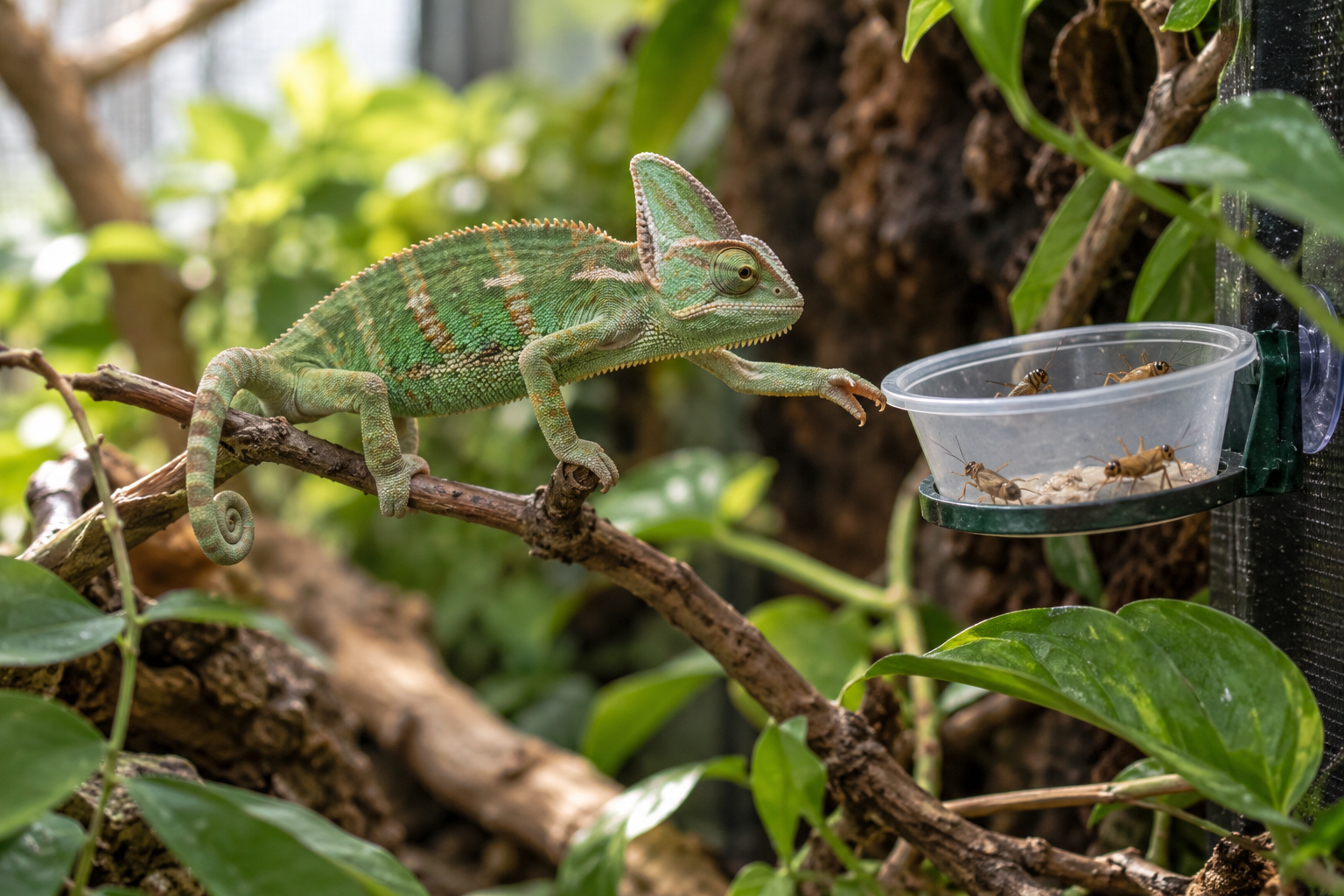
You can serve feeders two ways. Cup feeding, dropping prey into a smooth, deep dish the chameleon can aim at, keeps slow movers like silkworms from hiding and lets you count what gets eaten. Free ranging feeders into a planted cage lets a chameleon hunt naturally, which many keepers prefer for enrichment. Slow, soft worms suit a cup, while faster feeders suit free ranging.
Frequently Asked Questions
Ready to Stock Up?
Written by the TC INSECTS breeding team · Porter, Texas · Live Arrival Guarantee on every order
Have a care question? Ask our community.
Join Reptile Keepers USA, our free Facebook group for reptile, amphibian and invert keepers. Share your setups, get care help and swap feeder tips.
Join the free group