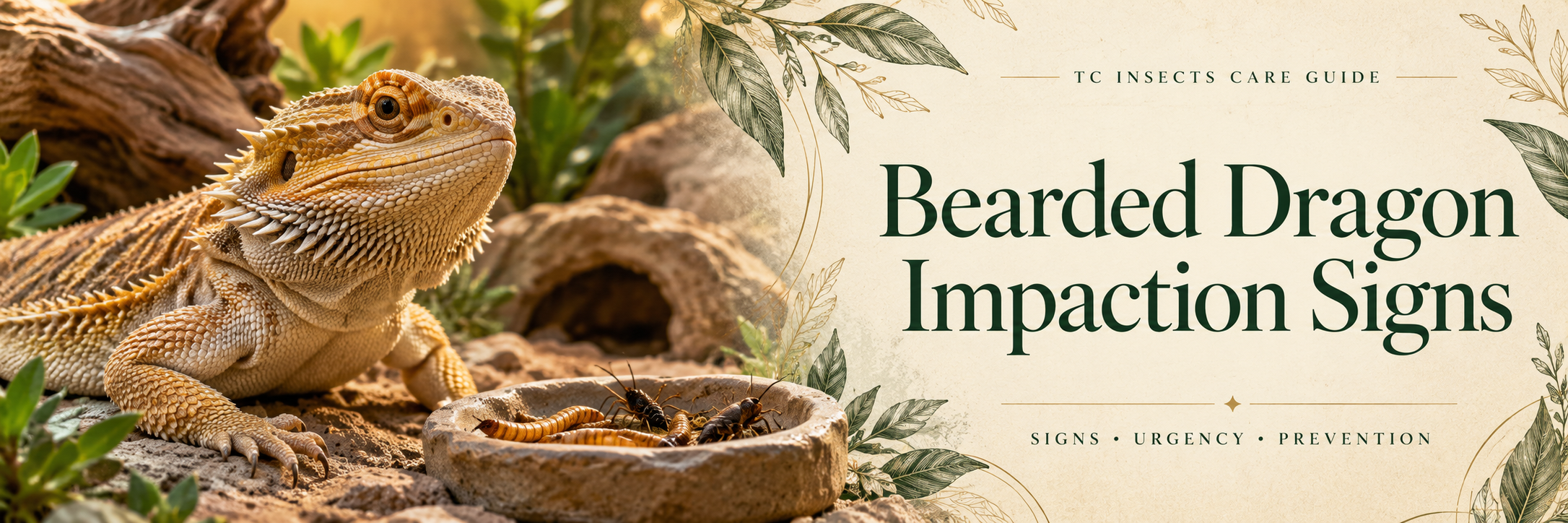
Bearded Dragon Impaction Signs
Bearded dragon impaction signs range across a real severity ladder, and most keepers panic at the wrong end of it: a dragon that simply has not pooped in a few days is usually fine, straining with no result for longer than that is worth watching closely, and any hind-leg weakness or a dragging tail is a same-day emergency, since a large impacted mass can press directly on the spinal cord. This guide separates ordinary infrequency from real constipation from a genuine emergency, and puts prevention, prey size, substrate, and basking heat, back where it belongs: mostly in your hands. See our bearded dragon care sheet for the full husbandry picture.
Possible spinal pressure from an impacted mass. Same-day vet
Adult frequency varies by diet, temperature and season
The single biggest prevention lever, more than substrate
Three different things, one severity ladder
Keepers tend to lump every pooping problem together, but a bearded dragon can be at any of three distinct points: simple infrequency that is not a problem at all, real constipation that is worth home steps, or an impaction with neurological signs that is a genuine emergency. Treating all three the same way, either ignoring all of them or panicking at all of them, is what causes the most harm.
The severity ladder below sorts by what you can actually see: how long since the last stool, whether straining is happening, and whether the back legs and tail are moving normally. Work through it in order rather than jumping straight to worst-case.
Infrequent pooping: usually not a problem
Adult bearded dragons commonly go anywhere from 1 to 7 times a week depending on diet, temperature, and the season, and that range alone is not a red flag. Juveniles fed daily typically go closer to once a day, so their bar for concern sits earlier than an adult's does.
A dragon that is eating, active, and basking normally, with no straining and no swelling, is very likely fine even after several days without a visible stool. This is the point in the ladder where watching, not treating, is the right move.
Real constipation: straining, small hard stool, a soft home step
Constipation looks like effort without much result: straining at the vent, small or unusually hard, dry droppings, or a visibly firmer belly, in a dragon that is still eating and otherwise acting normal. This is further along the ladder than simple infrequency but still short of an emergency.
A warm shallow soak with gentle, downward belly massage toward the vent, for about 20 to 30 minutes, is the one home step worth trying, repeated once daily. Give it a firm 48 to 72 hour window; if nothing changes in that time, or if any sign below shows up, stop trying to fix it at home and call an exotics vet instead.
When it's an emergency: hind-leg weakness and dragging
Hind-leg weakness, a stiff or dragging gait, or a tail that drags instead of lifting are the signs that end the wait-and-see approach immediately. A large impacted mass can press directly against the spinal column, and that kind of neurological pressure is both painful and capable of getting worse quickly.
A visibly bloated or swollen belly, complete loss of appetite alongside no stool, or a dragon that stops basking and goes unusually still all belong in this same same-day category. None of these are a soak-and-wait situation; they are a call to an exotics vet today, not a home remedy to try first.
Prevention: prey size is the lever you actually control
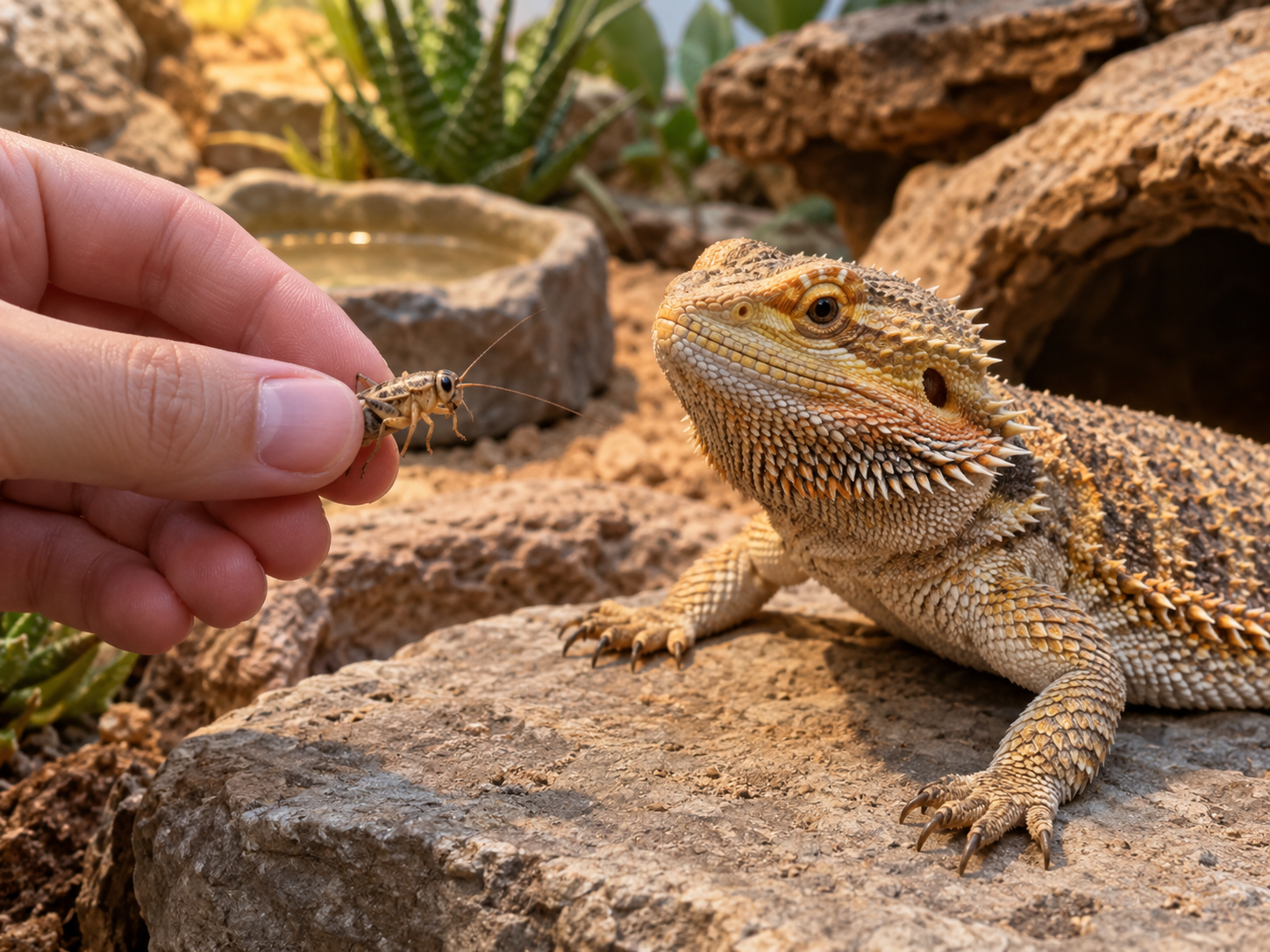
Impaction prevention starts with sizing, not substrate: never offer a feeder wider than the space between your dragon's eyes, and re-check that measurement every few weeks through a growth spurt, since last month's safe size can become this month's risk. Our feeder insect size chart and feeder impaction guide break this down by age and by feeder.
Soft-bodied feeders such as black soldier fly larvae, hornworms, and silkworms digest more easily than a hard-shelled superworm or an adult beetle, so lean on them for juveniles and anytime you are not certain about sizing. On substrate, tile, slate, or a firm soil mix carries far less risk than loose sand, which can be swallowed alongside a feeder that is struck at hard.
Basking heat is what actually digests the meal
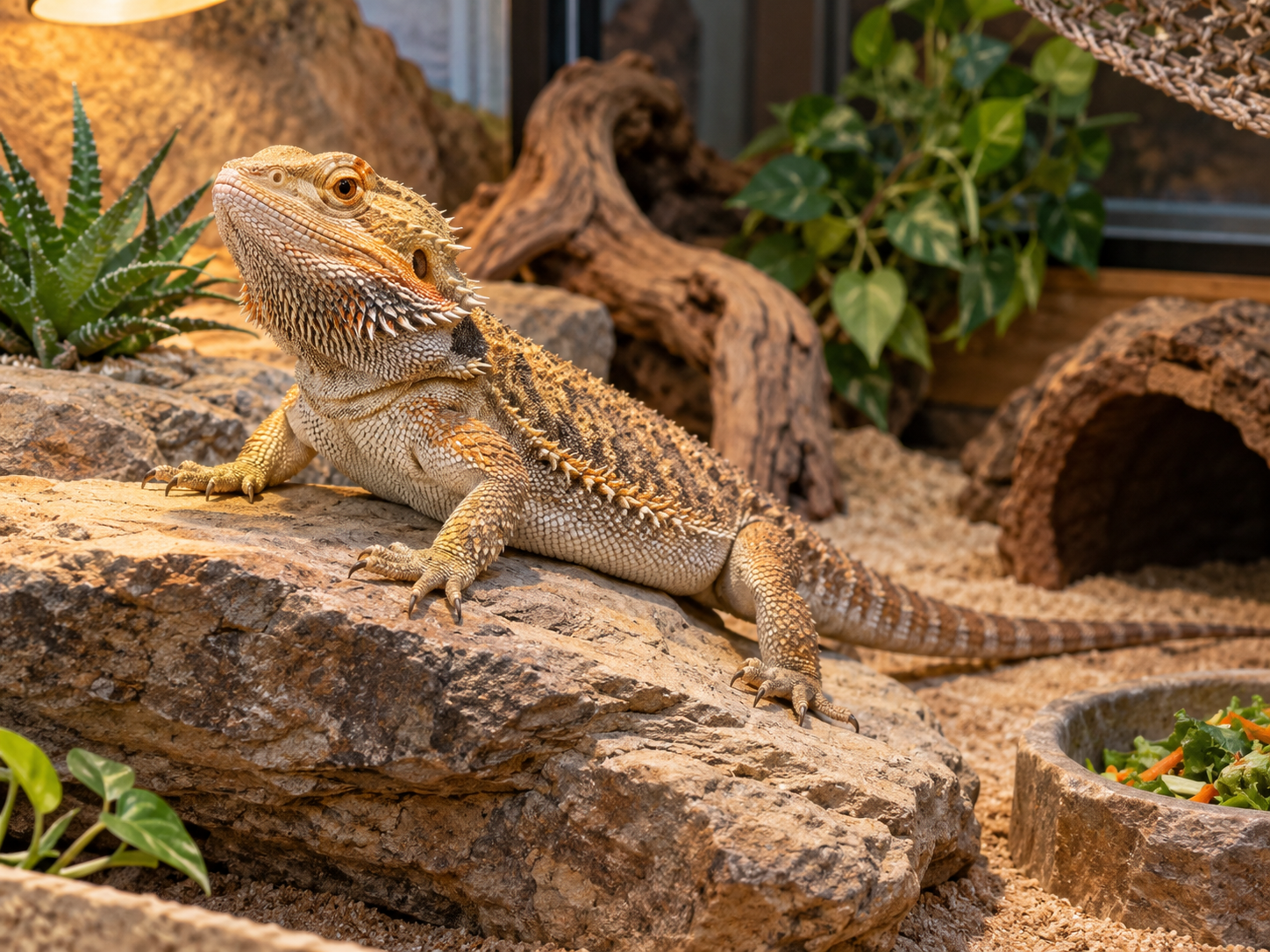
A bearded dragon digests using external heat, so a basking surface that falls short of the roughly 95 to 105°F our care sheet calls for slows everything moving through the gut, turning even a correctly sized meal into a slower, riskier one. Check the actual basking surface with a probe, not the ambient air.
Pair the right temperature with a feeding rotation that matches age and season, covered in our feeder rotation schedule, and you remove most of the actual risk before it starts. Correctly sized, soft-bodied black soldier fly larvae are a solid everyday staple to build that rotation around.
Bearded Dragon Impaction: The Severity Ladder
The Easy-Digestion Kit
Soft-bodied, correctly sized feeders that lower impaction risk while you fix the real cause.
Frequently Asked Questions
Keep reading: bowl feeding versus loose feeding and brumation or illness.
Written by the TC INSECTS breeding team · Porter, Texas · Live Arrival Guarantee on every order
Have a care question? Ask our community.
Join Reptile Keepers USA, our free Facebook group for reptile, amphibian and invert keepers. Share your setups, get care help and swap feeder tips.
Join the free group