What to Do With Leftover Feeder Insects, by Species
Leftovers grow up and breed on a shelf
Mealworms, BSFL, mini mealworms
Freeze, then trash, for a cup you cannot use
Every leftover feeder has a safe next step
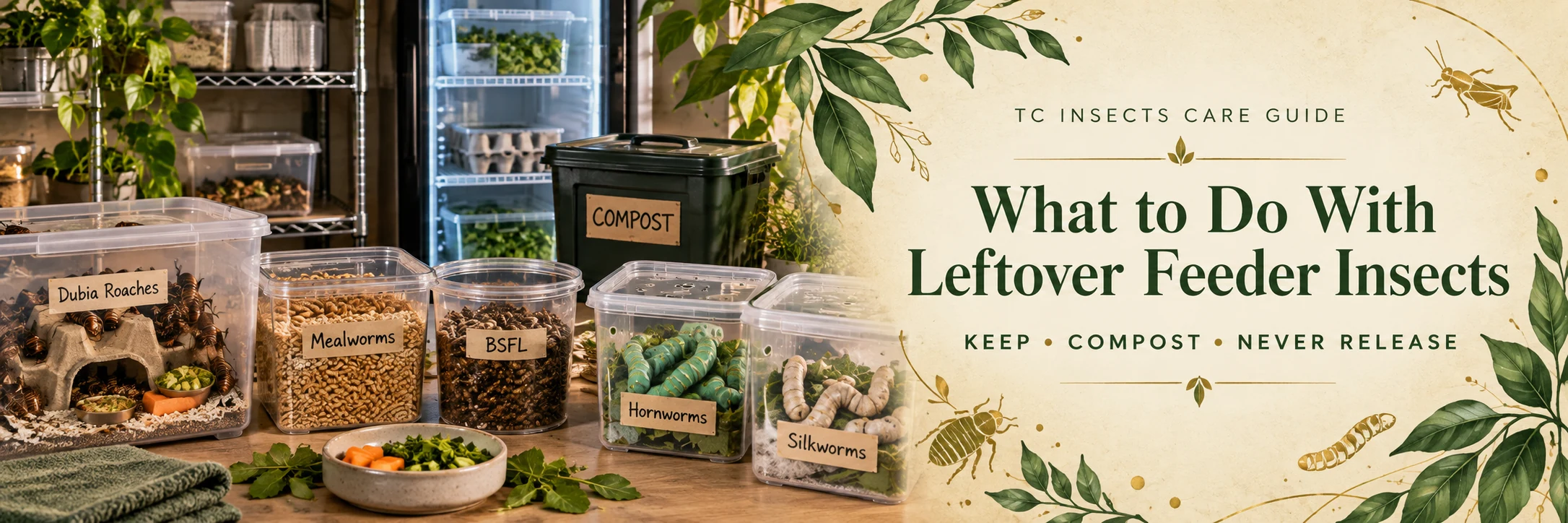
Every keeper ends up with a cup of feeders the animal did not finish, and the answer depends on the species: dubia roaches become a colony, mealworms go in the refrigerator or become beetles, superworms become beetles or bird food, black soldier fly larvae go in the refrigerator or the compost, hornworms and silkworms become moths and the next generation, and fruit fly cultures go in the freezer and then the trash. The one thing none of them do is get released outdoors, because a feeder colony loose in a yard is either a dead colony or a new pest, and both are bad ends. This guide gives the best use for each leftover, the storage that buys time, and the humane way to end a cup you cannot use.
Keep it, compost it, or dispose of it safely
Match the next step to the species, and never release captive feeder insects outdoors.
Dubia and red runners: keep them, they breed
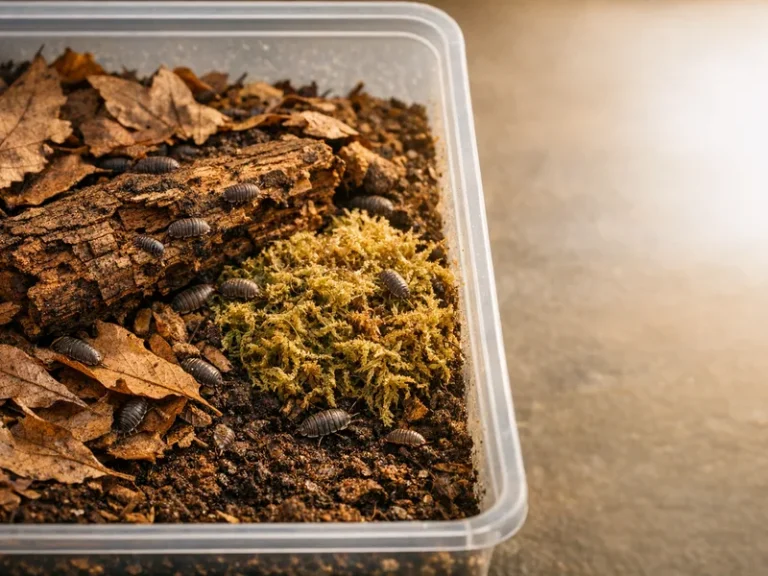
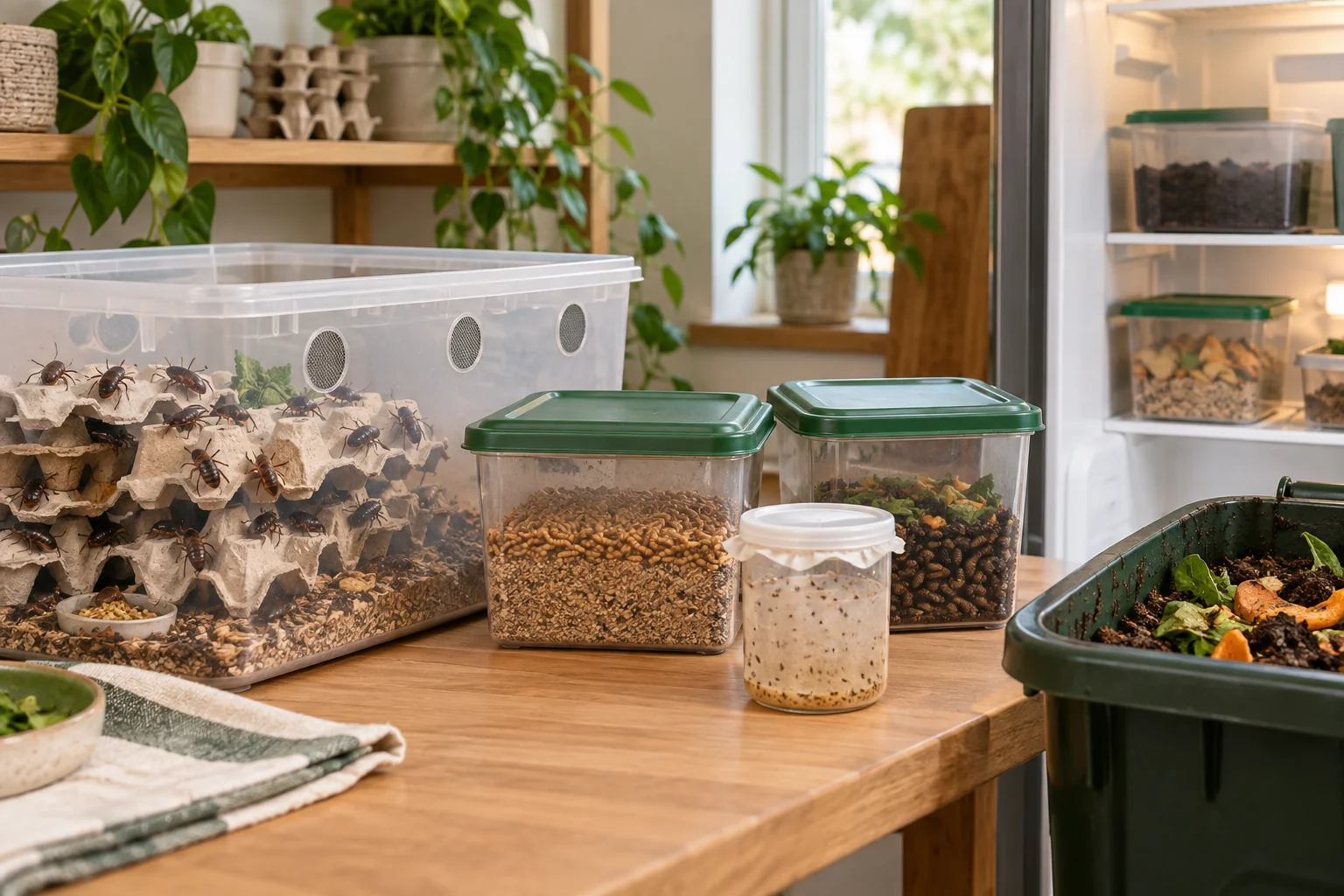
Leftover dubia are the easiest leftover there is. Put the cup in a ventilated tub with egg flats, dry chow, a vegetable slice, and water crystals at room temperature and they live for months; keep the tub warm, in the 80s F, and the nymphs grow up and start breeding within a few months, and the leftovers have become a colony that feeds the animal for free. The home breeding guide covers the tub and the temperatures, and a leftover cup is the cheapest possible start.
Red runners are the same with more speed and more climbing, so the tub needs a smooth wall and a tight lid. Neither species is native to the country and neither survives a northern winter outdoors, but a warm garage is not outdoors, and a red runner colony loose in one is a real nuisance. Leftover roaches stay in a tub.
Mealworms and superworms: fridge, beetles, or birds
Leftover mealworms go in a ventilated container with an inch of dry bran in the refrigerator, where they keep for months and stay the size they are. Or leave them warm in bran, and within a few weeks they pupate and turn into darkling beetles, which lay eggs and start a colony; a bin of leftover mealworms is how most home colonies begin. Superworms kept together in bran stay larvae for weeks; isolated one to a cup they pupate, and the beetles breed, as breeding superworms at home explains.
Both are also wild bird food. Bluebirds, chickadees, wrens, and robins take leftover mealworms from a dish at about 15 per bird per day, and backyard chickens take both by the handful. The bluebird post covers the dish and the limits. A cup that would otherwise be trash becomes a week of a bluebird pair on the fence.
Black soldier fly larvae: fridge, chickens, compost
Leftover BSFL keep a few weeks in the refrigerator with no food. Beyond that, they are the one feeder with a genuine second life: chickens and ducks take them as a calcium-rich treat, wild birds take them from a dish, and a handful dropped into a warm compost pile in summer eats kitchen scraps and pupates into harmless adult flies that live about a week and do not bite. Black soldier flies are native across most of the country, and a compost pile is their natural home.
If you want to keep the larvae going rather than let them finish, a warm bin with scraps and a ramp turns a leftover cup into a grow-out bin, which our guide to raising BSFL at home covers. A cup left warm and dry on a shelf turns into flies within two weeks, which is harmless but pointless.
Hornworms and silkworms: let them finish
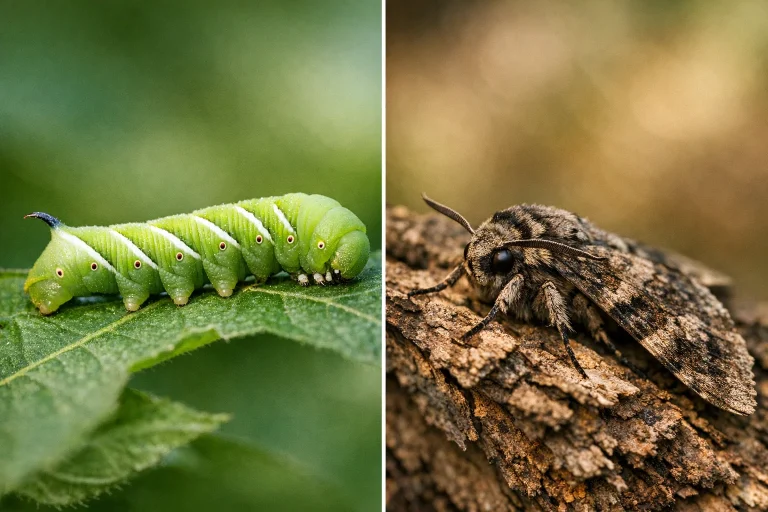
Hornworms that outgrow the animal keep growing, burrow into the substrate at the bottom of the cup or a tub of soil, pupate, and emerge a few weeks later as large hawk moths. Our post on the hornworm that turned into a moth covers what to do with the moth, which is mostly to enjoy it for the week it lives; captive hornworm moths need a nectar source and rarely breed at home. The moth is a fine classroom or window event and a poor feeder.
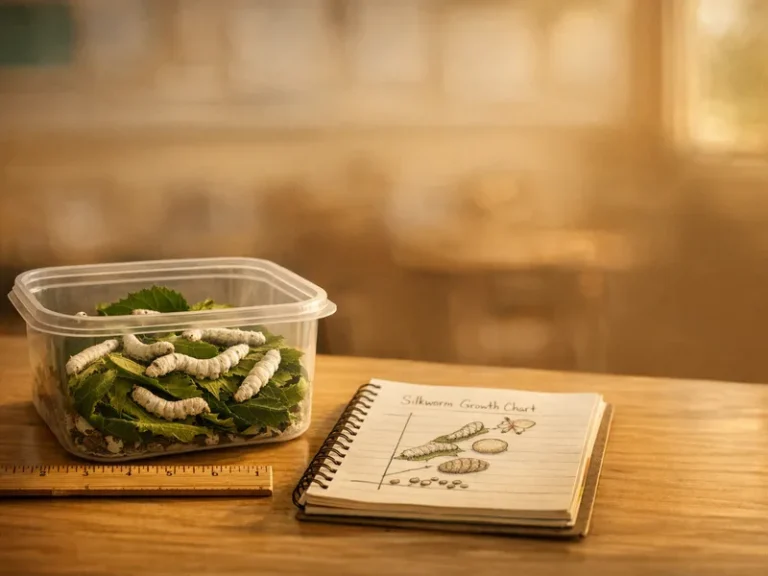
Silkworms that outgrow the animal spin cocoons and emerge as flightless silk moths that mate and lay hundreds of eggs on paper, and those eggs, refrigerated, are the next batch of silkworms for free. The silkworm breeding guide covers the cocoon-to-eggs cycle. A leftover silkworm cup is the start of a colony that costs nothing but chow.
Fruit flies, and the cup you cannot use
A fruit fly culture that has stopped producing, or a cup of anything you cannot keep, use, or give away, goes in the freezer overnight and then in the trash. Freezing is the humane end for an insect; it slows and stops without struggle, and a frozen cup does not smell in the bin. Never release feeders outdoors, whatever the species: a non-native roach or worm either dies slowly or establishes, and a native one carries whatever the bin carried.
Before the freezer, ask around. Reptile keepers, a local herp society, a science teacher, a chicken keeper, or a bird feeder two doors down will take a cup of live feeders gladly, and a mix pack that did not suit one animal often suits another. The best feeders to breed at home page is the other exit: most leftovers are a colony waiting for a tub.
Buying so there are fewer leftovers
Leftovers come from three habits: buying a treat feeder by the hundred, buying a size the animal is about to outgrow, and buying a month of a feeder that keeps two weeks. Buy hornworms and silkworms in small cups for the week, buy dubia a size small and let the cup grow with the animal, and buy BSFL and superworms in counts the collection eats inside their storage window. Mealworms and dubia can be bought big, because leftovers of both keep for months or become colonies.
The rest is a tub on a shelf. A keeper with a dubia tub, a mealworm bin in the refrigerator, and a superworm bin in bran never has leftovers; they have stock, and the animal eats from it for years. A colony starter to add the leftovers to is in the dubia shop.
The Leftover-to-Colony Kit
What a leftover cup needs to become a colony: a starter to join, substrate, bran, and chow for silkworms that will finish.
Frequently Asked Questions
What can I do with leftover dubia roaches?+
Keep them. In a ventilated tub with egg flats, dry chow, a vegetable slice, and water crystals they live for months, and kept warm in the 80s F they grow up and breed within a few months, turning the leftovers into a colony. Never release them outdoors.
What do I do with mealworms my reptile did not eat?+
Refrigerate them in an inch of dry bran, where they keep for months, or leave them warm in bran and let them turn into beetles that start a colony. Wild bluebirds, chickadees, and robins take leftover mealworms from a dish, and chickens take them by the handful.
Can I put leftover black soldier fly larvae in my compost?+
Yes. Black soldier flies are native across most of the country and a warm compost pile is their natural home; the larvae eat scraps and pupate into harmless flies that live about a week. Chickens, ducks, and wild birds also take them, and they keep a few weeks in the refrigerator first.
What happens to hornworms and silkworms I do not feed?+
Hornworms burrow, pupate, and emerge as large hawk moths that live about a week and rarely breed at home. Silkworms spin cocoons and emerge as flightless moths that lay hundreds of eggs on paper, and those eggs, refrigerated, are the next free batch of silkworms.
Is it okay to release feeder insects outside?+
No. A non-native feeder like a dubia or red runner either dies slowly or establishes as a pest, and a native one carries whatever the bin carried. Give a cup you cannot use to another keeper, a teacher, or a chicken keeper, or freeze it overnight and put it in the trash, which is the humane end.
How do I end up with fewer leftover feeders?+
Buy hornworms and silkworms in small cups for the week, buy dubia a size small so the cup grows with the animal, and buy BSFL and superworms in counts the collection eats within their storage window. Mealworms and dubia can be bought large, because leftovers keep for months or become colonies.
More helpful guides
Have a care question? Ask our community.
Join Reptile Keepers USA, our free Facebook group for reptile, amphibian and invert keepers. Share your setups, get care help and swap feeder tips.
Join the free group