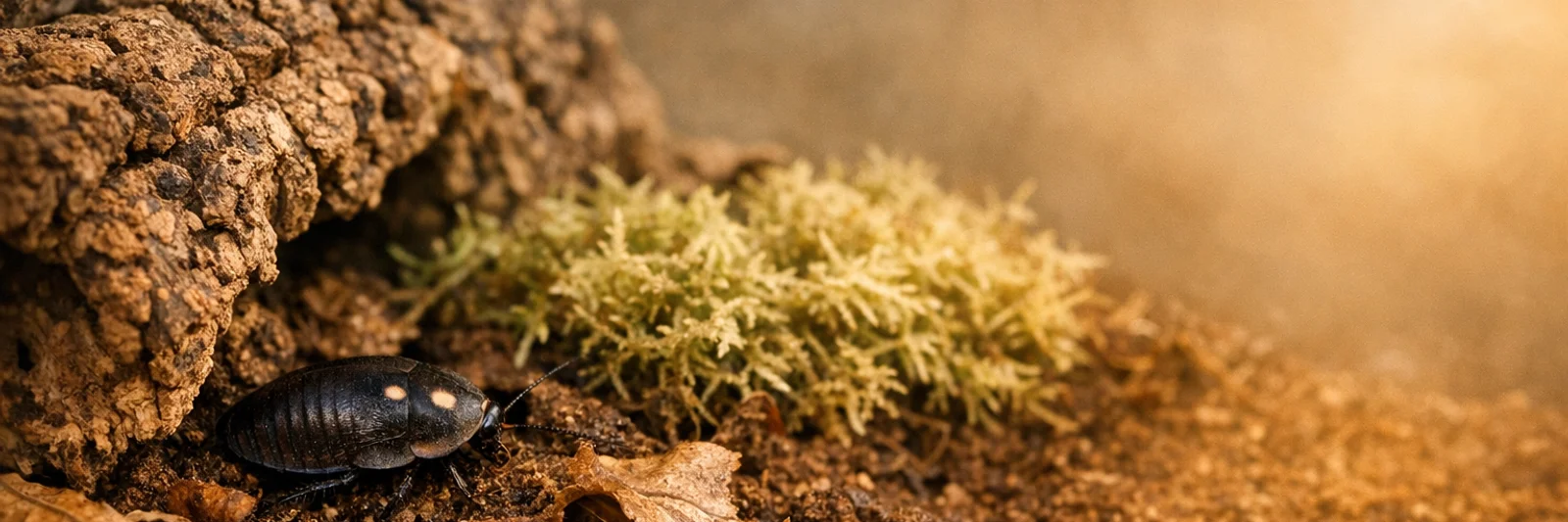
The Headlamp Roach (Eublaberus serranus) is a Brazilian display roach that needs one thing above all else: damp substrate. Adults on TC's line run 48 to 54 mm, cannot climb smooth surfaces, and grow wings as adults without ever flying. Kept at 75 to 85 F with consistently moist substrate, a small starter group settles in fast; let the bin dry out and you will see wing nipping within weeks. This guide covers setup, feeding, and how it compares to other roaches in TC's exotic lineup, including its own Eublaberus relatives.
About the same size as an adult Dubia
Warmer half of the range breeds fastest
Dry conditions trigger wing nipping
What Is a Headlamp Roach?
Headlamp Roach is the trade name for Eublaberus serranus, a display roach native to the Pantanal wetlands of southern Brazil, which is also why it is sold as the Pantanal Cockroach. Adults on TC's line run 48 to 54 mm; the 2015 scientific paper that first described the species measured its holotype male at about 41 mm total length, so treat TC's larger figure as what a well fed captive line reaches rather than a single wild specimen. That relatively recent description makes the species newer to the hobby than long kept relatives like Dubia.
Adults often show two pale gold spots on a darker pronotum, the headlamps that give the trade name its meaning, though the pattern is not universal. Some individuals show a clean upside down T shape, others a heavier dark blob with just the two spots breaking through, and a few show barely any contrast at all. Newly born nymphs are glossy and very dark brown, lightening and developing their own markings only as they mature.
Why Moisture Is Non Negotiable for This Species
This is the one firm rule for this roach: keep the substrate visibly damp at all times, not just the air around it. Eublaberus serranus comes from a wetland region of Brazil, so it never adapted to the drier setups that suit its genus mate Ivory (Eublaberus distanti). Dry conditions stress this species measurably, and the clearest symptom is wing nipping between colony mates, worse in a crowded or under fed bin.
The fix costs nothing extra: damp substrate, enough hides, enough floor space, and steady food. A properly moist enclosure at a reasonable density rarely shows nipping at all. If wing damage shows up in your colony, read it as the enclosure telling you something needs to change, not a behavior problem to breed out.
Setting Up the Enclosure
Use 2 to 3 inches of coco fiber, peat, or potting soil, kept damp but not soaked, with leaf litter and a layer of sphagnum moss on top to help hold that moisture and add cover. Add cork bark or a stack of egg flats for hides. Smooth sided enclosures are fine, since this species cannot climb glass or plastic at any life stage.
Ventilation matters more here than in a drier roach setup. A vented or mesh lid keeps enough airflow moving that a genuinely damp substrate does not turn into a moldy, stagnant one. A wet, stagnant bin crashes a colony faster than a dry one ever would, so damp and breathable beats damp and sealed.
Feeding and Hydration
This roach is not picky. Fresh fruit and vegetables, leafy greens, and a quality dry roach feed all work as the daily base, with a small amount of higher protein food such as dry dog food or beans supporting growing nymphs. Because the enclosure already runs humid, remove uneaten produce sooner than you would in a drier bin, since it spoils faster in that environment.
Skip an open water dish, which drowns nymphs easily. Water crystals or well soaked produce give the colony safe hydration without that risk, and the damp substrate itself supplies a steady baseline of moisture between feedings.
How a Headlamp Roach Compares Within Eublaberus
TC keeps more than one Eublaberus line, and the differences matter more than the shared genus name suggests.
Vs. Ivory (Eublaberus distanti)
Ivory tolerates a noticeably wider humidity range and does fine on drier substrate, which makes it the easier of the two for a keeper who does not want to babysit moisture. Headlamps need consistent dampness to avoid stress and wing nipping. If you already keep a drier setup for Ivory, give this species its own separate, damp enclosure rather than trying to compromise between the two.
Vs. Orange Head (Eublaberus posticus)
Orange Head is the faster growing, more protein hungry cousin covered in TC's orange head growth timeline, reaching sexual maturity in about 3 to 4 months under warmth. Headlamp Roach is calmer and slower moving, with less documented growth data, and its defining need is moisture rather than protein. Pick Orange Head for a fast breeding colony, and Headlamp Roach for a calmer display animal with distinctive markings.
Display Roach, Feeder, or Both?
This species can be fed out, but be honest about the trade-off. Published feeder roach comparisons put Eublaberus fat content higher than several common alternatives, so it is not the most efficient protein per bite. Dubia roaches remain the better staple for high volume feeding, and TC's full exotic roach lineup is worth a browse if you want to compare display species side by side.
Where this species earns its place is as a moisture loving display animal for a humid bioactive setup, with feeder use as a bonus rather than the point. A starter group of 12 mixed nymphs, kept warm and consistently damp, generally builds into a small breeding colony within a few months without much intervention beyond feeding and misting.
Headlamp Roach Starter Kit
The nymphs plus the moisture holding substrate and cover this damp loving roach needs.
Frequently Asked Questions
Written by the TC INSECTS breeding team · Porter, Texas · Live Arrival Guarantee on every order
Have a care question? Ask our community.
Join Reptile Keepers USA, our free Facebook group for reptile, amphibian and invert keepers. Share your setups, get care help and swap feeder tips.
Join the free group