What to Do With Extra Isopods

Rehoming is almost always the first and best answer for a surplus isopod or springtail colony: local keepers, reptile and exotic-pet groups, schools, and hobby clubs regularly want a free or cheap cleanup crew, so most keepers never need to go further than that. If rehoming genuinely is not an option, selling or trading, feeding the surplus to your own animals, or folding it into another bioactive tank all come next. Releasing isopods outdoors is never the answer, even for a species already living in your yard. Here is the order worth trying, one option at a time.
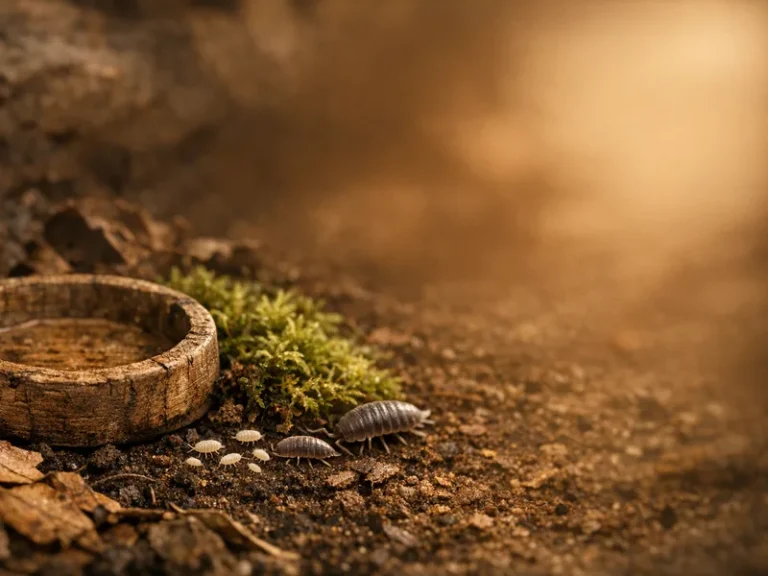
Local keepers, clubs, and schools regularly want a free cleanup crew
Risks disease and mixed lineages even where the species already lives wild
Worth considering only once rehoming, trading, and feeding off are exhausted
Start With Rehoming: Your Fastest, Kindest Option
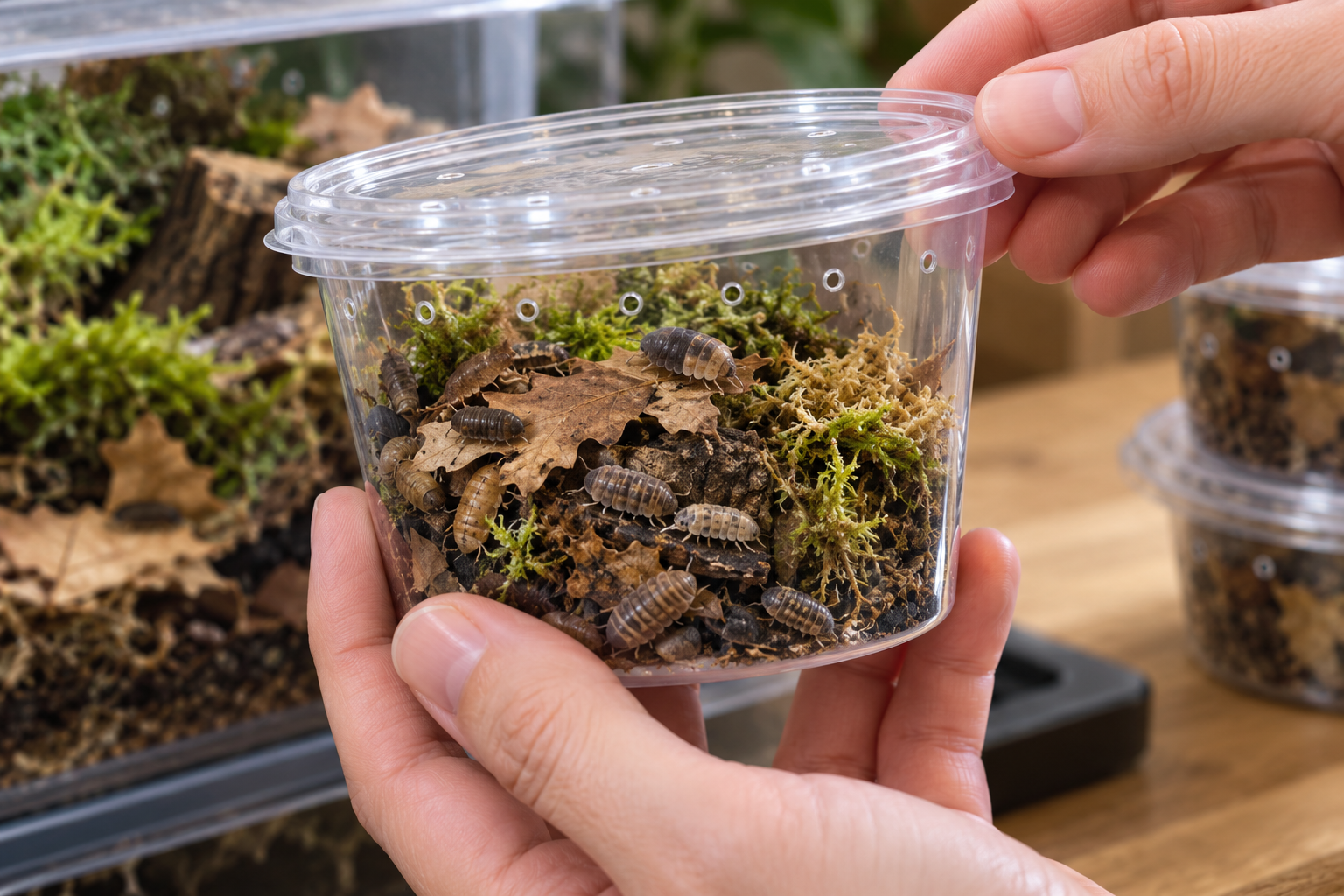
Rehoming beats every other option on this list because isopods and springtails are genuinely wanted animals, not waste. Local reptile and exotic-pet clubs, bioactive and vivarium hobby groups, and other keepers you already know through the hobby are usually glad to take a healthy surplus off your hands for free or for the cost of shipping, since a starter cleanup crew is exactly what a lot of new keepers are looking for anyway.
Schools are worth a call too, especially a science teacher covering decomposers, food webs, or a classroom bioactive project, where a small living colony is genuinely useful teaching material rather than a favor. Whichever direction you go, a quick post in a local hobby group or a message to a keeper you already know usually finds a taker faster than any other option on this list.
Sell or Trade Toward Something You Don't Have Yet
If a straightforward giveaway does not appeal to you, selling a surplus works the same way as rehoming but recoups a little of what you spent building the colony in the first place. A local reptile or exotic pet shop is worth a call too, since some buy or trade for popular cleanup-crew species directly, though a hobby group usually finds a taker faster. Trading is worth considering too: swapping surplus stock with another keeper for a species you do not already have grows your own collection without spending anything beyond isopods you already had plenty of.
Trading toward genuinely unrelated stock of a species you already keep is also a legitimate way to refresh a bloodline, though most hobby colonies handle years of close breeding just fine without it. TC's guide to isopod inbreeding covers when new genetics are actually worth seeking out, so you are trading with a real purpose in mind rather than just because it feels responsible.
Feed the Surplus to Your Own Animals
If you already keep an insectivorous reptile, amphibian, or invertebrate, working a portion of a surplus isopod colony into its diet is a legitimate and common use for extras, not a waste of a healthy colony. Isopods are already part of many keepers' feeder rotation, and TC's feeder finder is a useful way to see what else fits alongside them for whatever you keep. Match any feeder to the animal's usual prey size, the same rule of thumb that applies to every feeder in the shop.
Fold Extras Into Another Bioactive Tank, Isopods or Springtails
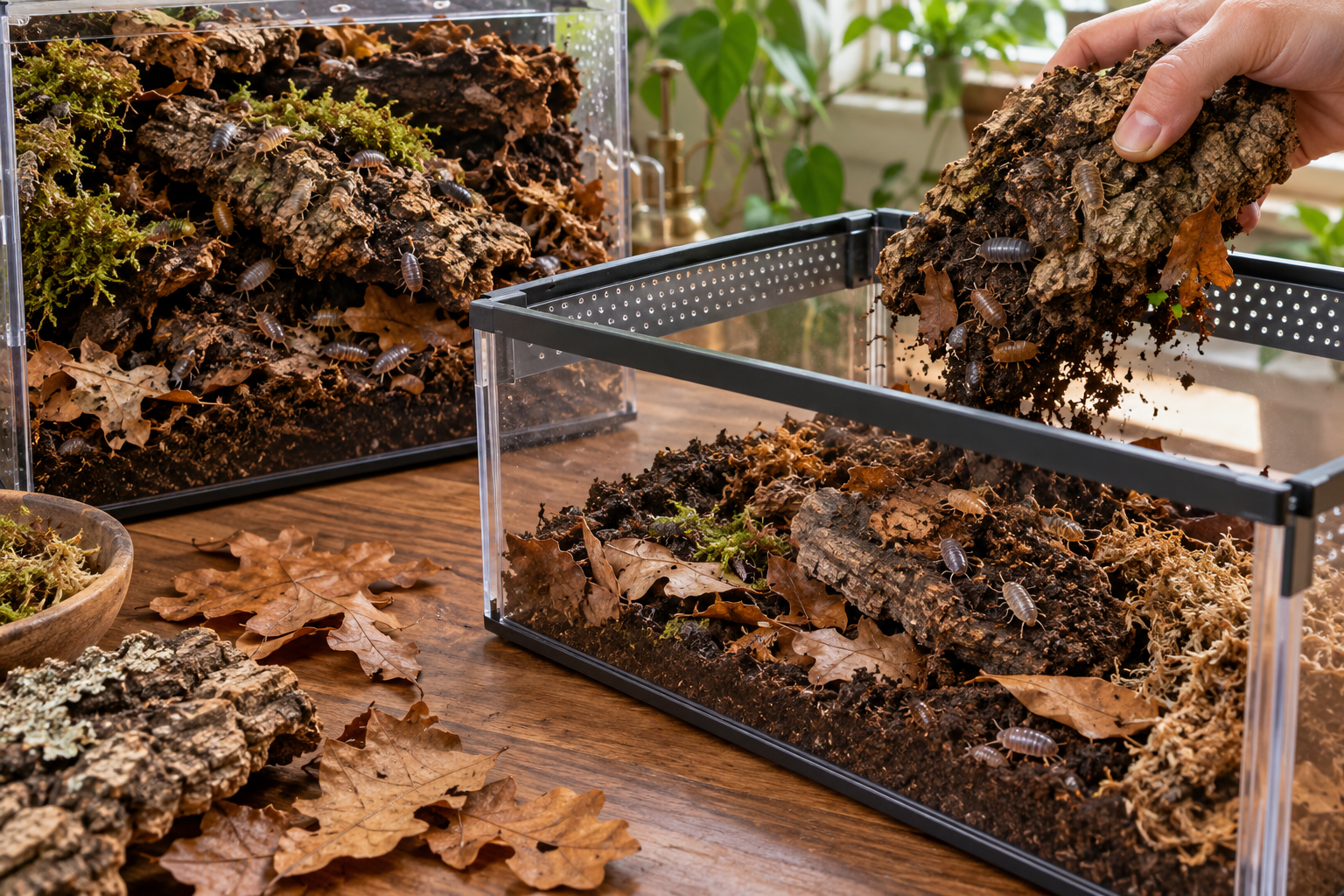
Sometimes the right move is not to give a colony away at all but to put it to work closer to home, seeding a display bin you have been meaning to build or backing up a tank that could use extra cleanup crew, with fresh substrate and litter so the new spot gets a fair start. The same logic covers a booming springtail culture just as well as isopods; a huge springtail population is not a problem to fix so much as free labor waiting for a second home.
If your isopod colony is thriving rather than something you want gone entirely, TC's guide to a booming colony covers the population-control side of this same question, bark traps and feeding adjustments included, so this piece can stay focused on what to do when you want some or all of a colony to go somewhere else for good.
What Not to Do: Never Release Isopods or Springtails Outdoors
Releasing a surplus outdoors is never the right call, even for a species that already lives wild in your yard and even though it feels like the easiest option in the moment. TC's full explanation of what actually happens when isopods get loose covers the disease, lineage-mixing, and winter-survival reasons why in detail, so it is not repeated here.
When You've Truly Exhausted Every Other Option
If rehoming, selling, trading, feeding off, and folding the colony into another tank all genuinely do not apply, some keepers use a cold-then-freezer method as a last resort: chilling the container in a refrigerator to slow the animals down before moving it to a freezer. Whether this is truly painless for an isopod or springtail is not settled science; researchers who study invertebrate welfare still disagree about whether cold registers as a noxious sensation the way it clearly can for a vertebrate. That real uncertainty is exactly why this belongs at the bottom of the list, not as a routine way to manage a colony you no longer want.
The Rehoming Kit
Everything to send part of your colony to a new home properly, or start a second one.
Frequently Asked Questions
Written by the TC INSECTS breeding team · Porter, Texas · Live Arrival Guarantee on every order
Have a care question? Ask our community.
Join Reptile Keepers USA, our free Facebook group for reptile, amphibian and invert keepers. Share your setups, get care help and swap feeder tips.
Join the free group