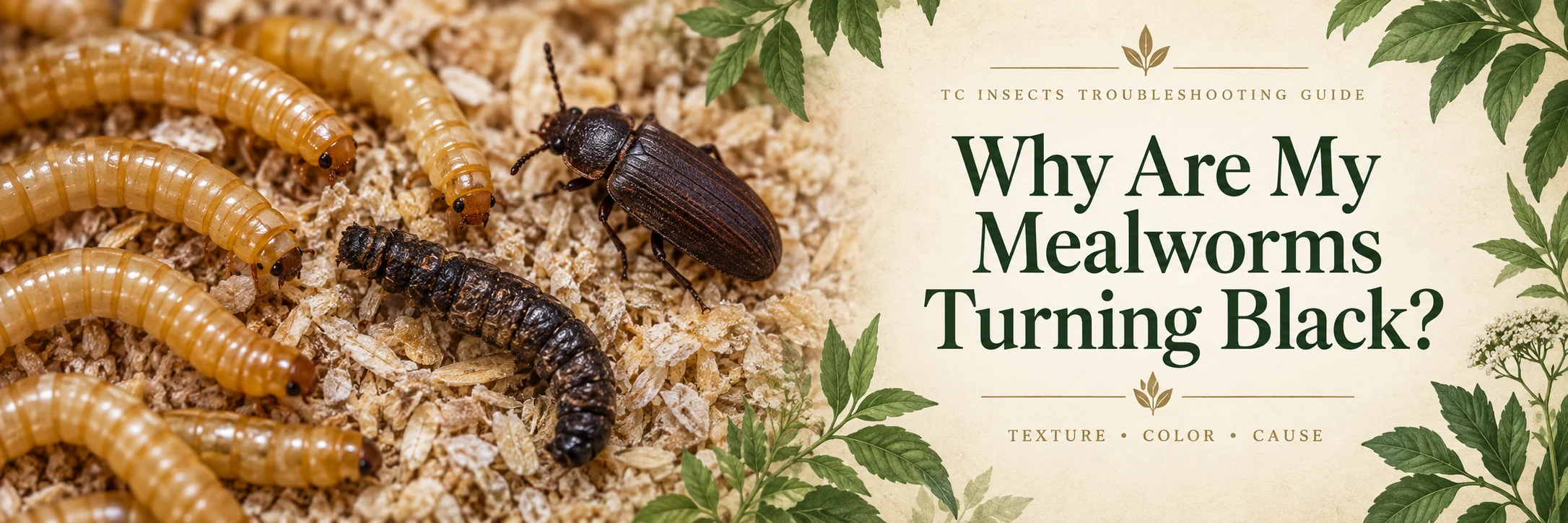
Why Are My Mealworms Turning Black?
Or limp and mushy with an odor. Remove it, never feed it
Cream to tan to black over days to weeks as it matures
Add a produce slice; dry bran alone can dehydrate a colony
Texture tells you whether darkening is normal or a true loss
A mealworm that has gone solid black and turned hard, brittle, or limp has died, most often from a bin that ran too dry, too crowded, or too cold too fast, but plenty of dark mealworms are not dead at all. A healthy pupa shifts from pale cream to tan to nearly black over roughly 1 to 3 weeks, and a freshly molted beetle goes from ghost white to deep brown or black within days, both completely normal color changes on the way to becoming a darkling beetle. The real test is texture and behavior, not color. Here is how to sort true death from normal metamorphosis, and which habits actually crash a colony.
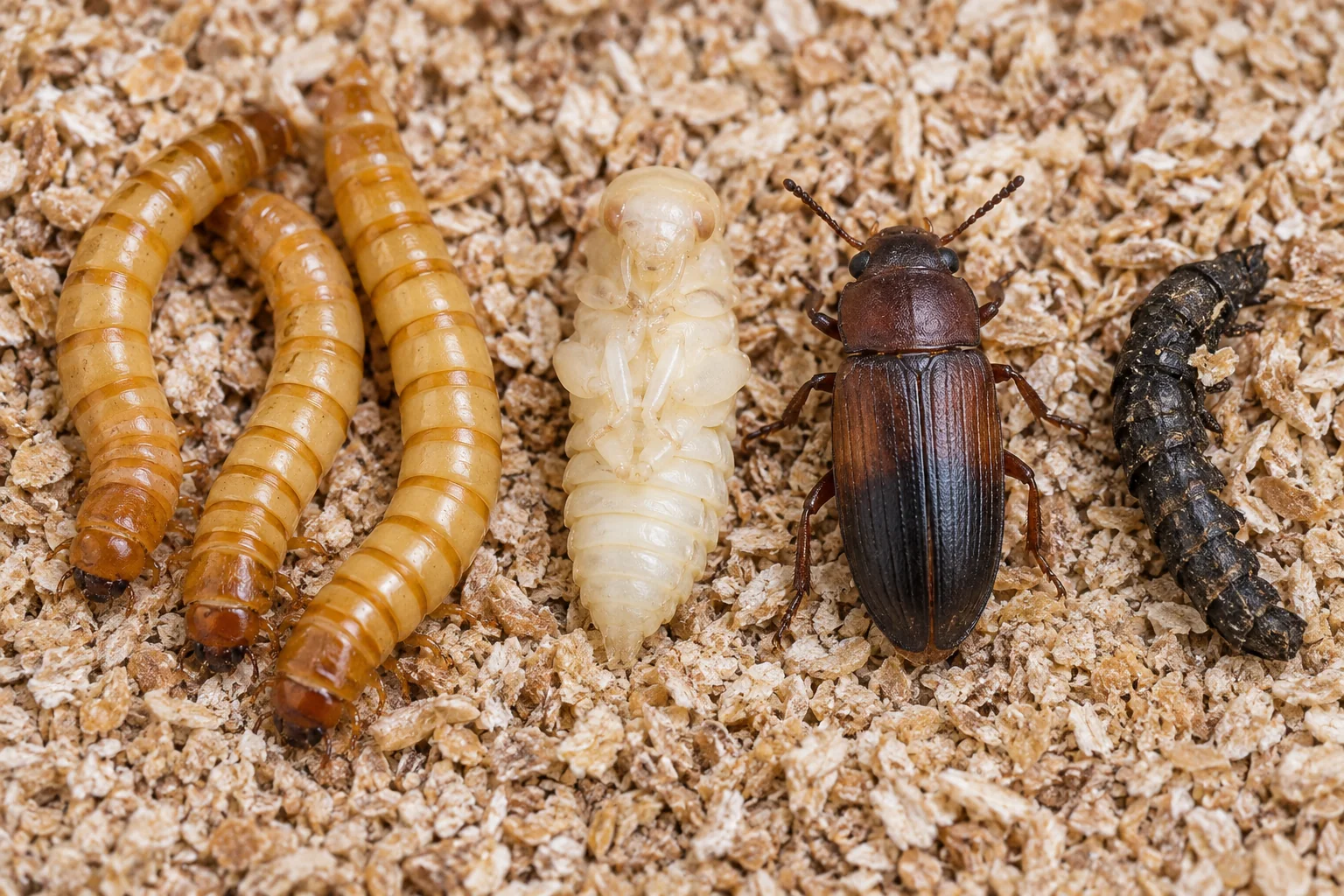
Compare the worm before you discard it
Normal life-stage darkening looks different from a hard, brittle or soft, foul-smelling dead worm.
Is a Black Mealworm Always Dead?
No, and telling the difference comes down to texture, not color. A mealworm that has actually died turns solid black or deep brown and goes either hard and brittle or limp and mushy, often with a bad smell. A mealworm that is simply changing life stages also darkens, sometimes dramatically, but it stays intact: a pupa keeps its curled shape and wiggles its tail when nudged, and a newly molted beetle is soft and pale for only a few hours before hardening into its adult color. Color alone will fool you. Feel and movement will not.
This confusion is common because mealworms (Tenebrio molitor) go through more visible stages than most feeders: worm, pupa, and beetle, each with its own normal coloring. If you have not seen the full cycle before, our mealworm life cycle guide walks through every stage in order. Here, the focus is on sorting a genuine die off from the color changes that just mean the bin is working exactly as it should.
The Normal Darkening: Pupa and Freshly Molted Beetle
Two completely healthy stages account for most of the dark mealworms keepers panic over, and neither one means the colony is in trouble. Both darken on a predictable schedule and both stay firm the whole time, which is the detail to watch for.
A Pupa's Color Arc
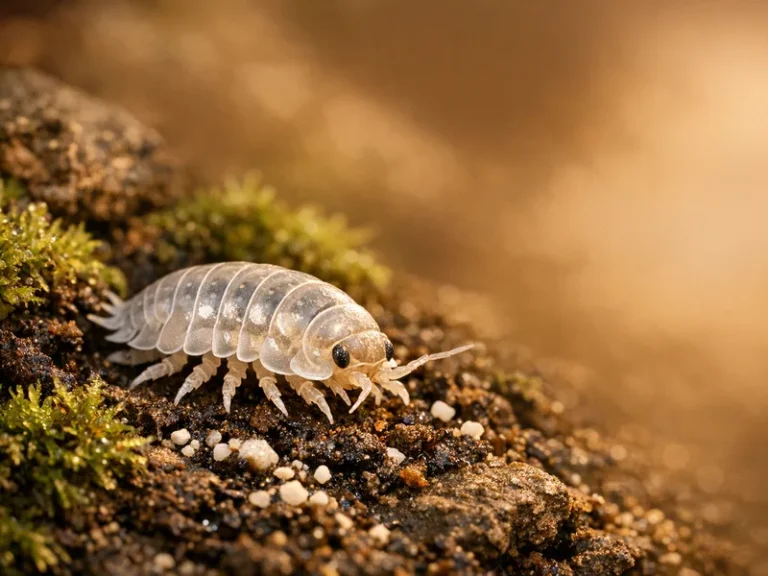
A healthy mealworm pupa starts out pale cream to white, curled into a loose C shape with visible leg and wing outlines, and it tans and eventually darkens toward brown or black over roughly 1 to 3 weeks as the beetle inside finishes forming. Through that whole stretch it stays firm, not soft or wet, and it wiggles its tail if you nudge it, though it cannot walk or feed at this stage. A pupa darkening on that kind of schedule is doing exactly what it is supposed to do.
A Newly Molted Beetle Darkens Too
A beetle that just emerged from its pupal skin is pale, almost white, and looks alarmingly fragile for the first few hours. It darkens to reddish brown and then black or deep brown within a day or two as its new shell hardens, a process called sclerotization. A pale, newly emerged beetle sitting still is normal, not sick, as long as it firms up and starts moving and eating within that window. One that stays soft, shrinks, or dies during this vulnerable stretch is usually a dehydration casualty, not a disease.
What True Death Actually Looks Like
A dead mealworm fails in one of two directions, and both look different from the normal darkening above. Some dry out completely: the body turns uniformly black or dark brown, feels hard and brittle rather than firm, and may look shriveled or shrunken compared to its living cupmates. Others go the opposite way and turn soft, deflated, or mushy, sometimes with a sour smell, which points to rot rather than dehydration. Either version stays exactly the same after you warm it up or leave it alone, unlike a cold or dormant worm that gradually perks up.
A large bin will always have a few individual losses among the healthy majority, and that alone does not mean the whole colony is failing. What matters is whether the dead ones are an occasional handful or a growing pile, and whether the survivors around them still look plump, pale tan, and active.
The Real Causes of a Die Off, Ranked
A short list of habits causes the overwhelming majority of mealworm die offs, and they are not equally common. Here they are in the order worth checking, starting with the one new keepers miss most.
Too Little Moisture
Mealworms get almost all their water from produce, not from bran, which is dry by design so it does not mold. A bin with dry bran and no fresh carrot, potato, or apple slice for more than a few days will slowly dehydrate its worms, and a dehydrated worm often dries into that hard, dark, shriveled state rather than staying plump and pale tan. The fix is simple: keep a slice of moisture-rich produce in the bin at all times, and swap it out before it dries to a husk or turns to mush.
Crowding and a Stale Bin
A bin packed too full stresses every worm in it; research on crowded mealworm colonies has found slower growth and higher losses at high density compared to the same worms given more room. Mealworms do not have the same crowding-delays-pupation trick that superworm keepers rely on, so in a mealworm bin, crowding is just stress with no upside. Crowding also concentrates frass and moisture in one spot, and bran that has gone months without replacing gets damp, compacted, and stale. Split an overcrowded bin into two, swap in dry, fresh bran on a schedule, keep the container ventilated rather than sealed, and see our basic setup guide if you are starting a bin from scratch.
Fridge Shock
Mealworms are one of the few feeders that genuinely tolerate the refrigerator, but shock is different from ordinary cold storage. Moving a warm batch straight into the coldest part of a fridge, or storing them too close to the cooling element or a freezer compartment, goes colder than they can handle and can kill and darken worms outright rather than simply slowing them down. Our guide to fridge storage covers the safe range and the weekly routine that keeps a chilled batch healthy for weeks instead of days.
What to Do Today
Pull every worm that is hard, black, and brittle, or soft and foul smelling, and get it out of the bin before it fouls the bedding for the rest. Check the produce slice next: if it is dried to a husk or missing entirely, replace it today. If the bin looks packed shoulder to shoulder, split it into a second container with fresh, dry bran, and make sure the lid has real ventilation rather than a tight seal. Small fixes made this week are what actually stop a die off from spreading.
None of this means you did something exotic wrong. A colony that has been fed, watered, and given room usually runs itself with very little drama, and most of what looks alarming, a pale beetle, a darkening pupa, is the bin working correctly. If your current batch is past saving, fresh mealworms and dry bran are a clean restart, not an admission of failure, and our guide to feeder die offs covers the same habits across every species you keep.
Black Mealworm Diagnostic Chart
The Mealworm Bin Reset Kit
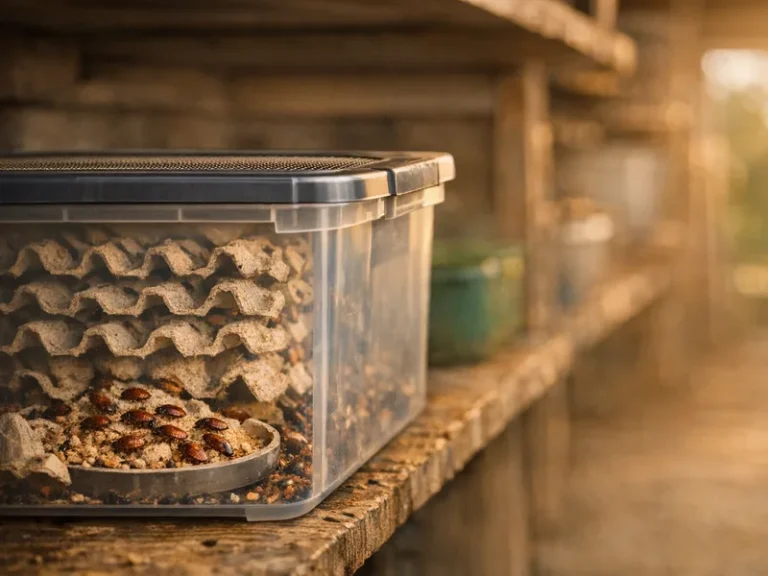
Fresh worms, dry bedding, and a roomier vented cup, the fix for a crowded, stale, or too-dry bin.
Frequently asked questions
Is a black mealworm always dead?
No. A mealworm that turns solid black and goes hard, brittle, or limp and mushy has died, but color alone is not proof. A pupa naturally darkens from cream to tan to black over 1 to 3 weeks, and a freshly molted beetle goes from white to black within days, both while staying firm and intact. Check texture and movement before you assume the worst.
How do I know if my mealworm pupa is healthy?
A healthy pupa is pale cream to tan at first, darkening gradually over 1 to 3 weeks, and it wiggles its tail if you nudge it even though it cannot walk or eat yet. It should stay firm the whole time, never soft or wet. A pupa that goes limp, discolored all at once, or smells off is not developing normally.
Can overcrowding really kill mealworms?
Yes, indirectly. A packed bin stresses every worm in it, slows growth, and research shows higher losses at high density compared to worms given more room. Crowding also traps moisture and frass in one spot, which invites mold and mites. Splitting an overcrowded bin into a second, roomier container with fresh bran is the direct fix.
Why did my refrigerated mealworms turn black?
Most likely fridge shock rather than normal cold storage. Moving worms straight into the coldest part of a fridge, or storing them too near the cooling element or a freezer, goes colder than they tolerate and can kill and darken them outright. Our fridge storage guide covers the safe range and the weekly routine that avoids this.
Can I still feed my reptile a mealworm that has darkened?
It depends on why. A worm that is simply a darkening pupa or a newly molted, still-firm beetle is a fine feeder if your pet will take it. A worm that has gone hard and brittle, or soft and foul smelling, has died and should never be fed, whatever stage it looks like it reached.
How do I stop my mealworms from turning black and dying?
Keep a moisture-rich produce slice in the bin at all times, avoid packing worms in shoulder to shoulder, swap in dry bran regularly, and keep the lid ventilated rather than sealed. If you refrigerate part of the batch, keep it in the safe range rather than the coldest part of the fridge. Most losses trace back to one of those habits.
Keep learning
Have a care question? Ask our community.
Join Reptile Keepers USA, our free Facebook group for reptile, amphibian and invert keepers. Share your setups, get care help and swap feeder tips.
Join the free group