Which fruit fly should you buy?
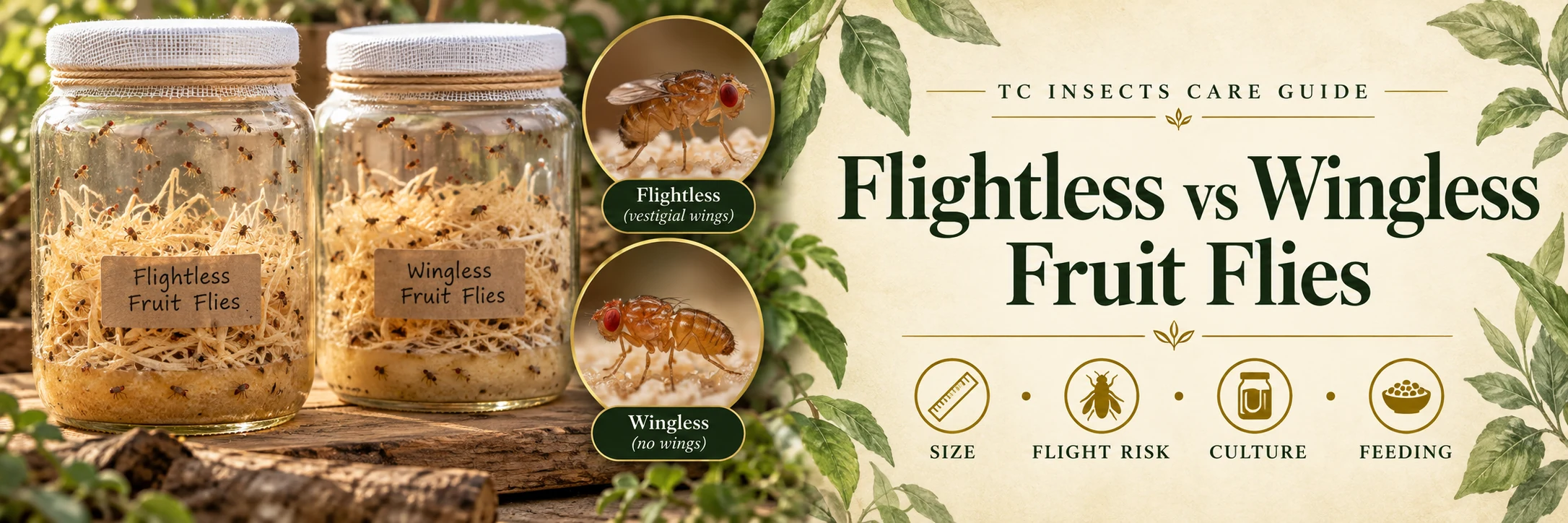
Wingless flies never develop wings and carry zero flight risk. Flightless flies develop non-functional wings and are often larger or more productive, but a warm culture can occasionally produce a short flutter. Choose the animal's prey size first, then consider your room and tolerance for escape risk.
Choose wingless when control matters
Best for beginners, open feeding, sensitive rooms and warm reptile spaces. There are no wings that could regain function.
Choose flightless for output
A strong option in cool stable rooms, especially when feeding multiple animals or larger appetites. Hydei cultures can be especially productive.
The real difference
A true wingless line has no wings because development is genetically removed. A flightless line grows vestigial or non-functional wings that normally cannot lift the fly. Flightless cultures may occasionally throw a flyer in warm conditions; wingless lines cannot.
| Trait | Wingless | Flightless |
|---|---|---|
| Wing development | No wings at all | Vestigial wings present |
| Flight risk | None | Very low; increases with warmth |
| Handling | Easiest for open transfer | Easy in cool stable rooms |
| Best for | Beginners and sensitive spaces | Higher output and larger appetites |
Melanogaster or Hydei?
| Species | Relative size | Best for | Examples |
|---|---|---|---|
| D. melanogaster | Smaller | The tiniest mouths | Dart froglets, tiny geckos, mantis nymphs, spider slings |
| D. hydei | Larger | Bigger appetites | Larger frogs and juvenile geckos |
Both species exist as wingless and flightless lines. Size and wing type are separate decisions: wingless melanogaster combines tiny prey with zero flight risk, while flightless hydei offers a larger, productive feeder.

Keep a backup producing
A healthy culture takes a couple of weeks to reach heavy production, then produces strongly for several more weeks before slowing. Keep two cultures on a staggered schedule rather than waiting until one is empty.
Provide breathable lids, fresh media and stable temperatures. Hydei cultures often support larger or multiple animals with less counting.
Dust lightly and feed immediately
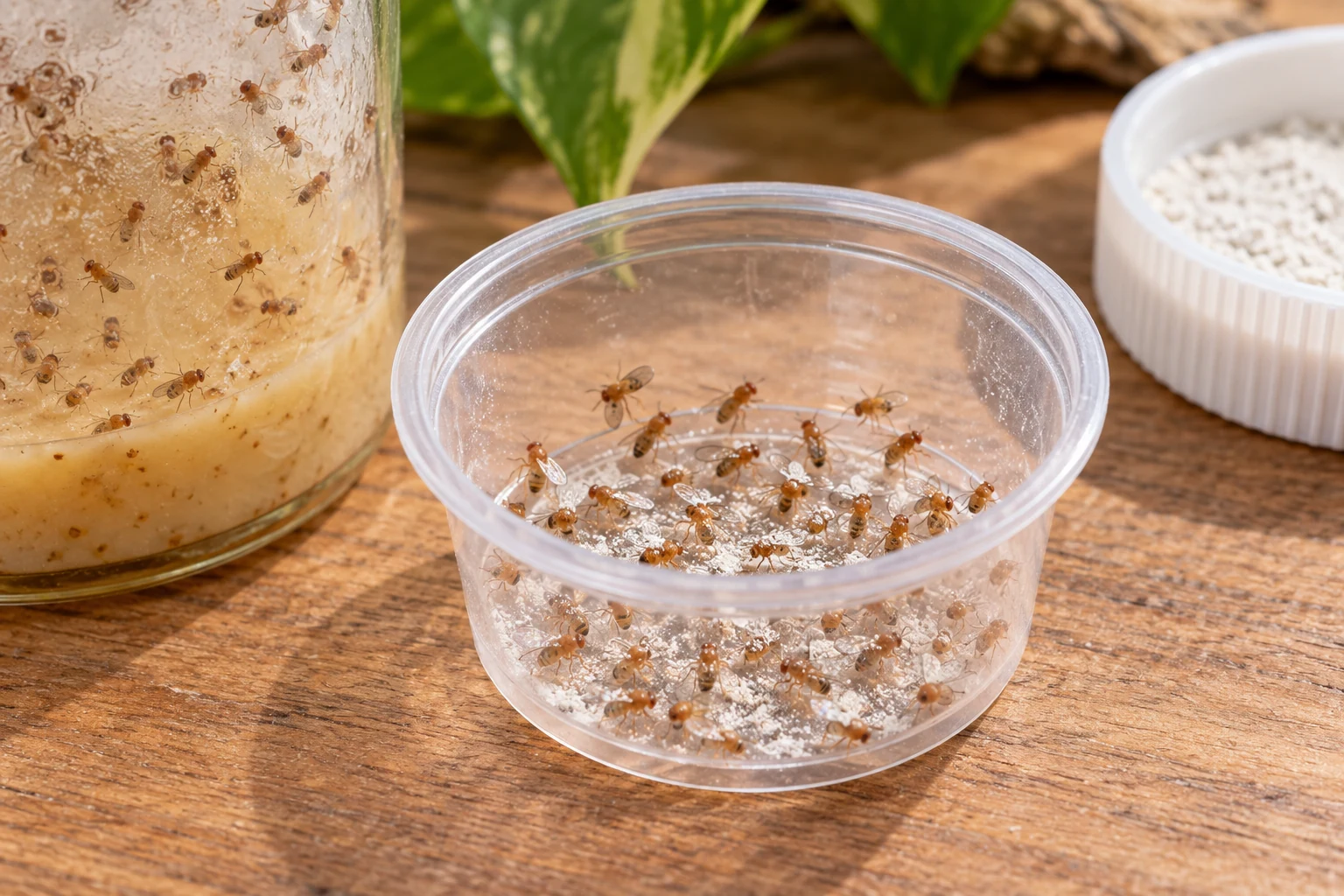
Tip a small portion into a clear cup, add a pinch of calcium or vitamin powder and swirl gently. Tap them into the enclosure before they climb out.
Dust most feedings because fruit flies alone do not provide enough calcium for growing or breeding animals. Wingless flies are especially forgiving during transfer.
Warm rooms favor wingless
Choose wingless for cultures kept near a heat lamp, sunny window or warm reptile room. In a cooler stable space, flightless cultures are a reliable and often more productive option. Neither is a lower-quality feeder—the tradeoff is control versus output.
The Fruit Fly Feeding Kit
Both species, multiple lines and the media needed to keep a staggered rotation.
Fruit Fly FAQ
What is the difference between wingless and flightless fruit flies?
Wingless flies develop no wings at all. Flightless flies grow vestigial or non-functional wings that normally cannot produce sustained flight.
Are wingless fruit flies better for beginners?
Generally yes. Their zero flight risk makes transfers simpler and reduces mess in open feeding or warm rooms.
Which fruit fly is bigger, melanogaster or hydei?
Hydei is larger. Melanogaster suits tiny mouths; hydei suits larger frogs and juvenile geckos.
Can flightless fruit flies fly at all?
Normally no, though a small percentage may manage a short flutter in very warm conditions. True wingless lines cannot.
Which fruit fly should I feed a dart frog?
Start froglets and small species with melanogaster, either wingless or flightless. Move to hydei as the frogs grow.
How long does a fruit fly culture last?
Production builds over a couple of weeks and continues strongly for several more. Stagger two cultures so the next one matures before the first declines.
Not Sure Which Culture Fits?
Tell us what you feed and your room temperature, and we will match the fly size and line.
Written by the TC INSECTS breeding team · Porter, Texas · Live Arrival Guarantee on every order.
Have a care question? Ask our community.
Join Reptile Keepers USA, our free Facebook group for reptile, amphibian and invert keepers. Share your setups, get care help and swap feeder tips.
Join the free group