Do Pet Millipedes Need Calcium?

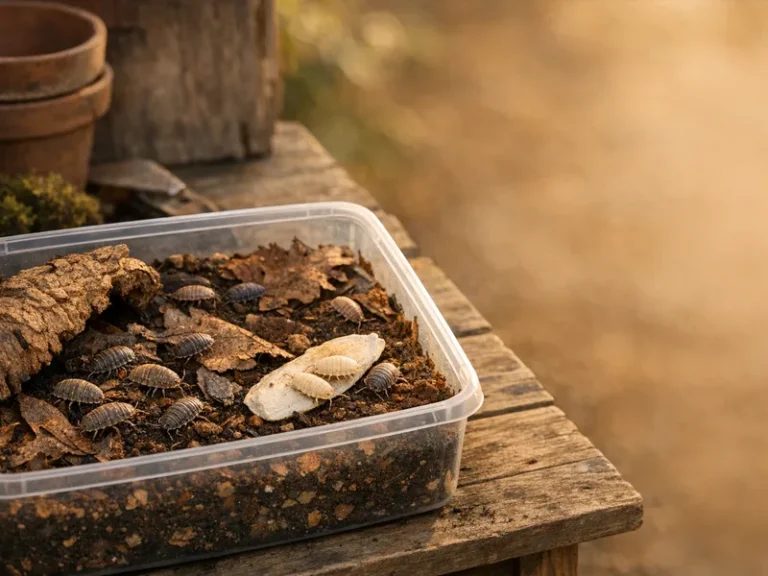
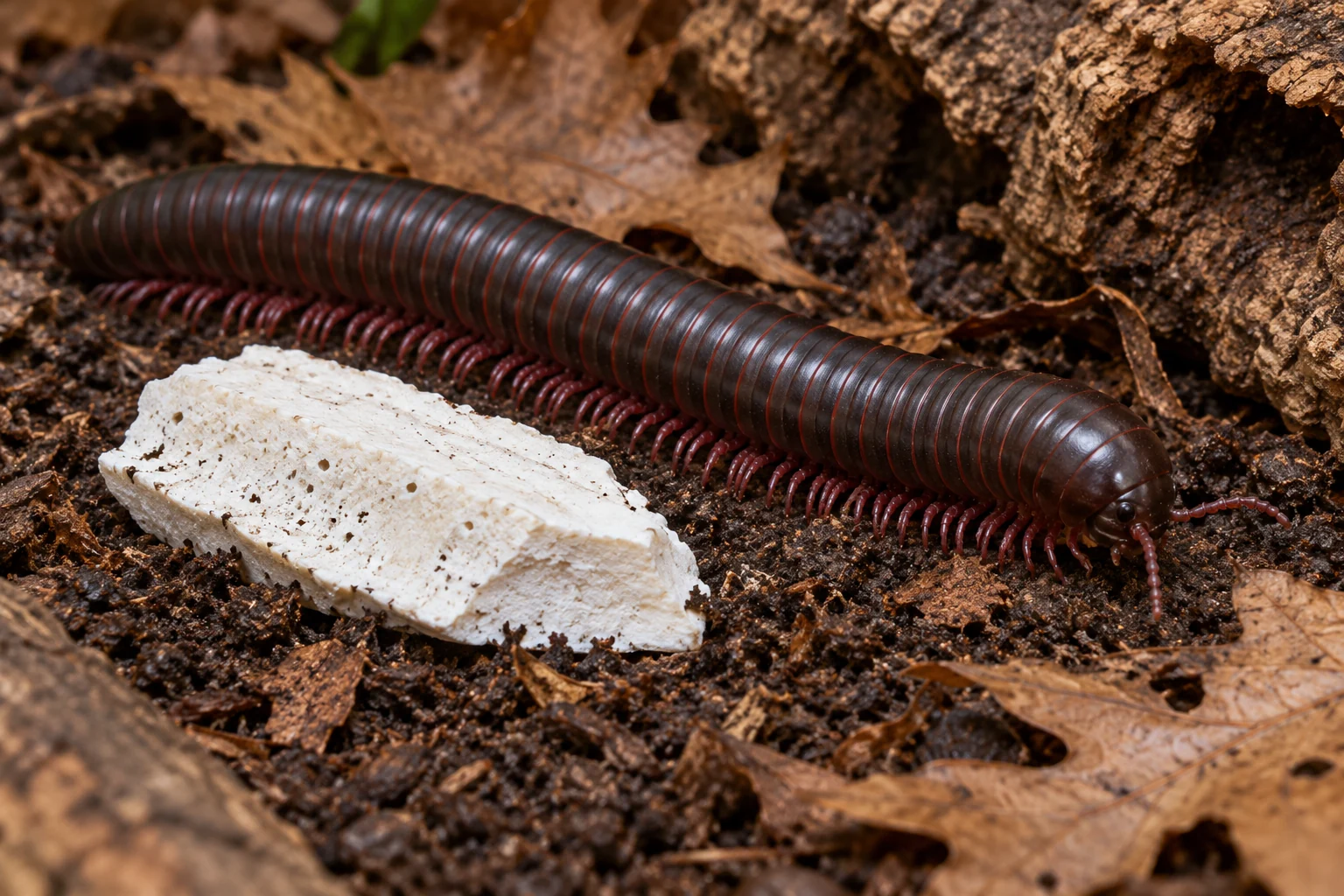
Yes, pet millipedes need calcium, the same way isopods and many reptiles do: it is what lets a new exoskeleton harden properly after every molt. The American Giant Millipede (Narceus americanus) we raise here gets a baseline of calcium from the rotting hardwood and leaf litter it already eats, but that alone usually is not quite enough to fully support fast growth, so most keepers add a dedicated source. Cuttlebone left in the enclosure is the standard, low-effort choice, and crushed oyster shell or baked, crushed eggshell mixed into the substrate work as slower-release alternatives for an animal that spends most of its life buried. Here is exactly how much to worry about it, and the easiest way to cover the gap.
Calcium hardens the new exoskeleton after each molt
Left in the enclosure as a free-choice supplement
Its natural diet provides a baseline before you add more
Yes, millipedes need calcium, here is why
Like every other arthropod, a millipede has to build a brand new exoskeleton underneath the old one before every molt, then harden it once the old skin splits away. Calcium is the raw material for that hardening, so an animal that molts repeatedly throughout its life, growing larger with each cycle for roughly its first two years, needs a steady supply of it, not a one-time dose.
Come up short on calcium and the risk is not immediate, it is cumulative: molts that take longer, do not harden properly, or leave an animal weaker than it should be. That is the same logic behind calcium dusting for feeder insects, just applied to an animal that is not being fed to something else.
Cuttlebone: the standard, low-effort source
Cuttlebone is the calcium source most keepers reach for first, and for good reason: it is inexpensive, safe, and you simply leave a piece in the enclosure as a free-choice supplement rather than dosing anything by hand. Keepers do genuinely disagree about how much a millipede actually gnaws on it directly compared to an isopod or a gecko, but as a passive, always-available source it is a safe standard addition either way.
If you would rather skip a raw cuttlebone piece, a reptile-safe calcium powder does the same underlying job in a more concentrated form, and can be lightly worked into damp substrate or dusted onto a piece of offered produce. Our nutrition and care products page carries the version we stock for exactly this.
Other sources: crushed oyster shell and eggshell
Crushed oyster shell and baked, crushed chicken eggshell are the two other calcium sources you will see recommended in the hobby, and both work well mixed directly into the substrate rather than left as a single chunk. That fits how a millipede actually lives, buried and grazing through the substrate for much of the day, so a calcium source blended into that material gets encountered passively over time instead of requiring the animal to seek out one specific spot.
If you use eggshell, bake it briefly first to reduce bacteria, then crush it fine before mixing it in. Either option is a slower-release, more diffuse supplement than a single piece of cuttlebone, which makes them a reasonable option to rotate in alongside it rather than instead of it.
Your millipede is already getting a baseline
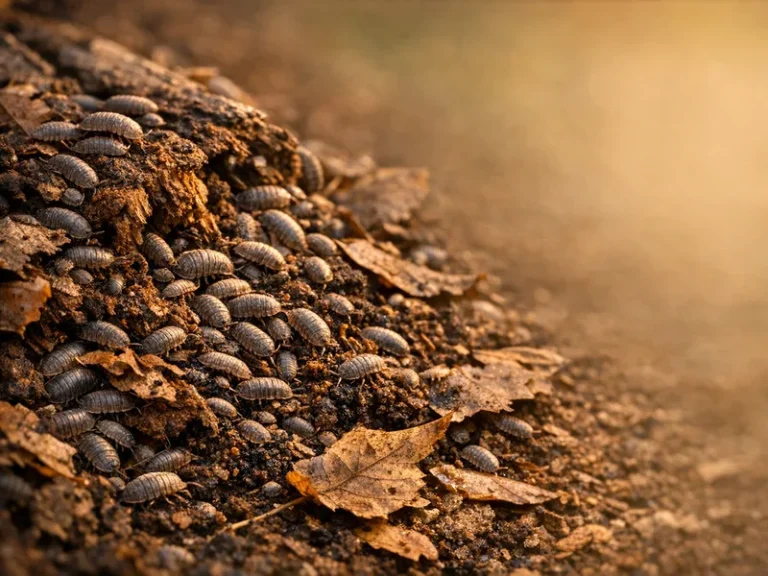
Do not treat supplemental calcium as the whole picture. The rotting hardwood and decaying leaf litter that make up a millipede's actual staple diet already contain some calcium and other minerals as the wood breaks down, which is part of why millipedes are not as calcium-hungry as, say, a fast-growing juvenile isopod colony. Our guide to leaf litter covers how that decomposing material works as both food and habitat.
That baseline is exactly why a modest, passive calcium source is enough for most keepers, rather than an aggressive dusting schedule. Think of cuttlebone or a calcium powder as topping off what the natural diet already provides, not replacing it.
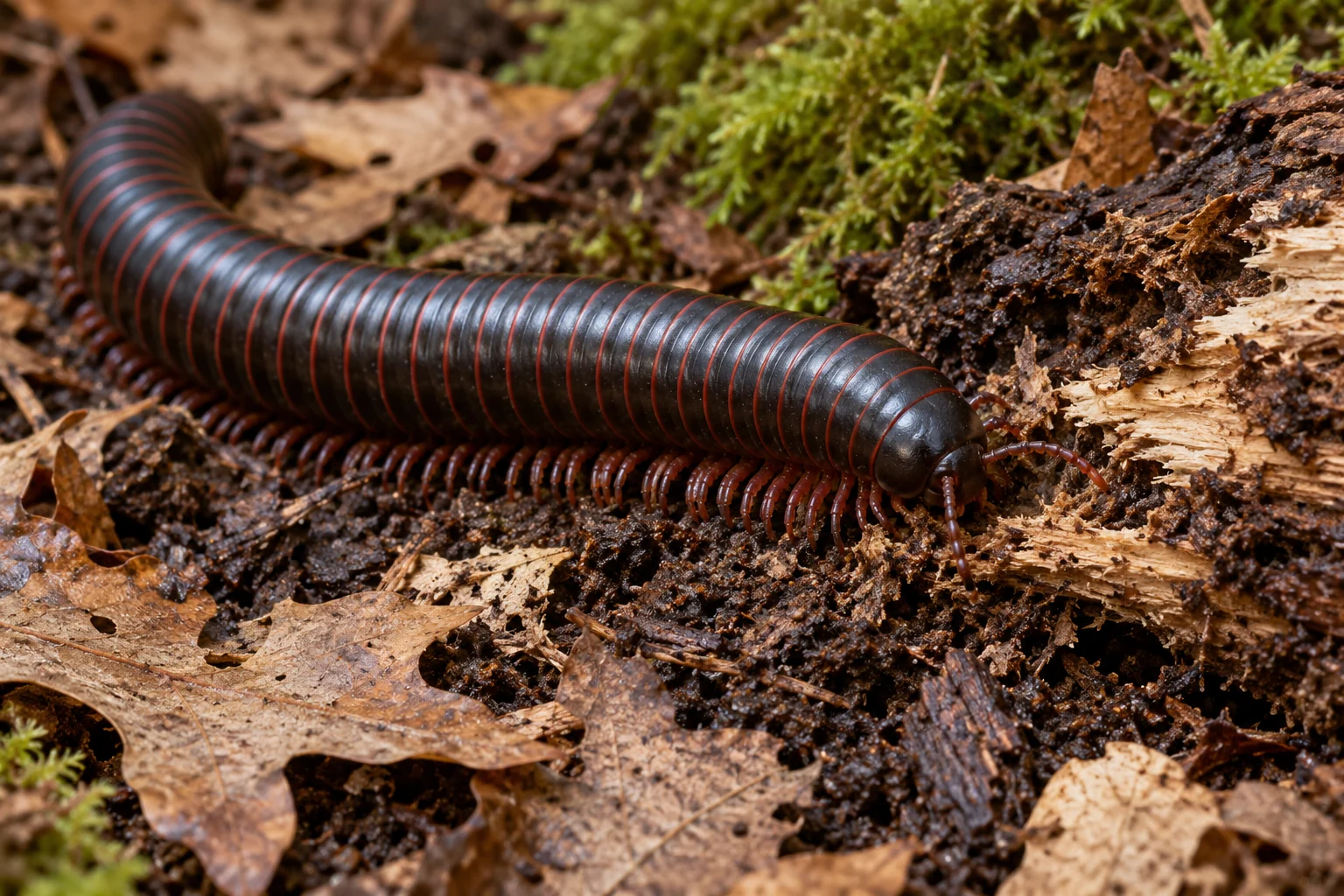
Signs calcium might be running short
A millipede getting enough calcium simply keeps molting on a normal cycle and looks and moves normally again within a few days of each molt. The harder-to-spot signs of a real shortfall are a soft or slow-hardening exoskeleton after a molt, or a molt that seems to take unusually long or does not complete cleanly.
If you notice that pattern, the fix is straightforward: add or refresh a cuttlebone piece, or work a little calcium powder into the substrate, rather than overhauling the whole setup. This is a husbandry-level observation, not a diagnosis, and a molt that still looks wrong after you have corrected calcium and humidity is a reasonable point to loop in an experienced exotics vet.
How much is too much?
Calcium overload is a much smaller risk with millipedes than running short, since a piece of cuttlebone or a light dusting in the substrate is a passive, self-limiting source rather than something you are force-feeding. There is no need for a rigid daily schedule the way you would dust a feeder insect going straight into a reptile.
A reasonable approach is to keep a cuttlebone piece or a light calcium-dusted patch in the enclosure at all times and simply refresh it every few weeks, alongside the leaf litter you are already replacing. Pair it with our enclosure setup guide for the substrate depth and moisture that let a millipede molt successfully in the first place.
Close the Calcium Gap
The ready-made calcium source behind the answer above, plus the diet and substrate that support it.
Frequently Asked Questions
Written by the TC INSECTS breeding team · Porter, Texas · Live Arrival Guarantee on every order
Have a care question? Ask our community.
Join Reptile Keepers USA, our free Facebook group for reptile, amphibian and invert keepers. Share your setups, get care help and swap feeder tips.
Join the free group