If your isopods are alive and active but the population just is not growing, the colony is almost always stalled for one of six reasons: the bin is too new, it is too dry for the babies, it is too cold, it is short on protein and calcium, it is being disturbed or harvested too hard, or a hungry tankmate is eating the young. A colony that is not breeding is a very different problem from one that is dying, and most healthy-looking colonies that simply will not multiply are only a few weeks of patience and one or two small tweaks away from booming.
Reproduction slows hard below about 60 F
Colonies boom on their own timeline, not yours
Protein fuels breeding, calcium fuels the molts that allow it
Reason 1: The bin is too new, and stalled is not dying
Reason 1: The bin is too new, and stalled is not dying
First, sort out which problem you actually have, because the fixes are different. A stalled colony looks healthy: the adults move, eat, and hold their numbers, you just never see babies or a rising population. A dying colony is the opposite, with shriveled dead isopods and a count that keeps dropping. If yours is actually crashing rather than idling, work through our guide on why isopods die off first, because a colony has to survive before it can breed.
Now the reassuring part, because the most common breeding complaint of all is not a real problem: a colony that has not been given enough time. Isopod cultures build slowly for the first weeks and months, then tip into a fast exponential climb once there are enough breeding adults. Give a new culture 3 to 4 months before you expect a visible boom, and remember that the newborns, called mancae, are tiny and far better at hiding in the leaf litter than you are at finding them, so a colony is very often breeding well before you can see it.
What to do today: leave it completely alone and write a date three months out on the lid. The worst thing you can do to a young bin is dig through it every few days looking for progress, which is reason five on this list. A small starter of 10 to 30 isopods is normal and will get there, it just needs runway, and our isopod care guide shows what a healthy young culture looks like.
Reason 2: It is too dry for the babies
Reason 2: It is too dry for the babies
Adult isopods tolerate a dry spell, but mancae do not. Newborns are minute and dry out fast, so a bin that stays damp enough to keep the adults alive can still be too dry for the young to survive, and the population never climbs. Let the whole bin go dry and breeding slows down or stops outright.
The fix is to keep one reliably damp zone at all times. Maintain a moist-side and dry-side gradient, mist the substrate rather than the animals, and tuck a patch of moist sphagnum moss or a pile of damp leaf litter into the wet corner where mancae can shelter and stay hydrated. Aim for damp to the touch, never dripping. We stock sphagnum moss and leaf litter for exactly this.
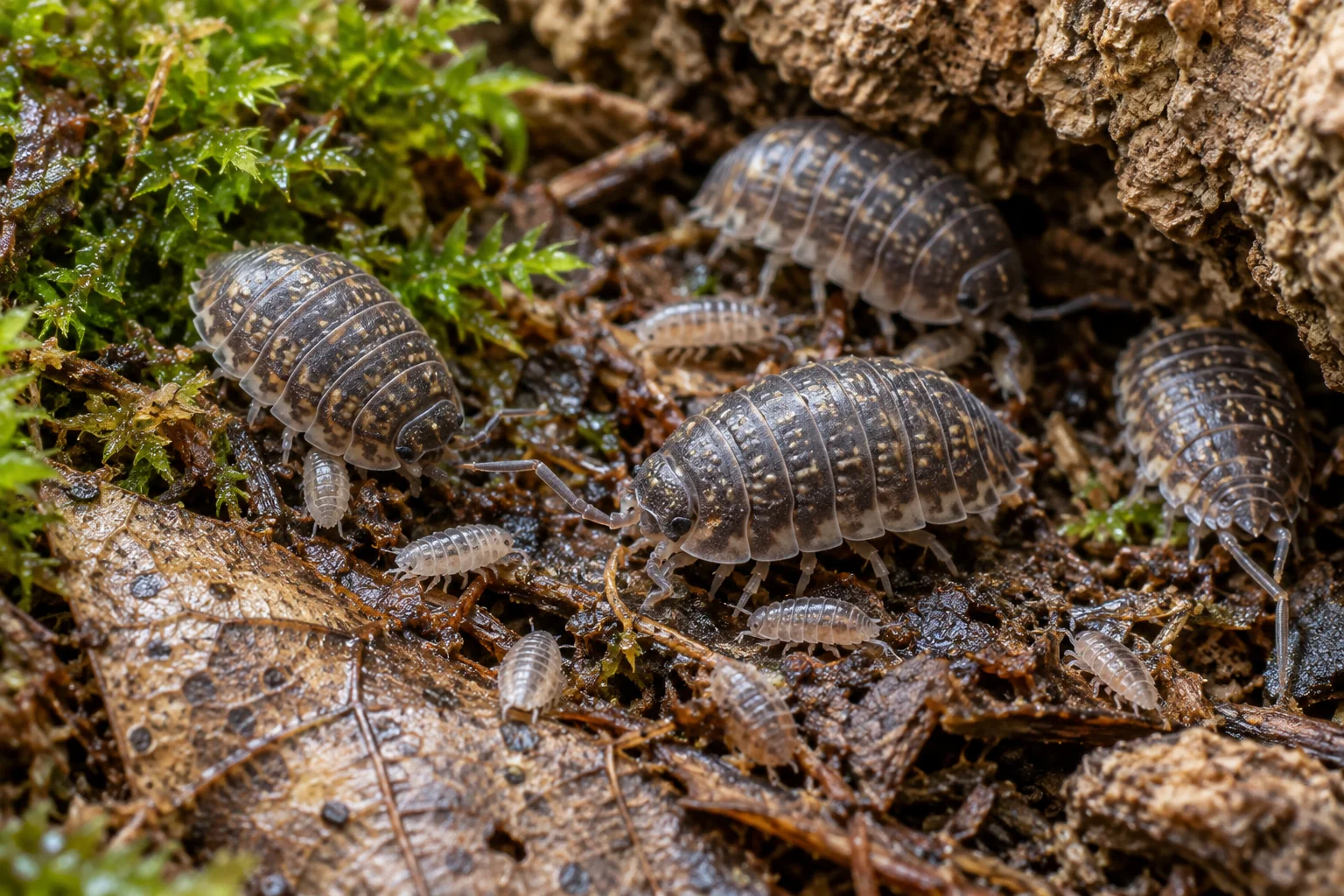
A damp refuge for the young
Keep one mossy corner consistently damp while the rest of the culture has room to dry slightly. The smallest isopods shelter where moisture holds.
Reason 3: It is too cold to breed
Reason 3: It is too cold to breed
Isopods reproduce on a temperature curve. In the upper 60s to mid 70s F they breed steadily, but let a bin sit below about 60 F and reproduction slows to a crawl even while the animals stay alive and look fine. A culture on a cold concrete floor or in a chilly basement is a classic stalled colony, healthy but frozen in place.
Move the bin off a cold floor and onto a shelf in a warmer room, away from drafts and exterior walls. Most beginner species never need a heat source if the room itself sits in that range. Honest trade-off: nudging the temperature up speeds breeding but also dries the bin out faster, so if you warm a colony to push production, plan to check its moisture more often.
Reason 4: Not enough protein and calcium
Reason 4: Not enough protein and calcium
Leaf litter keeps a colony alive, but growth and reproduction need two things litter alone is short on. Protein is what fuels egg production, and calcium is what lets isopods molt, which they must do to grow and to breed. A bin with plenty of litter but no protein or calcium source can idle for months without ever taking off.
Offer a small pinch of protein, no more than a pencil-eraser's worth per week for a small colony, and leave a cuttlebone or a little reptile-safe calcium in the bin as a free-choice source. We carry calcium supplements and isopod food for this. Do not overdo the protein, though: too much is what draws mites and fungus gnats, and a bin fighting a mite bloom is a bin that has stopped breeding, a failure mode we cover in our isopod die-off guide.
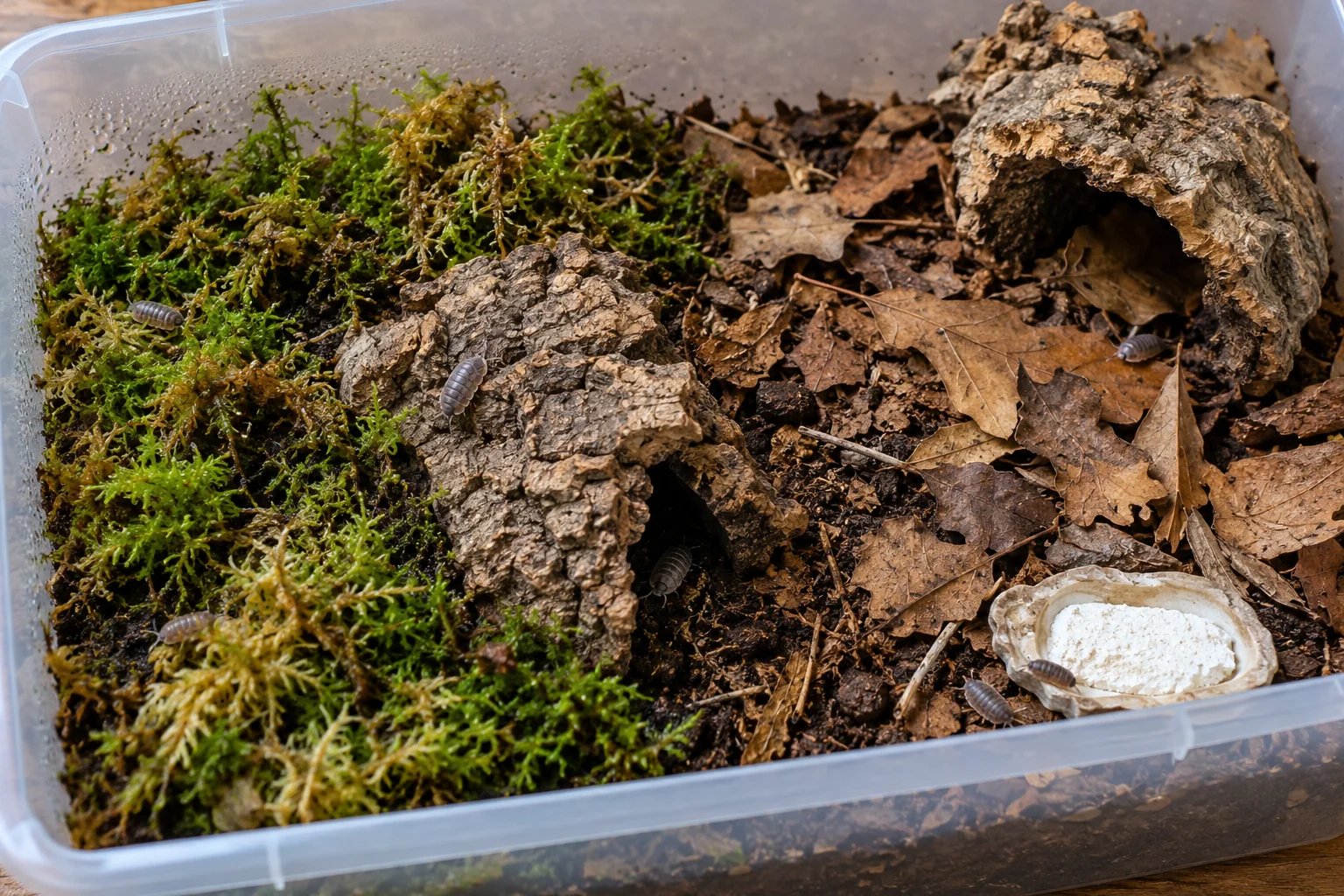
Balance moisture, cover and food
A culture bin can offer a damp retreat, a drier leaf-litter side, cork cover and a modest calcium source without crowding the colony.
Reason 5: Disturbed or harvested too hard
Reason 5: Disturbed or harvested too hard
Two handling habits quietly stall a colony. Constant digging and rummaging stresses the animals and interrupts breeding, and burrowing species resent it the most. And harvesting too early or too heavily pulls out breeding stock faster than the colony can replace it, so it never reaches the critical mass where numbers snowball.
The fix costs nothing: leave a young colony alone to build, and once it is genuinely booming, only ever skim the surplus, never more than you can see the colony clearly replacing. Patience is the cheapest tool on this whole list. If you want a bigger harvest sooner, the answer is to run a second bin, not to strip the first one bare.
Reason 6: A tankmate is eating the young
Reason 6: A tankmate is eating the young
If you are trying to grow isopods inside your pet's display enclosure, the animal may simply be eating them faster than they can breed, so the colony never gets ahead. And a large, protein-driven co-species can predate the young of a smaller one: the Dairy Cow (Porcellio laevis) is hungry enough that mixing it with a slower, smaller species you are trying to build up can hold that species down.
Breed your isopods in a dedicated culture bin rather than only in the display, then move the surplus into the enclosure once the colony is producing. Keep a big appetite species like Dairy Cow as its own colony instead of blending it with delicate breeders. You can start clean, single-species cultures from our beginner isopods, and if you also want the springtail half of a cleanup crew, our isopod and springtail combos pair both in one order.
Fix a Stalled Colony
The supplies that answer each fix above, ready to add in one tap. This is the bedding and food a stuck colony is usually missing.
Frequently Asked Questions
Written by the TC INSECTS breeding team · Porter, Texas · Live Arrival Guarantee on every order
Have a care question? Ask our community.
Join Reptile Keepers USA, our free Facebook group for reptile, amphibian and invert keepers. Share your setups, get care help and swap feeder tips.
Join the free group