Tropical White Springtail Care
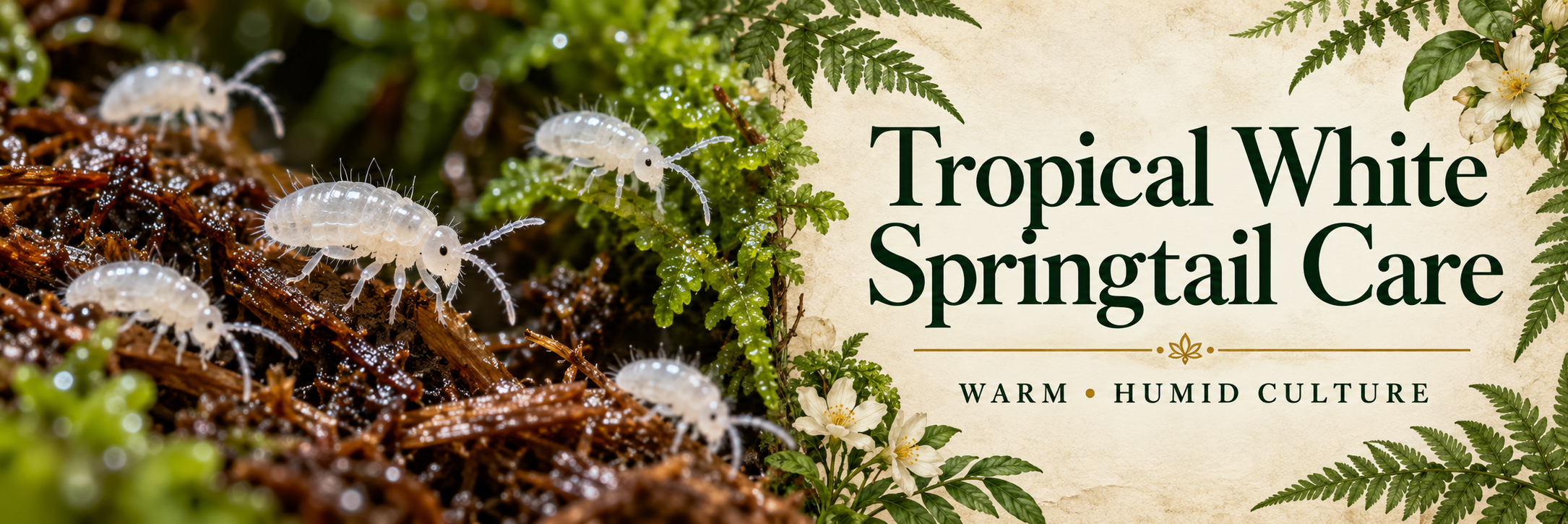
Tropical White springtails, sold industry-wide simply as Collembola sp., need warmer and wetter conditions than the standard Temperate White culture: 72 to 82 F and consistently high humidity, with no dry spells tolerated. The generic name is not a TC shortcut. Every major seller of this species uses the same placeholder label, because the exact species behind it has never been pinned down with full confidence across the trade, though Sinella curviseta is the leading candidate. This guide covers what that naming gap actually means for care, the medium that suits a warm, humid culture best, and when to reach for this species instead of a cooler-tolerant Folsomia culture.
Practical target 74 to 80 F; never let it chill
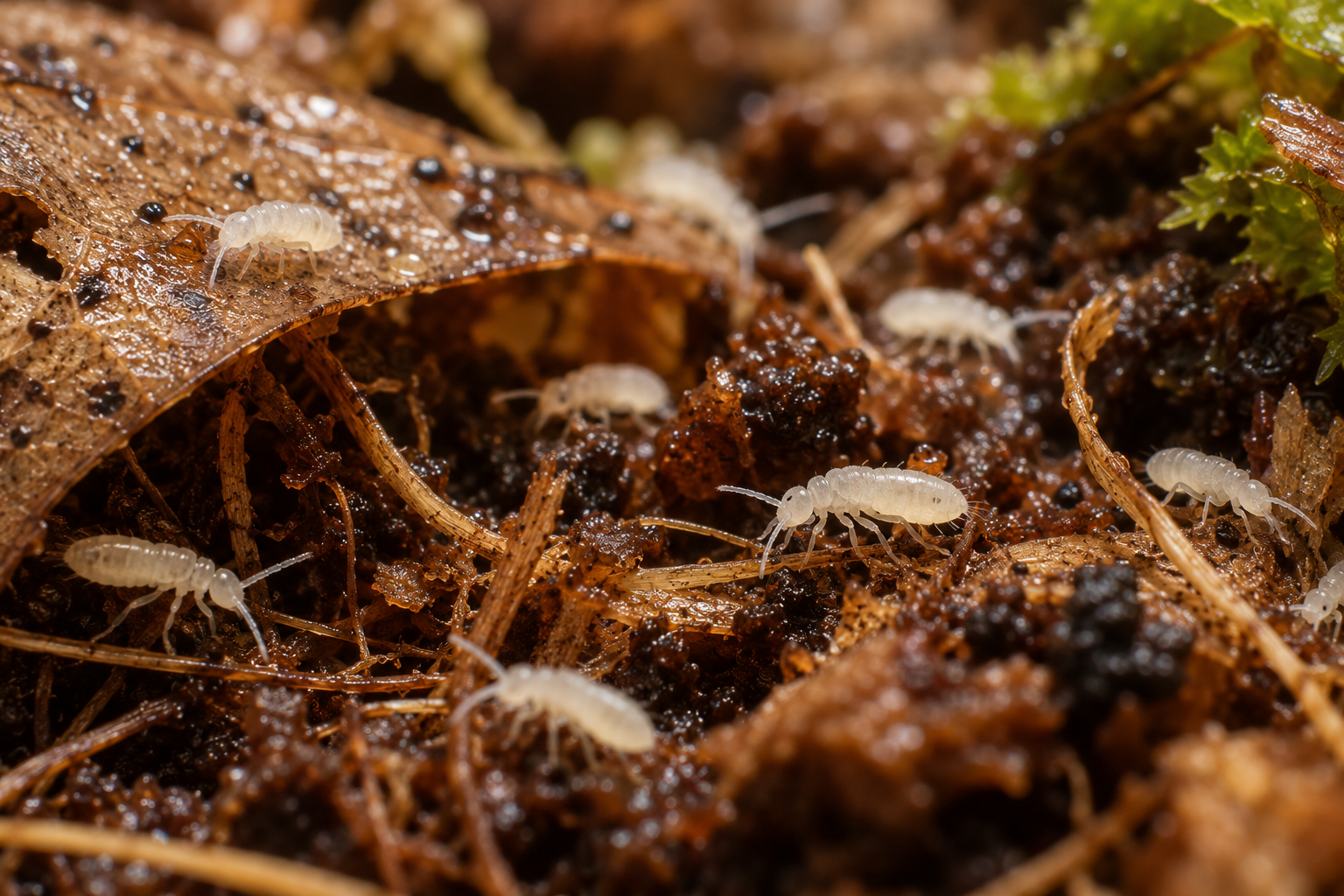
Pale white to translucent, easy to miss at a glance
Sold trade-wide under this name; likely Sinella curviseta
Why Do Keepers Just Call This Species Collembola sp.?
Every major vendor selling a Tropical White springtail culture, TC included, lists it the same way: Collembola sp., genus known, species unconfirmed. That is not vague marketing copy. Springtail identification below the genus level generally requires close microscope work on preserved specimens, and the pale, fast-moving culture strains that dominate the pet trade have never been formally keyed out to a single confirmed species with full agreement.
TC's own species reference lists the likely match as Sinella curviseta, a springtail with a long history in classroom and hobby culture going back decades, and published life-table research on that species lines up closely with how this culture actually behaves: fast, prolific, and demanding of warmth. Whether every cup sold under this name is genetically identical is a separate question the trade has not settled, but the care that follows works regardless of the exact answer.
Temperature and Humidity: Warmer and Wetter Than the Default
TC lists this species at 72 to 82 F preferred, with a practical target of 74 to 80 F for steady growth, notably warmer than the 65 to 80 F range that suits a standard Temperate White culture (our temperate versus tropical breakdown covers that climate split in general). Humidity needs to stay high and consistent, not just damp in one corner, since this species tolerates a dry surface far worse than Folsomia candida does.
The one real hazard unique to this species is cold, not heat. Published rearing work on Sinella curviseta found reproduction peaking near 86 F, and multiple sellers separately warn that refrigeration and cold shipping can kill this species outright, a risk Folsomia simply does not carry. If a culture ever ships during a cold snap or sits somewhere below room temperature for long, check it closely rather than assuming it rode out the cold the way a hardier species would.
Coco Fiber or Charcoal for This Species
TC ships Tropical White springtails on coco fiber, a clean, low-cost medium that holds warmth and moisture evenly without the rinsing charcoal needs. Keepers who want easier visibility against dark pieces can move part of an established culture onto plain charcoal themselves, though coco still holds dampness more consistently across the whole container for a species that punishes any dry stretch. If you are still deciding between this species and another color entirely, our springtail comparison chart lines up the tradeoffs side by side.
This species also pairs naturally with isopods in the same bioactive setup, since the two groups target different waste. Springtails graze mold, biofilm, and fine debris on the surface, while isopods work through the heavier leaf litter and decaying wood underneath, so running both in one enclosure covers more of the cleanup job than either does alone.
Feeding Cadence and Why This Culture Builds Slowly
The same house rule applies here as with every springtail: a very light sprinkle of yeast or prepared springtail food every 2 to 4 days, skipping a feeding entirely if the last one is still visible. TC lists this species as a moderate breeder rather than a fast one, meaning it tends to grow steadily instead of exploding in numbers the way Temperate White does. Published life-table research on Sinella curviseta, the likely species behind this culture, actually shows strong reproductive output once conditions run warm enough, so slow early growth more often means the cup needs more heat, not that something is wrong.
That steadier pace is a patience issue, not a husbandry mistake. Keep the culture consistently warm and humid, feed lightly, and give it more time before assuming something is wrong. Starting a culture several weeks ahead of when you actually need it, rather than the day before, is the simplest fix for a species that rewards a head start more than most.

Harvesting for Dart Frogs and Small Invertebrates
This species' small, pale body and steady reproduction make it a reasonable supplemental feeder for froglets, tiny geckos, and other micro predators too small for a full-size feeder insect, in addition to its main job as cleanup crew. Harvest by scooping a portion of the coco medium directly, or flood a charcoal culture with a small amount of dechlorinated water and pour off the springtails that float to the surface.
Feeding out of the same cup you are also trying to grow works against you. Keep a dedicated feeder culture separate from a display or seeding culture if you plan to harvest from it regularly, and reseed the feeder cup from your main culture whenever it thins out. TC's full springtail lineup makes starting that second cup as easy as checking out.
When to Choose Tropical White Over Folsomia Candida
The choice comes down to what temperature you can actually hold, not which species is better. Reach for Tropical White if your setup runs warm, mid-70s Fahrenheit or higher, stays consistently humid, and will never see a cold shipping delay or an unheated room in winter. Reach for Folsomia candida instead if your cultures live at normal room temperature, your winters get genuinely cold, or you want the more forgiving species while you are still learning the basics.
Running both is a completely reasonable answer too. A warm dart frog vivarium and a cooler reptile shelf simply want different springtails, and keeping one culture of each covers both jobs without compromising on either. See our guide to seeding a vivarium for how to introduce either species once you've picked one.
The Tropical White Springtail Kit
Starts and maintains TC's warm, humid Collembola sp. culture.
Frequently Asked Questions
Written by the TC INSECTS breeding team · Porter, Texas · Live Arrival Guarantee on every order
Have a care question? Ask our community.
Join Reptile Keepers USA, our free Facebook group for reptile, amphibian and invert keepers. Share your setups, get care help and swap feeder tips.
Join the free group