
Black Evil Isopods for Sale
TC INSECTS ships live captive-bred Cubaris sp. “Black Evil” for serious collectors and experienced keepers. If you are searching for Black Evil isopods, this is the Gothic Cubaris — a standalone Southeast Asian species with deep royal purple iridescent coloring, a heavier body profile than most members of the genus, and a premium price that reflects genuine rarity. It is not a color morph of the Panda King or any other identified species. For full Cubaris genus background, see the Rubber Ducky product page.
Overview
Cubaris sp. “Black Evil” is a formally undescribed species in the family Armadillidae from Southeast Asia. Unlike the panda-line *Cubaris* — which share the Panda King base species — or the ducky-line species from Thai limestone caves, Black Evil is a standalone form. The hobby has given it a specific identity that the community specifically maintains: the Gothic Cubaris, defined by its deep purple iridescent coloring and departure from the bright patterns that characterize most collected *Cubaris*.
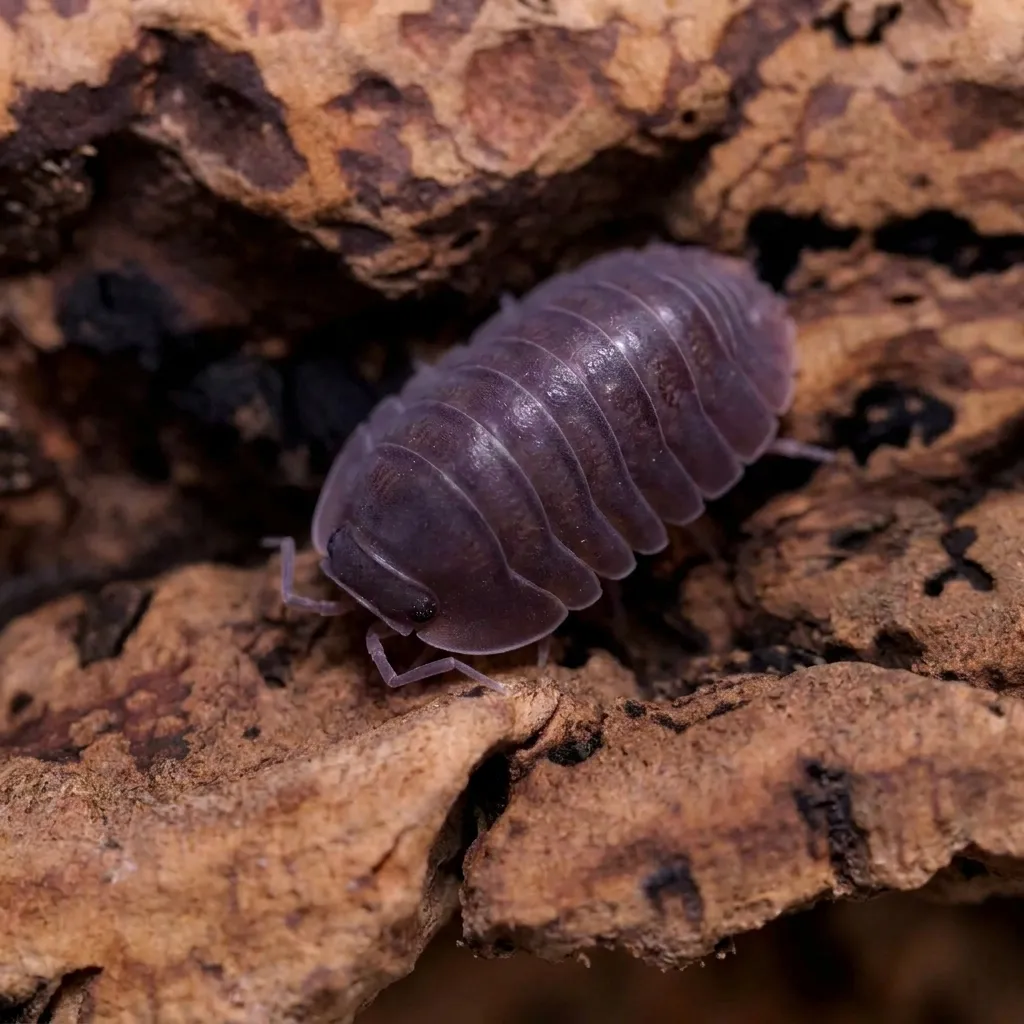
The Color — Royal Purple With Iridescent Sheen
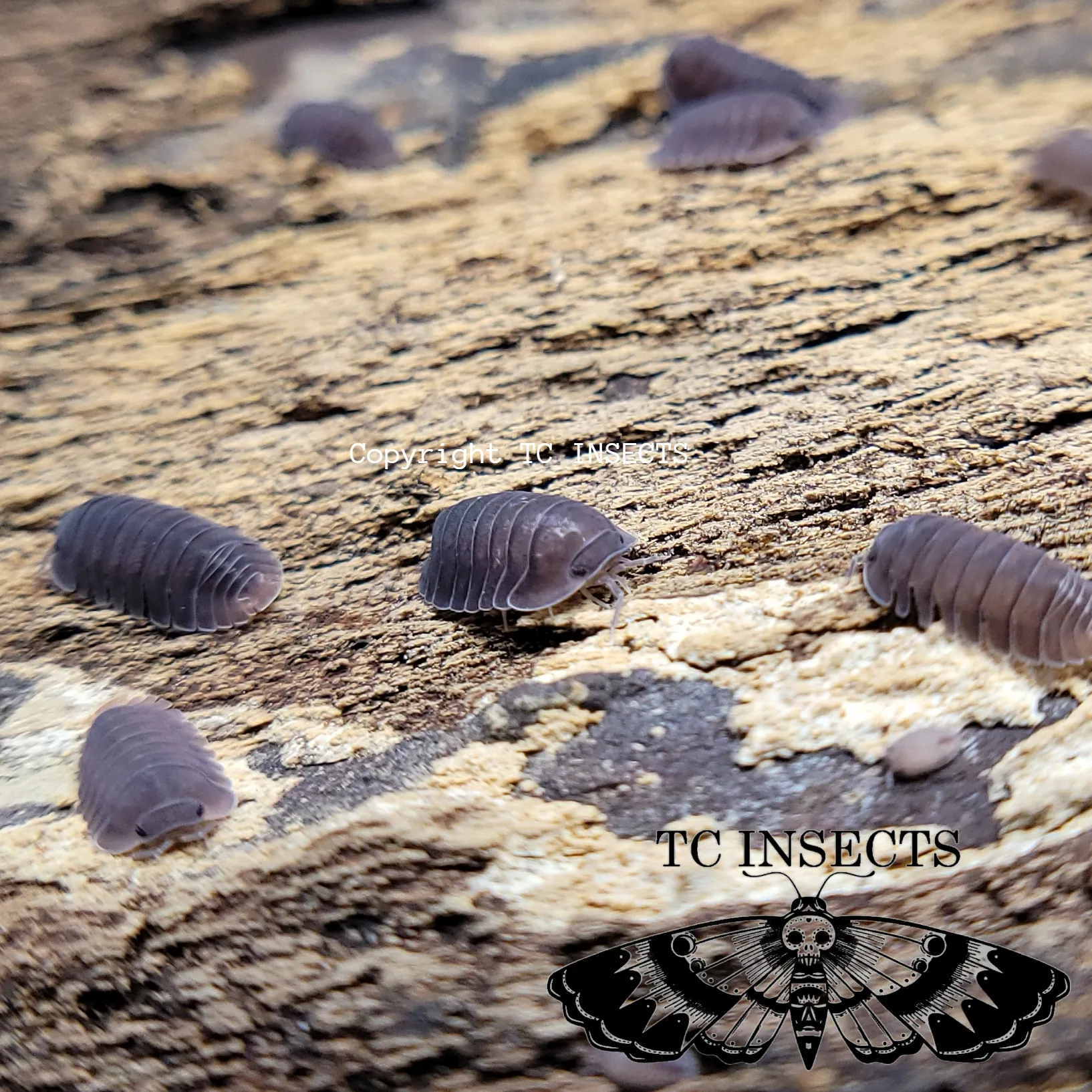
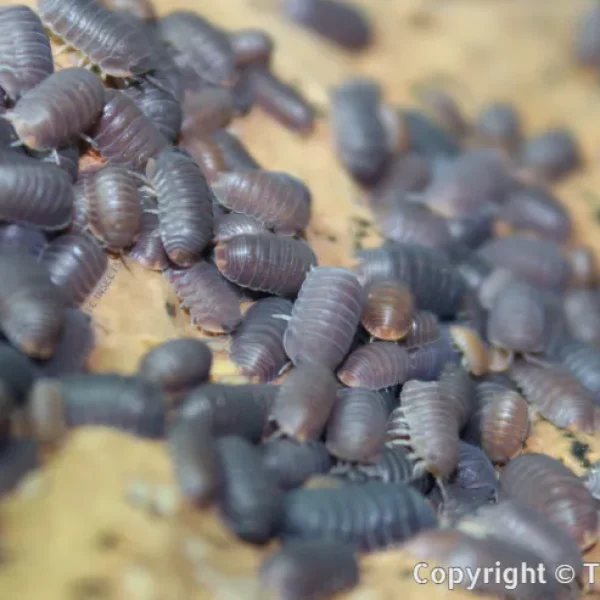
The Black Evil’s defining visual is not simply “dark” or “black” — it is deep royal purple with a metallic iridescent quality. The exoskeleton carries a structural sheen that shifts under different lighting conditions, similar in optical character to the Platinum Ducky’s silver metallic surface but in the deep purple spectrum. Under direct or strong light, the purple tone glows distinctly. In lower ambient light, the animal appears darker.
This iridescent sheen is what separates Black Evil from the Black Panda‘s flat dark coloring or any other uniformly dark Cubaris. The purple-with-shine is not a photograph artifact — it is a consistent characteristic of the species that specialist keepers specifically highlight as the primary visual appeal.
Honest Note: Origin Not Confirmed
Black Evil is described as originating from Southeast Asia across all hobby sources consulted. No specific country or locality is consistently documented. The TC INSECTS page reflects this accurately — “Southeast Asia” is the honest position. Care should be based on the proven captive husbandry framework rather than any specific wild habitat claim. The species responds well to the same warm, humid, organic-substrate care that works for other Southeast Asian Cubaris.
Honest Note: This Species Establishes Better in Larger Groups
Black Evil is specifically noted to enjoy and thrive in larger numbers. A small starter group of 5 individuals may establish more slowly than a larger starting colony. The species benefits from the humidity stability, social dynamics, and substrate maturation that larger groups create more quickly. Buyers starting with a 5-count should plan for a longer, slower establishment phase before consistent breeding activity appears. A 10-count gives meaningfully better starting conditions.
The Gothic Cubaris — Collector Identity
The hobby has attached a specific aesthetic identity to this species. Where the Rubber Ducky is vivid yellow-orange, the Panda King is bold black-and-white, and the Platinum Ducky is metallic silver, Black Evil occupies the Gothic end of the *Cubaris* color spectrum — dark, moody, iridescent purple. Collectors who build themed displays or who want a visual counterpoint to the bright colors dominating the *Cubaris* hobby choose Black Evil specifically for this aesthetic role.
The “evil” in the name is a hobbyist designation for the combination of dark coloring, iridescent sheen, and the somewhat forbidding visual presence the species has in a display setup. It is not a behavioral designation — Black Evil behaves like all other *Cubaris*: shy, nocturnal, burrowing, humidity-dependent.
Care
Setup Framework
Use a ventilated enclosure with 3 to 4 inches of organic substrate. Keep one side moist with sphagnum moss. Keep the other side slightly less moist with cork bark hides and leaf litter throughout. Maintain 75 to 80°F and high humidity with consistent ventilation. Keep feedings minimal and calibrated — experienced keepers specifically recommend light feeding with quality substrate rather than heavy supplementation. The substrate does most of the nutritional work for this species.
Temperature
Hold 75 to 80°F. This is warmer than the panda-line species (70–78°F) and aligns with the Thai cave ducky temperature range. Stable warmth drives establishment more than any other single variable. Avoid temperature drops during the early establishment phase — the colony is most vulnerable when new.
Humidity and Ventilation
Maintain high humidity with consistent airflow. Mist the sphagnum moss zone regularly — lightly but consistently — rather than flooding. Good ventilation prevents stagnation without drying the culture. The balance is the same as for ducky-type *Cubaris*: humid and fresh, not humid and sealed.
Food
Keep TC INSECTS Assorted Hardwood Leaf Litter and decaying hardwood available at all times as the base. Feed supplemental food in minimal amounts — smaller portions than you would offer a panda-line *Cubaris*. Offer protein such as TC INSECTS Isopod Food or dried shrimp once or twice per week in small quantities. Remove uneaten food promptly. Quality leaf litter and a mature substrate do more for Black Evil than heavy feeding.
Calcium
Provide TC Calcium Ultra Fine, cuttlebone, or limestone. Keep calcium available at all times. Calcium carbonate from natural sources including limestone and eggshell supports the exoskeleton quality that maintains the characteristic sheen.
Springtails
Pair with Springtails. High-humidity environments with minimal food inputs still need mold control in the moist zone. Springtails handle that layer without requiring the keeper to compensate with more ventilation.
Breeding Notes
Females carry developing young in a marsupium. Breeding is slow to moderate. The colony establishes faster in larger groups — plan for a slow, quiet first phase followed by gradual growth. Minimal disturbance during the establishment phase is critical. Do not excavate the substrate looking for mancae. Surface activity increases naturally as the colony matures.
A mature, larger colony is more visually impressive than any equivalent-number display with a smaller *Cubaris* — the iridescent purple sheen on a group of healthy adults against pale leaf litter or dark cork bark is the visual payoff for the extended establishment investment.
How Black Evil Compares to Other TC INSECTS Cubaris
Black Evil is separate from both the panda line and the ducky line in this catalog. It does not share lineage or pattern with the Panda King, Red Panda, or Black Panda. It is not related to the Thai limestone cave ducky forms — Rubber Ducky, Blonde Ducky, or Platinum Ducky. Black Evil is the standalone Gothic species in the catalog — its own form, its own visual identity, its own collector tier.
Best For
- Serious collectors who want the most visually distinct and premium Cubaris in the TC INSECTS range
- Display vivarium builds where deep royal purple iridescence anchors the aesthetic rather than bright or patterned colors
- Experienced keepers comfortable with advanced-tier care, slow establishment, and premium price investment
- Anyone building a complete TC INSECTS Cubaris collection who wants the species that occupies the Gothic end of the visual spectrum
Not Best For
- New or beginner Cubaris keepers. The care demands, price point, and slow establishment all require prior experience with the genus.
- Keepers wanting fast visible results. Establishment is slow, especially with a small starter group.
- Dry, cool, or variable setups. This species needs stable 75 to 80°F and consistent high humidity.
- Feeder use. The price, rarity, and slow breeding make feeder use impractical.
Receiving and Acclimation
Open the package in a calm, warm indoor area soon after delivery. Some animals may conglobate after shipping — leave them undisturbed for a few minutes before moving them. Place all packing material directly into the prepared enclosure. Position animals near the moist sphagnum zone under cork bark. Leave the culture undisturbed for at least two weeks.
First Week Priorities
Reach 75 to 80°F and high humidity before the animals arrive. During the first two weeks, feed only leaf litter and minimal protein. Check whether food disappears before offering more. This species benefits from restraint in supplemental feeding. Hiding for days after arrival is normal. Do not excavate or disturb the setup. Stability is the only thing that accelerates establishment.
Recommended Add-Ons
- TC Calcium Ultra Fine alongside cuttlebone or limestone for exoskeleton and sheen support.
- TC INSECTS Assorted Hardwood Leaf Litter as the primary diet foundation — the backbone of Black Evil’s nutrition.
- TC INSECTS Isopod Food for minimal, targeted protein supplementation.
- TC INSECTS Ultra Isopod Habitat Kit — the richer substrate and setup components suit the premium care tier this species occupies.
- Springtails for mold control in the high-humidity environment.
Frequently Asked Questions
Is Black Evil related to Black Panda?
No. Black Panda is a pattern mutation of the Panda King — the same Vietnam-origin species with its white bands suppressed. Black Evil is a separate, standalone Southeast Asian Cubaris species with no documented relationship to the panda-line species. The “black” in both names is a naming coincidence. They are different animals from different origins with different visual characteristics — Black Evil’s deep purple iridescent sheen has nothing in common with Black Panda’s flat dark coloring.
What makes the color look purple rather than black?
The deep royal purple in Black Evil comes from structural properties of the exoskeleton — the same optical mechanism that creates the metallic sheen in the Platinum Ducky, but in the purple spectral range rather than silver. Under direct or warm light, the purple tone is visible and the iridescent sheen gives it a luminous quality. In lower ambient light, the animal appears darker — closer to charcoal or near-black. The purple is most visible in good lighting against pale substrate like light-colored leaf litter or pale cork bark.
Why does this species do better in larger groups?
Multiple sources note that Black Evil enjoys and thrives in larger numbers. The likely explanation is a combination of factors: larger groups create faster substrate maturation through collective grazing, the colony humidity within a larger group stabilizes more consistently, and the social density encourages the behavioral patterns — including burrowing for molting and breeding — that these cave-origin isopods use naturally. A 10-count starter establishes noticeably better than a 5-count, and a 20-count better still.
Why is Black Evil so much more expensive than other Cubaris?
Two factors: genuine rarity and slow breeding pace. Black Evil is not widely available in the hobby, reflecting limited collection and the difficulty of establishing breeding populations at scale. The slow-to-moderate breeding rate means breeders carry significant long-term care costs before sellable culture numbers develop. Additionally, the unique visual — royal purple iridescent sheen — sustains demand at premium price points from a collector audience that specifically seeks it.
Can this species be used in a bioactive terrarium?
Yes, once established. Black Evil can process organic debris in the right humid tropical setup. However, introduce this species into a bioactive enclosure only after the colony has grown to a stable, reproducing population. A small new starter group placed directly into a large enclosure with active animals risks depletion faster than the colony can recover. Build the population in a dedicated culture first. Then, introduce a portion to the terrarium once numbers are robust.
Learn More About Black Evil and Cubaris
These sources give useful context on the genus, the Southeast Asian distribution, and the biology behind this species.
-
Wikipedia: Cubaris Brandt, 1833. The genus article notes that the hobby has expanded quickly through collector interest in visually striking undescribed species, and that many hobby Cubaris remain formally unnamed. Black Evil is one such form — its rarity in the hobby reflects genuine natural scarcity and the limited number of successful breeding populations established in captivity, both of which the genus article helps contextualize.
-
GBIF: Cubaris Brandt, 1833. The distribution data for the genus across Southeast Asia. The geographic spread of observation records across multiple countries in the region — Thailand, Vietnam, Indonesia, and surrounding areas — illustrates why “Southeast Asia” is the honest origin description for Black Evil rather than a specific confirmed locality. The region’s cave and forest diversity produces *Cubaris* forms that are highly locality-specific and rarely found far from their collection sites.
-
PMC / NCBI: Water conservation in terrestrial isopods. Research on how cave-origin terrestrial isopods manage water balance. Directly relevant to the “thrives in larger numbers” behavior of Black Evil — a larger group maintains the humidity microclimate within the enclosure more consistently than a small scattered group, which connects to the gill-biology moisture requirements that cave-origin Southeast Asian Cubaris cannot compensate for when ambient humidity drops.




Reviews
There are no reviews yet.