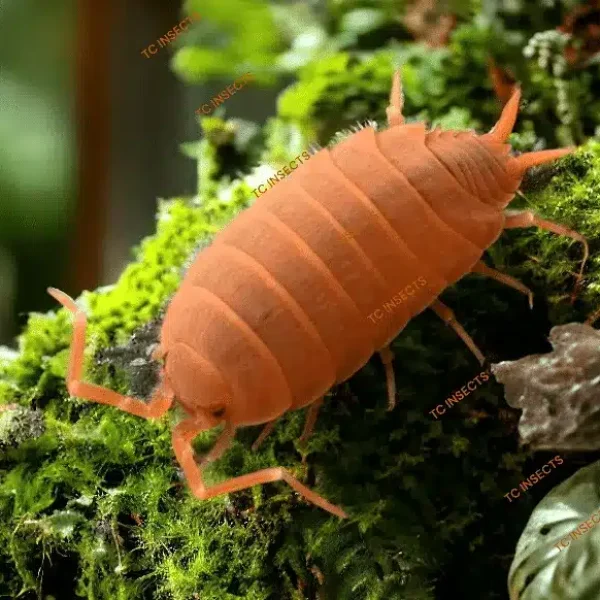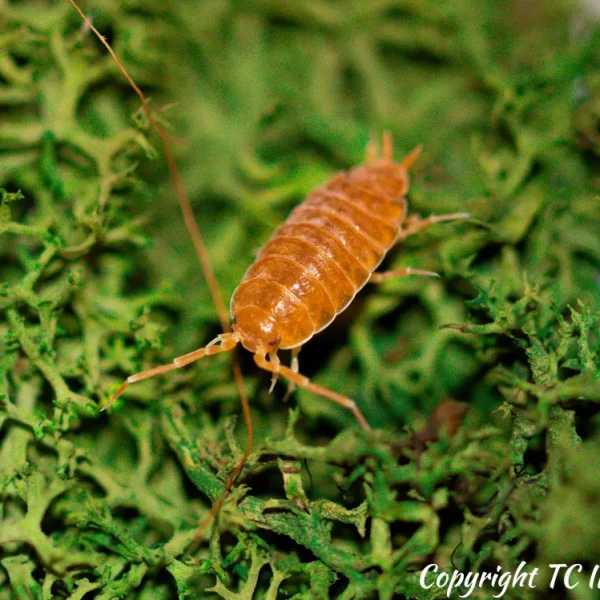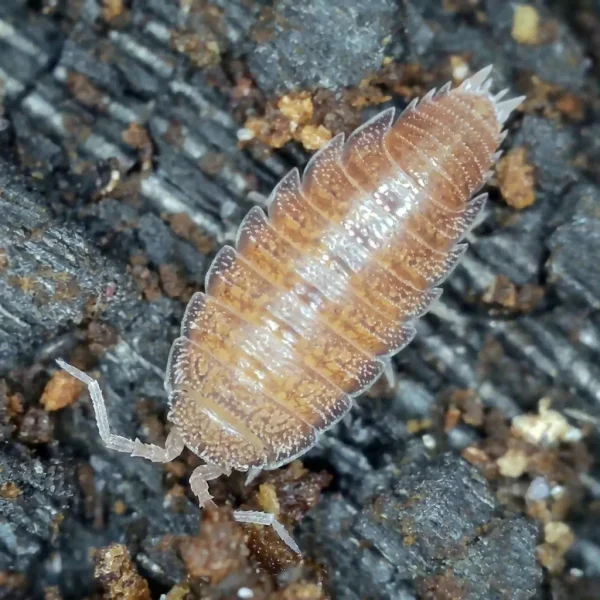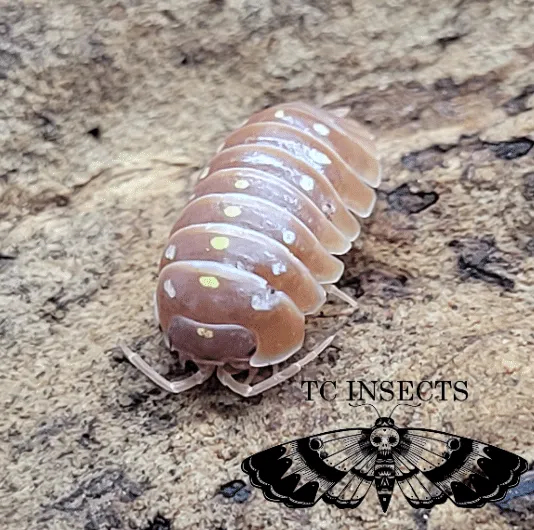
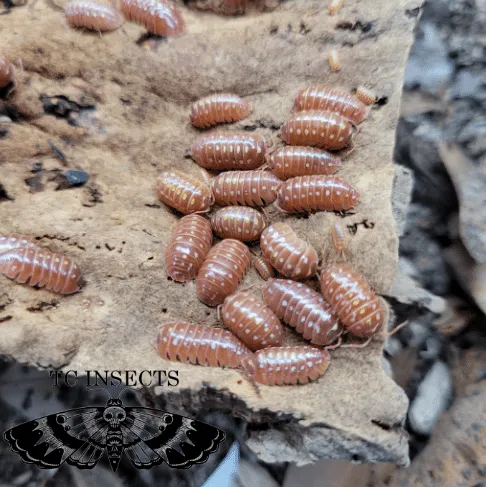

Armadillidium klugii Orange Clown Isopods for Sale
First, TC INSECTS ships Armadillidium klugii “Orange Clown” as a live captive-bred culture. Specifically, this is the hypomelanism color morph of the Clown Isopod. Additionally, our Orange Clown line traces back to a TC
INSECTS mother culture established in 2020. As a result, this is the catalog’s premium A. klugii morph counterpart to our Wild Type page.
Furthermore, this page sits alongside our Wild Type Dubrovnik as the morph-versus-wild-type pair within A. klugii. In contrast, Wild Type Dubrovnik shows the original Brandt 1833 grayish-brown base. However, Orange
Clown removes the dark base pigment entirely, producing a deep orange body. Therefore, the two pages cover the same species across two distinct color expressions.
Overview
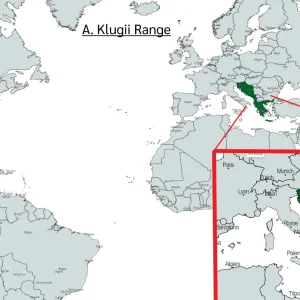
First, Armadillidium klugii was described by Johann Friedrich Brandt in 1833. Specifically, the description appears in his Conspectus monographiæ crustaceorum oniscodorum Latreillii. Additionally, the species is native
to the Adriatic coastal range from Croatia to Montenegro. Furthermore, newer records document populations in southern Albania and western Greece.
However, the Orange Clown morph is a cultivated color isolation, not a wild-type form. Specifically, the morph is documented as Montenegro Adriatic origin. As a result, the Orange Clown line traces to a specific point along
the species’ native range. In contrast, our Wild Type Dubrovnik traces to the Croatian Adriatic locality.
Why Keep Armadillidium klugii “Orange Clown”?
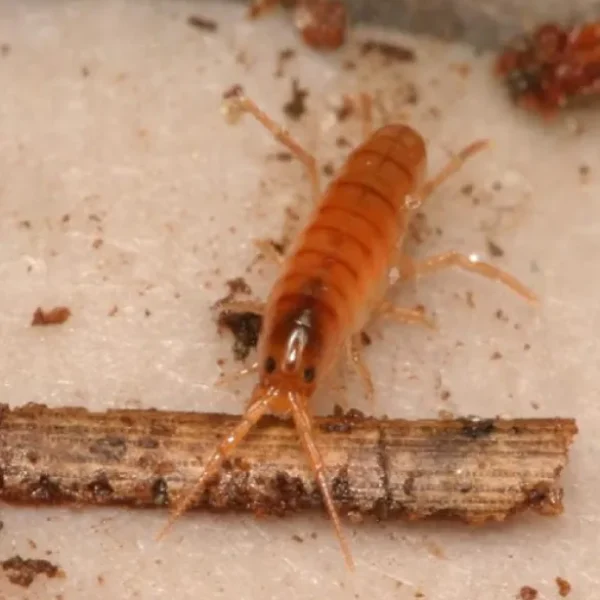
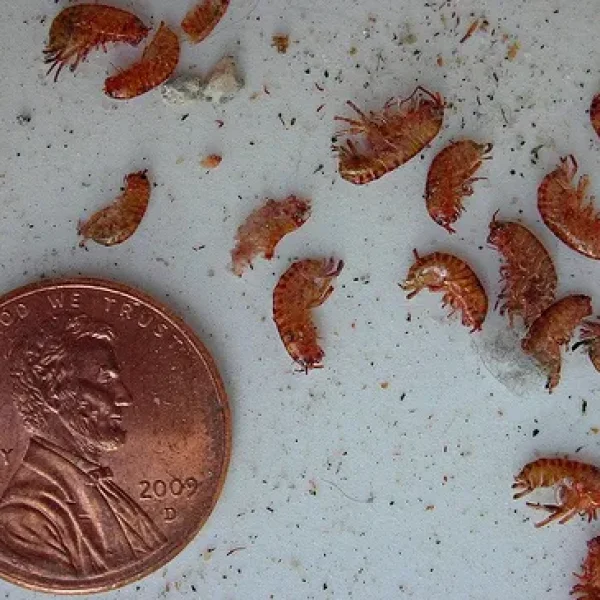
- Deep orange hypomelanism expression: First, the morph removes the wild-type dark base pigment entirely. Specifically, the resulting orange base is one of the most striking color expressions among Armadillidium.
- Retained three-row dot pattern: Additionally, the morph keeps the species’ signature three-row pattern of white and yellow dots. As a result, the visual signature combines hypomelanism with the original Clown Isopod pattern.
- Premium collector tier: Furthermore, this is one of the more premium Armadillidium morphs in the hobby. Therefore, the morph fits collectors building a high-end klugii display.
- TC INSECTS-bred mother culture: Specifically, our line traces to a TC INSECTS mother culture established in 2020. As a result, the culture has been stable in our facility for several years.
- Full conglobation: Finally, the species seals completely when rolled. Therefore, the bright orange pattern wraps into a dramatic sphere when disturbed.
Honest Note: Hypomelanism Mechanism with Dark Pigment Removed
First, Orange Clown shows hypomelanism. Specifically, the dark melanin pigment is removed from the body. Additionally, this is a more complete dark-pigment removal than partial-reduction morphs. As a result, the wild-
type grayish-brown base is replaced with a deep orange base.
However, hypomelanism is not the same as true albinism. Specifically, true albinism (such as our T- Albino vulgare) involves complete tyrosinase enzyme loss. In contrast, hypomelanism reduces or removes dark pigment
expression without disabling the enzyme entirely. Furthermore, Orange Clown retains the species’ yellow pterdine pigment for the spot accents. Therefore, the morph shows orange and yellow rather than the translucent
expression of true albinism.
In practical terms, this places Orange Clown alongside our Chocolate Zebra page in the catalog’s hypomelanism set. Specifically, Chocolate Zebra shows partial dark pigment reduction (producing brown). In contrast,
Orange Clown shows more complete dark pigment removal (producing orange). As a result, the two pages cover two intensity levels of the same broader hypomelanism mechanism.
Honest Note: Five-Mechanism Pigment Framework Across Our Catalog
First, our catalog now covers five distinct pigment-mutation mechanisms across morph pages. Specifically, our St. Lucia line preserves both pigment cell systems and shows polychromatic expression. Additionally, our
Japanese Magic Potion line uses the dalmatian gene to redistribute dark pigment into spots.
Furthermore, our T- Albino vulgare page covers complete tyrosinase enzyme loss with no dark pigment at all. Additionally, our Chocolate Zebra page covers partial hypomelanism producing brown. In contrast, this Orange
Clown page covers more complete hypomelanism producing orange. As a result, the catalog can demonstrate five different mutation expressions across three species.
Therefore, this is the catalog’s most complete pigment-mechanism collector framework. Specifically, the framework lets buyers see the same underlying isopod pigment biology expressed through different mutations. As a
result, this is a useful framework for keepers interested in genetics and selective breeding.
Honest Note: Modified Batesian Mimicry Context
First, the Wild Type A. klugii shows documented Batesian mimicry of the Mediterranean black widow spider Latrodectus tredecimguttatus. Specifically, the wild-type grayish-brown base with three-row spots resembles the
venomous spider’s warning coloration. Additionally, our Wild Type Dubrovnik page covers this mimicry biology in detail.
However, the Orange Clown morph is a captive isolation that departs from the wild-type adaptive pattern. Specifically, the orange base would not match the black widow’s actual coloration in the wild. Therefore, Orange
Clown would not benefit from the same predator-avoidance signal in nature. As a result, this morph is a captive collector curiosity rather than a wild-functional variant.
In practical hobby terms, this does not affect captive care. Specifically, the morph follows the same care framework as the wild-type. However, it is worth noting that the Wild Type pattern has documented adaptive function.
In contrast, Orange Clown’s pattern is purely aesthetic. As a result, the Wild Type is the biologically meaningful form; Orange Clown is the hobby-cultivated variant.
Honest Note: Montenegro Origin Morph Line
First, the Orange Clown line is documented as Montenegro Adriatic origin. Specifically, Montenegro is the southern Adriatic coastal country within the species’ native range. Additionally, this distinguishes the Orange
Clown locality from our Wild Type Dubrovnik page, which traces to Croatian Adriatic stock.
However, “Montenegro” as a morph designation refers to the original wild-collected line that produced the hypomelanism mutation. Specifically, the Orange Clown trait itself was selected and isolated from captive
Montenegro stock. As a result, treat the Montenegro reference as the founding stock origin rather than an active wild-collection record.
Honest Note: TC INSECTS Mother Culture Provenance
First, the TC INSECTS Orange Clown line traces to a mother culture established in our facility in 2020. Specifically, this represents several years of stable breeding under our care. As a result, the line has been established
long enough for consistent color expression to develop across generations.
However, the original founding source before the 2020 TC INSECTS establishment is not publicly documented. Specifically, captive Orange Clown stock circulates across multiple US and European breeders. Therefore,
treat the 2020 date as the TC INSECTS-specific provenance rather than the broader Orange Clown founding record.
Care and Setup
Generally, Orange Clown follows the standard Adriatic Armadillidium husbandry framework. Specifically, the same gradient setup that works for Wild Type Dubrovnik works here too. Additionally, premium morph
cultures benefit from slightly more attention to consistent conditions. Therefore, the setup notes below reflect best practices rather than minimum requirements.
Temperature
First, target 70 to 78°F for steady activity. Specifically, the species reproduces more readily at the warmer end of the range. However, avoid sustained heat above 80°F. Additionally, avoid cold rooms consistently below 60°F.
Humidity
First, target moderate humidity with a clear dry-to-moist gradient. Specifically, keep one consistently moist retreat zone hydrated with sphagnum moss and damp substrate. Then let the rest of the enclosure run drier. As a result, the colony self-selects between zones.
Substrate
First, use 2 to 3 inches of moisture-holding substrate. Specifically, a mix of organic topsoil, rotted hardwood, and flake soil works well. Then add a generous layer of TC INSECTS Assorted Hardwood Leaf Litter on top. Furthermore, magnolia leaves and pods are particularly favored by this species. As a result, including magnolia material strengthens the diet.
Food
First, lead with leaf litter and decaying hardwood as the base diet. Then supplement with TC INSECTS Isopod Food for added protein and minerals. Additionally, add a calcium source like TC Calcium Ultra Fine. Furthermore, this species appreciates higher supplemental protein than typical Armadillidium. Therefore, occasional dried shrimp, fish flakes, or insect frass supports breeding.
Ventilation
First, use cross-ventilation or a well-ventilated lid. Specifically, this species prefers active airflow rather than sealed wet conditions. As a result, undersized ventilation causes problems faster than undersized humidity. Therefore, prioritize ventilation over maximum humidity settings.
Bioactive Use
Generally, Orange Clown works well in moderate-humidity bioactive enclosures with strong ventilation. Specifically, the premium pricing tier makes a dedicated culture bin the safer setup choice. However, run a backup culture in a dedicated bin first to protect the genetics. Furthermore, predation in display tanks can keep population numbers low.
Breeding Notes
First, Orange Clown breeds at a moderate pace once established. Specifically, females carry developing mancae in a brood pouch. Additionally, this species reportedly reproduces more readily at warmer end of the
temperature range. As a result, target 72 to 78°F for active breeding.
Furthermore, juveniles emerge pale and gradually develop the spotted pattern. Specifically, the orange base color also intensifies with each subsequent molt. Therefore, very small mancae may look pale or yellowish before
the full orange develops. Additionally, expect the colony’s visual signature to mature over several months.
In particular, keep this morph separate from Wild Type Dubrovnik and other klugii locality lines. Specifically, cross-breeding would reintroduce dominant dark-pigment alleles and dilute the Orange Clown expression. As a
result, dedicated bins are essential for preserving the orange base across generations.
Best For
- Premium collector display vivariums where deep orange coloration reads strongly
- Keepers building a wild-type-vs-morph paired A. klugii set
- Multi-mechanism pigment collectors completing a five-mechanism catalog framework
- Buyers running standard A. klugii husbandry from the Wild Type Dubrovnik page
- Mediterranean-style display setups with cork bark and magnolia leaves
- Long-term breeding projects focused on hypomelanism color isolation
Not Best For
- Mixed cultures with Wild Type Dubrovnik or other klugii locality lines, since cross-breeding dilutes the Orange Clown expression
- Mixed cultures with Twisted Clown, since this would add versicolor genetics to the line
- Sealed wet tropical setups suited to high-humidity Cubaris species
- Hot tropical setups running consistently above 80°F
- Workhorse cleanup crew use, since the moderate breeding rate and premium value make them ill-suited for that role
- Feeder use, since per-animal value is too high for that role
Origin and Locality Notes
First, the species Armadillidium klugii was described by Johann Friedrich Brandt in 1833. Specifically, the description appears in his Conspectus monographiæ crustaceorum oniscodorum Latreillii. Additionally, the
species is native to the Adriatic coastal range from Croatia to Montenegro.
Furthermore, the Orange Clown morph is documented as Montenegro Adriatic origin. Specifically, the founding wild stock was collected from Montenegro populations before the hypomelanism trait was isolated in
captivity. As a result, this is a Montenegro-line morph distinct from the Croatian-origin Wild Type Dubrovnik page.
The TC INSECTS Orange Clown line specifically traces to a mother culture established in our facility in 2020. Specifically, this represents several years of stable breeding under our care. However, the original founding
source before the TC INSECTS establishment is not publicly documented.
Receiving and Acclimation
First, open your package promptly when it arrives. Then inspect the cup calmly before moving anything. Specifically, rolling isopods often arrive curled up or hidden in moss and shipping paper. As a result, check slowly
rather than dumping the culture.
Additionally, prepare the enclosure before opening the cup. Specifically, the habitat should already have a moisture gradient with one moist retreat zone, deep leaf litter, bark, and a calcium source. Furthermore, place the
shipping material into the enclosure and let the isopods move out on their own. Finally, keep the setup quiet for the first week while the colony settles.
Generally, it is normal for new arrivals to stay curled or hidden for several days. Specifically, juveniles may show less developed orange before the full color emerges. However, this species is reasonably active once
established. As a result, expect surface visibility within the first week as the colony settles.
Recommended Add-Ons
- TC INSECTS Ultra Isopod Habitat Kit — a premium starter setup well-matched to this premium collector morph, with deeper substrate volume and more complete cover from day one.
- TC INSECTS Assorted Hardwood Leaf Litter — the core food and cover layer that should never run out in an Orange Clown culture, with magnolia material particularly favored.
- TC INSECTS Isopod Food — supplemental protein and minerals beyond leaf litter, fed in small portions to support active breeding.
- TC Calcium Ultra Fine — supports healthy molts and exoskeleton development across the orange morph color expression.
- Springtails — pair with Orange Clown in moderate-humidity bioactive setups to manage mold around the moist retreat zone.
Frequently Asked Questions
How is Orange Clown different from Wild Type Dubrovnik?
First, the morph removes the wild-type dark base pigment. Specifically, this is the hypomelanism mutation. Additionally, the resulting body is deep orange instead of grayish-brown. In contrast, our Wild Type Dubrovnik page covers the original Brandt 1833 color expression with the dark base intact.
What is hypomelanism?
First, hypomelanism is reduced or removed dark melanin pigment expression. Specifically, the dark pigment is diluted or eliminated without disabling the tyrosinase enzyme entirely. In contrast, true albinism (such as our T- Albino vulgare) involves complete enzyme loss. As a result, hypomelanistic animals show altered color rather than translucent expression.
How does Orange Clown compare to Chocolate Zebra?
First, both are hypomelanism morphs in our catalog. Specifically, our Chocolate Zebra shows partial dark pigment reduction producing brown. In contrast, Orange Clown shows more complete dark pigment removal producing orange. As a result, the two morphs represent different intensity levels of the same broader mechanism.
Why is Orange Clown more expensive than Wild Type Dubrovnik?
First, Orange Clown is a premium cultivated morph. Specifically, the hypomelanism trait is recessive and requires isolated breeding to maintain. Additionally, the morph is rarer in the hobby than wild-type Clown Isopods. As a result, our pricing reflects the morph’s collector tier across the broader hobby.
Will the orange color stay consistent in offspring?
Yes, as long as the culture is not cross-bred with non-hypomelanism stock. Specifically, the trait breeds true within an isolated culture. As a result, keep this morph separate from Wild Type Dubrovnik and Twisted Clown. Furthermore, this preserves the orange color expression across generations.
Are they easy to breed?
Moderately. Specifically, the morph reproduces at a steady pace once established. Additionally, this species reportedly reproduces more readily at warmer temperatures. As a result, target 72 to 78°F for active breeding. However, expect a slow start in newly established cultures.
Learn More About Armadillidium klugii
Generally, A. klugii is a documented Adriatic endemic with peer-reviewed mimicry biology. Additionally, hypomelanism is a documented hobby mutation framework. Therefore, the following non-competitor references give keepers solid background on the species and its color mechanisms.
-
Wikipedia: Armadillidium klugii. Specifically, the main species reference covering Brandt’s 1833 description, Adriatic coastal range, three-row spot pattern, and the documented Batesian mimicry. As a result, this is the foundational reference for the species.
-
Wikipedia: Hypomelanism. Additionally, the reference for the broader biological concept of reduced or removed dark pigment expression. Therefore, this is useful for understanding the genetic mechanism behind the Orange Clown’s deep orange coloration.
-
Wikipedia: Latrodectus tredecimguttatus (Mediterranean Black Widow). Furthermore, the reference for the venomous spider that wild-type A. klugii mimics. As a result, this is useful for understanding why the Orange Clown’s cultivated orange base is a departure from the wild-type adaptive pattern.
Natural Habitat:
The origin of Armadillidium Klugii spans the coast of the Adriatic Sea. Found from Croatia to Montenegro. New records are indicating sitings in Southern Albania and west Greece.