
Armadillidium vulgare St. Lucia Isopods for Sale
Overview
Armadillidium vulgare “St. Lucia” is a documented Caribbean locality line of the common pillbug. The line is named after the volcanic island of Saint Lucia in the eastern Caribbean. This is where the original stock was collected.
from naturalized A. vulgare populations. As a result, this is the first non-European locality designation in our Armadillidium catalog. The species itself is the same Armadillidium vulgare described by Latreille in 1804 that
We cover this on our wild-type page. However, the St. Lucia population has expressed exceptional color polymorphism in captivity.
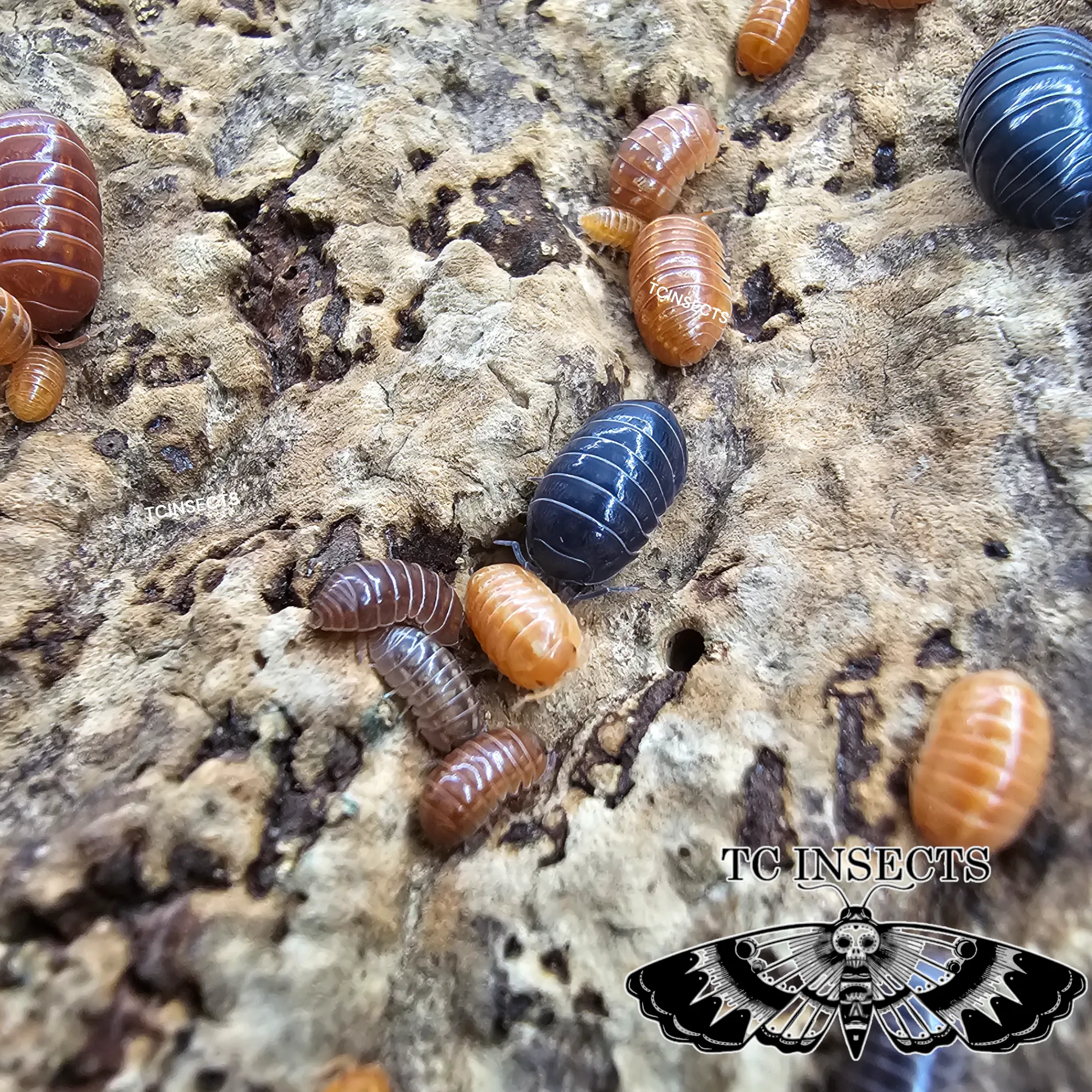
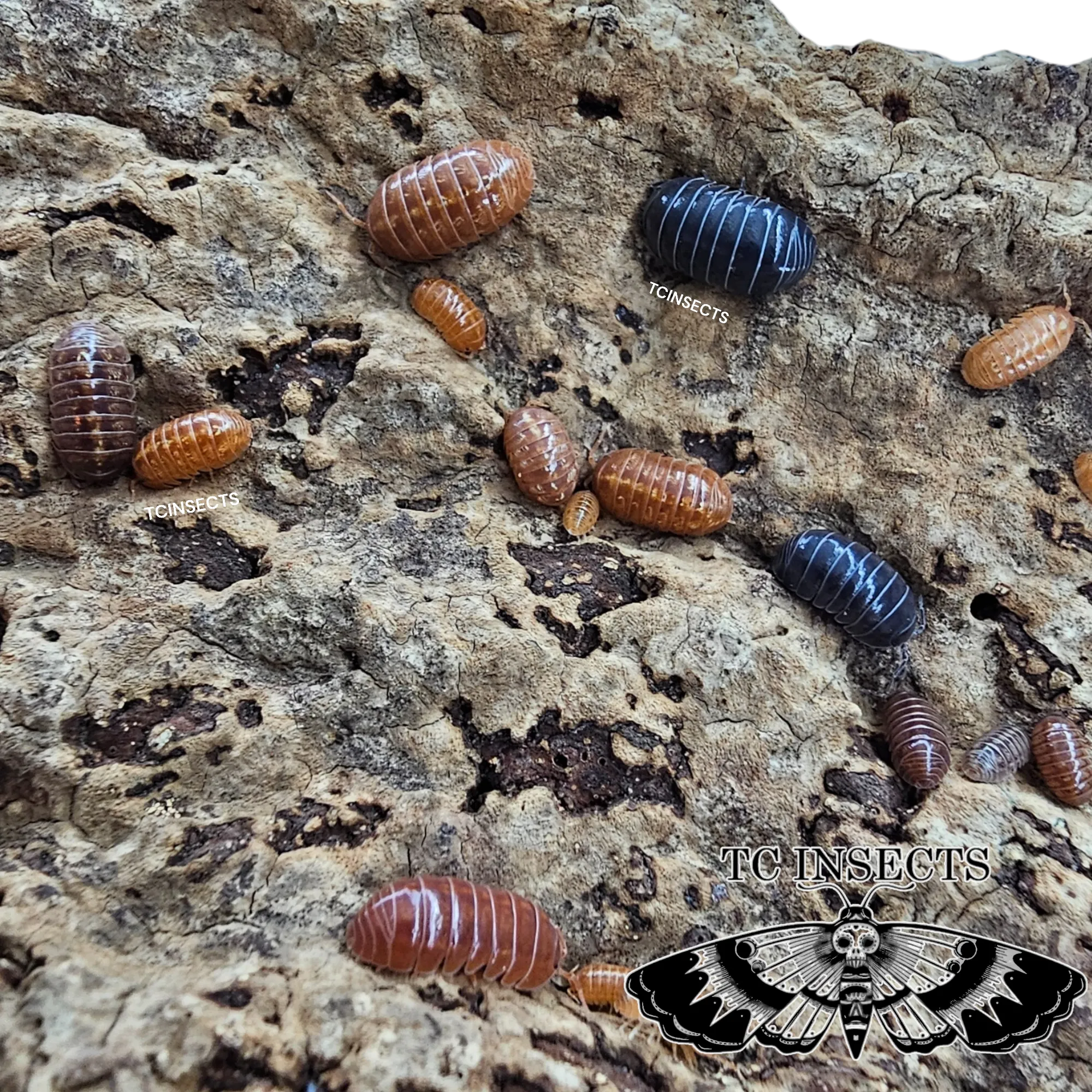
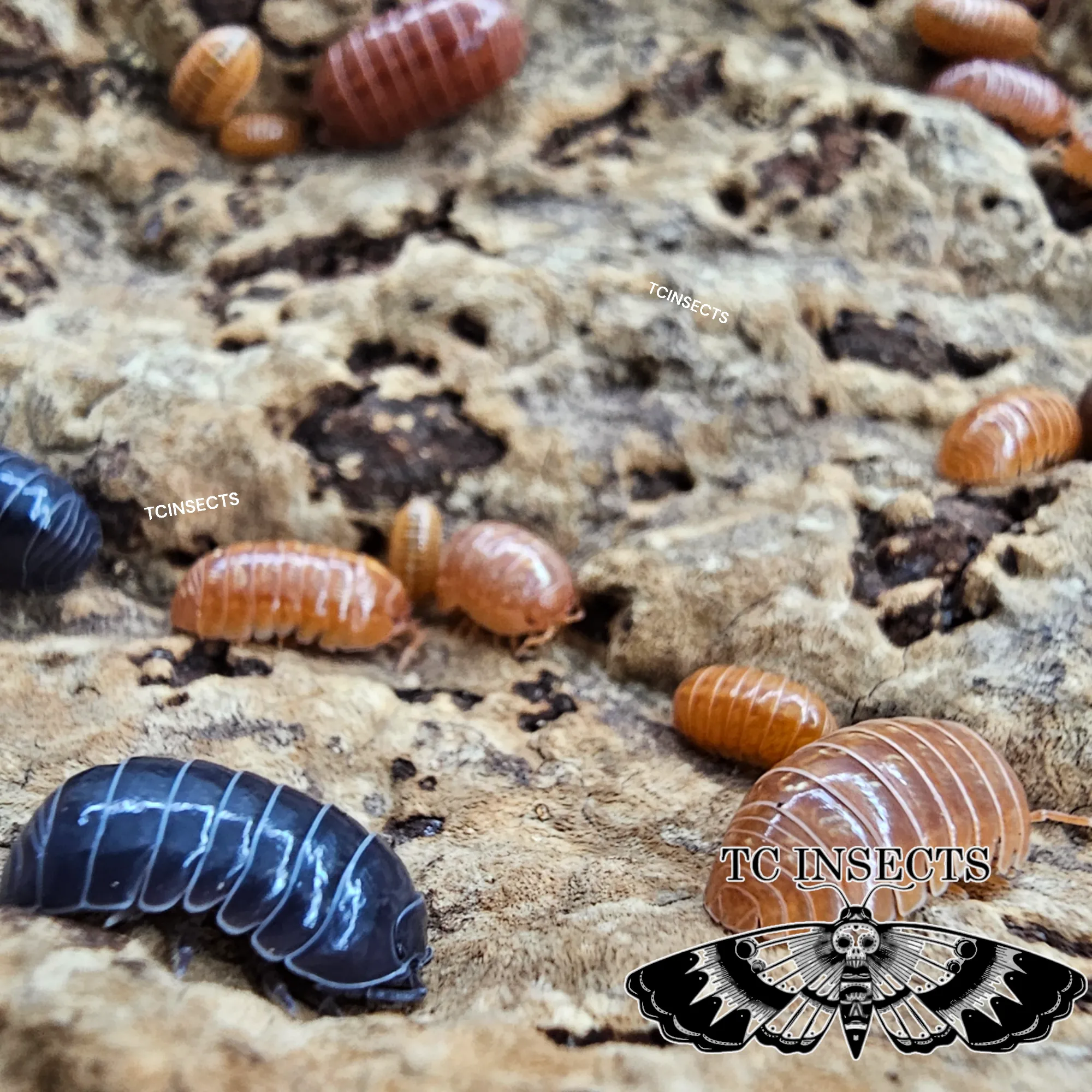
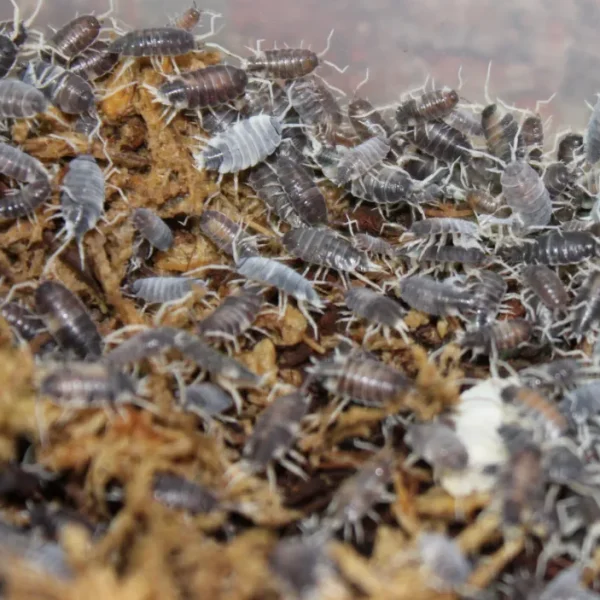
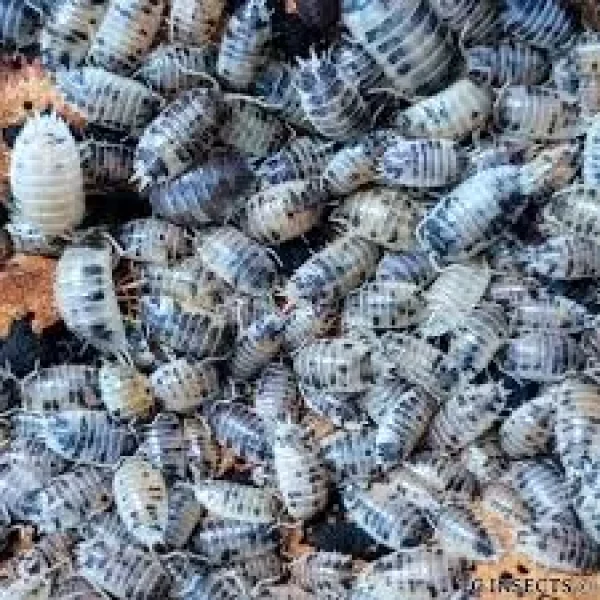
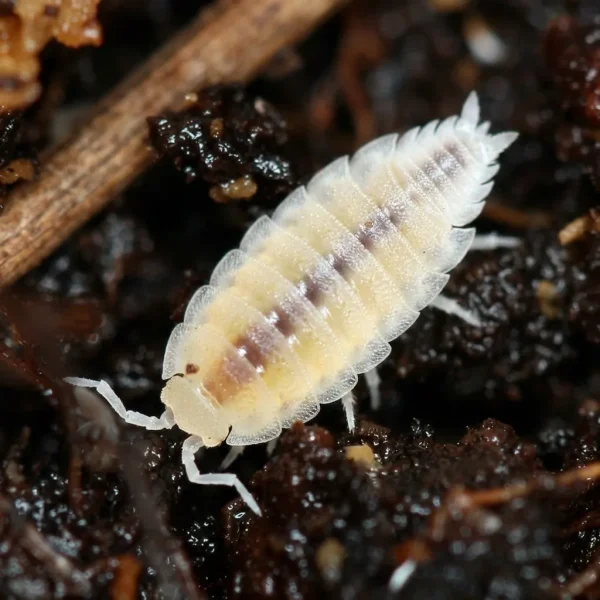
The line is widely sold under the hobby nickname “Jelly Bean Isopods.” Individuals from a single brood can display deep burgundy, bright orange, yellow, gray-blue, brown, black, tan, and peach tones all together.
Specifically, the polymorphism is genetic and persists across generations. Even when same-colored parents are bred together, the trait continues. Adults reach up to 18 to 20 mm with the standard A. vulgare body shape.
They have full conglobation.
Why Keep Armadillidium vulgare “St. Lucia”?
- Polychromatic single colony: First, this is one of very few isopod lines where a single brood produces a wide range of colors. As a result, the colony itself becomes a multi-color display without the need to buy separate morph lines.
- Documented Caribbean locality: Additionally, the line traces back to a named geographic origin (Saint Lucia, eastern Caribbean), which gives the product real provenance even though the species is introduced rather than native to the island.
- Standard A. vulgare care framework: Furthermore, the husbandry is identical to our wild-type page, so keepers who already manage standard pillbugs can add this line without changing their routine.
- More diurnal than typical vulgare: The line tends to be more visible during daylight hours than other A. vulgare stock, which makes the colony easier to observe and enjoy.
- Full conglobation: Finally, as a family Armadillidiidae member, this species seals completely when rolled, giving the polychromatic colony dramatic defensive display behavior.
Honest Note: The Polymorphism Persists Across Generations
This is the most important fact about this line. Even when keepers selectively breed only orange-to-orange or burgundy-to-burgundy, the offspring still come out polychromatic. Specifically, breeders who have tried to
isolate single color lines from St. Lucia stock have consistently produced the full range of colors in subsequent broods. As a result, “Jelly Bean” is the natural expression of the line. It is not the absence of selective breeding.
The underlying biology involves two documented pigment cells in A. vulgare: one expressing a black ommochrome pigment, and one expressing a yellow pterdine pigment. The St. Lucia line carries an unusual genetic
combination that maintains both pigment expressions within a single population. Consequently, this gives the colony its visible color range.
Honest Note: This Is the Same Species as Wild Type Vulgare
Both St. Lucia and our wild-type A. vulgare are the same species, Armadillidium vulgare Latreille 1804. As a result, husbandry is identical, the species biology is identical, and animals from both lines can interbreed
without hybridization concerns at the species level. However, do not cohabit the two lines if you want to maintain the St. Lucia color expression long-term.
Specifically, mixing St. Lucia with wild-type stock would dilute the polychromatic genetics over generations. To preserve the Jelly Bean color expression, keep this culture separate from any other A. vulgare cultures you maintain. Include the wild-type and other locality lines.
Honest Note: Slower Breeder Than Typical Vulgare
Multiple hobby sources describe St. Lucia as a slower breeder than standard wild-type A. vulgare. Specifically, where the wild-type form breeds at a moderate-to-high pace once established, St. Lucia tends to grow steadily
without the explosive colony booms. Therefore, this works in favor of display use. Slower turnover means a more stable population in a vivarium. However, it works against keepers who want a fast-cleaning cleanup crew.
If you specifically need a fast-breeding workhorse cleanup species, look at A. vulgare Wild Type instead. Use St. Lucia for the display and color story. Use wild-type for the cleanup crew workhorse role.
Care and Setup
A. vulgare “St. Lucia” does well at room temperature with a clear dry-to-moist gradient and moderate ventilation. The husbandry is identical to the wild-type species framework. The following sections cover the practical setup we recommend.
Temperature
Target 65 to 78°F across most of the year. Specifically, normal indoor temperatures work fine for this species in most home setups. However, avoid sustained heat above 80°F. Also avoid cold rooms consistently below 60°F.
Humidity
Aim for moderate humidity overall with one consistently moist retreat zone. Keep that side hydrated with sphagnum moss and damp substrate, then let the rest of the enclosure run drier. As a result, the colony can self-select between the two humidity zones.
Substrate
Use a moisture-holding mix of soil, rotted hardwood, and organic matter at a depth of 2 to 3 inches. Add a generous layer of TC INSECTS Assorted Hardwood Leaf Litter on top. Specifically, lighter-colored substrate and decor backgrounds help the polychromatic color expression show more clearly in display setups.
Food
Lead with leaf litter and decaying hardwood as the base diet. Then supplement with TC INSECTS Isopod Food for added protein and minerals, plus a calcium source like TC Calcium Ultra Fine. St. Lucia animals are reportedly bold feeders, which makes feeding response easy to monitor.
Ventilation
Use cross-ventilation or controlled lid ventilation. Specifically, you want enough airflow to prevent stagnant pockets, but not so much that the moist retreat dries within a day. As a result, the colony can self-select between the two humidity zones.
Bioactive Use
St. Lucia works well in moderate-humidity bioactive enclosures once the culture is established. Specifically, the slower breeding rate makes this line more stable in display setups where predation might keep workhorse species’ numbers low. However, run a backup culture in a dedicated bin first to protect the polychromatic genetics.
Breeding Notes
St. Lucia breeds at a slow-to-moderate pace once settled. Females carry developing mancae in a brood pouch. Stable conditions with consistent calcium support successful broods. Generally, the colony produces visible juveniles within a few months of stable conditions, though slower than the wild-type form.
For best results, leave the colony undisturbed during the first six to eight weeks. Then add fresh leaf litter before the existing layer is fully consumed, and avoid frequent digging through the substrate. Selecting breeders by color will not produce uniform offspring, since the polymorphism persists across generations regardless of selective pairing.
Best For
- Color-focused display cultures where polychromatic colony appearance is the selling point
- Keepers who already manage standard A. vulgare husbandry and want a visually distinctive locality line
- Planted vivariums and bioactive setups with moderate humidity
- Stable display tanks where slower breeding works in favor of population stability
- Collectors building a multi-line A. vulgare set across Wild Type and locality designations
Not Best For
- Workhorse cleanup crew use (the slower breeding makes wild-type A. vulgare a better fit)
- Mixed cultures with other A. vulgare lines, since cohabitation would dilute the polychromatic genetics
- Feeder use, since per-animal value is too high and the rolled defensive posture limits feeder availability
- Hot tropical setups running consistently above 80°F
- Sealed, fully wet enclosures suited to high-humidity Cubaris species
- Keepers expecting uniform color in every brood
Origin and Locality Notes
The St. Lucia line traces back to naturalized A. vulgare populations on the volcanic island of Saint Lucia in the eastern Caribbean. A. vulgare itself is native to Mediterranean Europe and has been introduced as a naturalized species across temperate and tropical regions worldwide, including the Caribbean. As a result, the St. Lucia line represents a Caribbean introduced population that has expressed exceptional polychromatic genetics in captivity.
The line has not been formally scientifically described as a subspecies or distinct taxon. Specifically, German hobby reference Insektenliebe notes the line is usually classified within the broader Armadillidium vulgare species. Therefore, we treat “St. Lucia” as a documented hobby locality designation rather than a separate taxonomic unit. The polychromatic genetics are real and consistent, but the line has not been studied formally in peer-reviewed literature.
Receiving and Acclimation
Open your package promptly when it arrives and inspect the cup calmly before moving anything. Rolling isopods often arrive curled up or hidden in moss and shipping paper, so check slowly rather than dumping the culture.
Prepare the enclosure before opening the cup. The habitat should already have moderate-humidity substrate with one moist retreat zone, deep leaf litter, bark, and a calcium source. Then place the shipping material into the enclosure and let the isopods move out on their own. Finally, keep the setup quiet for the first week. This allows the colony to settle.
It is normal for new arrivals to stay curled or hidden for the first several days. However, this line is reportedly more diurnal than typical wild-type A. vulgare, so expect visible colony activity sooner than you would see with other vulgare cultures.
Recommended Add-Ons
- TC INSECTS Isopod Habitat Kit — a complete starter setup that gives this culture proper substrate, leaf litter, moss, and feed from day one.
- TC INSECTS Assorted Hardwood Leaf Litter — the core food and cover layer that should never run out in a St. Lucia culture.
- TC INSECTS Isopod Food — supplemental protein and minerals beyond leaf litter, fed in small portions.
- TC Calcium Ultra Fine — supports healthy molts and exoskeleton development across the polychromatic colony.
- Springtails — pair with St. Lucia in bioactive setups to manage mold around the moist retreat zone while the isopods process larger debris.
Frequently Asked Questions
Why are St. Lucia isopods called “Jelly Beans”?
The hobby nickname comes from the wide polychromatic color expression within a single colony. Specifically, individuals from one brood can show deep burgundy, bright orange, yellow, gray-blue, brown, black, tan, and peach tones together, resembling a handful of multi-colored jelly beans. As a result, “Jelly Bean Isopods” has become the standard hobby common name alongside “St. Lucia.”
Is St. Lucia a separate species from wild-type vulgare?
No. Both St. Lucia and wild-type A. vulgare are the same species, Armadillidium vulgare Latreille 1804. Specifically, St. Lucia is a documented Caribbean locality line, not a separate species or subspecies. Husbandry is identical between the two lines.
Can I breed for a specific color?
No, not reliably. Specifically, the polymorphism in this line persists across generations even when same-colored parents are paired. As a result, isolating burgundy-to-burgundy or orange-to-orange pairs still produces mixed-color offspring. This is documented across multiple breeder sources. It is the defining genetic trait of the line.
Should I keep St. Lucia with wild-type vulgare?
Generally no. Specifically, mixing the two lines would dilute the polychromatic genetics over generations and lose the Jelly Bean expression. To preserve the color story, keep this culture separate from any other A. vulgare lines.
How do they compare to wild-type vulgare for cleanup crew use?
St. Lucia is the slower breeder of the two. Specifically, wild-type A. vulgare breeds at a moderate-to-high pace and works as a workhorse cleanup species. St. Lucia breeds slowly to moderately and works better as a display line. Therefore, use both species in different setups for different purposes.
Are St. Lucia isopods diurnal?
More than typical A. vulgare. Specifically, multiple hobby sources report that St. Lucia animals are more visible during daylight hours, with bold and active behavior. As a result, this is one of the easier A. vulgare lines to observe. You can enjoy it in a display setup.
Learn More About Armadillidium vulgare
Because A. vulgare is the most extensively studied terrestrial isopod species, peer-reviewed and educational resources cover the species at multiple depth levels. The following non-competitor references give keepers solid background.
-
Wikipedia: Armadillidium vulgare. The main species reference covering Latreille’s 1804 original description, the worldwide naturalized distribution, common names, and the pigment cell biology (ommochrome black, pterdine yellow) that underlies the St. Lucia color expression. Useful for understanding why this line shows such wide polychromatic variation.
-
Animal Diversity Web: Armadillidium vulgare. A university-hosted educational species account covering habitat, food habits, reproduction, and natural behavior. Useful for new keepers who want a structured beginner-friendly overview of the species.
-
Molecular Biology and Evolution: A. vulgare genome paper. The 2019 peer-reviewed publication of the complete A. vulgare genome. Useful for science-minded keepers who want the primary research source behind the species’ status as a model organism, including the documented sex chromosome and Wolbachia endosymbiont biology that shapes vulgare reproductive output.

Reviews
There are no reviews yet.