
Armadillidium vulgare T- Albino Isopods for Sale
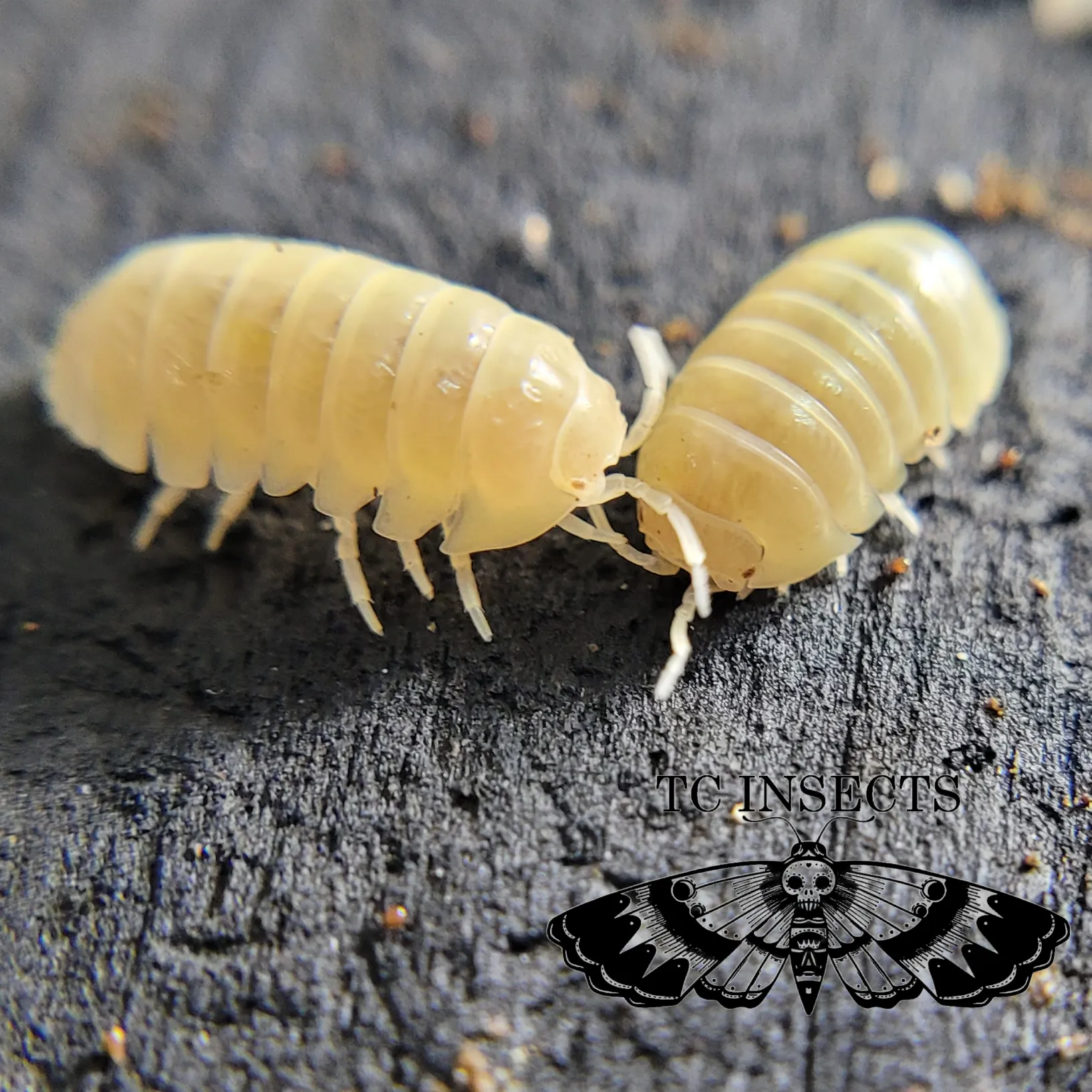
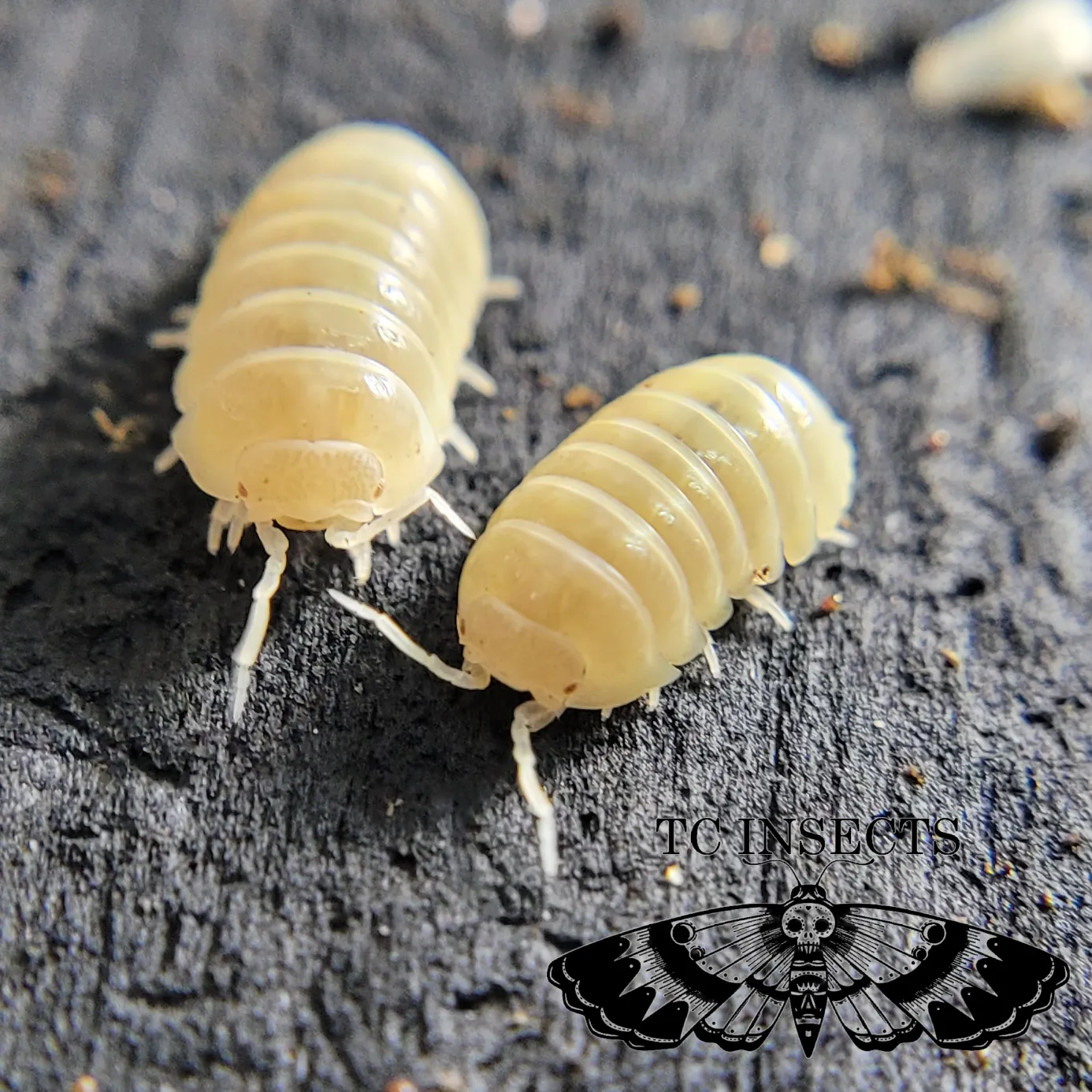
TC INSECTS ships Armadillidium vulgare “T- Albino” as a live captive-bred starter culture. Specifically, this is the tyrosinase-negative true albinism morph of the worldwide common pillbug. Additionally, the morph shows
pale yellow to nearly translucent coloration with vibrant yellow ribbons. As a result, this is the catalog’s premium A. vulgare albinism designation.
Furthermore, this page sits alongside the sibling T+ Albino as the paired genetic-mechanism set within a single species. In contrast, our Japanese Magic Potion page covers a different pigment mutation (the dalmatian
gene). Therefore, the three pages together show three different mutation mechanisms within the same species.
Overview
First, Armadillidium vulgare is the worldwide common pillbug. Specifically, Latreille described the species in 1804. Additionally, this is the most extensively investigated terrestrial isopod species. Furthermore, the species
is native to Mediterranean Europe but is naturalized worldwide. As a result, this is the catalog’s most scientifically studied and globally distributed isopod.
Additionally, the T- Albino morph is a captive color isolation within A. vulgare. Specifically, the morph is not a separate species or locality line. In contrast, T- Albino represents a documented genetic mechanism (tyrosinase
enzyme loss) applied to the cosmopolitan common pillbug. Therefore, decades of established A. vulgare husbandry knowledge applies directly here.
Visual Identity
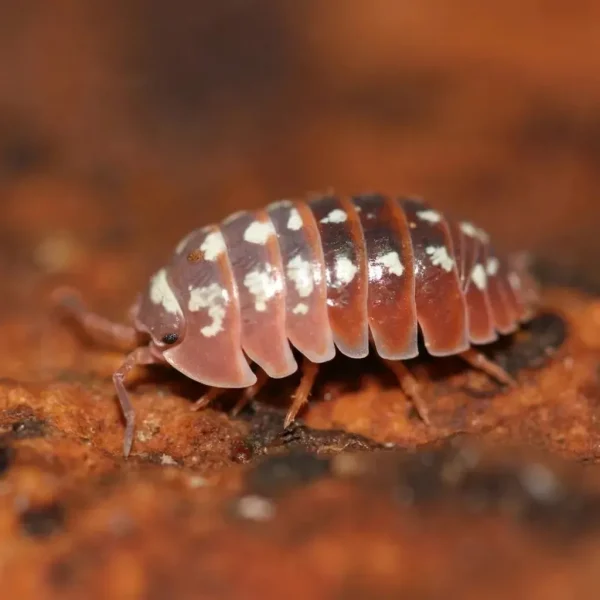
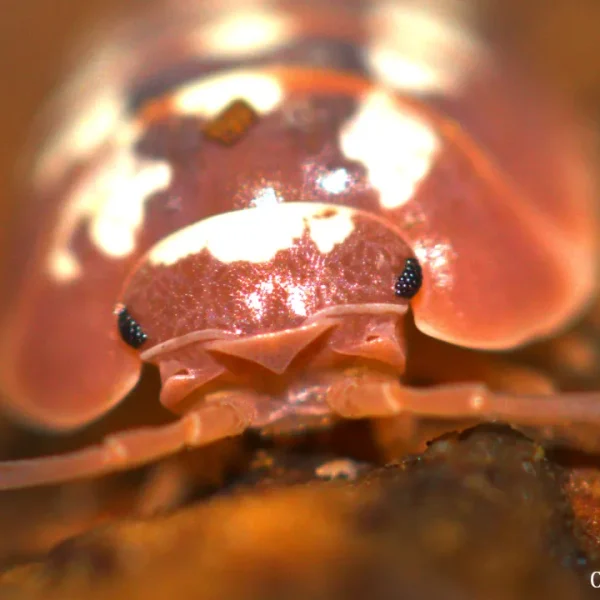
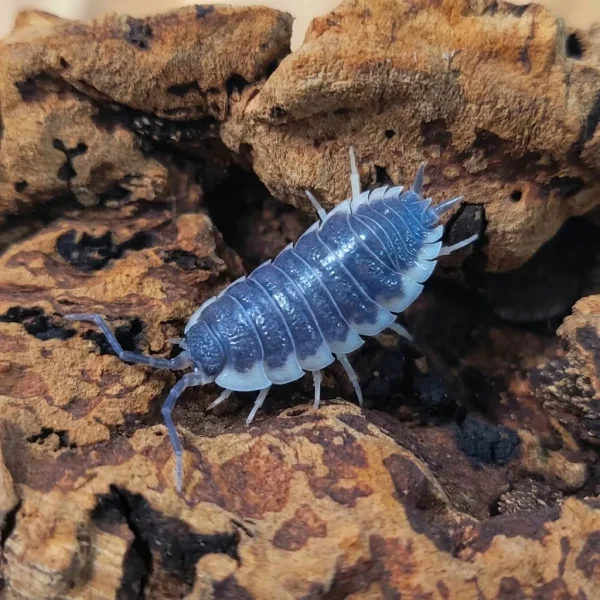
First, T- Albino shows pale yellow to nearly translucent coloration. Specifically, the morph has a transparent or white-tinted exterior. Additionally, vibrant yellow speckling typically breaks the pale base. Furthermore,
individual animals can show pale yellow to nearly clear bodies mottled with bright yellow ribbons. As a result, expect natural variation in translucency within a single culture.
In addition, the color expression reflects the tyrosinase-negative mechanism. In contrast, T+ Albino retains partial enzyme activity and produces orange and sienna pigments. However, T- animals produce no red, brown, or
black pigments at all. As a result, only the underlying yellow pterdine accents remain visible.
Honest Note: How the T- (Tyrosinase-Negative) Mechanism Works
First, tyrosinase is the enzyme that controls melanin synthesis. Specifically, melanin is the dark pigment that gives wild-type A. vulgare its gray-to-black base color. Additionally, T- animals carry a mutation that disables
tyrosinase entirely. As a result, no functional tyrosinase enzyme is produced. Furthermore, the animal cannot synthesize red, brown, or black pigments at all.
In contrast, T+ albinism retains partial tyrosinase activity. Therefore, T+ animals can still produce some pigments, which appear as orange and sienna tones rather than the wild-type dark colors. As a result, T- and T+ are
not the same mutation and are not interchangeable. Specifically, T- represents complete enzyme loss; T+ represents partial enzyme function.
Honest Note: The Three-Way Pigment Mechanism Comparison Within A. vulgare
First, our catalog now covers three different pigment mutation mechanisms within the same species. Specifically, our St. Lucia line preserves both pigment cell systems and shows polychromatic single-brood expression.
Additionally, our Japanese Magic Potion line uses the dalmatian gene to redistribute dark pigment into scattered spots. In contrast, T- Albino removes dark pigment production entirely via complete tyrosinase enzyme loss.
Therefore, all three pages reference the same underlying two-pigment-cell biology in A. vulgare. Specifically, ommochrome pigment expresses black, and pterdine pigment expresses yellow. As a result, these three morph
pages let buyers see how different mutations affect the same pigment system in different ways. Furthermore, this is a useful collector-set framework for keepers interested in genetics.
Honest Note: T- Is the Rarer and More Premium of the Two Albinism Morphs
First, T- Albino is the rarer of the two A. vulgare albinism morphs across the hobby. Specifically, true albinism with complete enzyme loss is less common than partial-activity T+ albinism. As a result, TC INSECTS pricing
for T- Albino runs higher than T+ Albino. Furthermore, this reflects established hobby pricing rather than a TC INSECTS markup.
Additionally, T- is more difficult to maintain as a pure phenotype. Specifically, the T- trait is recessive, so any cross-breeding with wild-type or T+ stock reintroduces dominant alleles. Therefore, dedicated bins are essential
for preserving the T- color across generations. As a result, this morph is best suited to collectors who can maintain a single-line isolated culture.
Honest Note: Contested Breeding Rate
First, this morph has a documented contradiction in hobby breeding descriptions. Specifically, Josh’s Frogs describes the line as “breeds readily in well-set-up colonies” in one part of their product page. However, the same
source also states the morph “reproduces too slowly to make a good long-term cleanup crew in most environments.” As a result, hobby buyers see conflicting expectations.
Therefore, treat T- Albino as a moderate breeder at best. Additionally, treat it as a pet or display morph rather than a cleanup crew workhorse. Specifically, the cosmopolitan wild-type A. vulgare remains the better choice
for cleanup duties. In summary, the T- morph rewards collectors and display keepers more than utility-focused buyers.
Honest Note: Plant-Eating Tendency Applies to A. vulgare Generally
First, A. vulgare as a species has a documented tendency to eat live plants. Specifically, this is not unique to T- Albino. Additionally, our Punta Cana page covers the same warning. Therefore, do not treat T- Albino as a
planted-vivarium-safe cleanup crew. As a result, prioritize dedicated culture bins or vivariums with hardy, established plants only.
Furthermore, soft moss and tender new growth are at the greatest risk. Specifically, T- Albino animals may browse plants more visibly than darker morphs because the translucent body makes their feeding behavior easy to
observe. However, the underlying behavior is the same as other vulgare lines. As a result, the warning is species-level rather than line-level.
Honest Note: Possible Winter Dormancy in Cold Rooms
First, T- Albino may go dormant in winter if kept in cold rooms below 60°F. Specifically, multiple hobby sources document this behavior across A. vulgare lines. Additionally, extreme cold and heat can be lethal at the edges
of the species’ tolerance range. Therefore, maintain consistent room-temperature conditions year-round for steady colony activity.
However, brief seasonal cooling is generally not fatal. Specifically, the species tolerates a wide 60 to 90°F range. As a result, occasional dips into the 50s are usually survivable but cause slowed activity and reduced breeding
. In summary, plan for a stable indoor location away from drafty windows or unheated rooms.
Honest Note: Complete Conglobation Without Gaps
First, A. vulgare rolls into a complete ball with no gaps or spacing when disturbed. Specifically, this complete-sphere conglobation defines the family Armadillidiidae. Additionally, it distinguishes “true pillbugs” from less-
complete-rolling isopod genera like Porcellio. As a result, T- Albino displays the textbook Armadillidium defensive posture.
Furthermore, the translucent body makes this defensive display especially visible. Specifically, you can see body segments aligning into the rolled sphere through the pale exoskeleton. As a result, the conglobation is
dramatic against the translucent base color. In effect, this turns a routine defensive behavior into a meaningful display feature.
Origin and Background
First, T- Albino is a captive color isolation within A. vulgare. Specifically, the species itself is native to Mediterranean Europe. Additionally, A. vulgare has become naturalized in nearly all suitable temperate ecosystems
worldwide. Furthermore, the T- captive selection isolated the tyrosinase-negative trait from wild-type European populations.
However, the exact provenance of the T- Albino captive line is poorly documented in the public hobby trade. Specifically, no single breeder or founding stock is widely attributed. Additionally, the morph has been
established in the European and American hobby for at least a decade. As a result, this is a stable, well-established premium captive line with unclear founding history.
Care and Setup
Generally, T- Albino follows the standard A. vulgare husbandry framework. Specifically, the same gradient setup that works for wild-type stock works here too. Additionally, premium albinism cultures benefit from slightly more attention to consistent conditions. Therefore, the setup notes below reflect best practices rather than minimum requirements.
Temperature
First, target 65 to 78°F for steady activity. Specifically, normal indoor temperatures work fine. However, the species tolerates a broad 60 to 90°F range. Additionally, extreme cold and heat can be lethal at the edges. Therefore, avoid sustained heat above 80°F and cold rooms consistently below 60°F.
Humidity
First, target 60 to 80% humidity with a clear moisture gradient. Specifically, keep one consistently moist retreat zone hydrated with sphagnum moss and damp substrate. Then let the rest of the enclosure run drier. Additionally, mist when the enclosure starts to dry out. As a result, the colony self-selects between zones.
Substrate
First, use 2 to 3 inches of moisture-holding substrate. Specifically, a mix of organic topsoil, rotted hardwood, and flake soil works well. Then add a generous layer of TC INSECTS Assorted Hardwood Leaf Litter on top. Furthermore, cork bark, lotus pods, coconut halves, and egg carton all make effective hides. As a result, multiple hides matter because juveniles and adults need separate cover.
Food
First, lead with leaf litter and decaying hardwood as the base diet. Then supplement with TC INSECTS Isopod Food for added protein and minerals. Additionally, offer small portions of vegetables such as potato, squash, carrot, sweet potato, or zucchini. Furthermore, occasional dried shrimp or fish flakes support the breeding cycle.
Calcium
First, keep a calcium source available at all times. Specifically, TC Calcium Ultra Fine works well sprinkled across the leaf litter every couple of weeks. Additionally, cuttlebone, crushed eggshell, and limestone all provide alternative calcium sources. Furthermore, the A. vulgare exoskeleton incorporates calcium carbonate as a structural layer. As a result, consistent calcium access supports healthy molts.
Ventilation
First, use cross-ventilation or a well-ventilated lid. Specifically, this species prefers active airflow rather than sealed wet conditions. As a result, undersized ventilation causes problems faster than undersized humidity. However, do not let the moist retreat dry out completely between mistings.
Bioactive Use
Generally, T- Albino works well in moderate-humidity bioactive enclosures with hardy plants only. Specifically, avoid setups built around soft moss or tender new growth. Additionally, add springtails from day one to manage mold around the moist retreat. As a result, the culture stays cleaner during establishment.
Breeding Notes
First, T- Albino breeds at a contested rate across the hobby. Specifically, descriptions conflict between “breeds readily” and “reproduces too slowly.” Therefore, expect moderate breeding speed at best. As a result, treat T- Albino as a premium pet and display morph rather than a primary cleanup crew species.
Additionally, sexing T- Albino requires close examination of underside genital structures. Specifically, the translucent body actually makes visual sexing harder rather than easier. As a result, mixed starter groups are usually the simplest way to establish a colony. Furthermore, the morph’s recessive trait requires isolated breeding to preserve the phenotype.
In particular, do not co-house T- Albino with wild-type A. vulgare, T+ Albino, or any pigmented A. vulgare line. Specifically, the T- trait is recessive, so cross-breeding reintroduces dominant alleles. As a result, dedicated bins are essential for T- color purity across generations.
Best For
- Premium display vivariums where translucent pale coloration reads strongly under enclosure lighting
- Breeders interested in true albinism genetics and recessive trait management
- Collectors completing a paired T+/T- albinism set within a single species
- Educational displays of tyrosinase enzyme biology and pigment mechanisms
- Pet and display use with hardy plants or planted-free setups
- Keepers already running standard A. vulgare husbandry
Not Best For
- Buyers expecting orange or sienna body color (use T+ Albino instead)
- Primary long-term cleanup crew use (slow reproduction)
- Co-housing with wild-type A. vulgare or T+ Albino, since this dilutes the T- phenotype
- Delicate planted terrariums with soft moss or tender new growth
- Cold rooms below 60°F, since winter dormancy slows the colony
- Feeder use, since per-animal value is too high for that role
Receiving and Acclimation
First, bring the package indoors as soon as it arrives. Then open the cup in a calm, well-lit area. Specifically, T- Albino animals conglobate when stressed. As a result, expect to see balled-up animals at first. Additionally, the translucent body makes balled-up animals look small and clear against the moss.
Additionally, prepare the enclosure before opening the cup. Specifically, the habitat should already include organic substrate, leaf litter, cork bark, calcium, and a damp moss retreat. Furthermore, transfer the isopods, moss, and safe shipping debris into the prepared enclosure. As a result, the colony has all the resources it needs from day one.
For the first week, focus on stability rather than feeding. Specifically, verify the moisture gradient holds and ventilation runs active. Therefore, the colony settles into the 60 to 80% humidity profile. Furthermore, expect surface activity within days. Generally, T- Albino shares the bold daytime behavior of wild-type A. vulgare.
Recommended Add-Ons
- TC INSECTS Ultra Isopod Habitat Kit — a premium starter setup well-matched to this premium albinism morph, with deeper substrate and more complete cover from day one.
- TC INSECTS Assorted Hardwood Leaf Litter — the core food and cover layer that should never run out in a T- Albino culture.
- TC INSECTS Isopod Food — balanced supplement that supports steady colony growth alongside leaf litter.
- TC Calcium Ultra Fine — supports the four-layer calcium-carbonate exoskeleton, especially relevant for an albino line where the dorsal plates show clearly.
- Springtails — pair with T- Albino in bioactive setups to manage mold around the moist retreat zone.
Frequently Asked Questions
What does “T-” mean?
Tyrosinase-negative true albinism. Specifically, tyrosinase is the enzyme that controls melanin synthesis. Additionally, in T- albinism the enzyme is lost or non-functional. As a result, the animal produces no red, brown, or black pigments at all. Therefore, T- represents the complete-loss form of albinism.
How is T- different from T+ Albino?
First, T- shows translucent or pale yellow coloration. In contrast, T+ shows orange or sienna pigments. Specifically, T- (tyrosinase-negative) has lost the enzyme entirely. Furthermore, T+ retains partial enzyme activity and produces residual color. Therefore, T- and T+ represent different genetic mechanisms, not different intensities of the same mutation.
Why is T- Albino more expensive than T+ Albino?
First, T- is rarer across the hobby. Specifically, complete enzyme loss is less common than partial-activity mutations. Additionally, the recessive trait is more difficult to maintain as a pure line. As a result, T- Albino at TC INSECTS runs higher than T+ Albino. In summary, this is the premium albinism morph within A. vulgare.
Will my T- Albinos go dormant in winter?
Possibly, in cold rooms. Specifically, T- Albino may go dormant if kept below 60°F. Additionally, extreme cold and heat can be lethal at the edges of the species’ tolerance range. Therefore, maintain consistent room-temperature conditions year-round. As a result, you should see steady colony activity through every season.
Is T- Albino a good cleanup crew?
Generally no. Specifically, the morph reproduces too slowly to make a reliable long-term cleanup crew. Additionally, the species-level plant-eating tendency makes T- Albino unsuitable for delicate planted setups. As a result, treat T- Albino as a premium pet and display morph rather than a workhorse cleanup species.
Can I co-house T- Albino with my T+ Albino?
No. Specifically, co-housing the two morphs would dilute both phenotypes over generations. Furthermore, the T- trait is recessive, so any cross-breeding with T+ stock reintroduces dominant alleles. Therefore, keep each albinism morph in its own dedicated culture. As a result, both lines maintain their distinct genetic mechanisms across generations.
Learn More About True Albinism and A. vulgare
Generally, T- albinism is a well-studied biological phenomenon across many species. Additionally, A. vulgare is the most extensively studied terrestrial isopod. Therefore, the following non-competitor references give keepers solid background on both the mechanism and the species.
-
Wikipedia: Albinism. Specifically, the broader biological reference covering pigment loss across animal species. As a result, this is useful for collectors who want to understand why true albinism is rarer than partial pigment mutations.
-
Wikipedia: Tyrosinase. Additionally, the enzyme-specific reference covering the biochemistry that defines T- versus T+ albinism. Therefore, this is useful for understanding why T- animals produce no dark pigments while T+ animals retain partial pigment-production capacity.
-
Wikipedia: Armadillidium vulgare. Furthermore, the species-specific reference covering Latreille’s 1804 description, worldwide naturalized distribution, and the pigment cell biology underlying both T+ and T- albinism. As a result, this is the foundational reference for understanding the wild-type species behind every A. vulgare morph in our catalog.


Reviews
There are no reviews yet.