


Armadillidium vulgare Punta Cana Isopods for Sale
Overview
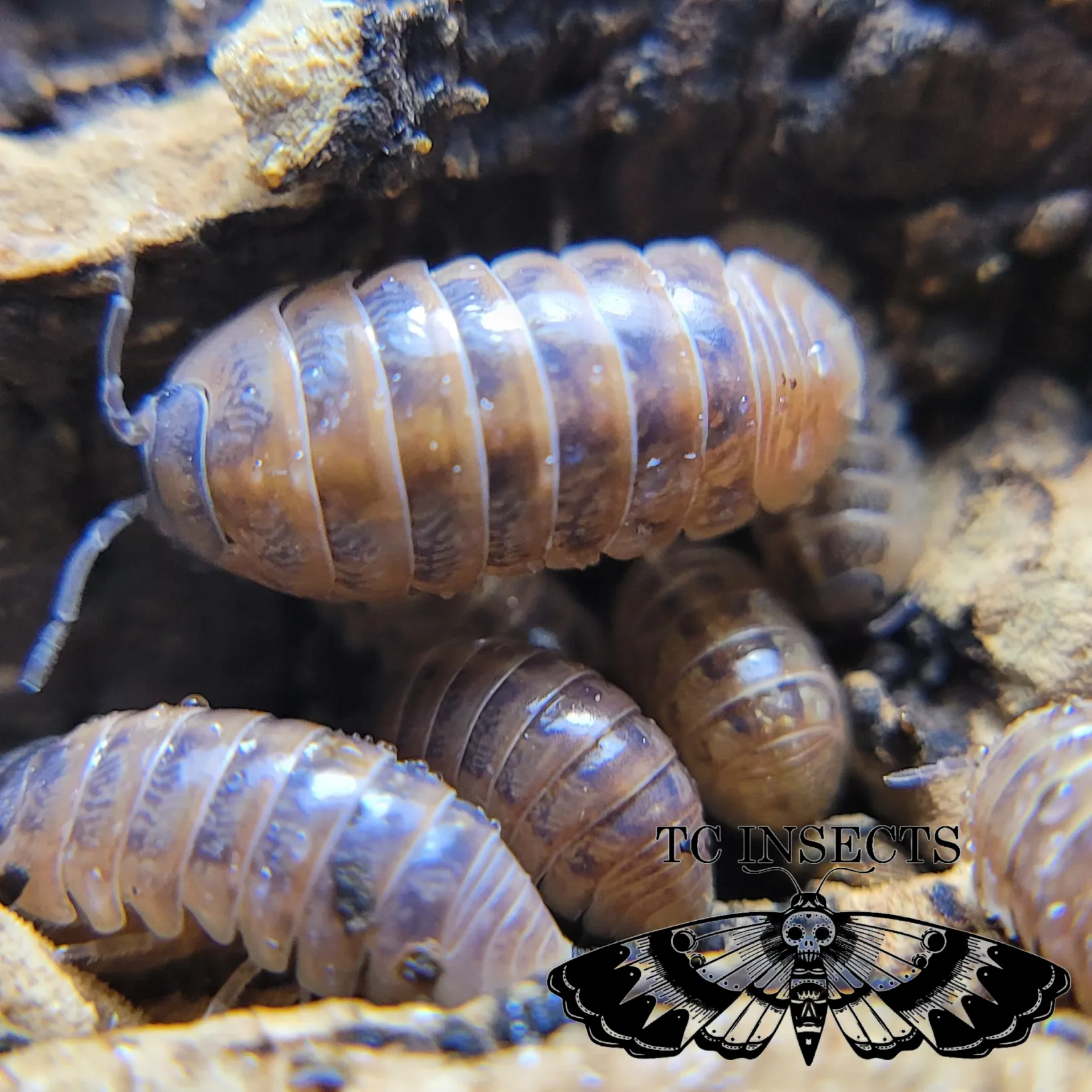
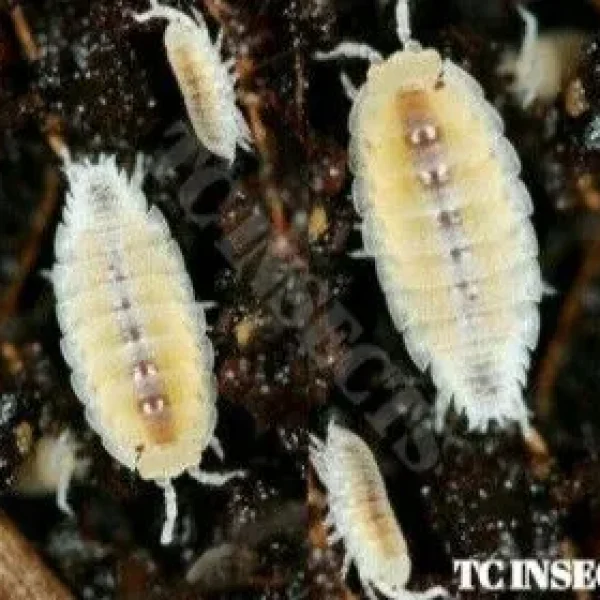
Armadillidium vulgare “Punta Cana” is a documented Caribbean locality line of the common pillbug, named after the Punta Cana region on the eastern tip of Hispaniola, in the Dominican Republic. The species itself is the
same Armadillidium vulgare described by Latreille in 1804 that we cover on our wild-type page, but the Punta Cana population has developed a distinct caramel-and-earthy polychromatic color expression in captivity.
The line shows gold, orange, brown, gray, and various intermediate caramel tones, with some individuals displaying splotching, stripes, or speckles across the body. As a result, this is the second Caribbean locality line in
our Armadillidium catalog, paired with our St. Lucia Jelly Bean line as companion products. Adults reach up to 18 mm with the standard A. vulgare body shape and full conglobation.
Why Keep Armadillidium vulgare “Punta Cana”?
- Documented Dominican Republic locality: First, the line traces back to a specific named geographic origin (Punta Cana, eastern Hispaniola), which gives the product real provenance even though the species is introduced rather than native to the Caribbean.
- Diagnostic black cephalon on females: Additionally, females show a characteristic black face segment (cephalon) that is the documented visual marker distinguishing Punta Cana from other vulgare locality lines. This is a citable identification feature, not just a hobby designation.
- Earthy polychromatic palette: Furthermore, the colony shows caramel, gold, brown, gray, and earthy tones with variable striping and splotching, giving a naturalistic visual appeal distinct from brighter morph lines.
- Standard A. vulgare care framework: The husbandry is the same as our wild-type page, so keepers who already manage standard pillbugs can add this line without changing their routine.
- Full conglobation: Finally, as a family Armadillidiidae member, this species seals completely when rolled, which preserves the classic Armadillidium defensive display behavior.
Honest Note: Formerly Misidentified as A. sordidum
This line was previously thought to be Armadillidium sordidum, a separate species. Specifically, the misidentification was disproved through cross-breeding tests in which Punta Cana stock was successfully paired with other A. vulgare morphs and produced viable offspring. As a result, the line is now confirmed as A. vulgare, not a separate species.
The breeding test matters because isopods do not hybridize across species boundaries under normal conditions. Therefore, successful cross-breeding with other documented vulgare lines is direct evidence that Punta Cana belongs within the vulgare species. We use the current accepted designation (A. vulgare “Punta Cana”) rather than the older sordidum label.
Honest Note: The Black Cephalon Marker
Females in this line show a characteristic black cephalon, which is the dark face segment at the front of the body. This is the documented diagnostic feature that distinguishes Punta Cana from other vulgare locality lines and color morphs. As a result, you can verify a culture’s identity visually by checking adult female face coloration once the animals reach mature size.
Males may not show the same level of black cephalon expression, and juveniles often have not developed the full marker yet. Therefore, the diagnostic check works best on confirmed adult females from a settled colony. The marker is consistent across documented Punta Cana stock.
Honest Note: Plant-Eating Tendency
Punta Cana stock has a documented tendency to eat live plants in vivarium settings, which is unusual among A. vulgare lines. Specifically, Josh’s Frogs has flagged this as a culture-specific warning, recommending that the line is best kept as a dedicated pet culture rather than as a planted-vivarium cleanup crew. As a result, do not add this line to a planted display you care about preserving.
For planted vivariums, use our A. vulgare Wild Type instead, which does not show the same plant-eating behavior. Punta Cana works better in dedicated isopod culture bins where leaf litter and decaying wood provide the primary food base, with no live plants present to be browsed.
Honest Note: Punta Cana vs. St. Lucia
Both Punta Cana and our St. Lucia line are Caribbean locality designations of A. vulgare. However, the two lines show distinctly different visual expressions. Specifically, St. Lucia (Jelly Bean Isopods) leans toward brighter
jewel-tone polychromatic colors: deep burgundy, bright orange, bright yellow, gray-blue, and peach. Punta Cana leans toward earthy caramel tones: gold, brown, gray, and tan with variable striping and splotching.
As a result, the two lines pair well as companion products in a multi-line collector set. Use Punta Cana for the naturalistic earthy display and the female black-cephalon identification check. Use St. Lucia for the brighter
jewel-tone color story. Keep the two lines in separate cultures to preserve each line’s distinct genetic expression.
Care and Setup
A. vulgare “Punta Cana” does well at room temperature with a clear dry-to-moist gradient and good ventilation. The husbandry follows the standard vulgare framework, though the line tolerates slightly higher humidity than the wild-type form.
Temperature
Target 65 to 78°F across most of the year. Specifically, normal indoor temperatures work fine for this Caribbean locality line. However, avoid sustained heat above 80°F and cold rooms consistently below 60°F.
Humidity
Aim for moderate to moderately high humidity overall with one consistently moist retreat zone. Specifically, Punta Cana tolerates slightly higher humidity than wild-type vulgare, with hobby sources recommending 60 to 80 percent ambient humidity through regular light misting. Then let the rest of the enclosure run drier for the standard moisture gradient.
Substrate
Use a moisture-holding mix of soil, rotted hardwood, and organic matter at a depth of 2 to 3 inches. Add a generous layer of TC INSECTS Assorted Hardwood Leaf Litter on top. Leaf litter is especially important for this line, since the plant-eating tendency means the colony benefits from having abundant leaf material available as the primary food base.
Food
Lead with leaf litter and decaying hardwood as the base diet. Then supplement with TC INSECTS Isopod Food for added protein and minerals, plus a calcium source like TC Calcium Ultra Fine. Keep the food supply consistent to reduce any incentive for browsing on live plants.
Ventilation
Use cross-ventilation or controlled lid ventilation. Specifically, you want enough airflow to prevent stagnant pockets, but not so much that the moist retreat dries within a day. As a result, the colony can self-select between the two humidity zones.
Bioactive Use
Punta Cana works in moderate-humidity bioactive enclosures, but only if there are no live plants you want to preserve. Specifically, the plant-eating tendency makes this line a poor choice for planted vivariums. For dedicated isopod culture bins, the line performs reliably once established.
Breeding Notes
Punta Cana breeds at a slow-to-moderate pace once settled. Females carry developing mancae in a brood pouch, and stable conditions with consistent calcium support successful broods. Generally, the colony grows steadily over several months rather than producing rapid population spikes.
For best results, leave the colony undisturbed during the first six to eight weeks. Then add fresh leaf litter before the existing layer is fully consumed, and avoid frequent digging through the substrate. Once adult females develop, the diagnostic black cephalon provides a useful visual confirmation that the culture is breeding true to the locality line.
Best For
- Color-focused display cultures focused on earthy caramel-and-brown polychromatic palettes
- Collectors building a multi-line A. vulgare set across Wild Type, St. Lucia, and Punta Cana
- Dedicated isopod culture bins (without live plants)
- Keepers who appreciate verifiable sex-linked identification markers in their colonies
- Bioactive setups paired with springtails for cleanup support
Not Best For
- Planted vivariums you want to preserve, since this line has a documented plant-eating tendency
- Workhorse cleanup crew use (the slower breeding makes wild-type A. vulgare a better fit)
- Mixed cultures with other A. vulgare lines, since cohabitation would blur line identity over generations
- Feeder use, since per-animal value is too high and the rolled defensive posture limits feeder availability
- Hot tropical setups running consistently above 80°F
- Keepers expecting bright jewel-tone colors (Punta Cana is muted; use St. Lucia for brighter expression)
Origin and Locality Notes
The Punta Cana line traces back to naturalized A. vulgare populations on the eastern tip of Hispaniola, in the Punta Cana region of the Dominican Republic. A. vulgare itself is native to Mediterranean Europe and has been
introduced as a naturalized species across temperate and tropical regions worldwide, including the Greater Antilles. As a result, the Punta Cana line represents a Hispaniolan introduced population that has developed its
own distinct earthy color expression and the documented female black-cephalon marker.
The line has not been formally scientifically described as a subspecies or distinct taxon. However, the cross-breeding test that disproved the older A. sordidum misidentification provides direct evidence that Punta Cana sits
within the broader vulgare species. Therefore, we treat “Punta Cana” as a documented hobby locality designation, similar to our St. Lucia line, with both representing Caribbean naturalized populations rather than separate taxonomic units.
Receiving and Acclimation
Open your package promptly when it arrives and inspect the cup calmly before moving anything. Rolling isopods often arrive curled up or hidden in moss and shipping paper, so check slowly rather than dumping the culture.
Prepare the enclosure before opening the cup. The habitat should already have moderate-to-moderately-high humidity substrate with one moist retreat zone, deep leaf litter, bark, and a calcium source. Then place the shipping material into the enclosure and let the isopods move out on their own. Finally, keep the setup quiet for the first week while the colony settles.
It is normal for new arrivals to stay curled or hidden for the first several days. Generally, Punta Cana is an outgoing line that becomes more visible once the colony establishes, so persistent hiding past the first week may suggest the moisture gradient or ventilation needs adjustment.
Recommended Add-Ons
- TC INSECTS Isopod Habitat Kit — a complete starter setup that gives this culture proper substrate, leaf litter, moss, and feed from day one.
- TC INSECTS Assorted Hardwood Leaf Litter — the core food and cover layer, especially important for this line because abundant leaf material reduces incentive for browsing on live plants.
- TC INSECTS Isopod Food — supplemental protein and minerals beyond leaf litter, fed in small portions to support steady reproduction.
- TC Calcium Ultra Fine — supports healthy molts and exoskeleton development across the polychromatic colony.
- Springtails — pair with Punta Cana in moderate-humidity culture bins to help manage mold around the moist retreat zone.
Frequently Asked Questions
What does the black cephalon look like?
The cephalon is the front face segment of the isopod body. In adult female Punta Cana animals, this segment shows a distinctly dark or black coloration that contrasts with the lighter caramel and brown body. As a result, you can verify a culture’s identity by checking the face coloration of mature females once the colony has settled.
Why was this line previously called A. sordidum?
Early identifications mistook Punta Cana for the separate species Armadillidium sordidum. Specifically, the misidentification was disproved through cross-breeding tests in which Punta Cana stock paired successfully with other A. vulgare morphs. As a result, the line is now confirmed as A. vulgare, and the older sordidum label is no longer used.
How is Punta Cana different from St. Lucia?
Both lines are Caribbean locality designations of A. vulgare, but they show different visual expressions. Specifically, St. Lucia (Jelly Bean Isopods) shows brighter jewel-tone colors (burgundy, orange, yellow, gray-blue, peach), while Punta Cana shows earthier muted tones (caramel, gold, brown, gray, tan). Additionally, Punta Cana females have a diagnostic black cephalon that St. Lucia animals do not show.
Will they eat my live plants?
Possibly yes. Specifically, Josh’s Frogs has documented a plant-eating tendency in this line that is unusual among A. vulgare. As a result, do not add Punta Cana to a planted vivarium you want to preserve. Use this line in a dedicated culture bin instead, and use our A. vulgare Wild Type for planted setups.
Can I keep them with wild-type or St. Lucia vulgare?
Generally no. Specifically, all three lines are the same species, so cohabitation would blur line identity over generations. As a result, the diagnostic black cephalon and the distinct color expressions would fade if the cultures are mixed. Keep each line in a separate enclosure to preserve the locality genetics.
Are they beginner-friendly?
Yes. Specifically, Punta Cana has the same forgiving care framework as standard A. vulgare. As a result, first-time keepers can manage this line as long as they avoid the live-plant compatibility issue and provide a clear moisture gradient with consistent leaf litter and calcium access.
Learn More About Armadillidium vulgare
Because A. vulgare is the most extensively studied terrestrial isopod species, peer-reviewed and educational resources cover the species at multiple depth levels. The following non-competitor references give keepers solid background.
-
Animal Diversity Web: Armadillidium vulgare. A university-hosted educational species account covering habitat, food habits, reproduction, and natural behavior. Useful for new keepers who want a structured beginner-friendly overview of the species before adding a documented locality line.


Reviews
There are no reviews yet.