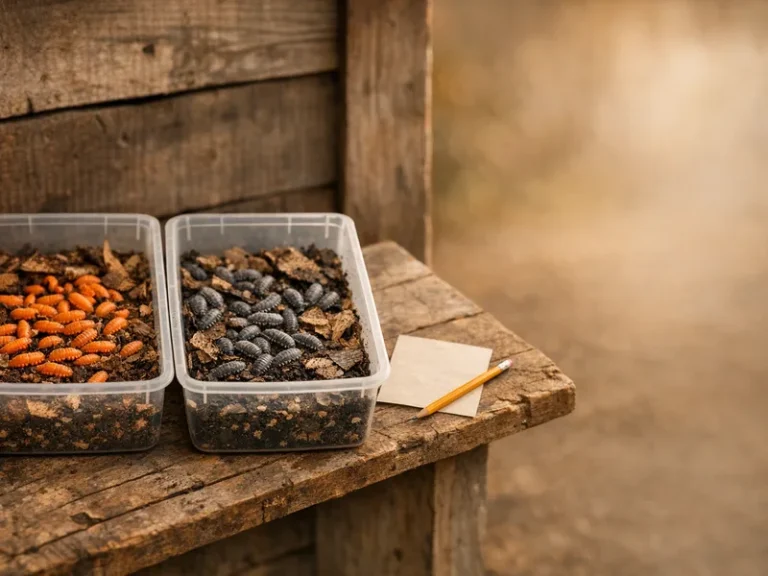
Do Springtails Need to Be Fed?

They graze mold, fungus, and waste already present in the enclosure
A very light sprinkle of brewer's or baker's yeast is enough
Too much food causes mold blooms, mites, and culture crashes
Feed for the setup you keep
In an established bioactive enclosure, springtails usually feed themselves on mold, fungus, decaying leaves, and waste, so you rarely need to feed them directly. In a separate standalone culture, yes, you feed them, a tiny pinch of yeast every couple of days is plenty. Either way, overfeeding is the bigger risk than underfeeding, so when in doubt, feed less.

A little food goes a long way
Established vivariums and standalone cultures have different feeding needs. Start small and check what remains before feeding again.
Two different contexts: vivarium vs culture
The honest feeding answer to do springtails need to be fed depends on where they are living. In an established bioactive vivarium with plants, leaf litter, and some age on it, springtails usually find plenty to eat on their own, since the enclosure is already producing the mold, fungus, and waste film they graze.
In a standalone culture bin kept just to breed springtails for feeding or restocking, there is no bioactive ecosystem generating that food supply, so you do feed them directly. Knowing which situation you are in tells you whether you need to do anything at all.
What springtails eat naturally
Left alone in a healthy setup, springtails graze the biofilm on mold and fungus, along with decaying leaf litter and general waste that builds up on damp surfaces. They are not eating the mold spores themselves so much as grazing the surface layer growing on top of decaying material, which is exactly the job that makes them useful cleanup crew in the first place.
That is also why a vivarium with visible mold is not necessarily a problem. A springtail population grazing mold down as fast as it appears is the system working as intended, not a sign something is wrong. See our do springtails eat mold post for the full picture.
When to add a little food to a vivarium
There are two situations where topping off a bioactive vivarium with a little extra food helps. The first is a very clean, brand-new setup that has not had time to build up any mold or biofilm yet, since there is nothing for a freshly seeded springtail colony to graze on right away.
The second is when you notice the population thinning out, fewer springtails visible than usual on the glass or substrate. In either case, a small amount of fish food, mushroom bits, or a light dusting of yeast on a corner of the substrate gives the colony something to work with while the enclosure's own mold supply catches up. Our live springtail care guide covers seeding a fresh enclosure in more detail.
The culture feeding rule
For a standalone culture, feed a very light sprinkle of brewer's or baker's yeast every 2 to 4 days. Less is more here. Other acceptable options include dedicated springtail food, a tiny amount of fish food, or bits of mushroom, but yeast is the simplest and most common choice.
The rule that keeps a culture healthy is simple: if the last feeding is still visible on the surface, skip the next one. Feeding on a fixed schedule regardless of what is left over is the most common way new keepers accidentally overfeed.
The overfeeding warning
Overfeeding is the number one cause of a culture crashing, whether it is a standalone bin or a vivarium you are topping off. Too much uneaten food sitting in a moist environment turns into a mold bloom, and mold blooms invite mites, which can wipe out a springtail culture fast.
Watch for a foul smell or a sudden population crash as your warning signs. If either shows up, cut feeding back immediately and let the culture work through what is already there before adding anything new. For the full setup and harvest routine, see our springtail culture care guide.
Keep reading: Your Springtails Just Arrived: What to Do First and Wild Springtails vs. a Bought Culture: Which Should You Use?
Keep reading: Florida Orange vs Asian Orange Springtails: Same Species, Two Names
The Springtail Culture Kit
A live culture plus the food and media that keep it booming.
Frequently asked questions
Do springtails need to be fed in a bioactive terrarium?
Usually not directly. In an established bioactive enclosure, springtails graze the mold, fungus, decaying leaf litter, and waste that the enclosure already produces. You typically only add a little food in a very new, very clean setup or when you notice the population thinning.
What do springtails eat in a vivarium?
They graze the biofilm on mold and fungus growing on damp surfaces, along with decaying leaf litter and general waste. That grazing is what makes them useful as cleanup crew rather than an animal you have to actively feed.
How often should I feed a springtail culture?
In a standalone culture, feed a very light sprinkle of brewer's or baker's yeast every 2 to 4 days. Skip a feeding if the last one is still visible on the surface. Less is more, since overfeeding is the main risk to a culture.
What happens if you overfeed springtails?
Overfeeding is the number one cause of a springtail culture crashing. Leftover food in a moist environment leads to mold blooms, which invite mites, and a heavy mite infestation can wipe out the culture. A foul smell or a sudden population drop are the warning signs to cut back.
Do springtails eat mold?
Yes, grazing the biofilm on mold and fungus is one of their main food sources, which is exactly why they are useful in a bioactive enclosure. For more detail, see our post on whether springtails eat mold.
Why does a brand-new terrarium need extra springtail food?
A freshly set up bioactive enclosure has not had time to build up the mold, fungus, and waste film that an established vivarium naturally produces. Until that develops, a light dusting of food gives a newly seeded springtail colony something to graze on.
Keep learning
Have a care question? Ask our community.
Join Reptile Keepers USA, our free Facebook group for reptile, amphibian and invert keepers. Share your setups, get care help and swap feeder tips.
Join the free group