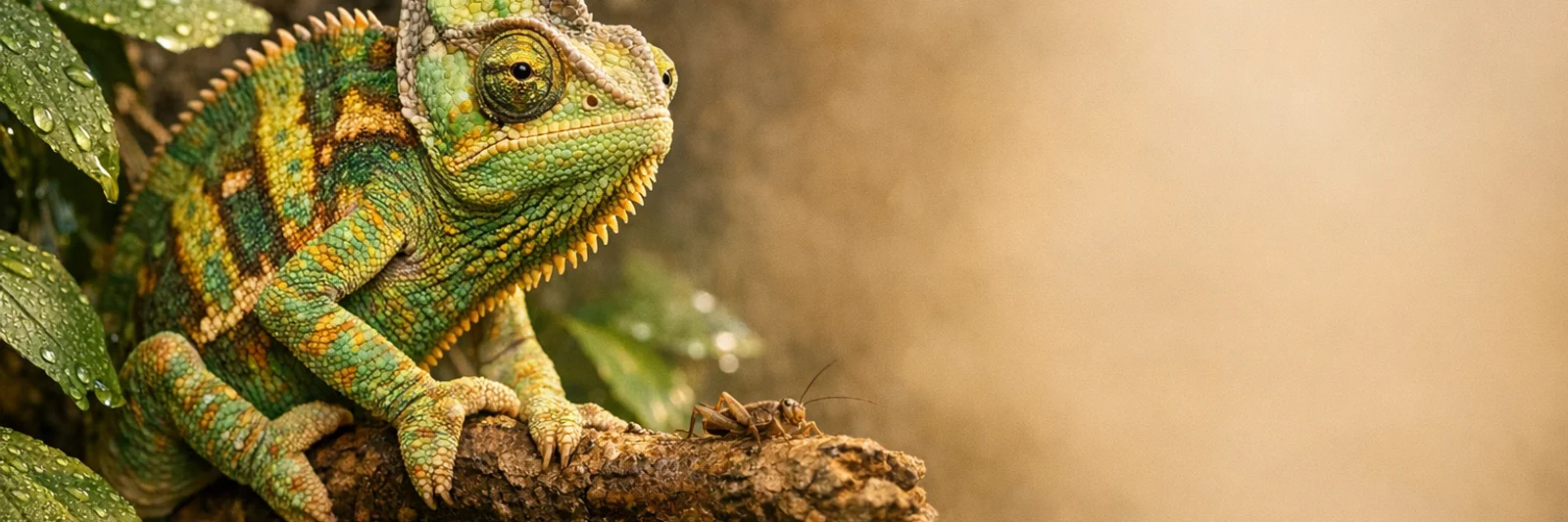
Sunken eyes in a chameleon are worth treating as urgent the same day, since they almost always point to dehydration, while dark stress coloring on its own, with eyes that still look normal and open, can usually be watched and corrected first. This guide separates the small, common stress signals from the ones that mean act now: eye position, color, whether the eyes stay open in daylight, and a simple hydration check you can do without a vet visit. Full enclosure and humidity numbers for a veiled chameleon (Chamaeleo calyptratus) are in our care sheet.
Almost always dehydration; start misting or a dripper check the same day.
Healthy chameleons keep eyes open and active in daylight; closed eyes need a vet call.
Watch and adjust husbandry first if the eyes look normal and open.
Sunken Eyes: The Sign to Treat as Urgent
A chameleon's eyes should look full and rounded, each one turning independently to track its surroundings. Eyes that look sunken or collapsed almost always mean the chameleon is short on water, since it is one of the clearest outward signs of dehydration in the species.
There is one honest exception: a brief eye retraction right after handling or a startle can be a normal, voluntary reaction and usually smooths out within fifteen to twenty minutes on its own. Eyes that stay sunken longer than that are not something to watch and wait on. Start a long, slow misting session or check that the dripper is actually running, since chameleons rarely drink from a standing bowl and depend on moving water for most of their intake.
Color Change: Stress or Normal?
Chameleons darken in response to handling, a rival in view, or a sudden startle, and that reaction on its own is normal and temporary. The color should ease back toward baseline once the trigger is removed, often within an hour or so.
Color that stays dark all day with no clear cause is a different situation, especially paired with lethargy, hiding, or reduced appetite. On its own, with the eyes open and normal, this is usually still a watch-and-adjust case, worth a look at handling frequency, enclosure sightlines, and whether another pet or a reflection is visible from its perch.
Eyes Closed During the Day: A Red Flag
A healthy chameleon keeps its eyes open and alert through the day and only closes them to sleep once it is dark. An eye, or both eyes, closed during daylight hours is one of the more serious signs in this species, since it usually points to dehydration or a deeper illness rather than ordinary tiredness.
Do not treat this one as a wait-and-see sign. If a chameleon is closing its eyes in daylight, especially alongside sunken eyes, not climbing, or reduced activity, that combination is worth a same-day call to an exotics vet rather than more monitoring at home.
The Hydration Check: Urate Color
Many keepers use the color of the white, chalky part of the droppings, called the urate, as a rough at-home hydration gauge. White or pale is the sign hydration is on track, a yellow tint suggests mild dehydration, and orange is a signal to act quickly rather than wait.
Treat this as a helpful home check, not a lab test, and read it alongside eye position and behavior rather than alone. A yellow urate with normal, open eyes is a nudge to step up misting. An orange urate paired with sunken or closed eyes is the combination that calls for a vet the same day.
Fixing Hydration: Drip, Mist, and Hydrating Feeders
Most chameleons never learn to recognize still water in a bowl as something to drink, since in the wild they lick droplets off leaves after rain. A slow drip system or a thorough misting session that leaves visible droplets on the leaves is what actually gets a chameleon drinking, several times a day if it is currently dehydrated.
Feeder insects can genuinely help too, as backup, not a replacement for misting. Hornworms run about 85 percent moisture and silkworms are soft and easy to eat, so both add real water intake alongside the staples covered in our feeder insect guide.
When to Call a Vet Today
Call the same day for eyes closed during daylight, sunken eyes that have not improved after an hour or two of real misting effort, an orange urate, or a chameleon that has stopped climbing and is staying low and still. Any of these outweighs a wait-and-watch approach.
Once hydration and color are back to normal, ease back into a regular feeding rhythm using our weekly feeder rotation rather than one large catch-up meal, since a chameleon that has been off its feed for a few days does better easing back in.
Chameleon Eye and Color Signs
The Hydration and Feeding Kit
Soft, moisture-rich feeders that support hydration alongside misting, not instead of it.
Written by the TC INSECTS breeding team · Porter, Texas · Live Arrival Guarantee on every order
Have a care question? Ask our community.
Join Reptile Keepers USA, our free Facebook group for reptile, amphibian and invert keepers. Share your setups, get care help and swap feeder tips.
Join the free group