Bioactive Tank Odors

A faint earthy smell after misting is normal for a bioactive tank, but sour, rotten egg, and true ammonia smells each point to a different problem. Sour usually means the substrate is staying too wet without a real dry side. Rotten egg means an oxygen-starved pocket has formed somewhere in the mix, often from compaction or standing water. True ammonia, especially alongside dark, greasy substrate, means the waste load has outrun what your cleanup crew and the substrate itself can process. All three trace back to the same root cause, not enough oxygen reaching the material as it breaks down, but the fix is different for each one, covered in the chart below.
Fades within a couple hours of misting or adding fresh litter
Dark, greasy substrate means a refresh, not just a clean-up
Every real fix restores air to the substrate, not just the smell
What a Healthy Bioactive Tank Actually Smells Like
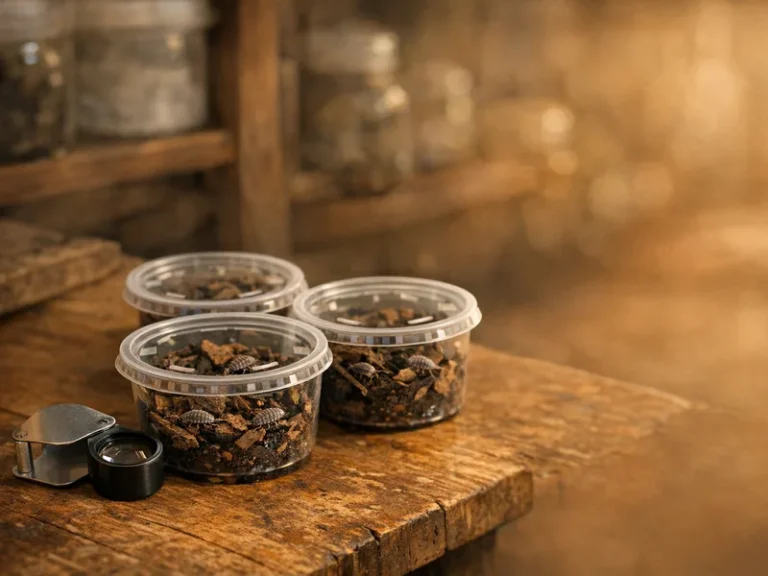
A healthy, well-run bioactive tank has almost no smell at all beyond a faint, earthy note right after you mist it or add fresh leaf litter, similar to damp forest soil after rain. Isopods themselves produce no real odor, and a well-stocked cleanup crew actually reduces smell by breaking waste down before it has a chance to rot. That mild smell should fade within an hour or two and never reach across a room.
If you can smell your tank from across the room, or the smell has a distinct edge to it rather than just an earthy note, something specific has gone wrong. The rest of this guide is about telling those specific problems apart instead of treating every bad smell as the same emergency.
Why Ammonia, Sour and Rotten Egg All Start the Same Way
All three bad smells share one root cause: not enough oxygen reaching the organic material as it breaks down. Composters run into the exact same problem in a mulch pile, and the chemistry is the same in a bioactive bin. When plenty of air reaches decomposing leaf litter and waste, the aerobic bacteria and fungi doing the work mostly produce carbon dioxide and water vapor, which is why a healthy bin barely smells at all.
Cut off that oxygen, through waterlogging, compaction, or simply more waste than the crew and airflow can keep up with, and a different set of bacteria takes over. Those anaerobic processes are what actually produce a sour, rotten egg, or ammonia smell, and which one you get depends on exactly what is overloaded, too much water, a sealed pocket, or too much nitrogen-rich waste like uneaten protein.
Sour Smell: Overwatering Without a Dry Side
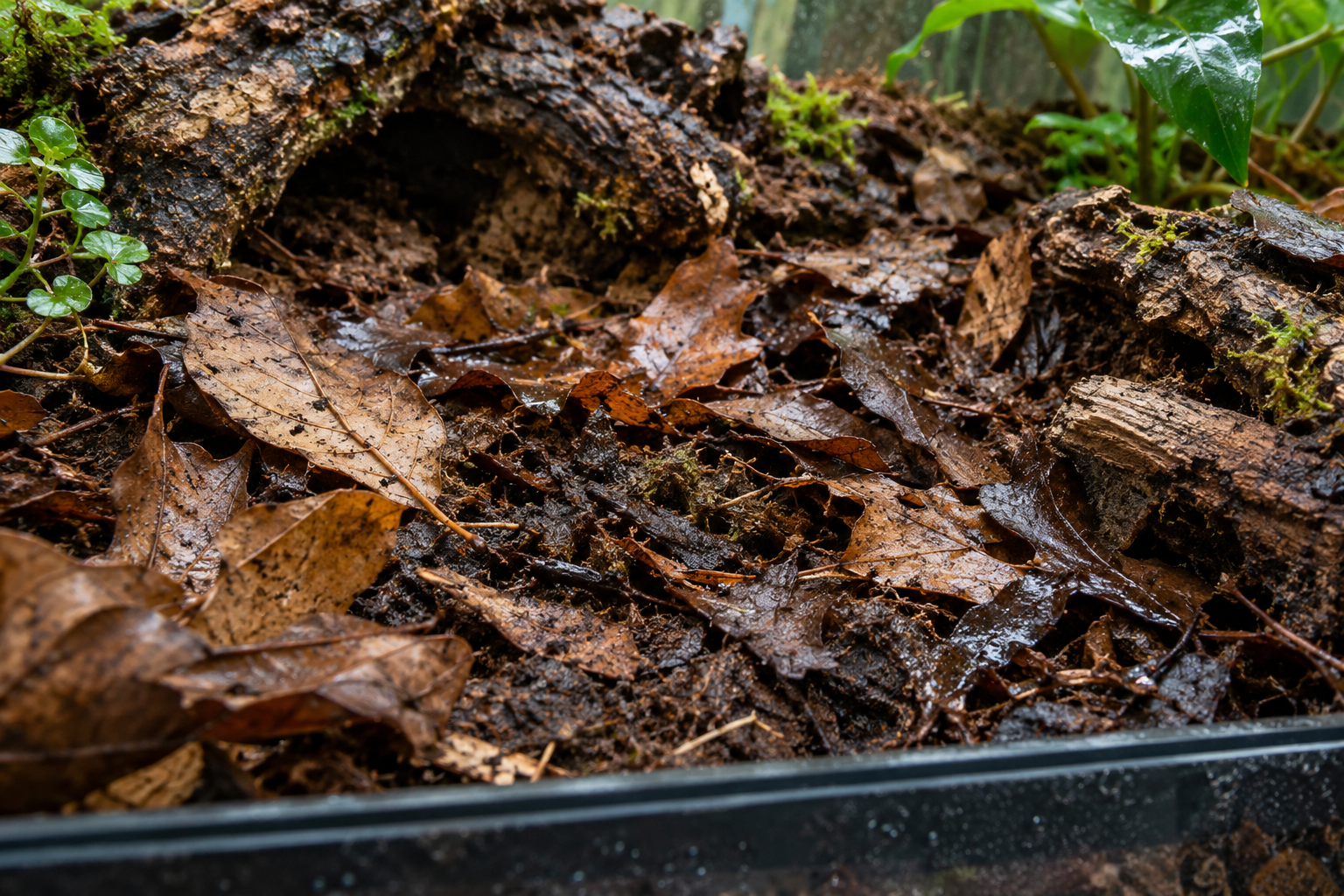
A sour smell, closer to vinegar or wet laundry than anything organic, almost always means the substrate is staying wet across too much of the bin with no real dry side to balance it. A proper moisture gradient needs a genuinely dry two thirds, not just a damp one, and a bin that never gets that dry stretch starts to sour from the inside out.
The fix is to let that section dry back before misting it again, and to check that ventilation actually gives the bin somewhere to dry. Watering the same damp zone by touch rather than on a fixed schedule is what keeps this from happening again once it clears.
Rotten Egg Smell: An Oxygen-Starved Pocket
A rotten egg smell is more specific than sour, and it usually means one distinct pocket somewhere in the bin has gone fully anaerobic, cut off from air by compaction or standing water. This is the smell of sulfur compounds building up in a spot with essentially no oxygen at all, and it is often strongest right where you disturb that one section rather than spread evenly through the bin.
Dig into the exact spot the smell is coming from, break up any compacted or waterlogged material, and mix in drier substrate so air can reach it again. Standing water at the bottom of a tank is a common hidden cause, especially in a build where a drainage layer has filled higher than it should.
True Ammonia Smell: When the Crew Is Overloaded
A sharp, stinging ammonia smell with no visible sludge usually means waste and uneaten protein are breaking down faster than your cleanup crew and airflow can process them. This is a nitrogen problem rather than a plain moisture one, too much waste relative to the carbon-rich litter and airflow available to break it down cleanly. Overfeeding, especially protein left sitting uneaten, is one of the most common triggers.
Stop feeding for a few days, remove any leftovers you find, and add a springtail top-up if the crew looks thin. Ammonia paired with dark, greasy, broken-down substrate is a different and more serious version of the same smell. That combination usually means the substrate itself is due for a refresh, not just a clean-up.
When to Rebuild Instead of Fix in Place
Most bad smells noticeably improve within about a week of applying the right fix above. Treat it as a signal to rebuild instead of patching again if the smell has not eased after roughly a week of fixing airflow and moisture, if the substrate looks dark and greasy rather than textured, or if you cannot find one obvious wet or compacted spot causing it.
A musty, damp-basement smell with visible fuzzy patches is usually just a normal mold bloom working through fresh material, not a sign to rebuild anything. Do not tear apart a bin that only smells earthy and looks normal just because you read about ammonia here. If your crew genuinely looks too thin to keep up with waste on its own instead, our isopod and springtail combos are an easy way to restock it, rather than fighting the smell by hand every week.

Bad Smell Diagnostic Chart
The Bad Smell Reset Kit
The living crew and fresh substrate that fix a sour, rotten egg, or ammonia smell for good.
Frequently Asked Questions
Written by the TC INSECTS breeding team · Porter, Texas · Live Arrival Guarantee on every order
Have a care question? Ask our community.
Join Reptile Keepers USA, our free Facebook group for reptile, amphibian and invert keepers. Share your setups, get care help and swap feeder tips.
Join the free group