What to Feed a Tegu: Feeder Insect Rotation by Age
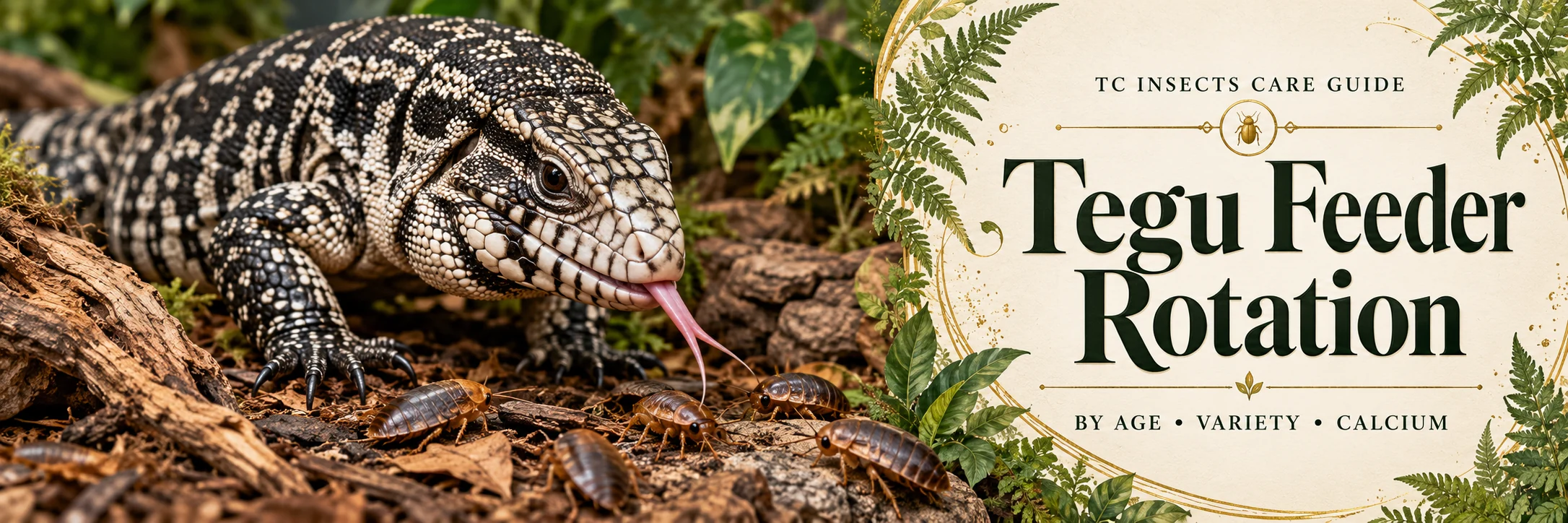
The best feeder insect for a tegu is the dubia roach, and that stays true even once your lizard is a full-grown adult, not just during the hatchling stage. Some keepers also raise discoid roaches as a comparable feeder for tegus, but TC Insects does not currently stock discoid roaches specifically, so dubia is the one you can actually buy here. Dubia is also a restricted species in Florida, so TC does not ship live dubia to FL addresses; Florida-based keepers should lean on BSFL, hornworms, mealworms, superworms, and silkworms instead. Feeding frequency steps down hard as a Salvator merianae, the Argentine black and white tegu, grows: daily for hatchlings, roughly every other day through the subadult years, and roughly every 2 to 3 days for a full adult, always watched against body condition rather than a fixed calendar. Because an insect-heavy diet runs phosphorus-heavy, every feeding needs a generous calcium dusting, not an occasional one. As your tegu matures its fuller diet broadens well beyond insects into whole prey, lean protein, and fruit, but the insect portion stays a real, valuable piece of the rotation the whole way through, and our red runner vs dubia comparison is worth a look if you want a second roach option in the mix.
Stays the top pick even once your tegu is a full adult
Steps down hard from hatchling to adult
An insect-heavy diet runs phosphorus-heavy without it
The answer: dubia stays the top pick at every age
Most reptile diets shift away from insects as the animal grows, but a tegu is the exception worth knowing about. The dubia roach is repeatedly named as the highest-quality insect protein for this species, and unlike a lot of other lizards, that does not change once your tegu is fully grown. Some keepers use discoid roaches the same way, but TC Insects does not currently stock discoid specifically, so dubia is the roach to build the rotation around here. A big adult still benefits from roaches in the rotation, just fewer of them relative to the whole-prey and fruit that make up more of an adult's plate.
That makes a tegu a genuinely different animal to plan feeders around than a bearded dragon or a leopard gecko. You are not just feeding a hatchling through a phase and moving on to romaine and squash, you are building a long-term rotation that keeps roaches in the picture for the animal's entire life, which is also why buying in bulk starts to make real financial sense once your tegu is grown.
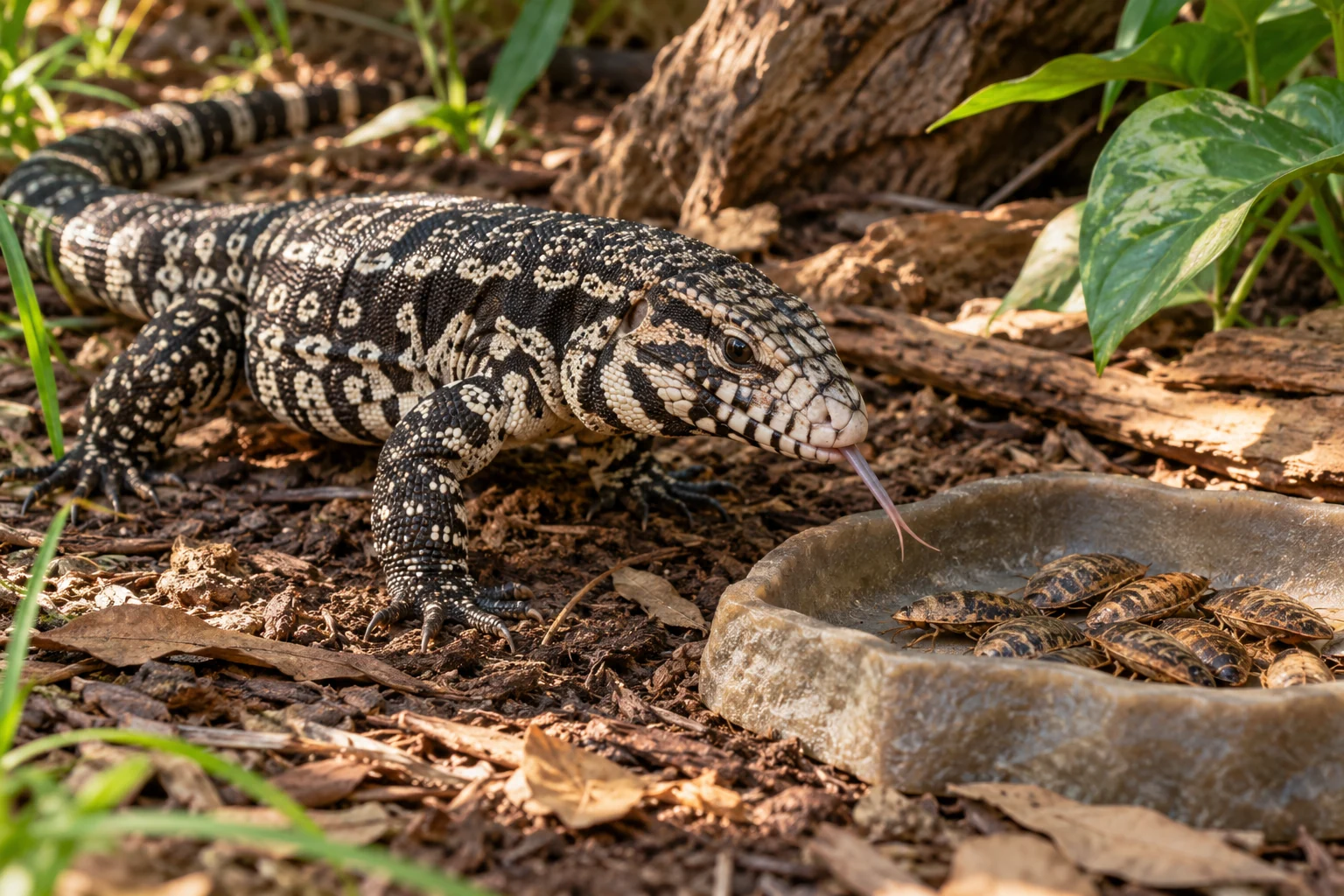
Tegus are big, food-driven omnivores, not pure insectivores
It helps to place the insect portion in context. Tegus are intelligent, food-motivated omnivores, and as a hatchling matures the diet broadens well past insects into whole prey like mice, lean cooked meats, eggs, and a good amount of fruit. None of that replaces the insect portion, it just means insects become one part of a bigger plate rather than the whole plate.
That is actually good news for the feeder side of the hobby. Because the insect portion never disappears the way it does for some species, a tegu keeper stays a real, ongoing customer for feeders rather than a one-time hatchling buyer, and the animal genuinely benefits from the variety a rotation provides on top of its other food.
A feeding frequency ladder by age
As a rough starting point, hatchling tegus do well fed daily, since they are growing fast and have small stomachs that empty quickly. Subadults under about 3 years old generally step down to every other day, and a full adult typically settles into roughly every 2 to 3 days once growth has slowed. Treat all of these as starting points, not fixed rules, and watch body condition rather than the calendar.
The most common mistake is sticking with a hatchling-style daily schedule well into the subadult years. An adult tegu that keeps getting fed like a baby can put on weight quickly, since its growth has slowed but the calories have not. If your tegu is thickening up rather than just getting longer, that is the signal to stretch the schedule out, not add more food.
Calcium dusting is not optional here
An insect-only or insect-heavy portion of the diet tends to run phosphorus-heavy relative to calcium, and that imbalance is exactly what a generous, consistent calcium dusting is meant to correct. Dust every insect feeding, not just the ones that feel important, and lean even heavier on it for a fast-growing hatchling or a reproductively active female.
This is one habit that should not loosen up as your tegu ages into the whole-prey-and-fruit stage of its diet. The insect portion is smaller by then, but it still needs the same dusting discipline every time it is offered. Our guide to dusting feeder insects with calcium covers the shake-in-a-cup method and a fuller frequency schedule by life stage.
Building the rotation: roaches as the base, real variety around them
Keep dubia roaches as the anchor of the insect portion at every age, since they are the pick most consistently named as the best insect protein for this species. Discoid roaches are a comparable option some keepers use, but TC Insects does not currently stock discoid roaches specifically, so dubia is the one to build your rotation around here. Round the rotation out with black soldier fly larvae for a naturally calcium-forward option, superworms for a firmer-bodied feeder as your tegu gets bigger, and hornworms occasionally for a soft, hydrating change of pace.
TC Insects does not stock live crickets or discoid roaches. Dubia roaches are the better choice for a tegu anyway, since they do not chirp, carry far less smell in a large enclosure, and offer a meatier, more consistent bite for a big lizard that is used to a real portion, not a snack.
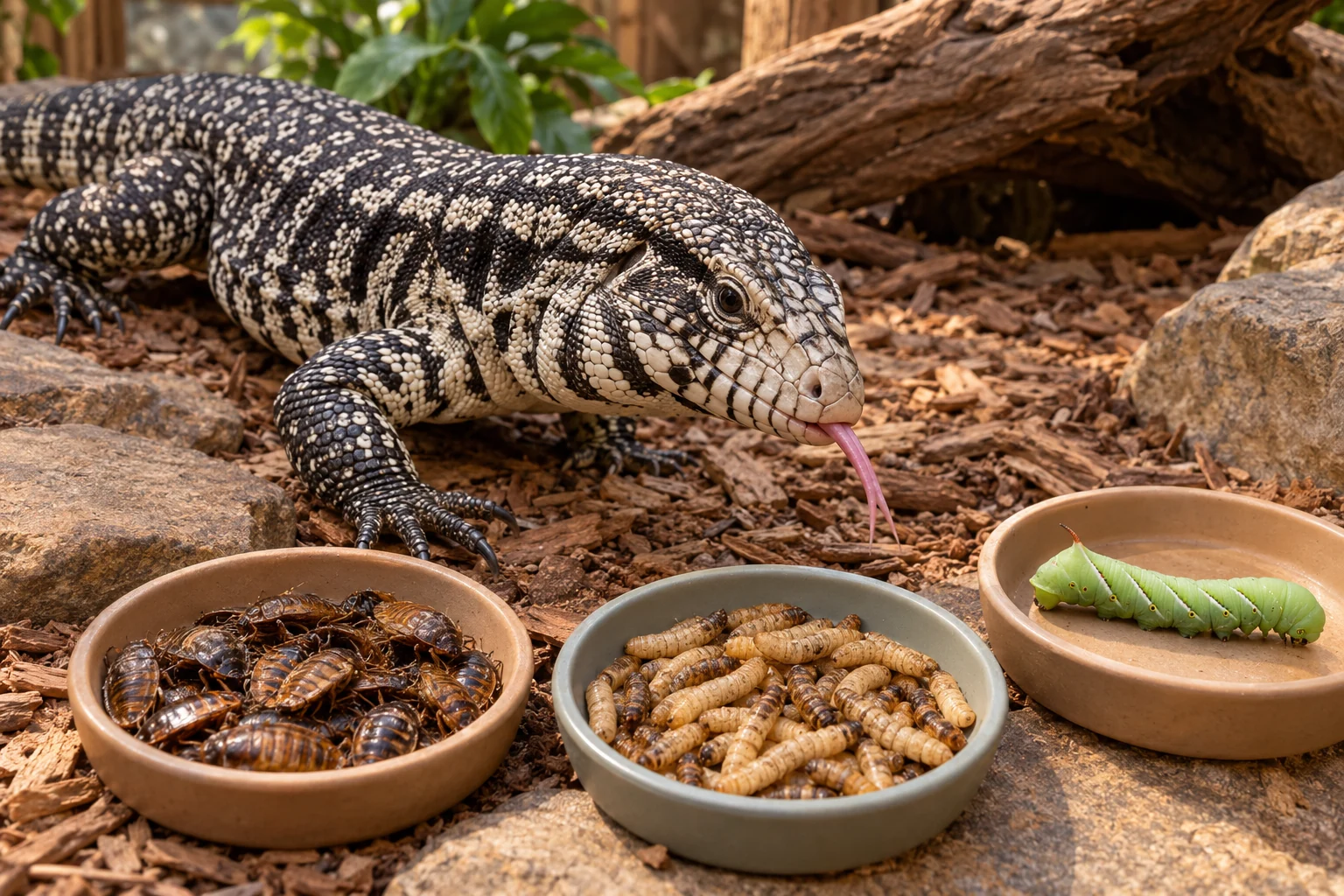
Sizing up as your tegu grows
A hatchling tegu does fine on small to medium roaches, but stick with tiny feeders too long and a growing lizard spends more energy hunting than it gets back in the meal. Size up steadily through the subadult years, and by adulthood a tegu can comfortably take large or jumbo-sized roaches in a single sitting.
As a loose guide, the feeder should not be wildly larger than the space between your tegu's eyes, the same general sizing rule used across most insectivorous reptiles. Gut-load whatever you are offering for a day or two beforehand so the nutrition inside the feeder is actually working for your tegu, not just filling space.
Feed a Growing Tegu Right
The roach sizes and calcium dusting behind the rotation above, sized for every stage from hatchling to full adult.
Frequently Asked Questions
Written by the TC INSECTS breeding team · Porter, Texas · Live Arrival Guarantee on every order
Have a care question? Ask our community.
Join Reptile Keepers USA, our free Facebook group for reptile, amphibian and invert keepers. Share your setups, get care help and swap feeder tips.
Join the free group