Tarantula Enclosure Setup
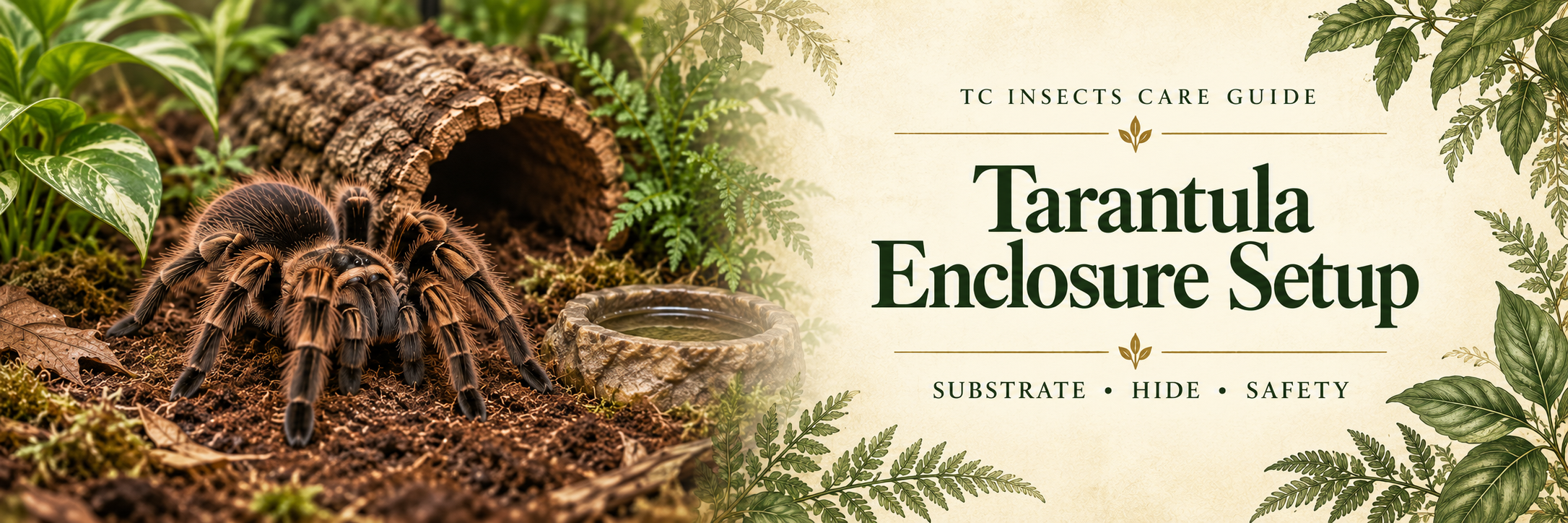
A terrestrial tarantula's enclosure should be roughly three times its diagonal leg span long and about twice as wide, kept low rather than tall, with 3 to 4 inches of a moisture retentive burrowing substrate, a snug hide, a shallow water dish, and a secure, well ventilated lid. Get the footprint and substrate right and most terrestrial species, including TC's easy in-stock picks, are genuinely low maintenance. Get the height or the sizing wrong, though, and you risk one of the two mistakes that actually injure a beginner's first tarantula. Here is the full setup, step by step.
Terrestrial species need floor space, not height
Enough for a burrowing species to dig and feel secure
A fall onto a hard surface can rupture a tarantula's abdomen

The right footprint: why floor space beats height
For a terrestrial species, the standard sizing rule is roughly three times the spider's diagonal leg span in length and about twice that span in width. Diagonal leg span just means the distance from the tip of one front leg to the tip of the opposite back leg when the spider is stretched out, and it is the measurement most keepers and sellers use instead of body length alone. This rule applies to TC's ground dwelling species, the Mexican Red Rump and the Brazilian Black and White Acanthoscurria, along with the classic Chaco Golden Knee type when it is in stock.
Height works differently for a terrestrial tarantula than it does for almost any other pet. An arboreal species wants a tall enclosure to climb in, but a ground dweller does not, and our terrestrial versus arboreal guide covers that split in full if you are still deciding between the two. For any burrowing species, keep the enclosure modestly low and let the floor space, not the height, do the work.
Why a tall enclosure is dangerous, not a bonus
This is the setup mistake that genuinely injures tarantulas, so it is worth stating plainly. A tarantula's abdomen is soft and can rupture in a fall from even a modest height onto a hard surface, and that kind of injury is frequently fatal. A bigger, taller enclosure is not automatically a better one for a ground dwelling species, since more height simply means more room to fall from with nothing to gain in return.
Keep a terrestrial setup low, keep the substrate deep and slightly soft rather than packed hard, and skip tall decor pieces a climbing sling could tumble from. If you want to give your spider height to explore safely, that is exactly the case for choosing an arboreal species and setup instead, which our beginner species guide covers alongside the easy terrestrial options.
Substrate: depth, material, and moisture
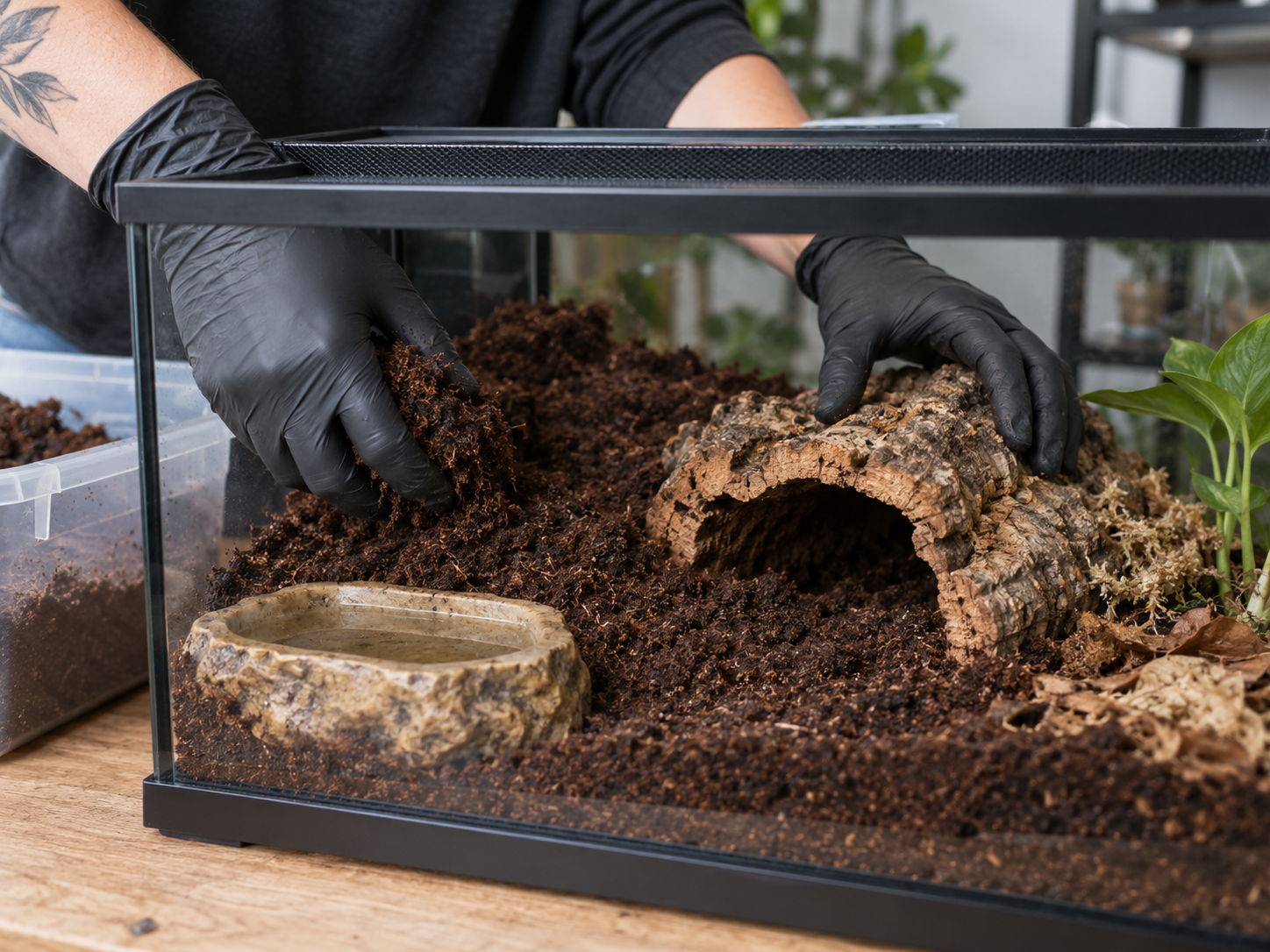
Aim for 3 to 4 inches of a coco fiber or topsoil based burrowing substrate, deep enough that a fossorial species can dig a real burrow and feel secure. A moisture retentive base like our burrowing substrate holds humidity well without staying soggy, which matters since most terrestrial tarantulas TC carries do fine with a modest humidity gradient rather than a uniformly wet tank.
Keep the surface mostly dry with one slightly damper pocket near the water dish and hide, and tuck in a patch of sphagnum moss if your species or your room runs on the dry side. Mist that one area lightly rather than soaking the whole enclosure, and let the substrate dry out between waterings so mold never gets a foothold.
The hide, water dish, and decor
Every terrestrial tarantula wants a secure hide, cork bark or half of a buried plant pot both work well, positioned so the spider can retreat and feel enclosed rather than exposed in open space. Add a shallow water dish that a sling or juvenile cannot fall into and drown in, and keep it topped off, since dehydration is a far more common problem than most new keepers expect.
Beyond the hide and water dish, decor can stay minimal. Tarantulas do not need the enrichment items a more active pet does, and a cluttered enclosure just adds more surfaces for a climbing sling to fall from. A little leaf litter on top for a natural look and some cover is plenty.
Sizing up as your tarantula grows: the sling-to-adult mistake
The second real mistake is the opposite problem: putting a tiny sling straight into a full adult sized enclosure. A sling lost in too much open space struggles to find food, stays stressed, and in a large bare enclosure can even be at a disadvantage against feeder insects it would otherwise handle easily. Start small, a modest, well ventilated cup or enclosure sized to the sling itself, not to where it will end up in a year.
Step the enclosure up gradually as your tarantula grows through several molts, rather than jumping straight to full adult size. It is a little more work up front, but it is the difference between a sling that settles in and hunts confidently and one that hides and refuses food out of sheer stress.
Ventilation and lid security
Finish with a secure, well ventilated lid. Tarantulas are surprisingly capable of pushing through small gaps, especially as slings, so check that any mesh or vent holes are genuinely too small for your spider to squeeze through, and that the lid itself locks or clips down rather than just resting in place. Cross ventilation on two sides of the enclosure keeps air moving without drying out your one damp substrate pocket too fast.
Once the enclosure is built, give it a few days to settle, damp substrate stops smelling raw and humidity evens out, before you add the spider. From there, our feeding schedule by age covers what comes next.
Everything for a Terrestrial Tarantula Setup
The substrate, moisture, and cover behind the setup steps above, ready to add in one tap.
Frequently Asked Questions
Written by the TC INSECTS breeding team · Porter, Texas · Live Arrival Guarantee on every order
Have a care question? Ask our community.
Join Reptile Keepers USA, our free Facebook group for reptile, amphibian and invert keepers. Share your setups, get care help and swap feeder tips.
Join the free group