Mealworms for Bluebirds
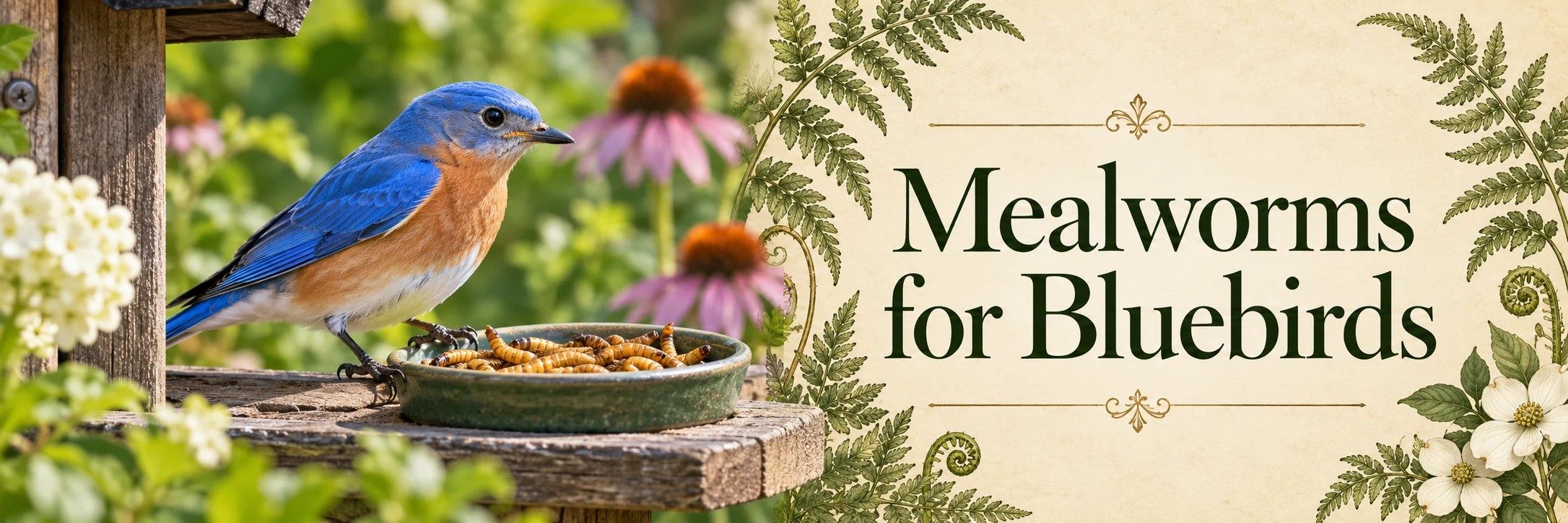
Mealworms (Tenebrio molitor) are the one supplemental food bluebirds reliably take, and the rule most bluebird organizations give is to treat them as a treat, not a diet: roughly 15 mealworms per bird per day, offered once or twice daily in a smooth-sided dish, and more freely only during a cold snap or when a pair is feeding nestlings. Live mealworms draw bluebirds far better than dried, and a 1,000-count cup kept in the refrigerator lasts a landlord most of a season. This guide covers live versus dried, how many and when, the feeder design that keeps starlings and jays out, calcium, storage, and when to stop.
A supplement, not a diet; wild insects should stay the main food
Movement is what draws a bluebird to a new feeder
A 1,000-count cup keeps for months on a bran diet
Why bluebirds take mealworms and little else
Eastern, western, and mountain bluebirds are insect eaters that hunt from a perch, dropping onto beetles, caterpillars, and grasshoppers in short grass. They ignore seed feeders because they do not eat seed. What they recognize is a moving insect, and a dish of live mealworms on a post in open ground looks exactly like what they hunt, which is why mealworms are the standard offering at bluebird trails, nest-box monitoring routes, and backyards across the country. Suet, berries, and softened raisins get taken by some birds in winter; mealworms get taken by nearly all of them, year-round.
The catch is that a mealworm is a convenient snack, not a complete diet. Mealworms are high in fat and phosphorus and low in calcium relative to a wild insect diet, and a bluebird that fills up on them every day is eating like a person who lives on french fries. That is the reason for the daily limit below, and for treating the dish as a way to keep bluebirds close and get them through hard days, not as a replacement for the field they are hunting.
Live or dried?
Live mealworms are what bring a bluebird to a feeder in the first place; the wriggling is the signal. Dried mealworms are cheaper and keep on a shelf, but many bluebirds ignore them entirely, and those that eat them tend to do so only after learning the dish from live ones. Dried worms also carry no water, which matters in summer heat. The usual path is to start with live worms until the pair is visiting daily, then mix in dried to stretch the supply, and go back to live when nestlings arrive.
If you do use dried, soak a handful in warm water for 10 minutes so they carry some moisture, and expect leftovers. Live mealworms come in sizes, and for bluebirds the large one-inch worm is right for adults, while the medium three-quarter-inch worm is easier for a parent to carry to nestlings. Both are in the mealworm shop, where a 1,000-count cup is the sensible size for a season; our guide to live versus dried mealworms covers the nutrition side in more detail.
How many, and how often
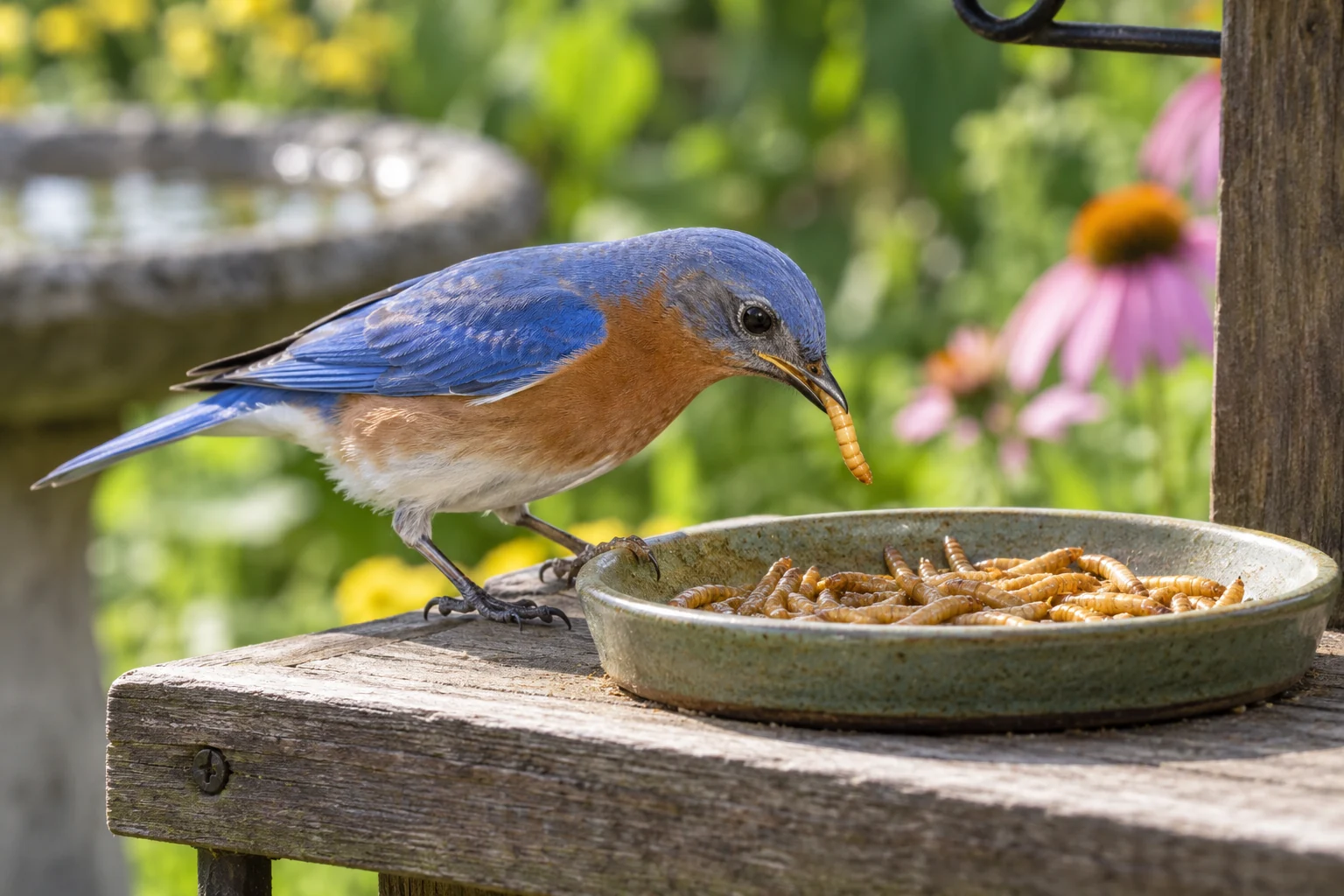
The widely used guideline is around 15 mealworms per adult bird per day, split into one morning and one late-afternoon offering, which for a pair is roughly 30 worms a day and about 200 a week. Put out the worms at the same times each day so the birds learn the schedule and the dish empties fast; a dish that sits full for hours feeds jays, starlings, and mice instead. Skip a day here and there deliberately, so the birds keep hunting.
Two situations justify offering more. During a cold snap, an ice storm, or a late spring freeze, when insects vanish and bluebirds can starve in a day, offer worms freely two or three times a day; this is when mealworm feeding saves birds. And when a pair is feeding nestlings, they will take every worm you offer and carry it to the box; many landlords raise the daily amount then and step it back down once the young fledge. Even then, keep calcium in the picture, covered below.
A feeder that keeps starlings and jays out
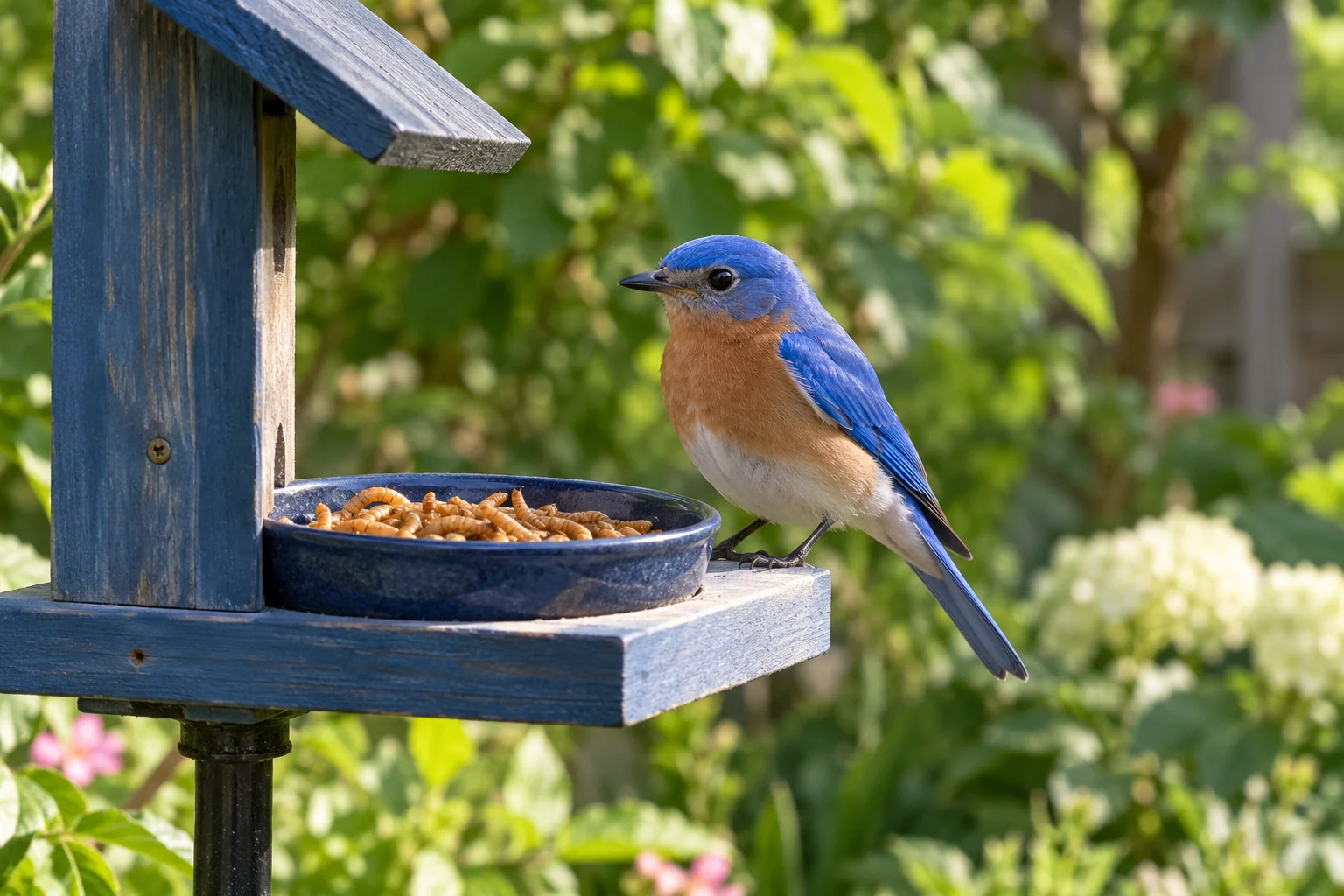
The mealworm dish itself is simple: a smooth-sided glass or plastic cup or a shallow dish at least 2 inches deep, so worms cannot climb out, mounted on a post or a platform about 5 feet up in the open, not against a bush. Bluebirds want a clear view and a nearby perch. Blue color is not magic, but a dish the birds can see from a perch is, so keep it in the open and in the same spot.
The problem is that starlings, grackles, jays, and robins learn the dish in a day and can empty 100 worms in minutes. The fix is an enclosed feeder with entrance holes about 1.5 inches across, which admits a bluebird and excludes starlings and jays, or a caged dish with 1.5 inch openings. Bluebirds learn to enter within a few days if you start by leaving the roof off or the holes open. Feed at set times and pick up leftovers, and the bullies lose interest faster than the bluebirds do.
Calcium and nestlings
Mealworms are low in calcium, and a pair raising a brood on a heavy mealworm diet can run short of it, especially in spring when the female is forming eggs. The standard landlord fix is to dust live mealworms with a plain calcium powder before offering them a few times a week during nesting, and to offer crushed clean eggshell in a separate dish; bluebirds and many other songbirds take eggshell on their own. A light dusting is enough; the worms should look faintly frosted, not white.
The other nestling-season rule is size and freshness. Parents carry a worm at a time to the box, so medium worms move faster than large ones, and worms that have been well fed on bran and a slice of carrot carry more water and nutrition than worms pulled hungry from a cold cup. Warm the day's worms to room temperature and give them a bran snack for an hour before feeding. A pinch of calcium powder is the whole supplement plan; anything more elaborate is for reptile keepers, not birds.
Storing a season's worth of mealworms
Mealworms keep for months in a refrigerator at around 40 to 45 F in a ventilated container with an inch of dry wheat bran. The cold slows them to a near stop so they do not pupate into beetles. Once a week, take the container out for a few hours at room temperature and add a slice of carrot or potato so they can drink, then remove it before it molds and put them back. A 1,000-count cup handled this way lasts a pair of bluebirds most of a season at the 15-a-day rate.
Do not freeze them, and do not leave them in a hot garage, where they pupate within a couple of weeks and you end up with beetles. If you would rather never buy again, a bin of large mealworms at room temperature becomes a self-sustaining colony in about 3 months, which our mealworm colony guide walks through. Either way, stop or cut back sharply once summer insects are plentiful and after the last brood fledges; the goal is a bluebird that treats your yard as a good place to hunt, with a dish as backup, not a bird that has forgotten how.
Keep reading: Raising Mealworms for a Backyard Flock: A Bin That Feeds Six Hens and A Mealworm Feeding Station for Bird Photography: Perch, Light, and Lure
The Bluebird Landlord Kit
A season of large and medium mealworms, bran to keep them fed in the refrigerator, and calcium for nesting season.
Frequently Asked Questions
Written by the TC INSECTS breeding team · Porter, Texas · Live Arrival Guarantee on every order
Have a care question? Ask our community.
Join Reptile Keepers USA, our free Facebook group for reptile, amphibian and invert keepers. Share your setups, get care help and swap feeder tips.
Join the free group