
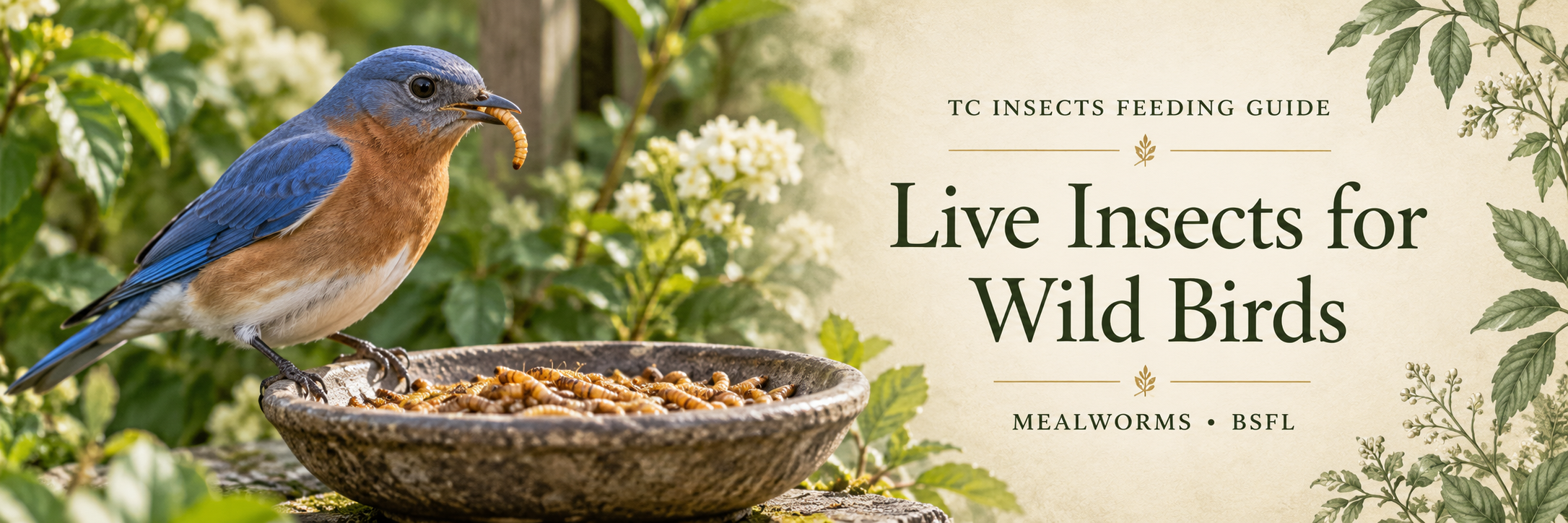
Live Insects for Wild Birds
TC INSECTS is a family-run insect farm in Porter, Texas, just outside Houston, and the largest feeder insect operation in the state. Most of our customers keep reptiles, but backyard birders want the same thing: bluebirds, robins, and wrens respond to movement, and live insects draw them in a way food sitting still never quite manages. We ship live mealworms and BSFL (calcium worms) straight from our farm, with the same Live Arrival Guarantee we have backed on 57,000+ orders.
No dried or freeze-dried substitutes, just active, wriggling insects.
The traditional favorite plus a calcium-rich alternative.
Ships Monday through Wednesday so nothing sits over a weekend.
Why Live Insects Bring Birds to Your Yard
Movement Catches Their Eye
Birds are hunters at heart, even the ones visiting your feeder for sunflower seeds. An insect that is alive and moving tends to catch a bird's eye faster than food that is sitting still, the same instinct that has a robin cocking its head at a lawn full of earthworms. For a lot of backyard birders, switching to live insects is the difference between a feeder that gets visited occasionally and one that becomes a regular stop.
Which Backyard Birds Eat Insects
Bluebirds are the bird most associated with mealworms, and for good reason: they are primarily insect eaters and will readily come to a dish of live worms, especially during nesting season when they are feeding hungry chicks. Robins, wrens, chickadees, titmice, and nuthatches are also known to eat mealworms when offered, along with many other insect-eating songbirds. Not every bird will take to them right away. Ground feeders like robins may prefer worms scattered on the ground or in a low, open dish, while cavity nesters like bluebirds tend to favor a raised feeder they can see clearly from a perch.
Simple Feeder and Dish Tips
You do not need anything fancy to offer live insects. A shallow dish with smooth, steep sides works well, since it keeps them from crawling out before a bird finds them. Placing the dish somewhere visible but with a bit of natural cover nearby (a shrub, a fence line, a low branch) tends to make birds more comfortable approaching. Offering a small amount at a time, especially when you are first introducing a new feeder, can help you see which birds in your yard take an interest.
Shop Live Insects for Your Feeder
The Traditional Favorite
Mealworms are what most backyard birds already recognize, and live ones squirm enough to catch a bird's eye fast. A safe, well-tested choice for bluebirds, robins, wrens, and more.
A Calcium-Rich Alternative
BSFL, also called calcium worms, carry dramatically more calcium than mealworms, which matters most during nesting season when parent birds are feeding hungry chicks. Some birds take to BSFL right away; others clearly prefer mealworms, so many birders offer both and let their yard decide.
Everything a wild bird keeper needs from this guide. Untick anything you already have, then add the rest in one click.
How Ordering Works
Choose your species, size, and count, and we will pack your order fresh from our Porter, Texas farm. We ship FedEx Overnight, normally Monday through Wednesday, so nothing is left sitting in a warehouse or truck over the weekend. Every order ships with our Live Arrival Guarantee. We ship to the lower 48 states only; because of transit time and import restrictions, we are unable to ship to Alaska or Hawaii. If you are near Houston, local pickup is also available.
Wild Bird Feeding FAQ
Fresh Insects, Straight From Our Farm
Have a question about sizing or ordering for your feeder? Email customer.service@tcinsects.com and we will point you to the right products for your setup.
TC INSECTS · Bred in-house in Porter, Texas · Live Arrival Guarantee on every order
