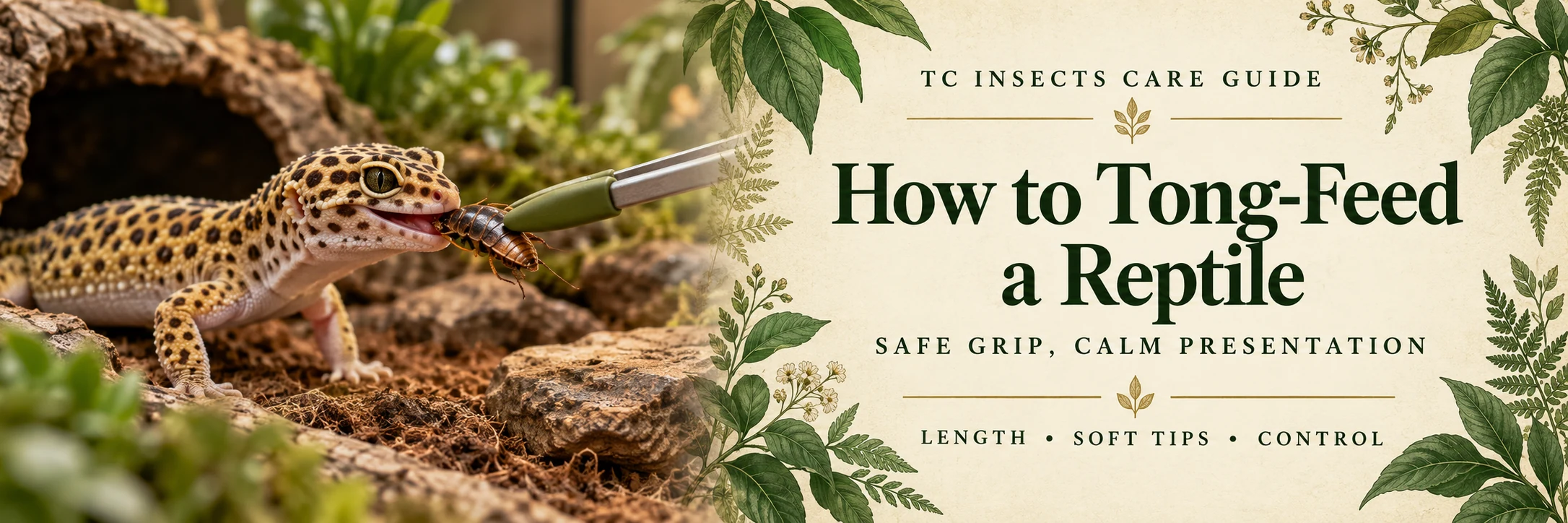
The right feeding tongs are soft-tipped, long enough to keep your hand outside the strike zone, and short enough that you are not fumbling for control, which for most pet reptiles means somewhere between 6 and 12 inches depending on the animal's size and temperament. Tongs earn their place for portion control, keeping feeders off loose substrate, protecting fingers from a strong food response, and coaxing a picky or recovering eater. This guide covers sizing, grip, presentation, and the two rules worth never breaking. See our feeder variety guide for what to put in them.
Shorter for small geckos, longer for bigger or more defensive feeders.
Blunt tips protect a mouth that clamps onto the tool instead of the food.
Tongs exist so a food-response strike lands on the tool, not on you.

Soft tips, steady grip, calm presentation
Safe tong feeding keeps the feeder controlled while protecting both the reptile’s mouth and the keeper’s hand.
Build a safer, calmer feeding routine
Why Tong-Feed At All?
Tongs solve a handful of real problems at once. They give you portion control over exactly how much a reptile eats at one sitting, keep a feeder from disappearing into loose substrate or a hide before the animal notices it, and keep your fingers out of range of an animal with a strong, fast food response.
They also help with a picky or recovering eater, since holding a single feeder still or moving it slightly lets you offer one item deliberately instead of dropping a handful in and hoping. For an animal that has stopped eating for other reasons, our picky-eater guide covers the rest of the troubleshooting.
Choosing Tongs: Length and Tip
Length is mostly about balancing reach against control, and tip material is about safety if the animal misses the food and clamps onto the tool instead.
Silicone or rubber tips are the safer everyday default, since a blunt tip does not injure a mouth on a miss the way bare metal can. Serrated metal tips grip harder and matter more for slippery feeders, but they carry more risk if a defensive or fast-striking animal clamps down on the tool itself rather than the food.
Small Geckos and Hatchlings
Six to eight inches is usually enough reach without losing the fine control a tiny feeder and a small mouth both need.
Bearded Dragons, Adult Geckos and Small Snakes
Eight to twelve inches is the sweet spot for most common pets, balancing a safe distance from the strike zone with a steady, controlled grip.
Larger or Defensive Feeders
Twelve inches and up, plus a genuine barrier or a hook first for any animal that strikes hard at movement, such as a large monitor or a defensive snake.
How to Hold a Feeder Without Crushing It
Grip a roach behind the head or across the thorax with just enough pressure to hold it steady, not squeeze the abdomen, so the legs keep moving and the feeder still reads as alive and worth chasing.
Soft-bodied feeders like hornworms and silkworms need an even lighter touch. Grip the middle of the body rather than the head, and check that gut-loaded feeders are moving normally before offering them; see our gut-loading guide for the routine that keeps them in good shape right up to feeding time.
Presentation: Height, Motion and Distance
Bring the feeder to roughly the animal's eye level or its natural strike zone, rather than presenting from above like a predator would. A small wiggling motion reads as prey and triggers a strike far more reliably than holding perfectly still.
Give the animal a beat to focus once it notices the feeder, since some species strike better off a still-then-moving cue than constant motion. Back off between offers instead of chasing the animal's face with the tongs, which reads as pressure rather than food.
The Two Rules Worth Never Breaking
First, never present food with bare fingers once an animal has a strong food response, since a fast strike aimed at movement cannot tell your fingers from the feeder. That is the entire reason tongs exist for this group of animals.
Second, never tong-feed an animal that strikes hard at any movement without a barrier, a hook, or real distance between your hand and the enclosure opening first. This matters most for large monitors and defensive snakes, where a clamped strike on a short tong can still reach a hand.
Which Feeders Tong Well (and Which Don't)
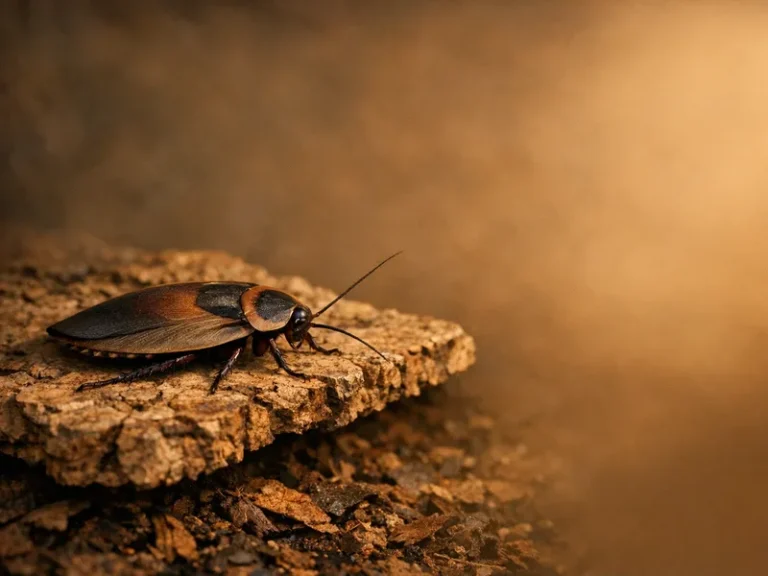
Roaches, superworms, hornworms and silkworms all have enough body to grip cleanly without crushing, which makes them the easiest feeders to offer this way. Dubia roaches in particular hold still enough in tongs for a controlled, deliberate offer, and hornworms are gentle enough for a young or recovering animal.
Tiny, fast or very loose feeders do not tong well at all and are better offered free-range in the enclosure or in a shallow dish instead. Mealworms are small enough to slip out of a metal tip but hold fine in a silicone-tipped pair, which is one more reason a soft tip is the safer general-purpose choice.
The Tong-Feeding Starter Kit
Feeders with enough body and grip to hold steady in silicone-tipped tongs during a slow, controlled offer.
Frequently Asked Questions
Keep reading: bowl feeding versus loose feeding and tong feeding a tarantula.
What size feeding tongs should I use for a bearded dragon?+
Something in the 8 to 12 inch range works for most bearded dragons, long enough to keep your hand well outside the strike zone but short enough that you are not fumbling for control. Pick a silicone or rubber-tipped pair rather than bare metal, since a miss lands on the tool instead of soft tissue.
Are metal or silicone-tipped tongs better for reptiles?+
Silicone or rubber-tipped tongs are the safer everyday choice, since a blunt tip protects a mouth if the animal clamps down on the tool instead of the food. Serrated metal tips grip harder and suit keepers who need a very firm hold, but they carry more injury risk on a miss.
Can tong feeding make a reptile too dependent on tongs?+
It can, especially with an animal that stops hunting loose feeders altogether. If that happens, mix in bowl or free-range feedings between tong sessions so the animal keeps its normal hunting behavior, and save tongs for portion control, picky eaters, or feeders you want to keep off the substrate.
Which feeder insects work best with tongs?+
Roaches, superworms, hornworms and silkworms all have enough body to grip cleanly without crushing, which makes them the easiest feeders to tong. Tiny, fast or very loose feeders do not tong well at all and are better offered free-range or in a shallow dish.
Is it safe to tong-feed a reptile that bites?+
Yes, that is one of the best reasons to use tongs at all, since the bite lands on the tool instead of your fingers. For an animal that strikes hard at any movement, use a longer tong, keep your hand well back from the enclosure opening, and consider a barrier for anything unusually defensive.
Why won't my reptile take food from tongs?+
Some animals simply prefer to hunt loose prey and never take to tongs, which is normal and not a problem to fix. Try presenting at the animal's eye level with a small wiggling motion rather than holding still, and if it still refuses, fall back to bowl or free-range feeding instead.
Have a care question? Ask our community.
Join Reptile Keepers USA, our free Facebook group for reptile, amphibian and invert keepers. Share your setups, get care help and swap feeder tips.
Join the free group