How Often Should You Order Feeder Insects?
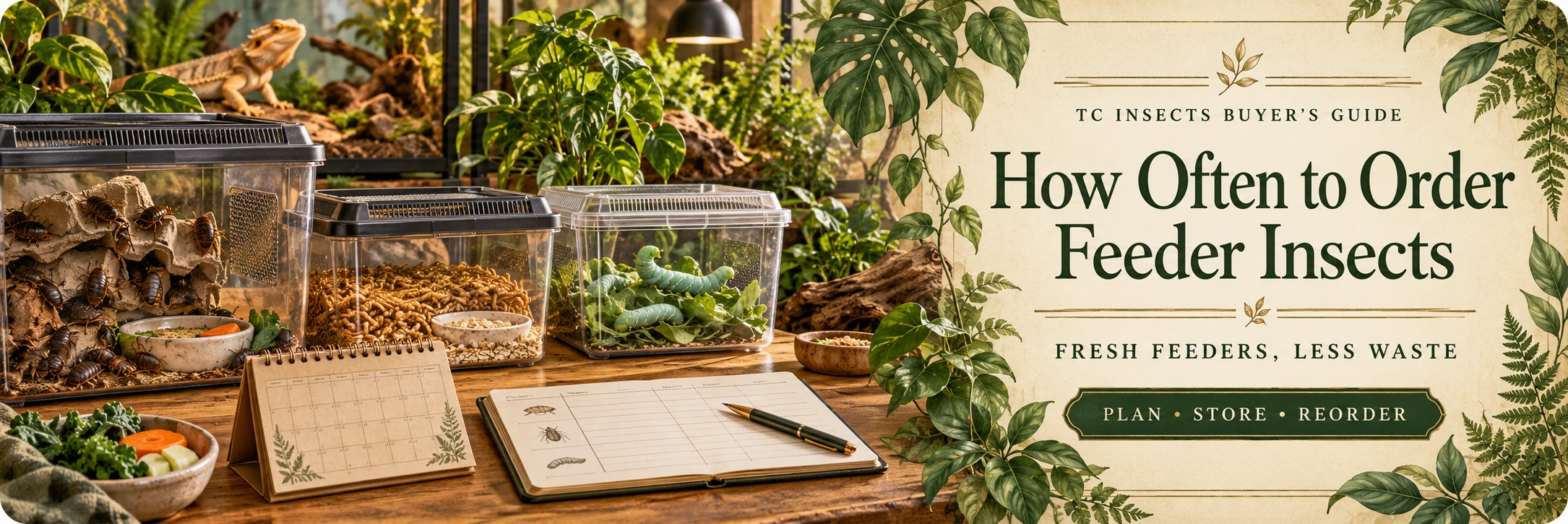
Warm and active, a colony holds and even breeds between orders
Hornworms and silkworms grow fast and should not wait on a slow reorder
Plan the order date around TC's live-ship window, not the day you run low
Order for Freshness, Storage, and Value
Order feeder insects roughly every one to three weeks for most home collections, and set the exact cadence by whichever feeder in the box has the shortest safe storage life, not by habit. Dubia roaches and superworms hold for weeks to months at home, while hornworms and silkworms are a use-it-in-two-weeks feeder, so a mixed order should be timed to the fastest-aging line in it. Buying in bulk drops the cost per insect, but it only pays off if your storage space and die-off rate keep pace. Below is the arithmetic for one gecko and for a four-animal collection, plus how shelf life by species factors into the schedule.
Build a Reorder Rhythm
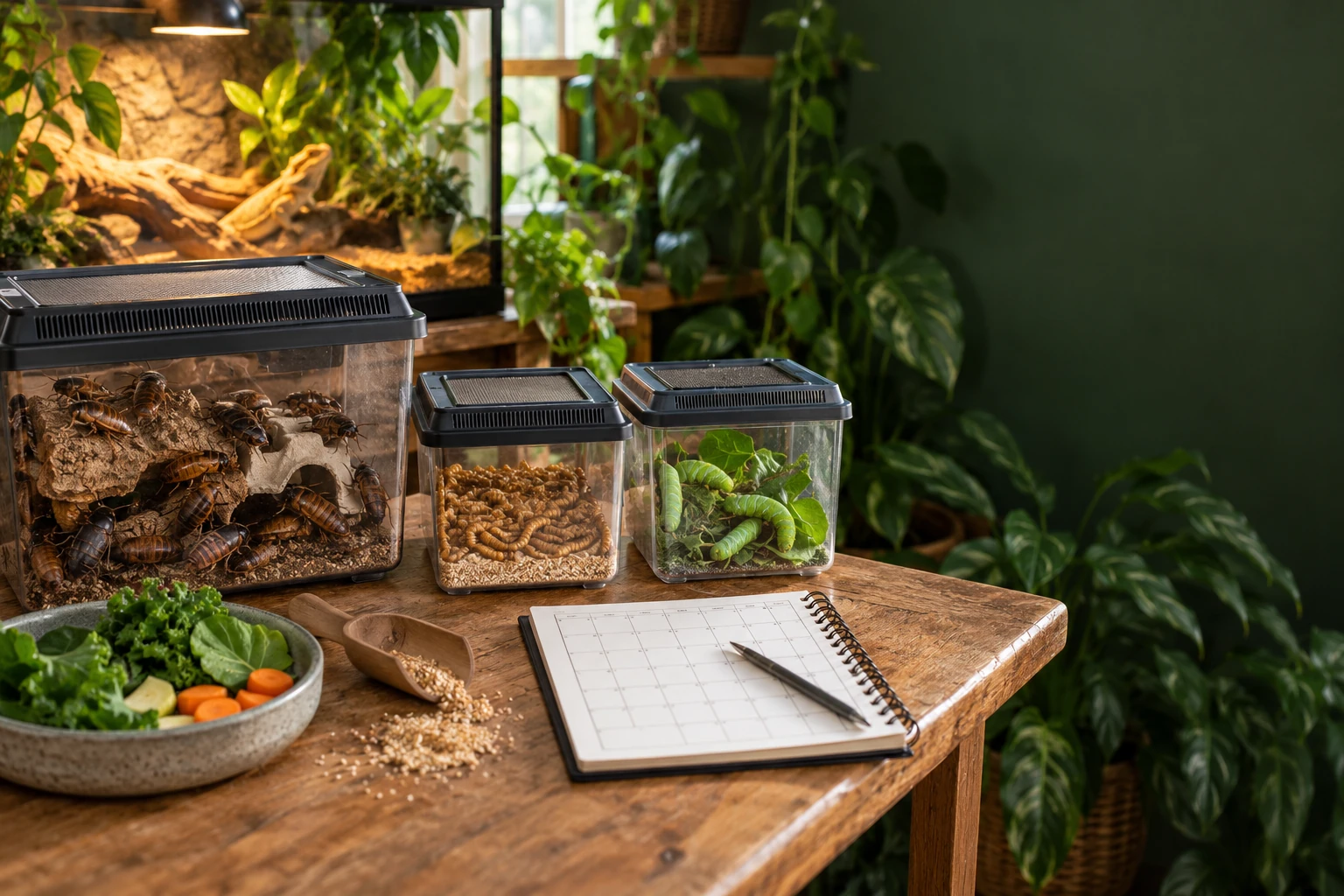
Let the shortest-lived feeder in your order set the schedule, then balance pack size against storage space, shipping days, and how quickly your animals eat.
Why Shelf Life, Not Habit, Should Set Your Order Date
Most keepers reorder on a fixed weekly or biweekly habit left over from keeping crickets, which barely survive a week in a bin. That habit does not fit TC's lineup. Dubia roaches are the long-lived staple of the group: kept warm and fed, a colony stays active and can even breed between orders, so it tolerates a loose schedule. Superworms keep for months at room temperature on dry bedding, as long as they are never refrigerated. Mealworms go the other way and slow into a several-week dormancy in the refrigerator. Hornworms and silkworms are the outliers that punish a slow reorder, since both grow fast and are best used within one to two weeks.
This is worth stating plainly for anyone coming from crickets: TC does not stock live crickets, and the lineup is built around feeders that hold up at home instead of a species that needs feeding and misting daily just to survive the week. Dubia roaches, red runner roaches, superworms and black soldier fly larvae all give you more room between orders than a cricket bin ever did. Once you know which feeder in your current order ages fastest, that line sets your reorder date, and the rest of the order rides along with it.
The Bulk Math: What a Larger Pack Actually Saves
Bulk pricing is real and worth doing the arithmetic on before you click order. On TC's medium dubia roaches, a 25-count pack runs $8.00, which works out to $0.32 per roach. Step up to a 100-count pack for $18.00 and the cost drops to $0.18 per roach, and a 1,000-count pack at $130.00 brings it down to $0.13 per roach, well under half the small-pack price. Medium mealworms show the same curve: a 50-count pack is $2.00 (about 4 cents each), a 200-count pack is $4.00 (2 cents each), and a 1,000-count pack is $12.00, just over a penny each.
That discount is exactly why bulk looks so attractive, and exactly why it can backfire. A 1,000-count pack of any feeder is only a bargain if you can keep most of it alive until it is eaten, and mealworms in particular do not hold at room temperature the way dubia do; without a refrigerator running near 45 to 50 degrees, a huge mealworm order will age out before a small collection gets through it. The honest rule: bulk pricing rewards animals that eat a lot or feeders that store well, and it punishes a slow feeding pace paired with a feeder that does not keep.
Worked Example: One Adult Leopard Gecko
TC's own feeding guide puts an adult leopard gecko at 6 to 10 dubia-sized feeders every 3 to 4 days, which averages out to roughly 15 to 20 feeders a week, or about 60 to 80 a month. At that pace, a 100-count pack of medium dubia ($18.00, $0.18 each) covers five to six weeks in one order, comfortably inside dubia's long shelf life. Ordering that same monthly total as four separate 25-count packs would cost about $32.00 for the same 100 roaches, nearly 80 percent more for the identical feeders, just to avoid keeping a bigger bin on hand.
Worked Example: A Four-Animal Collection
Scale that up to four similar-sized insect-eating pets and the picture changes. Four animals eating like the gecko above need roughly 240 to 320 dubia-equivalents a month. A 1,000-count pack at $130.00 ($0.13 each) covers three to four months of that demand in a single order and beats the 100-count price by almost 30 percent per roach, but it also means committing to a colony of a thousand roaches living in your house for months, with all the bin space, feeding and cleaning that implies. For most four-animal households, a 400 to 500-count order timed to a six to eight week window is the more realistic middle ground between price and a bin you can actually manage.
Shipping Days Are Part of the Schedule
TC ships live orders Monday through Wednesday by FedEx, so the calendar matters as much as the math. An order placed Thursday through the weekend waits for the next Monday to ship, which can add several days to however long your current feeders need to last. Build that gap into your reorder trigger: if a feeder's safe window is two weeks, place the new order when you still have four or five days of buffer left, not when the bin is nearly empty. Isopods, springtails and other exotics move on the same live schedule, so the same planning habit applies across a mixed order.
When a Small, Frequent Order Beats Bulk
Bulk is not always the answer, and saying so is the honest trade-off in this whole topic. A single gecko or a small collection often cannot eat through a large pack before some of it dies off in storage, especially with mealworms outside their cool dormancy or with hornworms and silkworms, which are built to be used fast and not stockpiled at all. If your household eats fewer than about 50 feeders a week, a small or medium pack ordered every one to two weeks usually beats bulk once you count what does not make it to the feeding dish. Buy bulk for the feeders that store well, and match your real weekly count for the ones that do not.
The Reorder-Ready Feeder Kit
A shelf-stable spread across fast and slow-aging feeders, sized to smooth out a bulk-vs-small reorder schedule.
Frequently Asked Questions
How often should I reorder feeder insects?
Most home collections do well reordering every one to three weeks, timed to whichever feeder in the box has the shortest shelf life. Dubia roaches and superworms can stretch that window toward a month or more since they store well at home, while hornworms and silkworms should be ordered closer to every one to two weeks since they grow fast and do not hold. Match the date to your fastest-aging feeder, not to the slowest one.
Is it cheaper to buy feeder insects in bulk?
Yes, per-insect cost drops significantly at higher quantities. On TC's medium dubia roaches, a 25-count pack runs $0.32 per roach, a 100-count pack runs $0.18 per roach, and a 1,000-count pack runs $0.13 per roach. The savings are only real if you can keep the larger batch alive and feed through it before it ages, so match the pack size to how many animals you feed and how well that specific feeder stores.
What feeder insects last the longest in storage?
Dubia roaches last the longest of TC's feeders, staying active and even breeding for a long stretch when kept warm and fed. Superworms come next, holding for months at room temperature as long as they are never refrigerated. Mealworms keep for several weeks in the refrigerator's cool dormancy. Hornworms and silkworms are the shortest-lived, best used within one to two weeks before they grow too large or begin to cocoon.
Can I switch from crickets to a longer-lasting feeder?
Yes, and most keepers who make the switch do it for exactly this reason. TC does not stock live crickets, but dubia roaches fill the same role as an everyday staple and last far longer at home with far less daily care. Red runner roaches add the fast movement that triggers a feeding response in reluctant eaters, and black soldier fly larvae need almost no upkeep between feedings.
Does a bigger order mean more feeders die before I use them?
It can, which is the real risk behind any bulk purchase. A larger pack only pays off if your feeding rate and storage conditions keep the batch alive until it is eaten, so a die-off-prone feeder like mealworms outside refrigeration will waste more of a large order than a hardy one like dubia roaches. If you are new to a feeder line, start with a small or medium pack and scale up once you know your own die-off rate.
What days does TC ship live feeder insects?
TC ships live orders Monday through Wednesday by FedEx so animals are not sitting in a warehouse or a truck over a weekend. An order placed Thursday through Sunday goes out the following Monday, so build that gap into your reorder timing rather than waiting until a feeder bin is nearly empty. Isopods, springtails and other exotics ship on this same live schedule.
Plan the Next Order
Have a care question? Ask our community.
Join Reptile Keepers USA, our free Facebook group for reptile, amphibian and invert keepers. Share your setups, get care help and swap feeder tips.
Join the free group