Feeder Insects for Green and Gray Tree Frogs
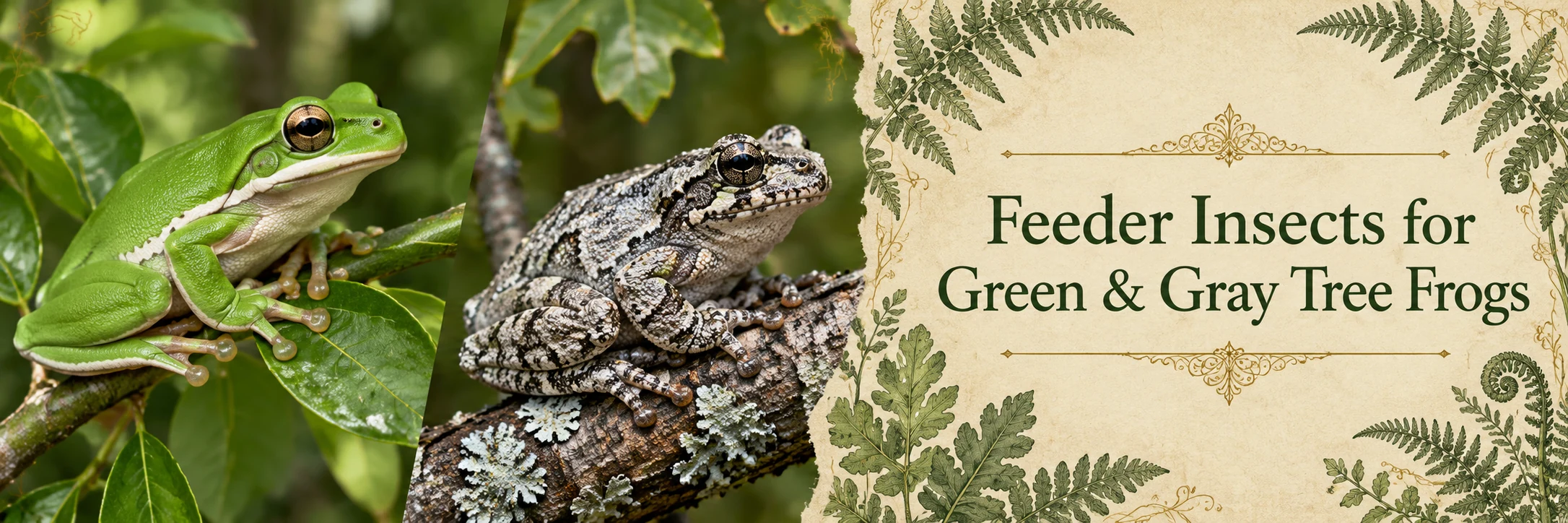
American green tree frogs (Hyla cinerea) and gray tree frogs (Hyla versicolor) are small, 1.5 to 2.5 inches, and they need small feeders: extra-small and small dubia roaches, small black soldier fly larvae, the occasional small hornworm, and flightless fruit flies for froglets. Adults eat 3 to 4 insects every 2 to 3 days after dark, juveniles eat daily, and every insect is no longer than the width of the frog's head. Dust with calcium two or three times a week. Both species hunt by sight on the glass and the leaves at night, so a feeding dish and a few walking insects on the foliage beat tongs. This guide covers the feeders by size, counts, dusting, and the night routine.
Every 2 to 3 days, after dark
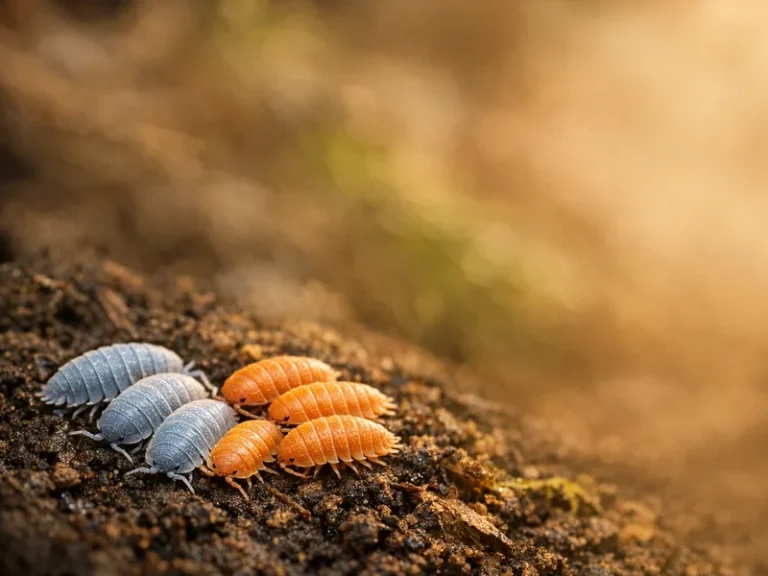
Extra-small dubia for gray, small dubia for big green frogs
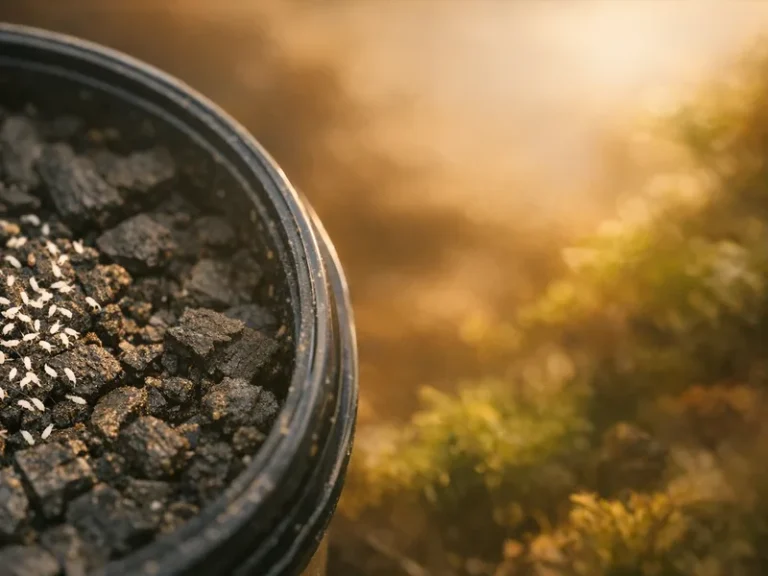
Hydei or melanogaster until the frog is about an inch
Two small frogs, one small feeder list
Green tree frogs top out around 2.5 inches and gray tree frogs a bit smaller, and both have the wide, sticky-tongued mouth of an ambush hunter that eats whatever walks past at night. The feeders that fit are the ones under half an inch: extra-small and small dubia nymphs, small black soldier fly larvae, small hornworms as a treat, and fruit flies for the youngest frogs. Large mealworms, superworms, and adult roaches are too big, too hard, or both, and they are the usual reason a new tree frog stops eating.
Both species are native across the eastern half of the country and are often kept after being found on a porch light, and the feeding is the same for a wild-caught adult as for a captive-bred froglet. Our feeder guide for frogs and toads covers the wider family; the larger White's tree frog has its own feeding guide because it eats a size up.
Feeders by size
Froglets under about an inch take flightless fruit flies, hydei for the larger froglets and melanogaster for the smallest, 10 to 20 flies a day, plus the tiniest extra-small dubia as they grow. A 32 oz culture from the fruit fly shop feeds a froglet for weeks and the flies walking on the glass keep it hunting.
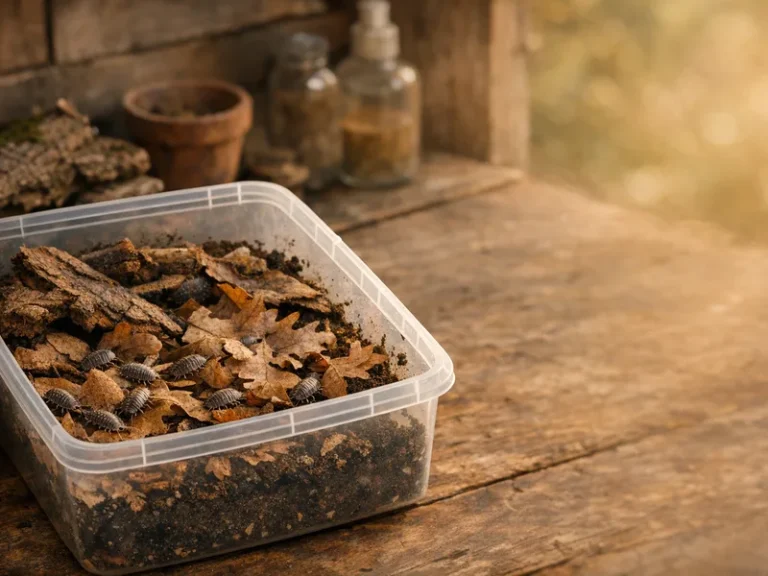
Juveniles and adults move to extra-small dubia for gray tree frogs and small dubia for a full-grown green tree frog, plus small BSFL, which carry calcium and are soft. A small hornworm once a week is the hydration treat and most tree frogs strike it instantly. Keep everything at or under the width of the frog's head, which for a 2-inch frog is about 3/8 inch. The feeder insect size chart puts both frogs in the small column.

Counts and schedule
Adults do well on 3 to 4 insects every 2 to 3 days. Tree frogs are sit-and-wait hunters with a slow metabolism, and a frog fed daily gets fat quickly; a round frog with folds at the jaw is being overfed. Juveniles between an inch and full size eat 2 to 3 small insects daily or every other day, and froglets eat daily. Gravid females and frogs recovering from a cold spell can take a little more for a few weeks.
For a group of three or four frogs in one enclosure, scale the count and feed in two spots so the boldest frog does not take everything. Count the insects in and check the next morning; a few walking dubia is fine, a dozen means too many. Remove any uneaten hornworm before it grows past the frog's head width, which a hornworm does in days.
The night-feeding routine
Tree frogs sleep pressed to the glass or a leaf by day and hunt after dark, so feed 30 to 60 minutes after the lights go off. A shallow smooth-sided dish on the floor or a ledge holds dubia and BSFL where the frog sees them move; tip a few fruit flies onto a leaf for froglets. Dubia climb rough bark but not smooth glass, so a glass dish keeps them put until the frog arrives. Most tree frogs learn the dish within a week and sit above it waiting.
Hunting by sight means still prey is ignored, which is why dried insects fail. If a frog will not eat, the prey is usually too big or the enclosure too cool; tree frogs want the low to mid 70s F at night and a warm spot near 80 F by day. Give a new frog a quiet week before you worry. The general fixes are in reptiles that won't eat feeders, and they apply to frogs.

Dusting and gut loading
Dust with plain calcium two or three times a week and a multivitamin about once a week, using a shake cup so the insect is lightly frosted rather than coated. Tree frogs absorb through their skin, so excess powder in the enclosure is worth avoiding. Black soldier fly larvae carry calcium already and can be fed plain. Low-level UVB helps both species use the calcium, and it is cheap insurance for a frog that lives for years.
Gut load the dubia on chow with a vegetable slice for a day before feeding, and feed fruit fly cultures that are producing rather than exhausted. A frog eats what its prey ate, and the two minutes it takes to keep the feeder cups fed is most of what nutrition means for a small frog.
A month of feeders for a pair
A pair of adults at 3 to 4 insects every other day eats roughly 50 to 60 insects a month: a 50-count cup of small or extra-small dubia, a 25-count cup of small BSFL, and a small hornworm cup for treats. Dubia keep for months at room temperature with egg flats and a vegetable slice, BSFL keep a few weeks in the refrigerator, and hornworms keep a week or two in their cup, growing as they go, so feed the hornworms first.
For froglets, add a fruit fly culture and restart a new one every two weeks. Everything on the list is quiet, odorless, and shelf-stable, which suits a bedroom or a classroom, and a cup of extra-small dubia is the single most useful thing a tree frog keeper can have on hand.
The Tree Frog Feeder Kit
Extra-small and small dubia, small BSFL for calcium, fruit flies for froglets, and calcium powder.
Frequently Asked Questions
Written by the TC INSECTS breeding team · Porter, Texas · Live Arrival Guarantee on every order
Have a care question? Ask our community.
Join Reptile Keepers USA, our free Facebook group for reptile, amphibian and invert keepers. Share your setups, get care help and swap feeder tips.
Join the free group