Vacation Care for Isopods

Yes, isopods and springtails handle time alone well, and for most trips the real risk is the enclosure drying out, not the animals going hungry. An established isopod colony can comfortably go about 2 to 3 weeks without a hand-fed meal, but a springtail culture has far less slack once it actually dries out completely. Here is how much prep a weekend, a week, or a longer trip actually needs, and where isopods and springtails need different plans.
Not hunger, both animals tolerate missed feedings far better than a dry bin
For an established colony with leaf litter already on hand
A fully dried-out culture can crash much faster than an isopod bin
The real risk is drying out, not starvation
Isopods and springtails are both far more tolerant of a missed meal than most new keepers expect. Isopods graze the leaf litter and decaying wood already built into their substrate, so an established colony is not waiting on you for its next feeding the way a lot of pets are. Our full breakdown puts that window at about 2 to 3 weeks for a colony with real substrate on hand, and food is genuinely the smaller half of vacation planning for isopods specifically.
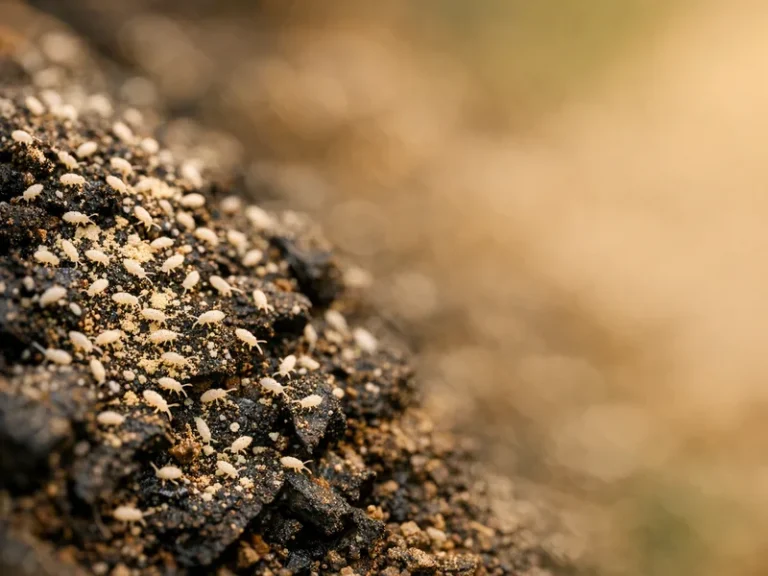
Springtails flip the usual worry. A springtail culture rarely starves in any meaningful sense either, since an established one largely feeds itself on mold and waste, but it has far less room for error if it dries out completely. Where an isopod bin can coast on a slow moisture decline for weeks, a springtail culture that goes bone dry can crash in a matter of days, which is the detail that should actually drive your trip planning if you keep both.
How much prep a trip actually needs, by length
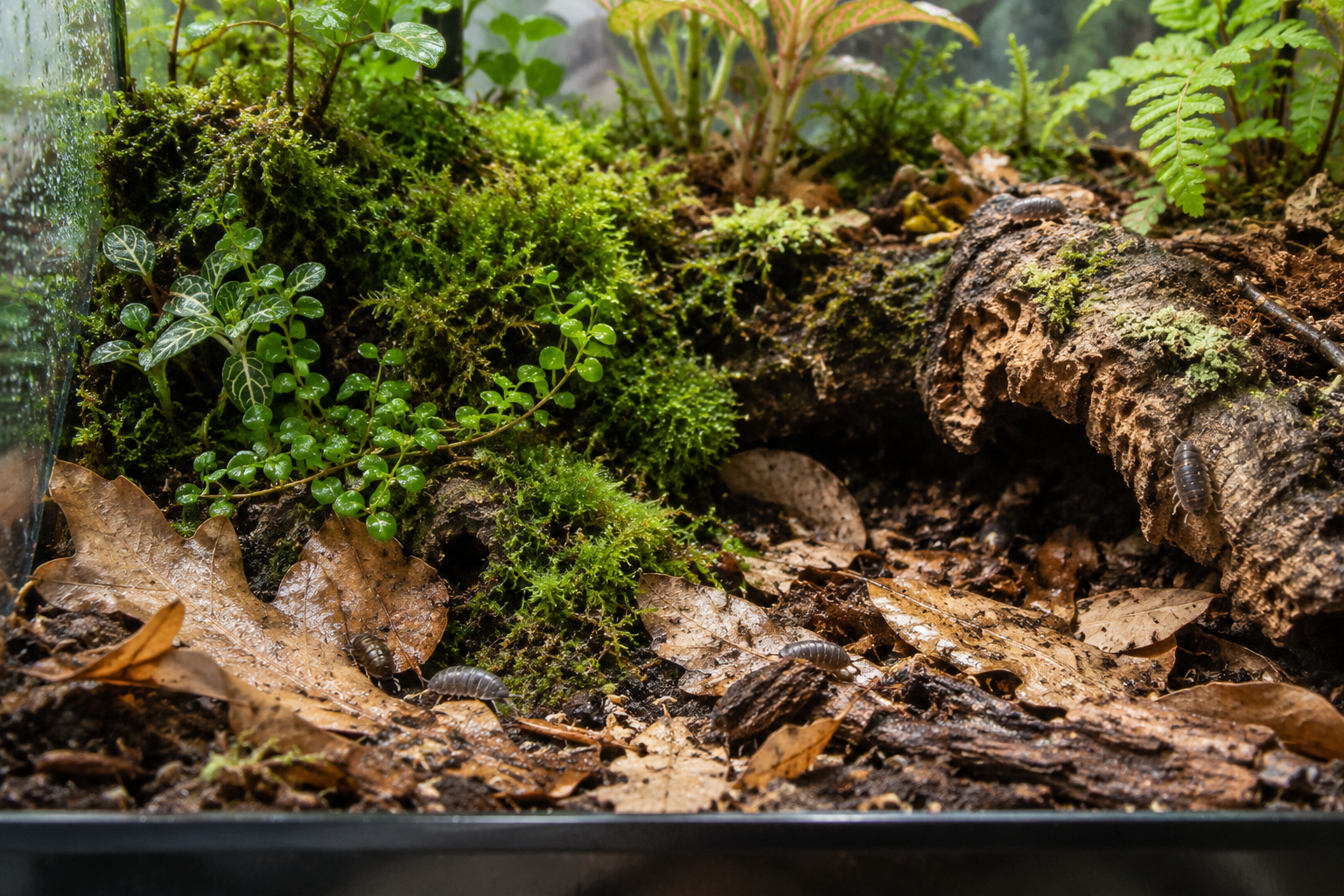
Treat trip length as the main variable, not a single one-size rule. What a weekend needs is genuinely different from what three weeks needs, and most of the difference comes down to how much standing moisture and food you build in before you leave. The three tiers below cover almost every real trip a keeper actually takes.
A weekend or up to three days
Barely any prep is required. A healthy, established bin already holds enough moisture and leaf litter to coast through a few days with no changes at all. Do a normal check and mist before you leave, the same as any other day, and skip anything extra.
About a week to ten days
Do one slightly heavier pass on the damp zone before you go rather than your usual light touch, and add an extra layer of leaf litter so there is more standing food than usual. A well-sealed lid holds that moisture for the length of a typical week-long trip without anyone checking in.
Two weeks or longer
This is where a small check-in matters, ideally from someone who can look at the damp zone partway through rather than a full feeding visit. A trip this long is also where a simple, reservoir-fed automatic mister on a timer starts to earn its cost, especially for a springtail culture or a genuinely humidity-sensitive species like Cubaris.
Prepping the bin before you leave
The isopod side of this list is quick: extra leaf litter and a deep pass on the damp zone, the same prep our food-duration guide covers up above. Give the springtail side that same deep-moisten treatment, and do it first, since a springtail cup or patch holds far less standing moisture than the isopod substrate around it. A thicker pad of damp sphagnum moss over that spot holds water longer than a quick surface mist, buying real days rather than hours before anyone needs to check on it again.
Move the whole setup out of direct sun and away from a heat vent or a window that swings hot during the day, since either speeds up drying well past what a normal week sees. Leave the lid on its normal setting instead of sealing it extra tight, since two weeks with no airflow at all trades a drying problem for a stale one. Skip any last-minute over-misting on the way out the door, since a soggy bin left alone invites mold faster than a slightly drier one does. A smaller springtail cup swings from damp to dry faster than a full-size isopod tub, so it earns the deeper pass, not the other way around.
What to tell a sitter in one line
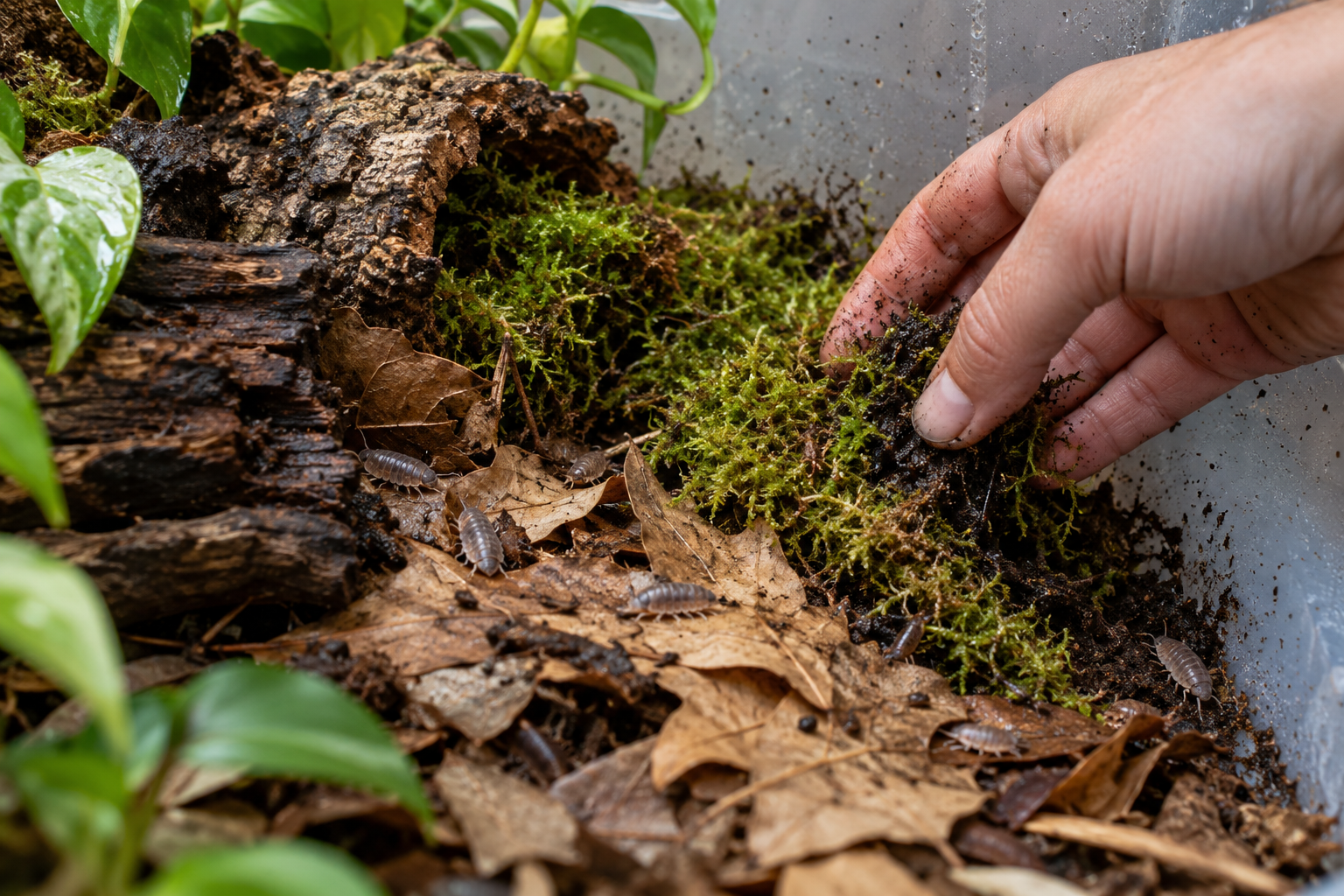
Most sitters do not need, or want, a full care sheet. One line is usually enough: only touch the bin if you notice a strong smell or spreading mold, and otherwise leave it alone. That single instruction protects against the two real risks, a sitter who overwaters out of good intentions and a sitter who ignores an actual problem, without asking someone unfamiliar with isopods to judge a moisture gradient by eye.
If the trip is long enough that you do want a genuine mid-trip check, be specific about what that means: press a fingertip into the damp corner, and mist only if it no longer holds together. That is a task almost anyone can follow correctly on the first try, which matters more than a longer, more technical set of instructions a sitter is unlikely to execute exactly right.
When an automatic mister actually earns its cost
For most trips under two weeks, a properly prepped bin does not need any equipment beyond what is already in the room. An automatic mister earns its place once a trip stretches past that window, once several tanks need covering at once, or once a genuinely humidity-sensitive species like Cubaris is involved, since that group has less tolerance for drift either direction than a Powder isopod or a Dwarf White does.
A simple version, a small reservoir and a timer set to mist the damp zone every few days rather than on a fixed daily schedule, covers most of what a sitter would otherwise be asked to judge by hand. It is a reasonable one-time purchase for a keeper who travels often, and a needless expense for someone taking one long weekend a year.
When a trip is too long for a small or brand-new culture
Everything above assumes an established setup with some age on it. A brand-new isopod bin deserves the same shorter leash our food-duration guide already gives any first-month colony, rather than the full 2 to 3 week window an older culture earns. A brand-new springtail culture is the tighter constraint of the two, since it has not yet built the standing moisture and biofilm buffer an older culture relies on, and a dry spell that a settled culture shrugs off can set a fresh one back hard.
Keep an early trip short, under a week if you can manage it, or arrange an actual mid-trip check rather than assuming a new setup will coast the way an established one does. Give both halves of a new crew a full month or two of steady care at home first, and they earn the same relaxed vacation tolerance every other bin on this page gets; our isopod and springtail combos are a simple way to start both halves of a crew together.
The Trip-Ready Moisture Kit
Sphagnum and standing leaf litter that hold moisture and food while you are away.
Frequently Asked Questions
Written by the TC INSECTS breeding team · Porter, Texas · Live Arrival Guarantee on every order
Have a care question? Ask our community.
Join Reptile Keepers USA, our free Facebook group for reptile, amphibian and invert keepers. Share your setups, get care help and swap feeder tips.
Join the free group