Morph Isopod Colony Throwing Wild-Type Babies? Here's Why
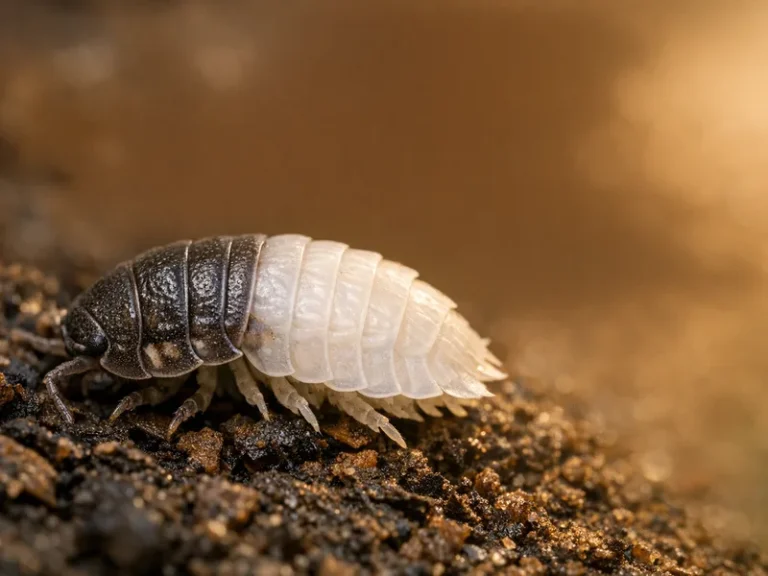
A morph isopod colony that suddenly produces plain, wild-type babies almost always means one of the founding parents was quietly carrying the recessive gene for that color all along, not that the line crossed with anything else. Color morphs like T+ and T- Albino in Armadillidium vulgare are documented recessive traits, so a line sold as pure can carry an unmarked carrier for generations before two carriers happen to pair up. The fix is not to panic about the whole colony: pull the wild-type young out of your breeding group, watch whether more keep appearing, and decide from there whether to tighten the line or let it run mixed.
A parent can carry a recessive gene for generations without ever showing it
A hidden carrier looks normal itself, until it pairs with another hidden carrier
Found the albino trait recessive in Armadillidium vulgare, TC's own morph species
Why a Pure Morph Line Can Still Carry the Wild-Type Gene
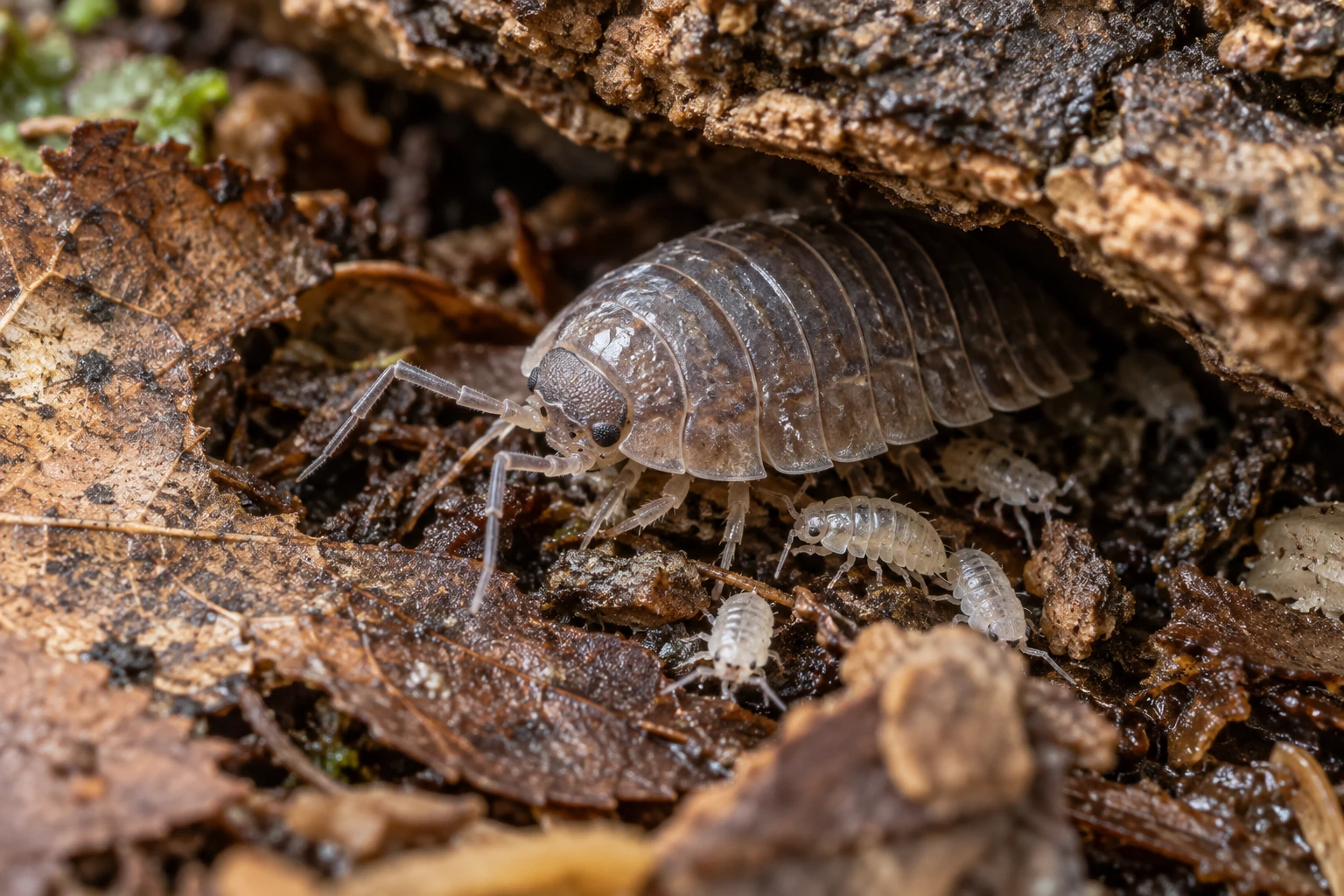
Most named isopod morphs are color traits controlled by a single recessive gene, meaning an animal needs two copies of it to actually display the color. One copy paired with a normal gene produces an animal that looks completely ordinary, wild type, while still carrying the trait forward invisibly. Our guide to morph abbreviations covers what WT, T+, T-, and the other letters on a listing actually mean, so this guide assumes you already know the terms and focuses on what happens when a supposedly pure line throws a baby that does not match.
That invisibility is exactly why a line advertised as pure can still hide a carrier. A breeder several generations back may have paired a visibly correct animal with one that happened to carry the recessive gene without showing it, and nothing about the resulting offspring would have looked wrong at the time. The gene rides along in the population, silent, until two carriers happen to pair up and the math catches up with the colony.
The Simple Math Behind the Surprise Babies
When two hidden carriers happen to pair up, the classic single-gene math says about one in four of their offspring inherit two morph copies and show the color, about half inherit one of each and grow up wild type themselves, quietly carrying the gene just like their parents did, and about one in four inherit two normal copies and are wild type with no morph gene at all. That is the simplified textbook version for one gene, not a measured count for any specific TC line, and a pairing like that is rare to begin with, since most matings in a colony are still a true morph to a true morph. That is why the practical result most keepers actually see is a handful of plain babies scattered among an otherwise normal-looking crop of young, not a sudden takeover.
It only takes one quietly-carrier animal, sometimes bought years earlier as part of a perfectly normal-looking line, to eventually produce this result once it gets paired with another carrier by chance. You do not need a contaminated bin or a mislabeled shipment to explain a few wild-type babies, an entirely clean, correctly-labeled line can do this on its own, which is part of why it catches so many keepers by surprise.
Is It Genetics, or Did Something Get Mixed Up?
Genetics is the far more common explanation, but it is worth ruling the other option out, especially if the numbers look unusual for a simple recessive trait.
It's genetics (the common explanation)
This fits if you keep only this one morph and species in that rack, the wild-type babies show up as a minority scattered through an otherwise normal litter, and nothing else about the colony changed. That pattern matches a hidden recessive carrier finishing its math, not an outside mix-up.
It's a mix-up, not genetics (less common)
Suspect this instead if you keep multiple morphs or species close together, recently added outside stock to the line, or if the plain babies suddenly make up most of a litter rather than a minority. Our guide on why sp. labels matter covers keeping lines straight when more than one is in the same space.
What to Actually Do When It Happens
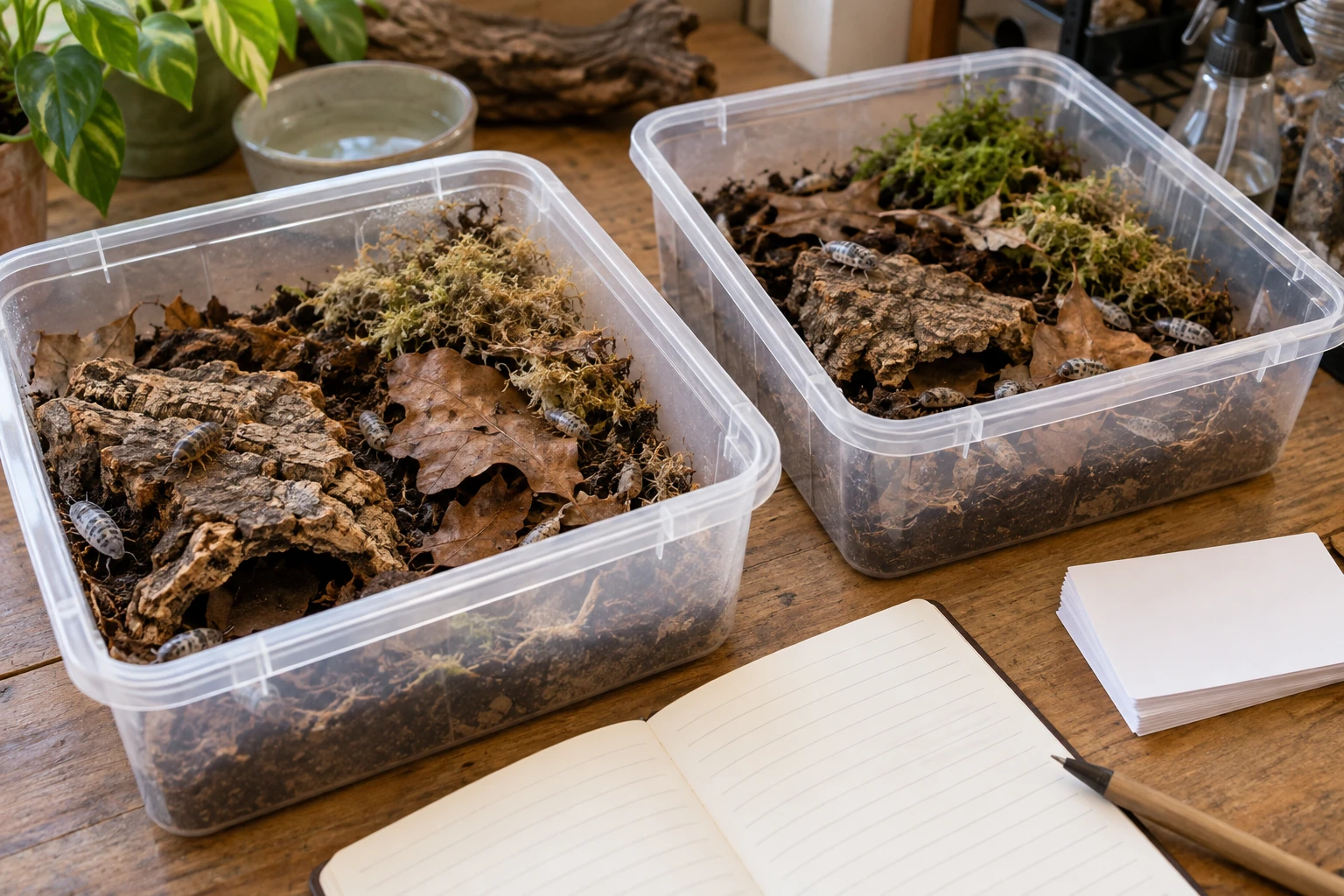
You have three honest options, and none of them require panicking or tearing the colony apart. First, cull-to-breed: pull the wild-type young out of your active breeding group and only pair the correctly colored adults going forward, which keeps the visible line clean but does not remove the recessive gene from every animal that still carries it quietly. Second, separate: move your best, most consistently colored individuals into their own isolated container and build a tighter line from just that group, leaving the rest as a mixed working colony.
Third, and genuinely fine for most keepers: accept the mixed line. If you are keeping isopods for a bioactive cleanup crew rather than selling a specific morph, a few wild-type babies change nothing about how well the colony does its job. Reserve the tighter selection work for a colony you are actually planning to sell or show as a named morph, and let a display or cleanup-crew colony run mixed without a second thought.
Does This Mean Your Line Is Inbred?
No, and it is worth telling the two apart. A wild-type reveal is a single-gene event, a hidden recessive gene finally pairing with another copy of itself, and it can happen in a perfectly healthy, genetically diverse colony. Inbreeding depression is a different, slower pattern entirely: shrinking adult size, thinner broods, and color washing out gradually over many generations, covered in our guide on isopod inbreeding and bloodlines. One surprise batch of plain babies is not evidence of either problem on its own.
Here is the honest trade-off: culling every wild-type baby aggressively out of a small colony shrinks your active breeding pool fast, which can create exactly the founder-effect problems that guide describes if you take it too far. For a small line, separating out your best animals is usually the safer move over hard culling, since it keeps more total breeding animals in play while you work toward a tighter look.
Should You Start a Separate Line to Keep It Pure?
If you are starting fresh rather than fixing an existing colony, buy your founding stock from a single source instead of combining the same morph name from multiple sellers, since two lines sold under an identical name are not guaranteed to share the exact same genetics. Our Armadillidium isopods page carries named lines like T+ and T- Albino, Orange Dalmatian, and Orange Vigor if you want to start or rebuild a project on a single documented line.
Whichever route you take, the husbandry side does not change with the genetics. Keep a calcium source available for clean molts, a steady leaf litter layer, and the same moisture and temperature range any Armadillidium line needs. If you are weighing two established color forms rather than chasing a surprise baby, our wild-type versus Chocolate Zebra comparison covers picking between two known lines instead of troubleshooting an unexpected one.
The Morph Line Starter Kit
Substrate, leaf litter and calcium to found or restart a single clean morph line.
Frequently Asked Questions
Written by the TC INSECTS breeding team · Porter, Texas · Live Arrival Guarantee on every order
Have a care question? Ask our community.
Join Reptile Keepers USA, our free Facebook group for reptile, amphibian and invert keepers. Share your setups, get care help and swap feeder tips.
Join the free group