Tiny Blue Springtail Care: When Standard Springtails Are Too Big
Tiny Blue springtails, sold under the family name Hypogastruridae sp., run about 0.5 to 0.7 mm, small enough to disappear inside the fine pockets of a substrate that a standard 1 to 3 mm springtail could never reach. Keepers reach for this species specifically when a normal culture is the wrong size, most often in a bioactive reptile enclosure where a small gecko or juvenile lizard notices, chases, or simply stresses over a bigger springtail moving across the glass. Keep it at 65 to 80 F with high humidity, and expect to need a hand lens to actually see it working. Shop live springtails to compare every culture TC sells.
One of the smallest springtails TC sells
Sweet spot 72 to 78 F
Surface film should never fully dry out
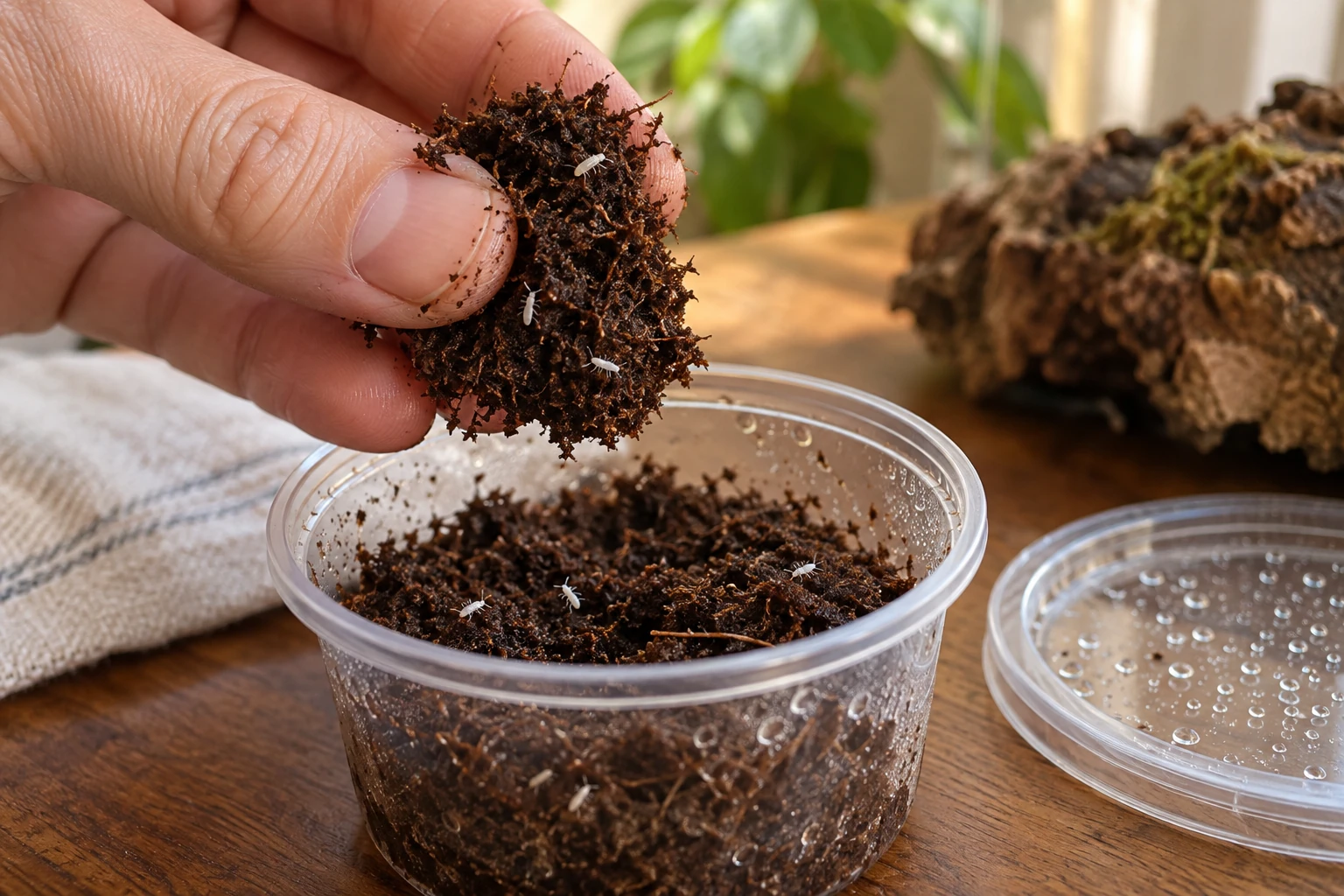
What Is a Tiny Blue Springtail?
Tiny Blue is a hobby trade name, not a confirmed scientific species. TC sells it identified only to the family level, Hypogastruridae sp., because a firm species level identification is not currently settled for this culture. That is a normal situation for springtails specifically, not a red flag for this one culture. Our guide to why springtail scientific names keep changing covers why a family or genus level label is honest rather than vague in this corner of the hobby.
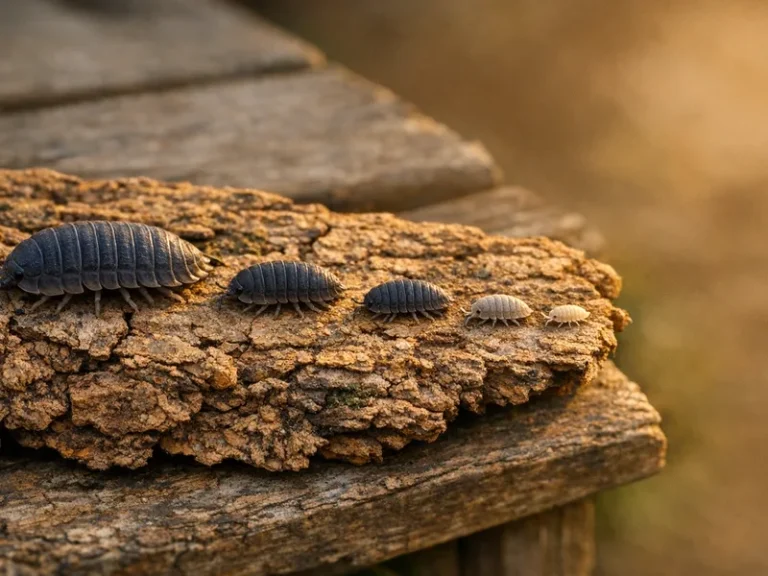
What you actually get is a deep blue, blue gray, or dark slate springtail that runs about 0.5 to 0.7 mm, roughly a third to a quarter the size of the white springtails most keepers start with. Under magnification the body shows a soft, faintly fuzzy texture, but at normal viewing distance the culture can look completely empty even when it is thriving, since individuals this small sit below what the naked eye reliably picks up.
Tiny Blue vs. Blue Podura: Two Different Blue Springtails
TC also sells a springtail called Blue Podura, and the shared color and the shared word blue leads to real mix-ups at checkout. These are not the same animal, they are not even in the same family, and they solve two different problems. Our Blue Podura care guide covers that species on its own; here is the short version of how the two compare.
Tiny Blue, family Hypogastruridae
About 0.5 to 0.7 mm, the smaller of the two by a wide margin. Bought specifically for the reptile safe angle, small enough that most reptiles never register it as prey or get bothered by its movement in the substrate.
Blue Podura, Proisotoma minuta
About 1 to 2 mm, closer to a standard springtail in size. Bought mainly for its unusual tolerance of standing water, which makes it the pick for a paludarium or a water feature rather than for a reptile enclosure specifically.
Why Size Is the Whole Point
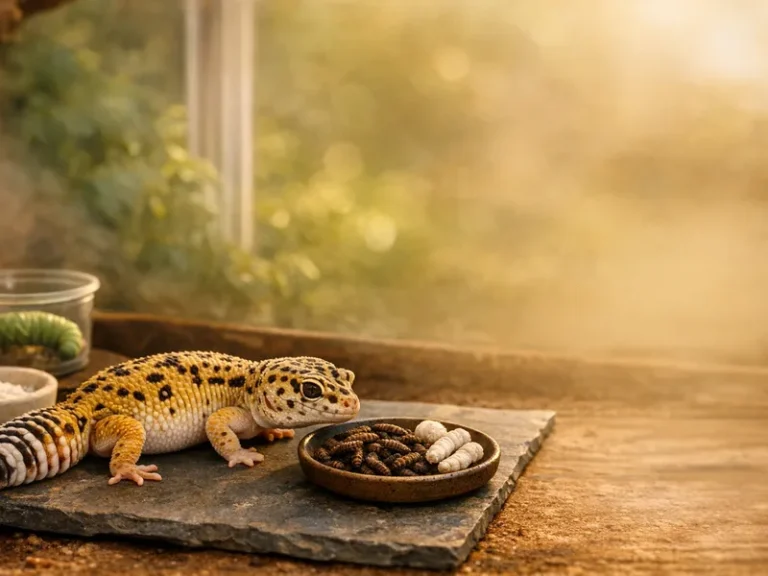
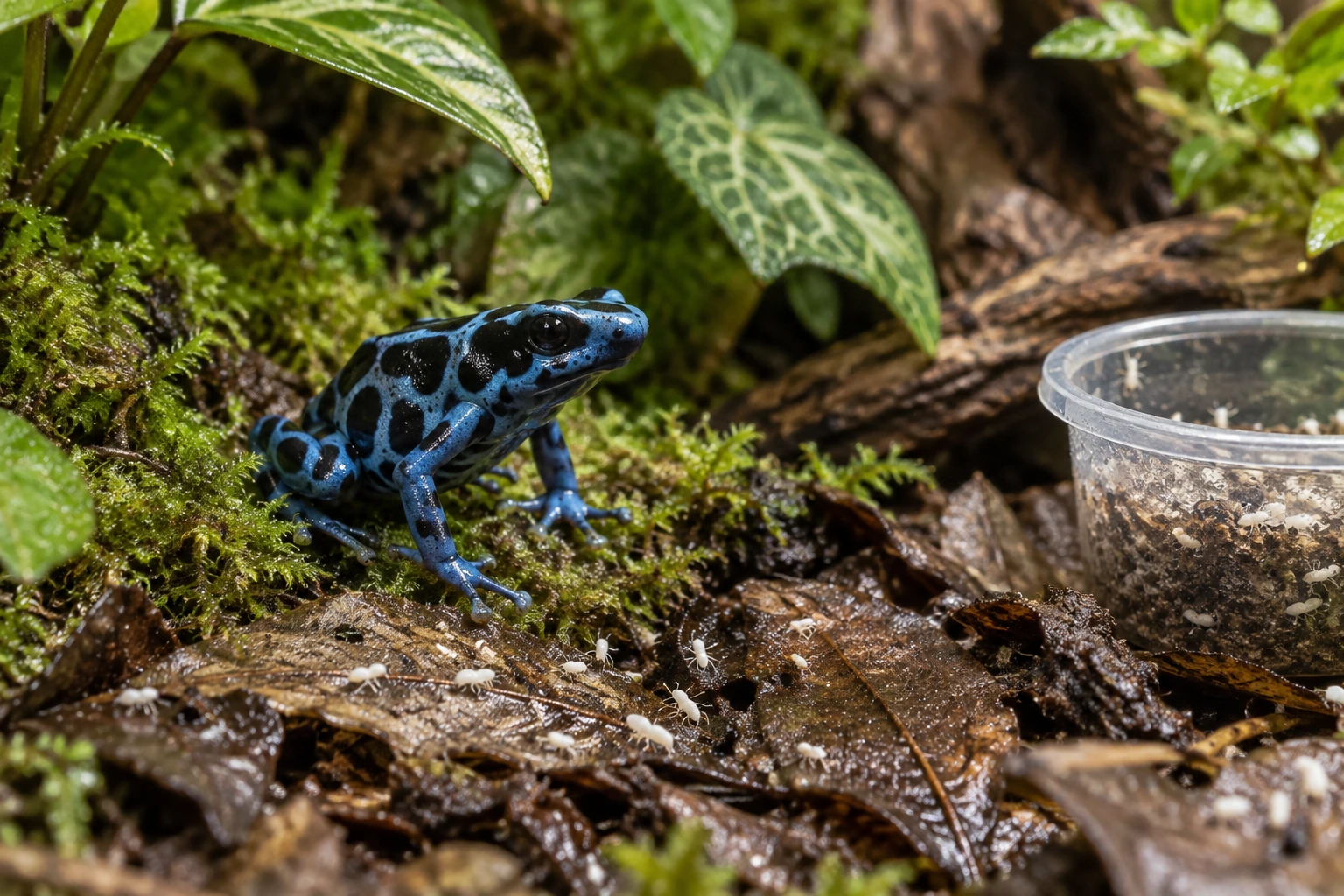
Most cleanup crew springtails sold in the hobby run 1 to 3 mm, which works fine in a tropical dart frog or amphibian setup but can genuinely bother a smaller reptile enclosure. A small gecko, a juvenile lizard, or another ground dwelling animal can register that size of springtail as prey, chase it, or simply get stressed by constant movement in the substrate, and a cleanup crew that keeps getting eaten or harassed stops doing its job.
At 0.5 to 0.7 mm, Tiny Blue drops below the size most reptiles notice at all. It keeps grazing mold, fungi, biofilm, and fine organic debris quietly in the background, and the dark coloring helps it blend into darker substrate rather than draw attention. The same small size makes it a workable supplemental feeder for froglets and other tiny insectivores that take prey this size too, though cleanup stays its main job.
Culture Setup and Temperature
Keep Tiny Blue at 65 to 80 F, with a sweet spot of 72 to 78 F, and treat humidity as the priority: 75 to 95 percent at substrate level, matching TC's own species reference data, with the surface film never allowed to fully dry out. Gentle ventilation over that damp zone keeps the culture from souring while still holding the moisture this species needs.
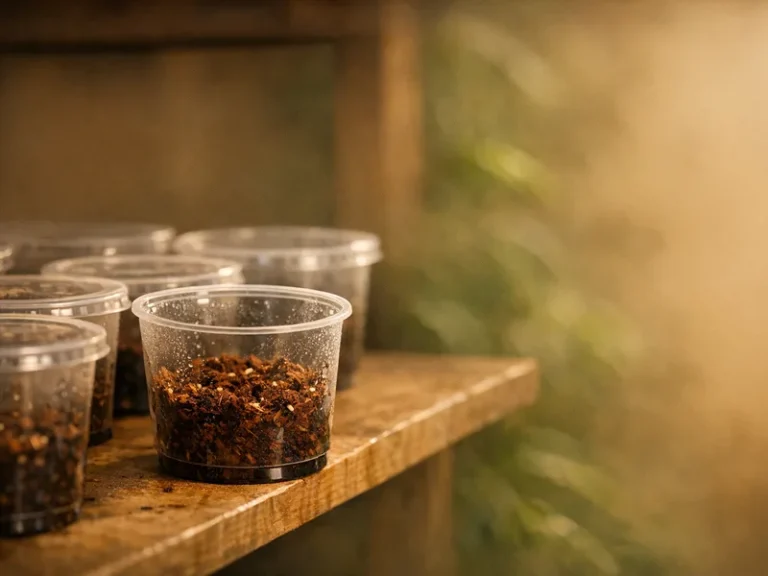
Euro-Clay is the recommended medium for this species specifically, mostly for visibility. The calcium bearing clay gives a light, contrasting background that makes a dark, 0.7 mm springtail noticeably easier to spot than it would be against dark soil or coco fiber. Charcoal and standard bioactive substrate both work too if you would rather use a medium you already stock from our culturing supplies shop.
Feeding Without Crashing a Culture This Small
The usual house rule applies, just with a smaller margin for error: a very light pinch of food every 2 to 4 days, and skip the next feeding entirely if the last one is still visible. Overfeeding crashes a Tiny Blue culture faster than it would a larger species, since uneaten food molds before a population this size can graze it down.
Mist the surface before it looks dry rather than after, since this species reacts faster to a drying substrate than a standard 1 to 3 mm culture does. Keep at least one backup culture running at all times. For a species this easy to lose track of visually, a second cup protects you if the main one ever sours.
Confirming a Quiet Looking Culture Is Actually Fine
An empty looking cup is the single most common concern with this species, and it is almost always a false alarm rather than a dead culture. Grab a hand lens, a cheap magnifier, or just the macro setting on a phone camera, and check the medium surface, the container walls, and any damp food spots before assuming the worst.
If you genuinely want a springtail you can watch without extra equipment, this is not that species. Reach for a standard white or a silver culture instead for a display bin, and save Tiny Blue for the specific job it is built for: a bioactive reptile enclosure where a normal sized springtail becomes a problem rather than a solution.
The Tiny Blue Culture Kit
A calcium clay medium and light feed for the smallest springtail TC sells.
Frequently Asked Questions
Written by the TC INSECTS breeding team · Porter, Texas · Live Arrival Guarantee on every order
Have a care question? Ask our community.
Join Reptile Keepers USA, our free Facebook group for reptile, amphibian and invert keepers. Share your setups, get care help and swap feeder tips.
Join the free group