Leopard Gecko Humid Hide Setup Guide
Why it matters
A humid hide is a small microclimate, not a reason to make a leopard gecko’s entire enclosure wet. A gecko can move into it when preparing to shed and leave it when it wants drier air. That choice is especially important for toes, where thin retained rings of shed can go unnoticed until circulation is affected.
Setup
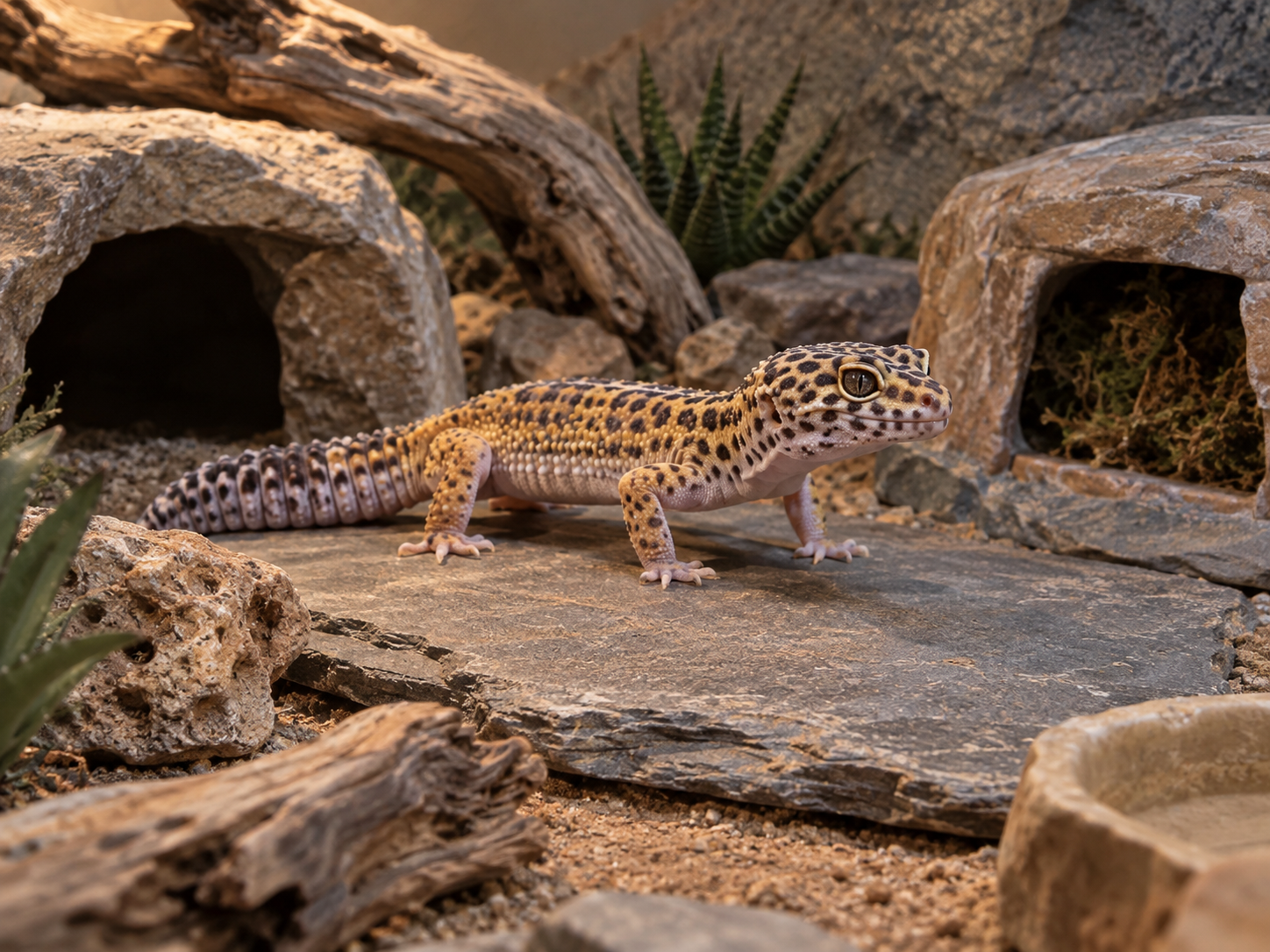
Place a snug, enclosed hide on the warm side or middle of the enclosure, with a damp but not dripping medium inside. The gecko should be able to enter and turn around easily.
Start with a snug hide that cannot tip. Choose a safe, easy-to-change medium such as damp paper towel or appropriate moss, and check it with your fingers: moist, not dripping. Place the opening so the gecko can enter without crossing a hot surface. Keep at least one dry hide on the cooler side so humidity is a choice.
Everyday routine
Check the medium regularly, refresh it before it dries out, and clean the hide when soiled. Keep the rest of the enclosure’s dry areas available.
What to check and common mistakes
Inspect toes and tail tip after each shed. If retained shed persists or the gecko seems unwell, use a reptile veterinarian rather than pulling skin off.
If the medium dries between checks, adjust how often you refresh it rather than soaking the entire tank. Remove dirty medium promptly. Never pull stubborn skin from toes; use the full care sheet for gentle first steps and contact a reptile veterinarian if a constricting ring remains.
Build and maintain the hide
Choose a hide just large enough for the leopard gecko to feel enclosed, with an entrance it can use easily. Place damp paper towel, moss, or another safe moisture-holding material inside, keeping it moist rather than dripping. The hide belongs within a properly heated enclosure, not as a substitute for the temperature gradient. Set it where the gecko can reach it without crossing an exposed area.
Inspect the hide each day during a shed. Replace soiled liner, check for mold, and re-moisten only as needed. After shedding, look at the toes, tail tip, and around the eyes for retained skin; do not pull stuck skin off dry. A gecko that repeatedly has shedding problems needs a review of hydration, habitat, and health, not simply a wetter box. Keep a separate dry hide available so the animal can choose.
Keep learning
Use the related guide for full species or product details. Check current store availability before ordering.
Have a care question? Ask our community.
Join Reptile Keepers USA, our free Facebook group for reptile, amphibian and invert keepers. Share your setups, get care help and swap feeder tips.
Join the free group