Do Feeder Insects Need Water?

Yes—but never use an open bowl
Feeder insects need moisture to live, gut-load properly, and arrive at your animal in good condition. The safe choices are water-gel crystals and firm, moisture-rich vegetables.
Why not just use a water dish?
Even a shallow bowl can drown worms, crickets, and roaches. Any water that remains quickly collects frass and food debris, then becomes a breeding place for mold and grain mites.
The solution is not to skip hydration. It is to offer water in a form insects can drink from without falling in.
Never leave behind
- Open standing water
- Soaked bedding
- Leaking sponges
- Slimy or spoiled vegetables
- Condensation trapped in the bin
Water crystals and hydration gel
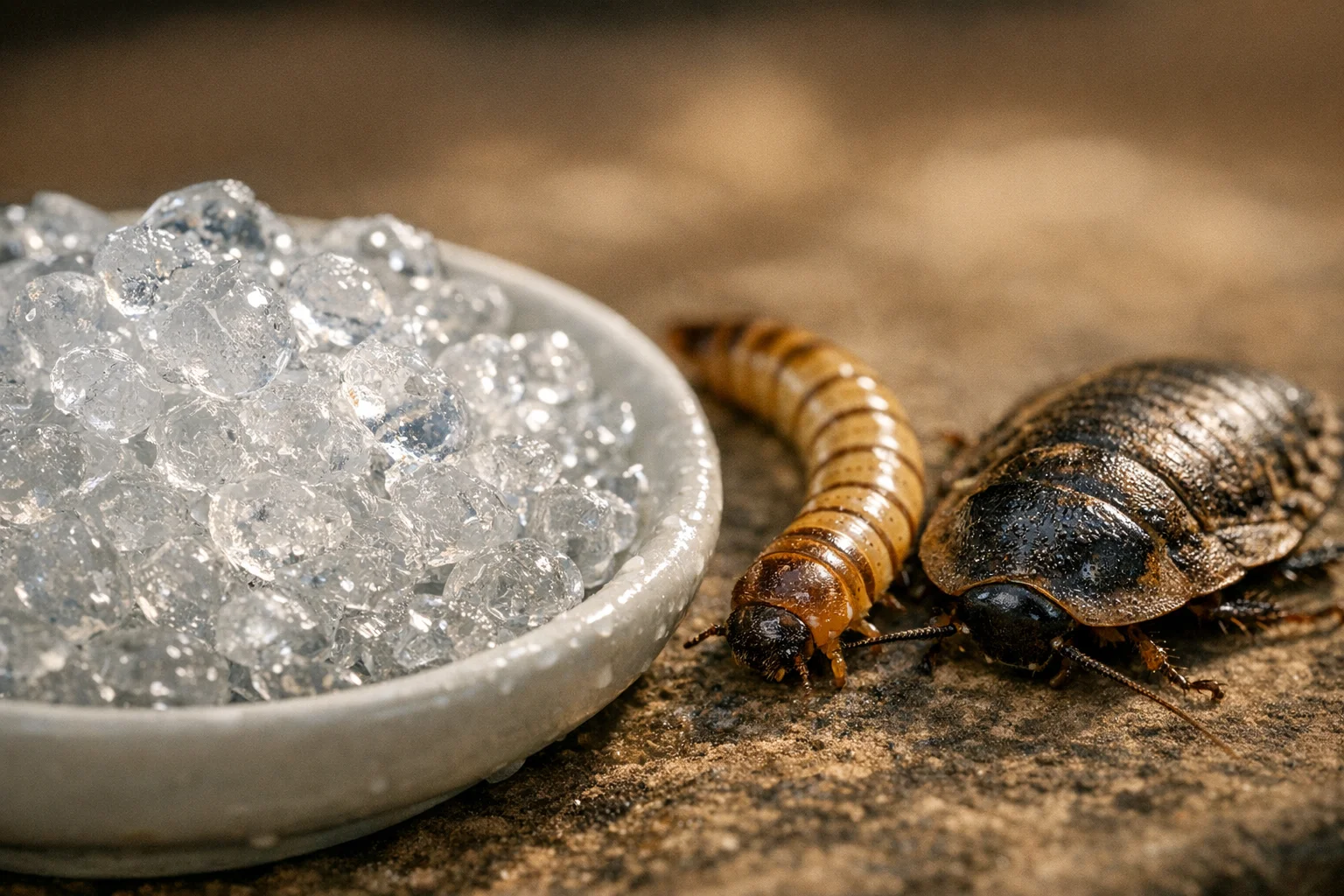
Commercial hydration crystals hold water in a firm, climbable gel. Feeders can drink from the surface without a puddle, drowning risk, or messy spill.
For everyday care
Offer a small mound in a shallow feeding lid and replace it before it becomes dirty or begins to dry out.
After shipping
Give newly arrived crickets and roaches fresh gel immediately. Rehydration helps them recover from warm or extended transit.
Moisture-rich vegetables
Firm produce works well for mealworms, superworms, and roaches because it supplies both food and moisture without soaking the enclosure.
Carrot and sweet potato
Firm, slow to spoil, and easy to remove from the bedding.
Potato and squash
Useful in small portions when removed before they become soft or slimy.
Keep pieces on top
Do not bury produce. Visible pieces are easier to check and remove promptly.
Swap every couple of days
Remove food earlier in warm or humid conditions and at the first sign of spoilage.
Each feeder hydrates differently
Use firm vegetables
They obtain moisture from produce and should never remain in damp substrate.
Gel or fresh vegetables
Keep conditions lightly humid and well ventilated, never soggy.
Use water gel
Gel is clean, accessible, and far safer than an open dish in a crowded cricket bin.
No added water
Their prepared food provides abundant moisture. Extra water and condensation create problems.
Feeder Insect Hydration FAQ
Do feeder insects need water?
Yes, but not from an open dish. Provide water-gel crystals or moisture-rich vegetables such as carrot, potato, and squash. Well-hydrated feeders live longer and pass more moisture to your pet.
Why can’t I just use a water dish?
Feeders drown in shallow standing water, and the water quickly fouls with waste and food. Water gel allows insects to drink without a puddle or drowning risk.
What are insect water crystals?
They are a commercial gel product that holds water in a firm, climbable form. Insects drink from the gel without falling in, and nothing spills.
Which vegetables give feeders water?
Use small pieces of carrot, potato, sweet potato, or squash. Place them on top of the bedding and replace them before they spoil.
Do hornworms and silkworms need water?
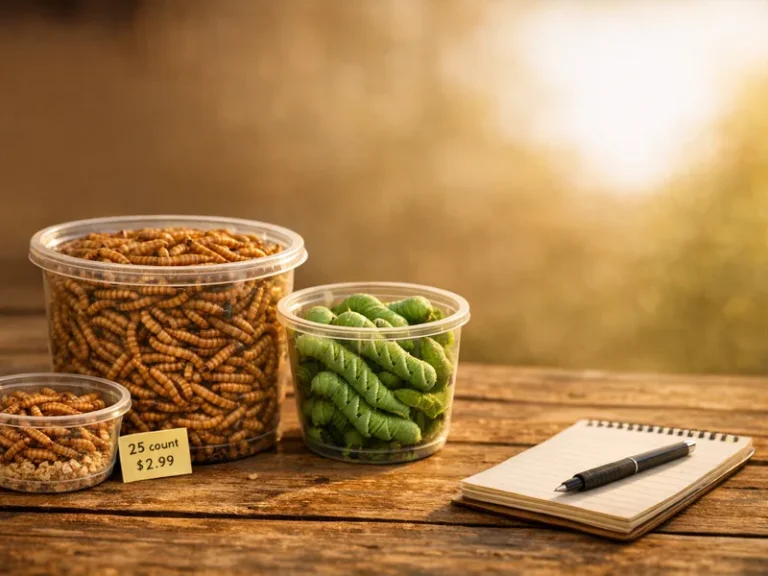
No added water. Their food already supplies moisture. Good airflow and dry surfaces matter more because condensation encourages problems.
Can too much moisture hurt my feeders?
Yes. Wet bedding and spoiled produce encourage mold, mites, and colony failure. Keep conditions lightly humid rather than soggy and remove leftovers promptly.
Stock up on hydration and care supplies
Practical products for healthy feeder bins, backed by the TC Insects team.
Written by the TC Insects breeding team · Porter, Texas · Live Arrival Guarantee on every order
Have a care question? Ask our community.
Join Reptile Keepers USA, our free Facebook group for reptile, amphibian and invert keepers. Share your setups, get care help and swap feeder tips.
Join the free group