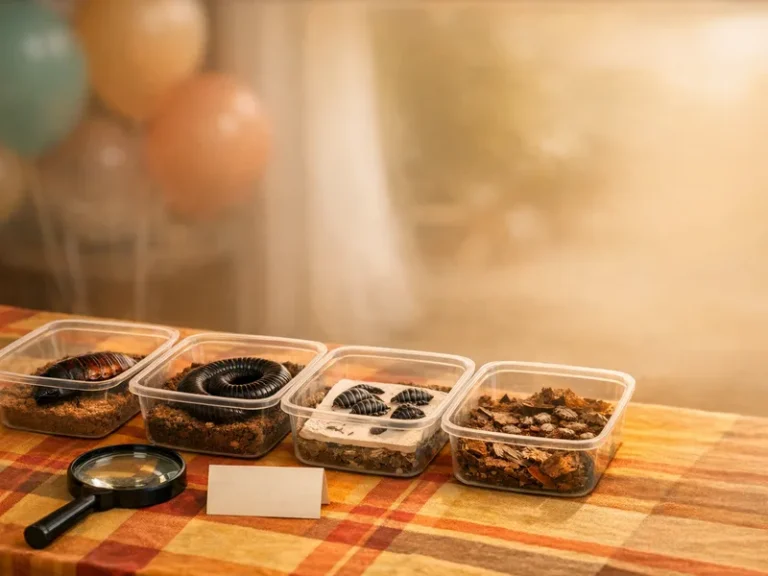
When and How to Split an Isopod Colony
Move roughly half the colony, with substrate, not a token handful of isopods
Young mancae hide in it, so bare isopods alone leave most of the colony behind
Give each half real time to rebuild before splitting either one again
One thriving colony, two healthy starts
Split an isopod colony once you are seeing several size classes and mancae regularly and the surface looks crowded after dark, by moving roughly half the isopods, along with a real scoop of their own substrate and leaf litter, into a fresh, already-conditioned enclosure. The substrate matters almost as much as the isopods, since most of the hidden young ride along in it rather than out in plain sight. A fast genus like Powder Orange can handle another split sooner than a slow one like Cubaris. Here is the full protocol, plus how to know you are actually ready.

Move a colony—not just a handful
Move roughly half the colony with its own substrate and leaf litter, then give both halves time to settle and rebuild.
The Real Signs a Colony Is Ready to Split
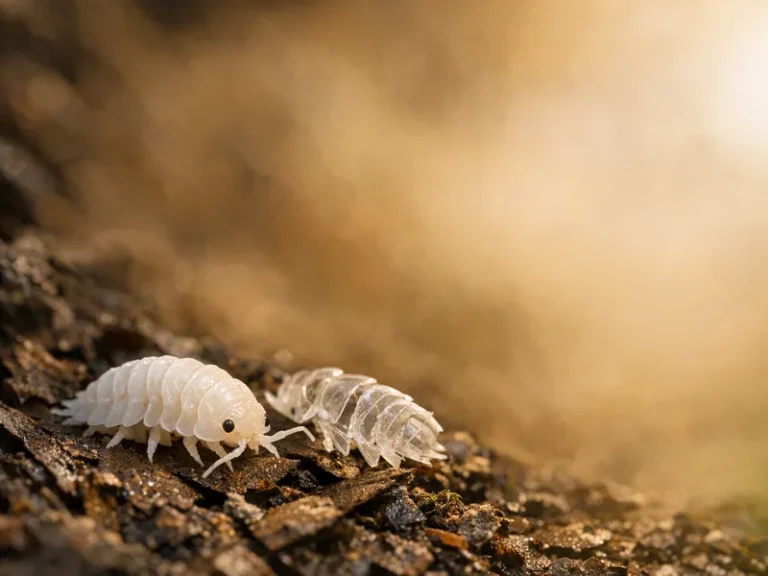
The clearest sign is seeing several size classes at once, tiny pale mancae next to half-grown juveniles next to full adults, because that pattern only shows up after a colony has bred continuously for a while, not from one lucky batch of babies. A colony that produced one brood and then went quiet is not there yet, no matter how many isopods are currently in the bin.
Add in real crowding: isopods piled on the substrate surface after dark, food or fresh leaf litter disappearing overnight instead of over a couple of days, and the substrate itself breaking down into fine, dark, crumbly material faster than you can top it off. Any one of these alone is not urgent, but seeing several together means the colony has genuinely outgrown some part of what its current bin can offer, whether that is food, space, or a moisture gradient stretched too thin.
Not Ready Yet? Wait.
A young colony, especially one still under the roughly 50-isopod range a standard 6 quart bin supports, is rarely ready for a split even if a batch of mancae just showed up. Splitting divides your breeding stock in half, and doing that before multiple overlapping generations are established usually leaves both halves too thin to grow well, the same trap as harvesting a young colony too hard.
Splitting vs. Upsizing: Pick the One You Actually Need
These solve two different problems, so it is worth being honest about which one you actually have. Upsizing keeps one colony, just in a bigger container with more substrate and floor space, and it is the simpler move if your only goal is more room for a single growing population. Our guide on sizing a starter container covers exactly when to size up instead of splitting.
Splitting makes two independent colonies. Pick it when you want insurance against a crash wiping out your only culture, a second bin to sell, trade, or seed a new bioactive enclosure, or simply two smaller colonies instead of one large one. If you only want fewer isopods in the bin you already have, without starting a second colony at all, our guide on what to do with a booming colony covers harvesting and rehoming instead.
How to Split a Colony, Step by Step
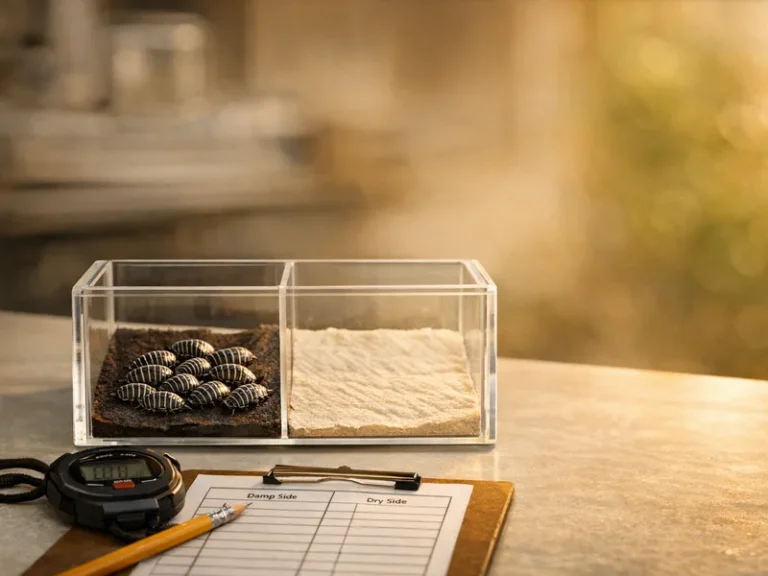
Prepare the new bin before you touch the old one. Set up a second enclosure with the same 2 to 3 inches of substrate depth and the same one-third-damp, two-thirds-dry moisture gradient as the parent colony, and let it sit for at least a few days so it is a real habitat, not a sterile box. Grab what you need from our isopod culturing supplies if you are building this second bin from scratch.
Move roughly half the colony, not a token handful, and move them with a generous scoop of their own substrate and leaf litter rather than picking isopods out one at a time. That scoop is doing real work: it carries mancae too small to see, a spread of size classes, and the same microbes and partly broken-down litter the colony has already been living on, so the new half settles in faster instead of starting from zero.
Handle Gravid Females as Little as Possible
If you notice a female with the pale, rounded marsupium bulge while you are splitting, leave her and the substrate around her undisturbed rather than transferring her by hand. Working around one spot costs far less than stressing her mid-brood, and either half of the split can end up with her without it mattering much.
Caring for Both Halves After the Split
Feed both bins a little lighter than you fed the single colony for the first week or two. A freshly split bin is more sensitive to leftover food than an established one, so lean on leaf litter as the staple and hold back on extra protein until both halves are clearly settling in and staying active. Mancae and gravid females both do best when the bin around them is calm.
Check moisture daily on both bins for the first week, since a newly built damp zone has not had time to stabilize the way the parent colony's had. After that, step back. Constant checking stresses a colony more than it reassures you, and a split bin needs real weeks to prove itself, not daily inspection.
How Often You Can Split, Fast Genus vs. Slow Genus
Species choice changes the whole timeline, so the honest cadence depends on what is actually living in the bin. Treat the ranges below as a starting point, then let what you actually see in the bin, size classes, crowding, and how fast the last split recovered, be the real signal.
Fast Genera: Dwarf White and Powder
Dwarf White (Trichorhina tomentosa) and Powder Orange or Blue (Porcellionides pruinosus) rebuild their numbers quickly enough that a healthy, well-established colony can often handle another split within a few months of the last one, once the new half is clearly thriving on its own. These are the genera our own genus comparison ranks as the fastest breeders, for exactly this reason.
Slower Genera: Cubaris and Some Porcellio
Cubaris is the genus that most rewards patience here. It is naturally the slowest breeder of the common hobby genera, so splitting it on the same schedule as a Dwarf White colony usually leaves both halves too small to be worth having. Give a Cubaris colony several months of clear, steady growth after any split before you even consider doing it again, and expect the wait to feel long next to a fast genus.
Mistakes That Turn One Strong Colony Into Two Weak Ones
Splitting too early is the most common one: a colony that has not yet shown multiple overlapping generations does not have enough breeding adults to found two separate populations. Splitting too much at once is the second, taking more than about half leaves the parent colony too thin, especially if you also disturbed the substrate heavily to do it.
And splitting too often, before either half has had real time to rebuild, is how a keeper ends up with two stalled bins instead of one healthy one. If a half you split off stops producing visible mancae and stays flat for months, treat it like any other stalled colony and work through our guide on why a colony won't breed rather than assuming the split itself failed.
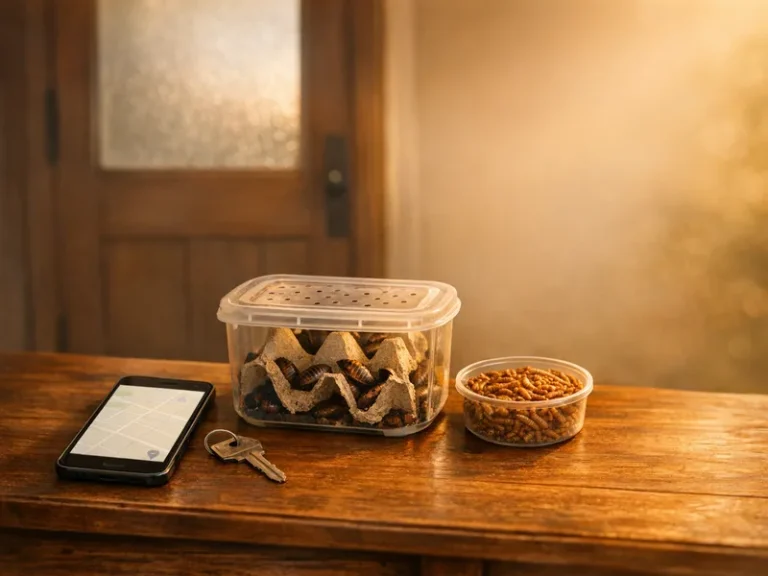
The Colony Split Kit
Everything for the new half in one box, plus the leaf litter and calcium both colonies keep using after the split.
Frequently asked questions
How much of an isopod colony should I move when splitting?
Move roughly half the isopods, not just a handful. Take them together with a real scoop of their own substrate and leaf litter rather than picking isopods out one by one, since that scoop carries hidden mancae, a mix of size classes, and the microbes the colony is already living on, which helps the new half settle in far faster than starting from bare substrate.
How do I know my isopod colony is ready to split?
Look for multiple size classes at once, tiny mancae, half-grown juveniles, and full adults, together in the same bin, since that pattern means the colony has been breeding continuously rather than producing one lucky batch. Crowding after dark and food disappearing overnight are supporting signs, but size-class variety is the strongest single indicator of real breeding momentum.
Is it better to split an isopod colony or just use a bigger bin?
It depends on what you want. A bigger bin keeps one colony and is simpler if you just need more room. Splitting makes two independent colonies, which is worth the extra work if you want insurance against a crash, extra stock to sell or trade, or a second bin ready to seed a new enclosure.
How often can I split a fast-breeding isopod colony?
A fast genus like Dwarf White or Powder Orange can often handle another split within a few months of the last one, as long as the new half is clearly thriving first. Slower genera like Cubaris need much longer between splits, since they rebuild their numbers at a fraction of that pace.
Can splitting an isopod colony too early hurt it?
Yes. A colony that has not yet shown multiple overlapping generations rarely has enough breeding adults to found two healthy populations at once, so an early split often leaves both halves thinner than the original ever was. Waiting for real size-class variety first is the difference between two strong colonies and two stalled ones.
Do I need to feed a freshly split isopod bin differently?
Feed both halves a little lighter than you fed the single colony for the first week or two, since a freshly split bin is more sensitive to leftover food than an established one. Lean on leaf litter as the staple, check moisture daily for the first week, then step back and let both halves settle in without constant checking.
Keep learning
Have a care question? Ask our community.
Join Reptile Keepers USA, our free Facebook group for reptile, amphibian and invert keepers. Share your setups, get care help and swap feeder tips.
Join the free group