White Fuzzy Mold in a New Terrarium

That white fuzzy mold creeping across your new cork bark or fresh substrate is almost always harmless, and it is normal. Saprophytic mold like this feeds on sugars and starches left over in new wood, coco fiber, and substrate, and because a brand-new terrarium has no established microfauna yet to intercept it, the bloom shows up fast and looks a lot more alarming than it is. Do not tear the tank down or start scrubbing with anything harsh. Ventilate, ease off on misting for a few days, and seed a springtail culture, and it fades on its own, usually within a week or two.
Feeds on sugars left in new wood, cork and substrate
Faster with ventilation and an established springtail culture
Ventilate, ease off misting, and seed springtails instead
Why brand-new wood and substrate mold in the first place
Raw, uncured wood, cork bark, and coco fiber all carry sugars and starches left over from processing, and the moment humidity and warmth are added, a fungus will happily move in and colonize that surface. A brand-new terrarium has zero established microfauna yet to compete for that food, so the mold gets a completely open field for the first week or two while everything else in the tank is still settling in.
This is not a sign of a dirty build or something done wrong. Almost every bioactive setup goes through some version of this curing phase, especially one built with a lot of fresh hardwood or cork. If you are still in the setup window and have not added your animal yet, our guide on how long a bioactive tank needs to establish covers this same early phase in more depth.
What normal white mold actually looks like
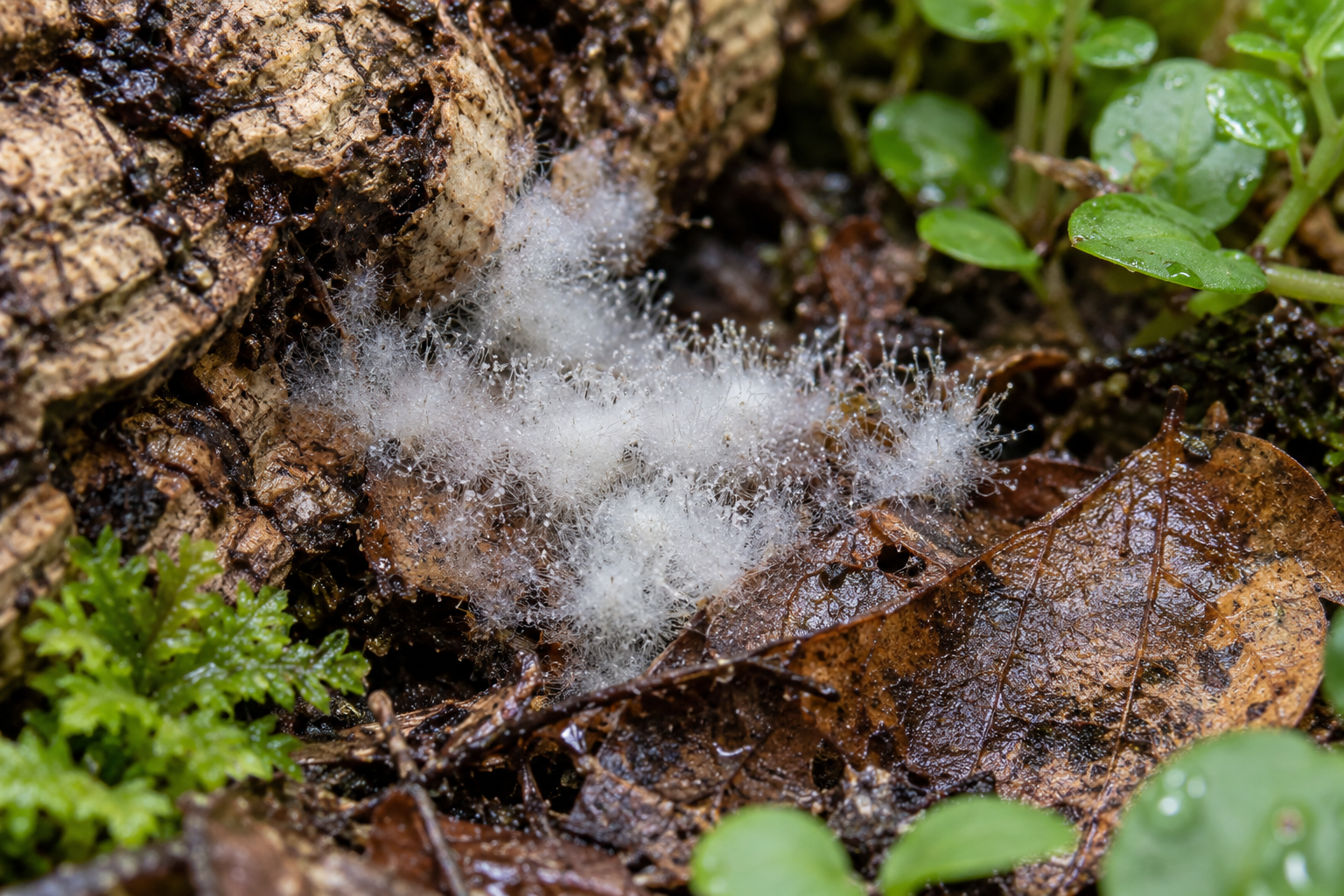
Expect a fine, cottony, white-to-gray fuzz across the surface of the newest, rawest wood or substrate in the tank, sometimes with a faint musty smell. It typically spreads for a day or two, plateaus, and stays confined to the freshest materials rather than creeping across everything in the enclosure at once.
This is a surface fungus feeding on leftover sugars, not rot and not the gel-like slime mold that shows up in a very different, wetter situation. It looks dramatic against dark substrate, especially under a grow light, which is exactly why it panics so many first-time bioactive keepers even though it is one of the most ordinary things a new tank does.
How to tell harmless mold from an actual problem
Harmless, new-tank mold is fuzzy or cottony, white to gray, confined to the newest materials, and it fades within days to a couple of weeks once the tank settles in. A real problem looks and behaves differently: a slimy, wet film that keeps spreading across substrate that is not new anymore, a strong rotten or ammonia-like smell, or standing water that never dries between mistings.
That second combination points to a ventilation or drainage issue rather than a normal curing phase, and it is worth fixing at the source, more airflow, a proper drainage layer, less frequent misting, rather than waiting it out. If you are also noticing small flies around the same damp spots, check our fungus gnat guide, since the two problems often share the same root cause.
Do not tear it down. Do this instead
Crack the lid or add a little more ventilation, ease back on misting for a few days so the surface can dry slightly, and resist the urge to scrub the wood or wipe it down with anything harsh. Scrubbing just knocks the fungus loose without addressing why it grew, and anything stronger than plain water risks harming microfauna you may have already added.
Leave your normal lighting and heat running as usual. There is no special equipment needed for ordinary new-tank mold, just a little patience and airflow while the raw materials finish curing and the tank's own biology catches up.
How springtails clear it, and why timing matters
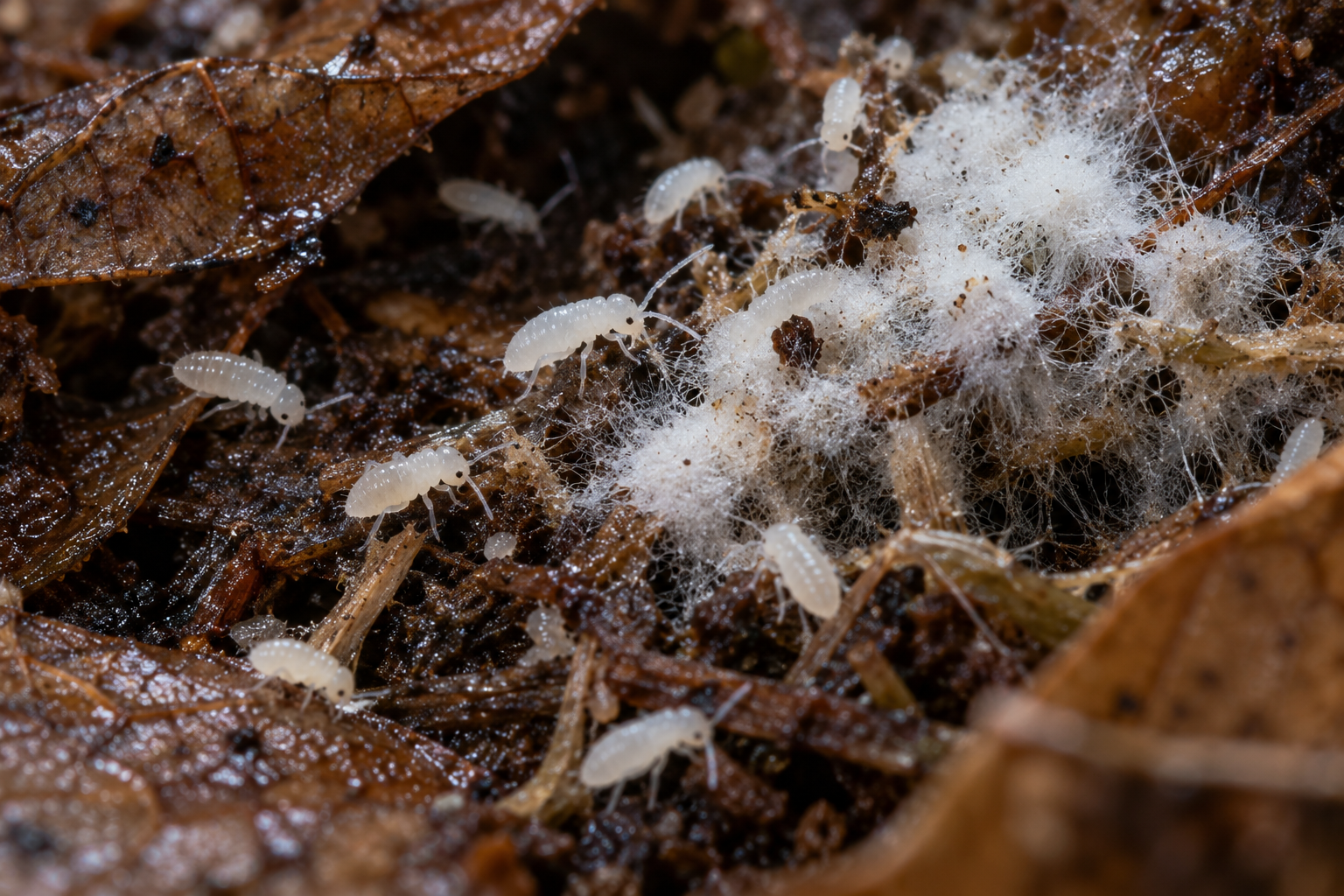
Springtails graze the fungal film directly, and an active culture will visibly thin out a patch within days once it gets established, faster with more individuals and in a warmer tank. Seed them at setup, or even before the substrate and wood are fully in place, and the crew is already working by the time those sugars start leaching out, so the bloom that would otherwise look alarming barely gets a foothold.
If mold has already shown up and you are seeding a culture in response rather than ahead of it, that is completely fine too, it just means the springtails are catching up rather than running ahead. Our companion piece on why springtails eat mold in the first place goes deeper into how quickly an established culture works and why the population rises and falls with the food supply.
When to actually worry
Keep an eye out for mold that keeps spreading onto substrate that is well past the new-tank phase, a wet or slimy texture instead of dry fuzz, or a smell that is genuinely foul rather than faintly musty. That combination points to an ongoing moisture or airflow problem worth addressing directly rather than something springtails alone will out-eat.
For the very large majority of new builds, though, this is a non-event. Give it a week or two, keep the airflow reasonable, and let an established springtail culture do its job, and most new-tank mold has cleared on its own well before it becomes anything worth worrying about.
The New-Tank Springtail Starter Kit
The cultures and substrate that clear a fresh mold bloom fastest. Add what you need, then send it all to your cart in one tap.
Frequently Asked Questions
Written by the TC INSECTS breeding team · Porter, Texas · Live Arrival Guarantee on every order
Have a care question? Ask our community.
Join Reptile Keepers USA, our free Facebook group for reptile, amphibian and invert keepers. Share your setups, get care help and swap feeder tips.
Join the free group