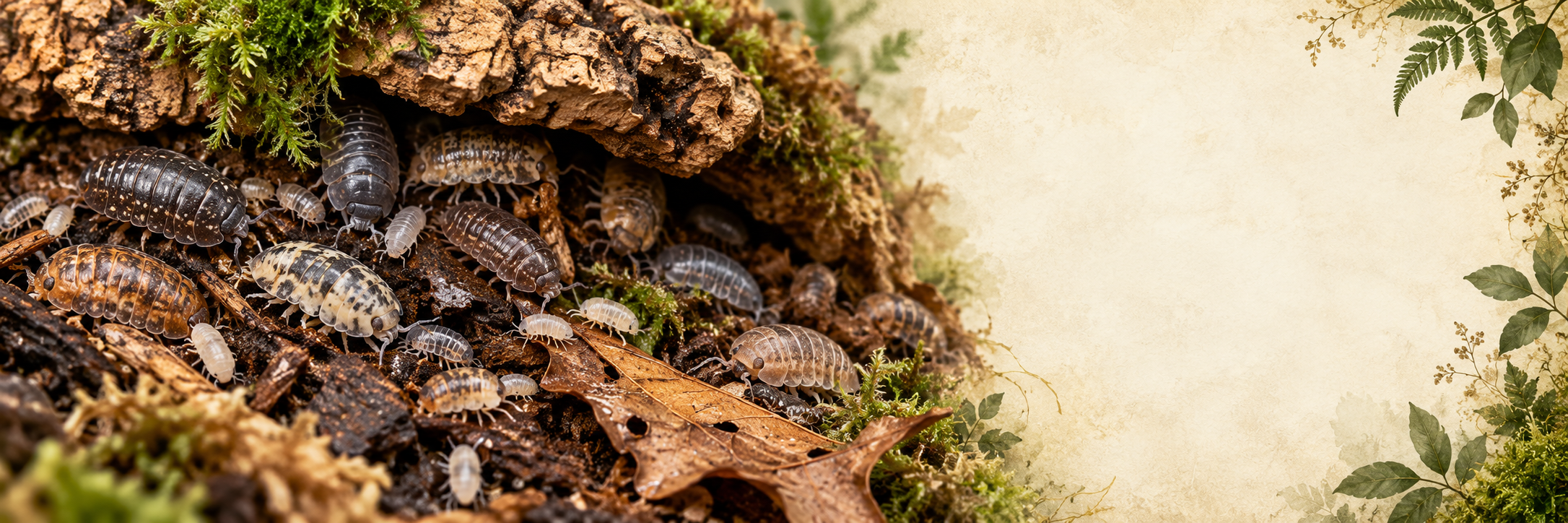
An isopod colony that is booming is not a problem to solve, it is a sign your husbandry is working, and the good news is that populations self-limit on their own as a bin fills up. If you still want to slow things down or make room, the real playbook is simple: cut back supplemental feeding, harvest the surplus with a bark or cardboard trap instead of digging through the whole bin, upsize the enclosure, or seed the extras into a second tank. The one thing you should never do is add a predator to try to control the numbers, since that trades a good problem for a genuinely bad one. If you would rather just start a second colony properly instead of splitting an existing bin, our isopod and springtail combos are an easy way to seed a brand new enclosure.
Less food and space per isopod slows reproduction naturally
Isopods cluster under it overnight; lift and shake off, no digging
Trades a booming colony for an unpredictable new problem
First, know that a boom is not a problem
A visibly booming isopod colony, mancae everywhere, adults at every size, numbers climbing week over week, is exactly what a healthy culture is supposed to do, and it is the outcome every beginner-isopod guide is trying to help you reach. If your colony has gotten there, the culture is working. Nothing about a boom is dangerous to the isopods, to a housed reptile or invertebrate, or to the enclosure itself.
What people usually mean by isopod overpopulation is really one of two separate things: either the bin feels crowded and you would like to thin it out, or you simply have more isopods than you know what to do with and want options. Both are good problems, and both have straightforward answers below, none of which involve panic or a predator.
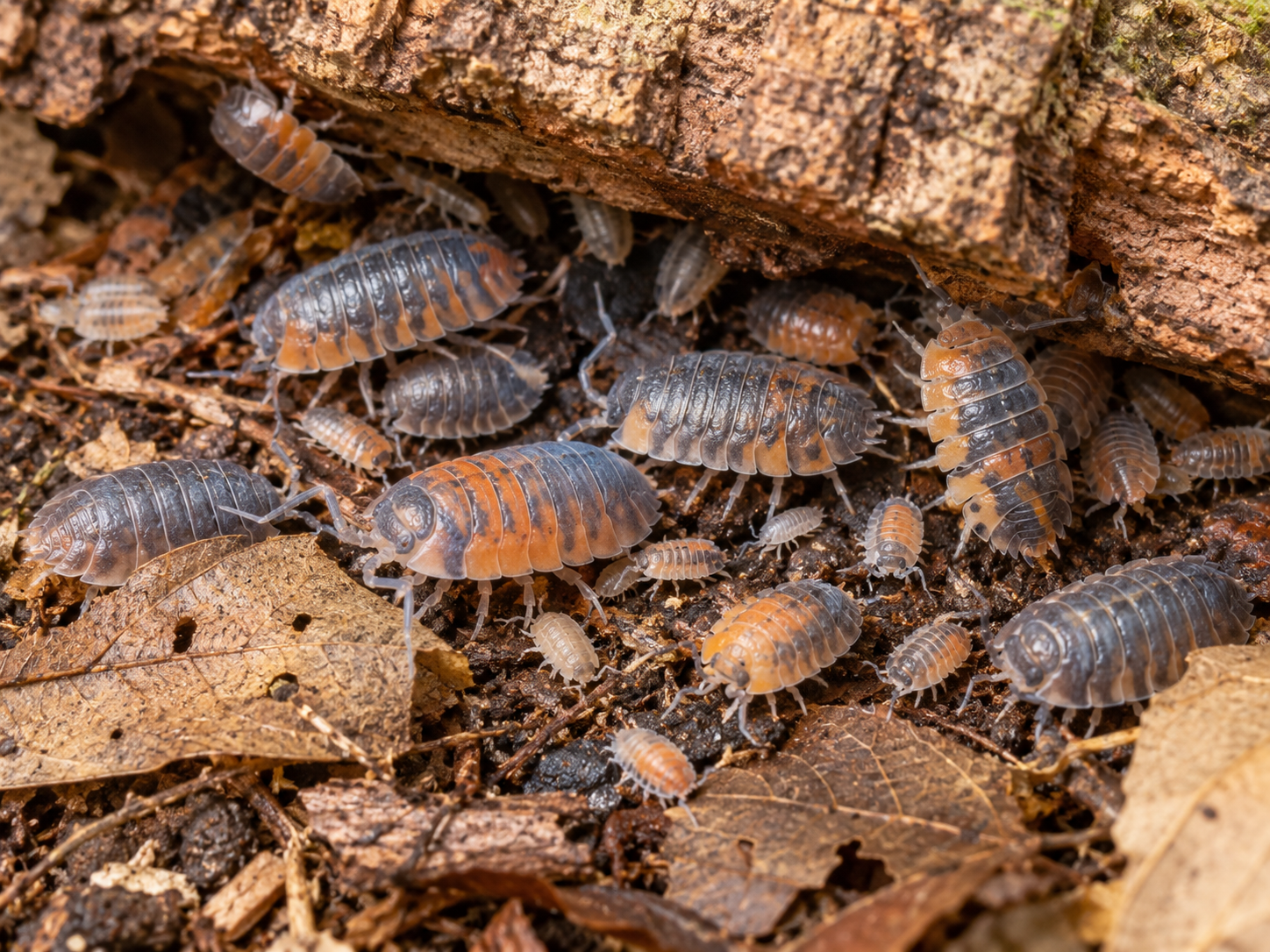
Populations self-limit, so patience alone does a lot
Isopod colonies are density-dependent. As a bin fills up, the amount of food, moisture, and physical space available to each individual drops, and reproduction naturally slows to match what the enclosure can actually support. Left alone, most colonies plateau on their own well short of any real crisis rather than climbing forever.
If you want to nudge that natural slowdown along, the simplest lever is feeding. Cut back on supplemental protein and calcium for a few weeks rather than keeping the colony on a growth-focused diet, and reproduction will ease off further. This is the same lever in reverse that our guide on making isopods breed faster uses to speed a colony up, so if you want the population curve to bend in either direction, feeding is where you start.
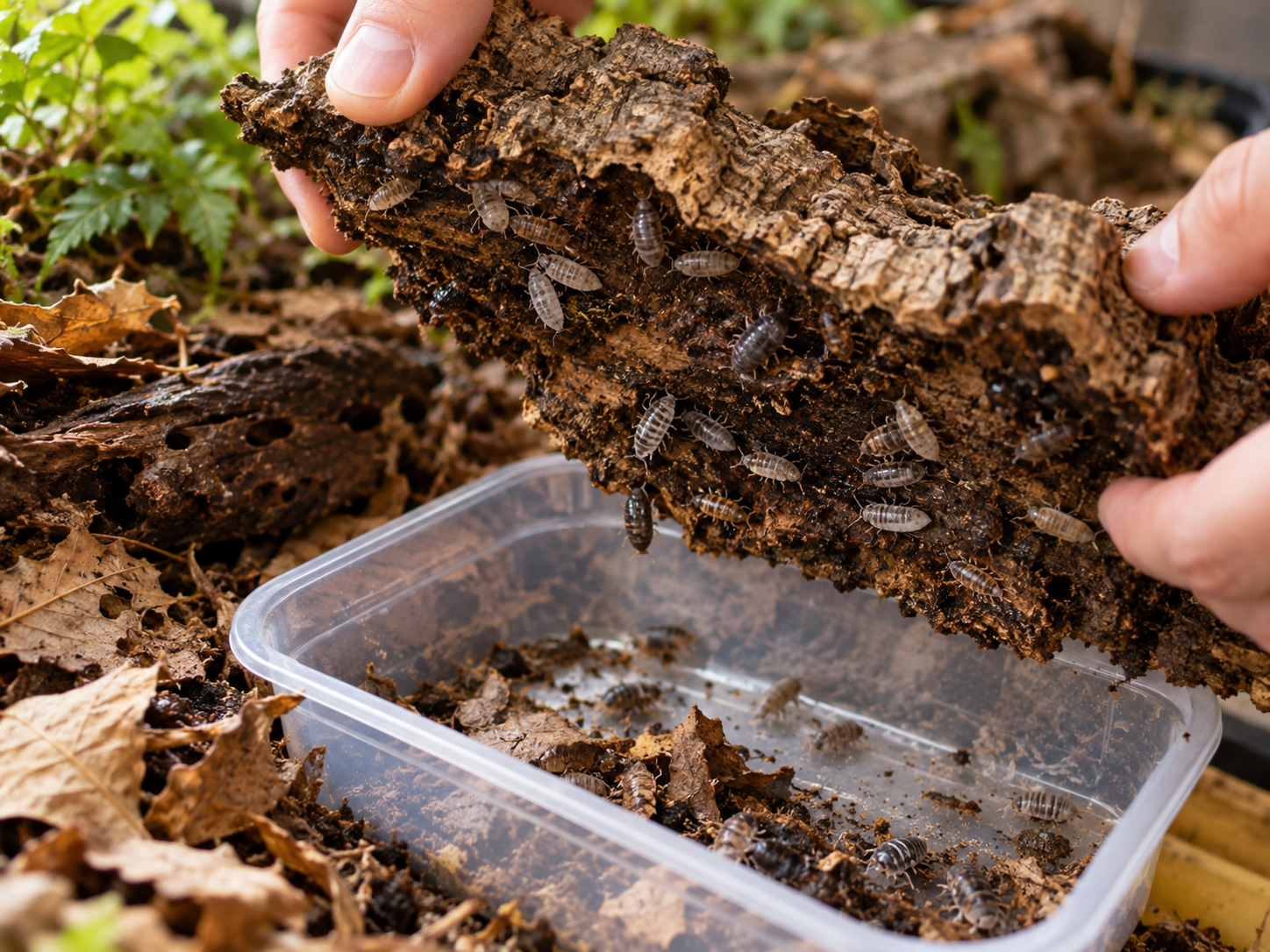
Harvest the surplus without tearing the bin apart
Digging through an established colony to pull isopods out stresses the ones left behind and can crush mancae you never even see. A bark trap solves this cleanly: lay a piece of cork bark, a folded scrap of cardboard, or even a damp paper towel on the substrate surface in the evening, ideally with a small smear of food underneath, and let it sit overnight.
By morning, isopods looking for cover and an easy meal will have clustered underneath in real numbers. Lift the trap out over a collection container and give it a gentle shake, and you can pull dozens out in one pass with almost no disturbance to the rest of the bin. Repeat every few days if you are harvesting a large surplus, and you will barely dent the colony's stability while still meaningfully thinning the numbers.
Upsize the bin or seed a second enclosure
Sometimes the better move is not to remove isopods at all but to give the colony more room to match its own success. Moving a booming culture into a larger enclosure with fresh substrate and leaf litter gives it the space and resources to keep growing comfortably instead of fighting a shrinking margin of food and moisture per isopod.
If you would rather put the surplus to work, rehome extras into another bioactive enclosure that could use a cleanup crew, whether that is a second reptile tank, a spare vivarium, or a dedicated display culture. Starting that second setup properly with its own substrate and a paired springtail culture, like our isopod and springtail combos, gives the rehomed isopods a real chance to establish rather than getting dumped into an unprepared tank.
What not to do: never add a predator
It is tempting to look up a natural isopod predator and add one to keep the population in check, the way some keepers use predatory mites or beetles against pest insects. Resist it. Predators are unpredictable in a closed bioactive enclosure: they rarely stop at just isopods, they can crash a colony far harder than you intended, and if the isopods are sharing space with a reptile, amphibian, or invertebrate you are actually keeping, a predator you introduced on purpose is now loose in that same enclosure.
There is also no upside over the methods above. A bark trap, a feeding adjustment, and a bigger or second enclosure solve overpopulation completely without introducing anything new into the bin. If numbers still feel unmanageable after trying those, our guide on why isopod colonies stall is a useful read from the opposite direction, since understanding what makes a colony slow down helps you fine-tune how hard you pull those same levers here.
Everything You Need to Upsize or Rehome
The habitat, substrate, and springtail partner behind the options above, ready to add in one tap.
Frequently Asked Questions
Written by the TC INSECTS breeding team · Porter, Texas · Live Arrival Guarantee on every order
Have a care question? Ask our community.
Join Reptile Keepers USA, our free Facebook group for reptile, amphibian and invert keepers. Share your setups, get care help and swap feeder tips.
Join the free group