Glass vs Plastic for an Isopod Enclosure
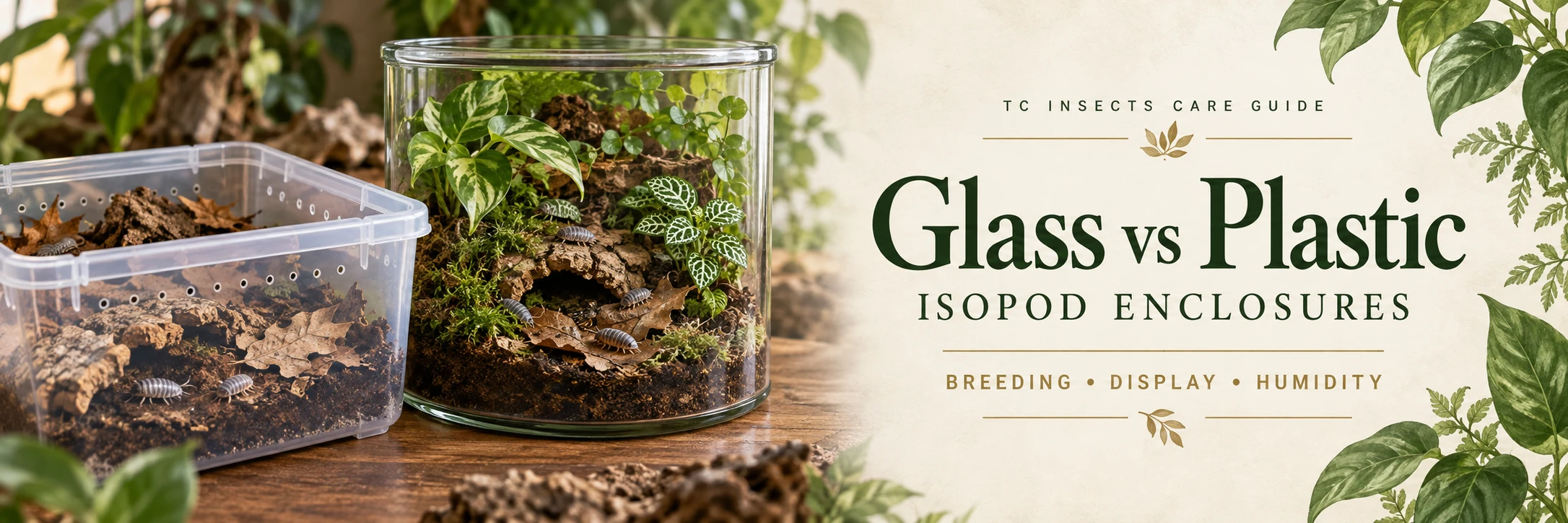
Holds humidity well, cheap, and easy to drill for ventilation
Scratch resistant and shows the setup off
Plastic holds it, screen topped glass loses it fast
Choose the material for the job
Plastic tubs are the better choice for breeding isopods, because they hold humidity well, cost little, and are easy to drill for cross ventilation, while glass is the better choice for a display setup, because it looks far nicer and resists scratching. Most keepers end up doing both, breeding in plastic and displaying in glass, rather than picking one material for everything.

Breed in plastic, display in glass
Both can work when lid fit, ventilation and substrate moisture match the colony’s needs.
Plastic: the breeding choice
Plastic tubs hold humidity well because the walls and lid are solid, so the only place moisture escapes is through whatever ventilation you drill yourself. That gives you real control over how humid or dry a bin runs. Plastic is also cheap, light, easy to stack, and simple to drill or modify as a colony's needs change.
The tradeoff is looks. Plastic scratches over time, clouds up, and reads as utilitarian rather than attractive, which is exactly why it works so well for breeding bins tucked away on a shelf but rarely gets chosen for a display piece. If you are setting up your very first bin, our isopod care guide for beginners covers substrate, food, and species alongside container choice.
Glass: the display choice
Glass enclosures are genuinely beautiful, and they hold up to scratching in a way plastic never will. A well built glass terrarium is the obvious choice when the point of the setup is to actually look at it, whether that is a planted bioactive display or a tank that shares space with a pet.
Glass is also heavier and much harder to add ventilation to on your own, since drilling glass is a specialty job most keepers are not set up to do at home. Many glass enclosures ship with mesh or screen tops instead, and those breathe constantly, which pulls humidity out of the tank faster than a solid lid ever would.
Humidity retention: the real deciding factor
This is the difference that actually matters most day to day. A plastic tub with a solid lid and a handful of drilled holes seals humidity in tightly and needs less frequent misting to stay in range. A glass tank with a screen top is essentially always venting, so it dries out faster and asks for more attention to keep the substrate from crossing into too dry. Neither material is wrong, they just ask for different habits, and a solid substrate recipe helps buffer either one.
Condensation reads differently on each material too. A light haze on plastic is easy to see and can look alarming even when it is completely normal, while the same amount of moisture on glass can go almost unnoticed. Judge how damp a bin actually is by touching the substrate, not by how foggy or clear the walls look.
Escape risk and lids
Both materials keep isopods in fine as long as the lid actually fits and seals. The real escape risk is not the wall material at all, it is mancae, the tiny newborn isopods, which can squeeze through gaps that look far too small to matter. Smooth interior walls do more to prevent climbing than any barrier product you can buy.
Whichever material you choose, size the enclosure to the colony living in it rather than picking based on looks alone. Our container size guide covers dimensions and ventilation placement that apply the same way in plastic or glass.
Which to pick for your setup
For a starter colony or a straightforward breeding bin, go plastic. It is cheap, forgiving, and easy to adjust as you learn what your species actually wants. Our beginner isopods are a low pressure place to start building that first bin.
For a display piece or a planted bioactive setup with a pet living in it, glass is worth the extra cost and attention, especially if you plan to swap the top for something less ventilated than a stock screen lid. Our best display isopods guide is a good next stop if that is the direction you are headed.
Keep reading: What Happens If Isopods Escape, and Why You Should Never Release Them
Keep reading: Bioactive Substrate in a Rack System: Tub vs Tank
The Enclosure Setup Kit
A ventilated plastic starter bin, ready to breed in from day one.
Frequently asked questions
Is glass or plastic better for isopods?
It depends on the goal. Plastic is better for breeding because it holds humidity well and is cheap and easy to ventilate. Glass is better for a display setup because it looks nicer and resists scratching, though it holds humidity less reliably.
Does glass or plastic hold humidity better for isopods?
Plastic holds humidity better in most setups, since the solid walls and lid only lose moisture through holes you drill yourself. Glass tanks, especially ones with mesh or screen tops, breathe constantly and dry out faster.
Can isopods escape from a glass tank?
A well sealed glass tank holds isopods in just fine. The real escape risk is mancae, the tiny newborn isopods, squeezing through small gaps, so lid fit and smooth interior walls matter more than the material itself.
Why do glass isopod tanks dry out faster than plastic ones?
Many glass enclosures come with mesh or screen tops for airflow, and that constant ventilation pulls humidity out faster than a solid plastic lid with a few drilled holes would.
Can you drill ventilation holes in a glass enclosure?
Not easily on your own. Drilling glass is a specialty job, which is why most glass terrariums rely on a mesh or screen top for airflow instead of custom drilled holes like a plastic tub.
What container should I use for a display isopod colony?
Glass, adjusted with a less ventilated top than the stock screen lid if humidity is running low. It shows off a planted or bioactive setup far better than plastic while still supporting a healthy colony.
Keep learning
Have a care question? Ask our community.
Join Reptile Keepers USA, our free Facebook group for reptile, amphibian and invert keepers. Share your setups, get care help and swap feeder tips.
Join the free group